Archive for July, 2025

July 7, 2025

Posted: July 8, 2025 in Uncategorized
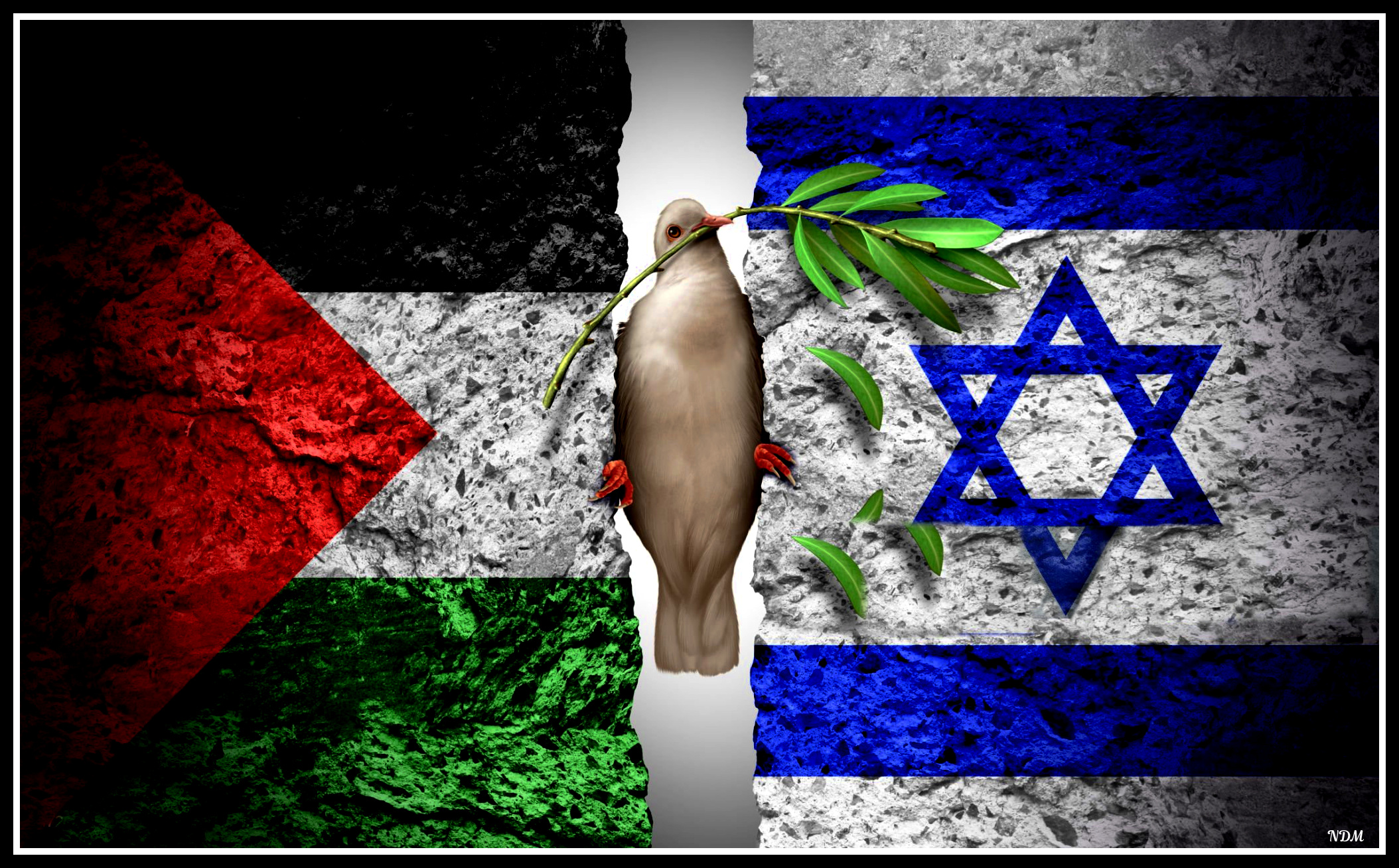
Palestine and Israel crisis as a geopolitical conflict and war between the Palestinian and Israeli people and Middle East security concept and struggling finding a diplomatic agreement

Today, as I write this, U.S. President Donald Trump and Israeli Prime Minister Benjamin Netanyahu are meeting at the White House. The headlines haven’t landed yet, but I think we all know how the press release will read: they had a “productive conversation,” “mutual respect was reaffirmed,” and Trump will likely describe Netanyahu as “a very strong leader,” maybe even “a terrific guy.”

But while those statements are being polished, I’ve been sitting with something more complex, and frankly, more honest, than anything that’s likely to come out of that meeting. I hesitate sometimes to write about Israel. And maybe that’s the right instinct, to pause before speaking about something so layered, so painful, and so steeped in history that I can’t possibly claim to understand it the way others do. Especially not from the perspective of Jewish people, for whom this land, this history, this trauma, and this hope are not theoretical but deeply lived.

But something New York Times columnist Tom Friedman said recently at the Aspen Ideas Festival struck such a chord with me that I’ve been turning it over in my head ever since. And I guess this is less a post than a bookmark of that moment, one I don’t want to lose.

Friedman said that to understand the Middle East, and Israel in particular, you have to hold three truths in your head at the same time. And yes, he acknowledged, that’s not something we’re very good at, especially in the polarized world of North American discourse (campuses and Twitter/X alike). But here they are:

  1. Israel is an extraordinary place. What the Israeli people have built in just 75 years, out of exile, out of ashes, through wars and waves of immigration, is nothing short of astonishing. A technological, agricultural, and military powerhouse. An improbable success story.
  2. Israel is doing really bad things right now. Especially in Gaza, and in the West Bank. And it’s not new. The occupation, the dispossession, the deaths of civilians , these are not myths or propaganda. They are real, and they are wrong.
  3. Israel lives in a crazy neighbourhood. One where it’s surrounded by failed or barely functioning states, some of which are under the grip of Iran, an authoritarian regime exporting chaos. Israel’s security dilemmas are real, and existential.

And that’s what grabbed me: the idea that more than one thing can be true at the same time. That Israel can be both remarkable and responsible for grave injustices. That it can be both a beacon and a danger to its own future. That people inside and outside the region can love it and criticize it, sometimes in the same breath.

This framework helped me as someone outside the faith, the culture, and the history, a gentile trying to make sense of something I can’t fully feel. I can’t understand what it means to carry generational trauma like the Holocaust, or to see a homeland as both sanctuary and struggle. So I offer this with all humility. If any Jewish readers find my agreement with Friedman too simplistic or misapplied, I understand. But I’m trying to learn. I’m trying to listen.

What also struck me, and this is something Friedman emphasized, is the deeply uncomfortable truth about Benjamin Netanyahu. According to Friedman, Netanyahu is a man who just presided over a monumental military victory, not just against Hamas, but symbolically against Iran and its network of influence over Lebanon, Syria, and Iraq. And yet, at the same time, Netanyahu is continuing a campaign of destruction in Gaza well beyond the defeat of Hamas, at great humanitarian cost. And at the same time again, he’s pushing forward a domestic judicial overhaul that would weaken Israel’s Supreme Court and, potentially, set the stage for annexing the West Bank.

It’s not just that these things are happening at once, it’s that they are deeply contradictory. And Friedman made a powerful point: the very people who delivered this military success, the elite pilots, the cyber warriors, the scientists and tech minds of Israel’s defense, are often the same people who spent the entire nine months before the Hamas war protesting Netanyahu’s attempts to undermine democracy. These are people who love their country deeply and are willing to defend it with everything they have, but who are also terrified of the direction Netanyahu is dragging it.

That contrast, between military heroism and political despair — has stayed with me. It reminds me again that complexity isn’t a flaw in the conversation. It’s the core of it.

It’s not lost on me that I’m writing this on a day when the headlines aren’t screaming. There’s no new airstrike footage flooding the news cycle at this moment. And yet, like you, I know that every day is escalated in some way. Still, maybe quieter days are when we should be thinking hardest, not in reaction, but in reflection.

This might not be a post that travels far. It’s not spicy, not viral, not packed with certainty. But it’s honest. And it’s grounded in something that I think we need more of: the ability, and the courage, to hold conflicting truths without rushing to flatten them into just one.

So yes, I’ll keep thinking about this.

And maybe that’s the point.
July 6, 2025

Posted: July 8, 2025 in Uncategorized

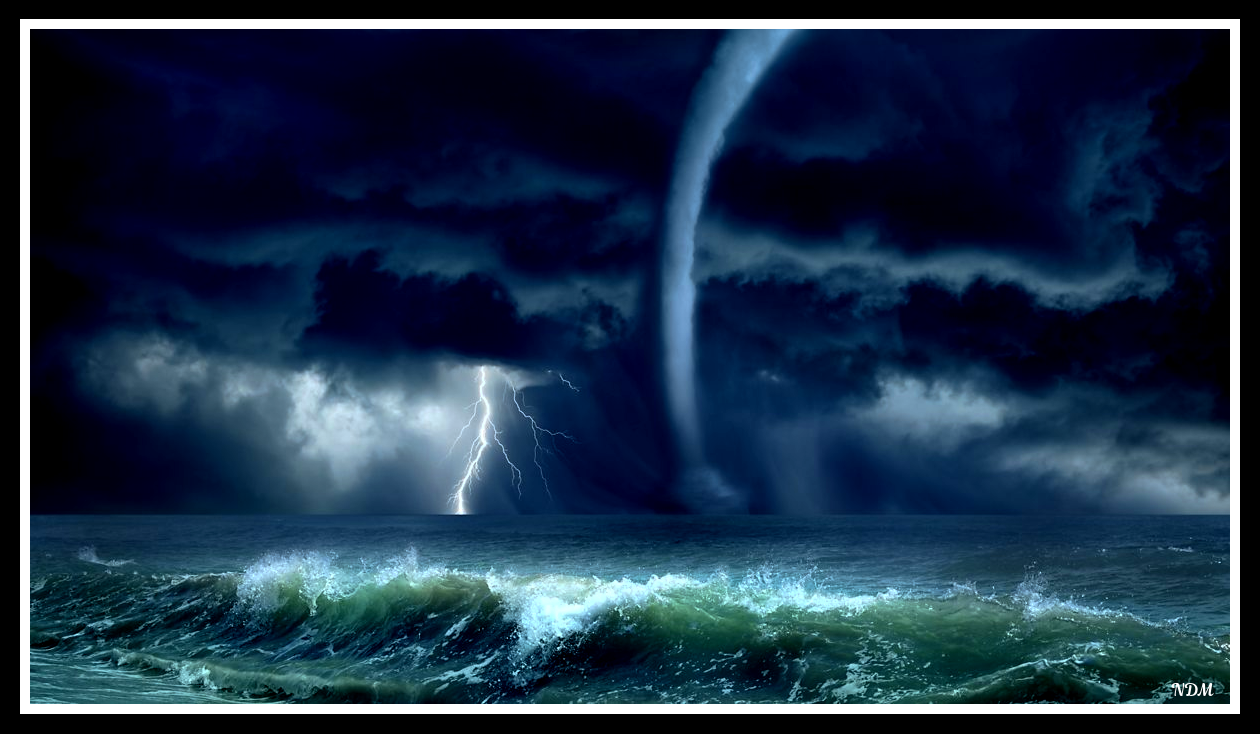
On July 5th, 2025, as much of Texas woke to what should have been a hot and quiet long weekend, everything changed in a matter of hours. Flash flooding, violent, fast, and utterly unforgiving, tore through parts of Central and East Texas. Bridges collapsed. Homes were swept from foundations. At the time of writing, the death toll stands at 70. Dozens are missing. And I can’t stop thinking about the sky.

Let me explain. I was raised in a family business where aviation wasn’t just a profession, it was a way of life. And in aviation, especially before Foreflight and real-time radar apps, weather wasn’t a side topic. It was the topic. My father talked about pressure systems over breakfast. We learned to read clouds before we could parallel park. When your safety and livelihood depend on the weather, you don’t take it lightly.

Even now, decades later, I check five weather apps, scan radar, read METARs and TAFs, and still go outside to squint at the sky, just to be sure and that’s just to do gardening. Some people think I’m overdoing it. I think I’m paying attention.

That brings me back to Texas. The storms that hit on July 5th weren’t a surprise to forecasters. Some parts of the state received flash flood watches the evening before. Others got warnings the morning of. But here’s the thing, “a warning” is only useful if it comes in time, if people understand what it means, and if systems are in place to act on it. In Texas, in some places, the water rose in minutes. Hardened ground from drought couldn’t absorb a drop, so the rain just ran, taking everything in its path.

Did people get warned? Some did. But too many didn’t get enough notice, or didn’t trust the alerts. And here’s where it gets political, whether we want it to or not.

The U.S. National Weather Service has been under strain for years. Budget cuts, staff shortages, and now even a further reduction in weather balloon launches. Those cuts, furthered through DOGE have eroded the capacity to give the kind of hyper-local, real-time data that saves lives. A weather balloon costs about $300. They were among the “non-essential” items cut and those losses haven’t been reversed.

I don’t mean to be flippant, but how many weather balloons could you launch for the cost of one political parade or a golf weekend? What value do we place on knowing what the atmosphere is doing before it unleashes itself on us?

And I know people get tired of alerts. I do too. We get them constantly now, severe thunderstorms, tornado watches, snow squalls, extreme heat. Sometimes nothing happens. Sometimes the radar looks worse than what reaches the ground. But here’s what I know from aviation: when something’s uncertain and potentially lethal, you plan for the worst and hope for the best.

I will always prefer a false alarm to a missed warning. Always.

We are lucky in Canada. Not perfect, but lucky. We still have meteorologists with funding, tools, and a weather service that issues alerts proactively. Sometimes they seem premature, or overblown. But when I see a red banner across my screen, I don’t roll my eyes. I lean in.

Because I can still hear my dad muttering about “unstable air” as he watched the cloud bases lower. I can still feel the hum of tension before a storm when a decision was made to cancel a flight, not because the radar was dramatic, but because something didn’t feel right. I learned that you don’t ignore risk just because it’s inconvenient.

And as I looked at footage from Texas, roads turned into rivers, families clinging to rooftops, I couldn’t help but think: how much of this was preventable? Not the rain itself. But the death. The destruction. The disbelief.

We are in an age where weather is going to come at us faster, harder, and more unpredictably than we’re used to. And let’s be clear: climate change is not up for debate. It is real, it is here, and it is accelerating the frequency and severity of these events. This isn’t just “bad luck” or “Texas weather.” It’s what happens when a destabilized climate system collides with underfunded public infrastructure. Floods, fires, droughts, and storms, these aren’t isolated events anymore. They’re the new normal.

And so, we have a choice: to invest in knowledge, in alerts, in public systems that keep us aware and alive, or to spend money on things that look good on television but do nothing when the skies open.

As for Canada, we’ve had our share of wildfire seasons that stretched the limits of provincial response. The need for a coordinated national fire strategy, and yes, that applies to the U.S. too, is urgent. But I’ll leave that for another post.

For now, I’ll keep doing what I’ve always done. I’ll look at the increasingly detailed radar available to all of us. I’ll read METAR reports when someone in the family is flying. I’ll check multiple weather apps and still look out the window, because the sky is still the best indicator I know.

And I’ll never apologize for checking it one more time.

July 4, 2025

Posted: July 4, 2025 in Uncategorized

To my American friends. I know I’m not supposed to care this much. I’m Canadian. I should turn off the news, shrug my shoulders, and tell myself it’s not my fight. I should roll my eyes at your politics, scoff at the fireworks, and say, “If you’re really going to hand it all over to one man, then you’re on your own.”

But I can’t. Because what happens to you doesn’t stay within your borders. Because every tremor in Washington sends aftershocks across the world. And because, whether I like it or not, your country is still tethered to mine, economically, culturally, diplomatically. When America sneezes, Canada gets pneumonia. And right now, it feels like you’ve got a full-blown democratic hemorrhage.

So when I see you gearing up for another Fourth of July, red, white and blue streamers, hot dogs, parades, and speeches about liberty, I can’t help but feel the world tilt a little more off its axis.

So what exactly are you celebrating? Freedom? Independence? From what? From facts? From institutions? From your own damn Constitution?

I grew up admiring the United States. The scale of it. The confidence. The belief in ideas bigger than one person. But somewhere along the way, something got hollowed out. The flag is still flying, sure, but it’s covering something dark, and decaying fast.

This past week was proof. A giant, flashing billboard that read: ‘We’re not even pretending anymore.’ I watched members of Congress and Senate, elected to serve the people, fold like cheap lawn chairs under the weight of one man’s threats. I saw backroom deals crafted not in the interest of Americans, but to secure loyalty, silence dissent, and grease the machinery of a government increasingly run by fear, not policy.

That wasn’t compromise. That wasn’t negotiation. That was hostage-taking. And then the bill passed. A bill that carved out billions, not for schools or healthcare or housing, but to help faciliate immigration detention and other tools of control. You tell me: who did that bill serve? Did it serve a single mother in Ohio? A veteran in Arizona? A teacher in Georgia? No. It served power. Consolidated, corrosive power.

And now, as the smoke clears from the Capitol, you light up the sky with fireworks in celebration. The contrast is staggering.

You don’t need to hear this from me, but maybe it matters more because I’m not American. I’m watching from across the border trying to process how the country that prides itself on freedom of speech is silencing journalists. How the country that fights wars in the name of democracy is dismantling its own. How the country that invented the phrase checks and balances now seems to believe that loyalty to one man outweighs the rule of law.

It’s like watching someone burn down their own house and throw a block party in the front yard while the roof collapses behind them.

After Nov 6th I took a break. I had to. From the headlines. From the outrage fatigue. I turned it off. Stopped watching the cable carnage and disappeared into a haze of documentaries and crime series, because those felt less disturbing than reality.

But when our Canadian federal election kicked into gear, I plugged back in. And what I saw this past week snapped me out of every last shred of numbness. Because you can only tell yourself it can’t get worse so many times before you realize, it already has.

And so, I ask: What exactly is the Fourth of July this year? A celebration of what’s been preserved? Or a distraction from what’s been destroyed? Maybe patriotism isn’t what I thought it was. In Canada, we’ve often looked at American pride and felt like we lacked something. We don’t pledge allegiance. We don’t sing our national anthem in every school. We’re quieter. Less performative. But now I think maybe I’ve misunderstood it. Maybe patriotism isn’t about pageantry. Maybe it’s about protecting what matters even when it’s not convenient. Maybe it’s about asking hard questions, even when the answers are ugly.

Because let me tell you something uncomfortable: tyrants don’t destroy democracies alone. They need help. They need people to stay silent. They need people to rationalize. So no, I won’t be celebrating with you. But I won’t look away either. Because deep down, I still want to believe that enough of you are wide awake. That you see it. That you feel the fire under your feet. That you know the difference between real freedom and manufactured consent.

And if you don’t? Then this isn’t a holiday. It’s a funeral with fireworks.

July 2, 2025

Posted: July 4, 2025 in Uncategorized

Canada’s model for health care is the envy of the world. In the U.S. Donald Trump is tearing theirs apart and Alberta has a leader that supports the American model. Millions of Americans just lost access to basic coverage under Donald Trump’s so-called “big beautiful bill.” And I can’t stop thinking about it, because I know exactly what it means when a health system works… and when it doesn’t.

This is a very short version of a very long story. There were dark nights, painful setbacks, near-deaths, and small mercies. I make it sound neat here, but it wasn’t. Not even close. Still, you’ll get the gist.

Of course we have had our share of emergency visits and surgeries over the years but our family’s medical journey escalated in 2020, before covid vaccines, when my healthy husband, at only 55, was hospitalized with COVID. He survived, barely, but that moment marked a turning point. His health was never quite the same again.

In October 2022, we were hit again, this time, far harder. He had been feeling unwell for months, and finally, he collapsed. Scans showed masses across nearly all his abdominal organs: liver, pancreas, spleen, gallbladder, colon. A palliative care doctor told us it was likely terminal metastatic cancer. “Prepare for end of life,” they said. But within a day, chemistry results revised the diagnosis: Aggressive High Grade Diffuse Large B-cell Lymphoma stage 4. It wasn’t good news, but better than originally thought.
Chemotherapy began immediately and the treatment nearly killed him. There were two drug-resistant staph infections, kidney failure from antibiotic toxicity, pulmonary embolisms, and malnutrition.

Aggressive chemotherapy continued and by April the grapefruit-sized tumors had shrunk to the size of walnuts. Some were gone altogether. He was sick from chemo, his 6’1 body weighed just 135 lbs but he was alive.

Then in March 2024, our youngest son, just in his twenties, with a career dependent on his eyesight, woke up with almost no vision in one eye. His optometrist saw him immediately and diagnosed a retinal detachment. Within 15 minutes, we were rushing to a retinal surgeon, one of the best in the country, on-call that day by chance. Five hours later, he was in surgery. The surgeon chose a more painful but more effective technique to preserve his vision, because he understood what was at stake for a young man whose eyes are his livelihood. There was no invoice. No haggling. No deductible. Just… care.

Then just 8 weeks later, June 2024, and we nearly lost my husband again. He’d been working outside in the heat, still thin and depleted from his cancer ordeal. He collapsed. No pulse. No breath. Cardiac arrest.

Our son, still recovering from eye surgery was home. His training from the Canadian Armed Forces kicked in. He began CPR immediately. EMS arrived in 9 minutes. Firefighters shortly after. Forty minutes passed with no signs of life. They were preparing to call his death.

And then… a gasp. Once at hospital he was intubated, placed in a medically induced coma, and against all odds, he woke up days later, dazed but intact. Only 10% of out-of-hospital cardiac arrests end in survival. Almost none after 40 minutes. He beat the odds, because of immediate CPR, and because our system responded.

Since then, he has had several cardiac procedures, including the installation of a cardiac device that will assist his heart if it fails again. And the system continues to hold him. There are still follow-ups. Still supports. Still care.

I’ve said many times: I was able to fight for my family because I’m resource-driven, maybe a little relentless, and am English first language. That matters. It shouldn’t, but it does. I could push, research, ask the right questions, and advocate. But even with those advantages, I still marvel that we got what we did, because I’ve seen what happens in countries where people don’t.

During this time I joined many online support groups, for cancer, cardiac arrest, retinal detachment. I’ve met people from around the world. Some in developing nations, yes. But what shocked me most were the stories from Americans.

People denied life-saving surgery because of co-pays. Young people going blind because of insurance loopholes. People dying because they couldn’t afford the heart devices.

This isn’t anecdotal. This is systemic.

The United States is not failing at health care, it is succeeding at a system that was never built to care for everyone in the first place.

It brags about innovation while millions are locked out. It sells the dream of opportunity while robbing people of the basic chance to survive.

Here in Canada, we complain about hallway medicine and long waits, and we should. We need to keep fighting for improvement. But we must never forget the alternative. Because when cancer attacked my husband we were treated without question. When he flatlined for 40 minutes, they brought him back. When my son’s vision was slipping away, they saved it.

All of that happened because we live in a country where health care is a right, not a privilege. Doctors have told us that the health care costs for the past 5 years would have been between 4.5 and 5 million for what is some of the most expensive and resource intensive care our system offers. And our family didn’t have to decide between treatment and bankrupcy.

So no, I won’t stay quiet while Trump guts another piece of his country’s safety net and I won’t pretend Canada doesn’t have something worth defending here.

I am terrified for the millions of Americans now left without care, watching their lives shrink to the size of a co-pay. And I am profoundly grateful to live in a country where health care, however imperfect, is still based on need, not net worth. And don’t be fooled, Alberta, Danielle Smith is dragging us in that direction, and far too many are nodding along. We should be strengthening public care, not selling it off piece by piece.

June 30, 2025

Posted: July 4, 2025 in Uncategorized

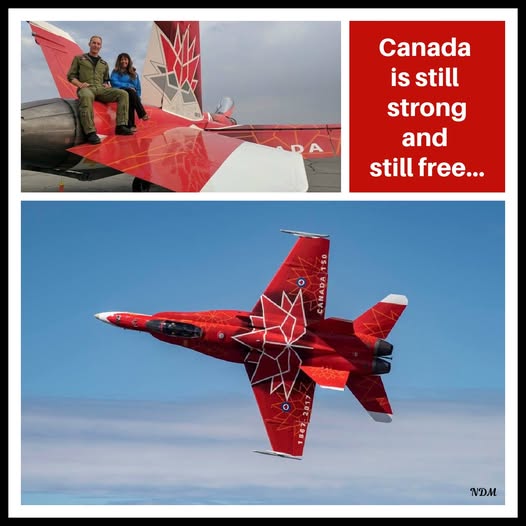
There’s a trade-off for putting my opinions out into the world, and my family has made it very clear: no images, no specifics. That’s the boundary. And I respect it. So instead, I post what I can, like this photo of me, messy hair and all, sitting on the Canada 150 F-18 sitting on the tarmac in Yellowknife on July 1, 2017. That jet? That sky? That’s where so much of my pride lives anyway. Aviation. Military service. It’s the country I love.

I wasn’t going to write another Canada Day post. But here we are on the edge of something. A moment in my life, a moment for our country, and a moment for the world. It’s all pressing in. And somehow, that photo, wild and imperfect, captures exactly what I’m feeling: reverence, pride, tension, and the ache of transition.

Because this isn’t just about celebration. It’s also about decision. Last night, Prime Minister Mark Carney made the call to hold back the digital services tax (DSA). Some are calling it a climbdown. I call it strategy.

Was it a revenue loss? Yes. But sometimes you make a decision to abort a landing and do a go around. The U.S. under Trump is playing hardball. Carney knew that. We all should’ve known that. And as I said in my post a few days ago protecting Canadian jobs, from autos to aluminum might mean stepping back on the DSA for now. That tax was always a card to play. And he played it.

Not weakly. Wisely.

Some of you voted for Carney because of climate, or housing, or health care. And I support those things too. But many of us, especially those of us watching the geopolitical weather patterns, voted for him because we knew he could handle the chaos from the south. And now, in real time, he is. Steady hands, sharp mind, no bluster.

The other side of July 1st is where things get real. We’ll see if the trade talks hold. We’ll see if Trump escalates. We’ll see if calm can prevail. But I know this: we’re not rudderless. We’ve got someone who understands the game, sees the next moves, and refuses to let Canada get steamrolled.

I look out over blue skies today and think of the last hundred years. Not just the image of that centennial jet, but the men in my family who flew and fought before me. We are nearing the 100th anniversary of the start of World War II. And somehow, that history is humming under everything right now. The stakes feel high because they are. For our economy. For our democracy. For our future.

And that’s why I posted the photo. Not because it’s perfect—but because it’s real. Because it’s mine. And because it reminds me of what we’re trying to hold onto in this moment.

Hold the line, this flight’s not over, and the storm isn’t done circling.

June 30, 2025 NDM

June 28, 2025

Posted: July 4, 2025 in Uncategorized

UPDATE-June 30-From below-(“The digital tax, while important, isn’t on the same level as autos, steel, or critical trade infrastructure. That makes it a useful card, not a dealbreaker, but a chip worth playing.”) It looks like PM Carney played his card last night!

This one’s for my fellow Canadians, and for my American friends peeking over the fence to see what this tech tax is all about.This Tuesday, July 1st, marks Canada’s 158th birthday. And while the fireworks and face paint will be out in full force, I’ll be keeping it simple. I’ll be sitting with my own gratitude. Gratitude for having had the privilege, not the luxury, the privilege, of visiting or living in every province and territory in this country. Not just flying over, not just ticking a box, but really being there. From ferry terminals in Newfoundland to frozen airstrips in Nunavut, to the shores of Vancouver Island and yes, even downtown Winnipeg in February. That’s not a brag. That’s a love story.

Because once you’ve seen this country, really seen it, you don’t just understand Canada. You feel it in your bones. And maybe that’s why I take it personally when a human thundercloud from the south decides to try and muscle us around on the eve of our national holiday.

Enter Donald J. Trump, stage far-right, with a Friday afternoon meltdown that absolutely no one asked for. In his infinite insecurity, Trump announced, from his personal echo chamber, Truth Social, that he is suspending all trade negotiations with Canada. Why? Because Canada is implementing a Digital Services Tax.

Let’s be clear: this isn’t a tariff. It’s a 3% tax on massive digital platforms such as Google, Meta, Amazon, and X. Any digital platform provider that makes more than $20 million annually from Canadian users is subject to the tax. The law has been in the works for years, passed through Parliament, and delayed only while countries debated a global approach. First payments are due June 30th, and it’s retroactive to 2022. So no, this wasn’t sudden. It was scheduled.

Why the outburst now? Because someone in Northern California, maybe Zuckerberg, maybe another tech billionaire who isn’t used to paying tax anywhere, picked up the phone. And Trump, never one to miss a cue from a donor, did what he does best: threw a fit. Probably exacerbated because he’s stuck in D.C. this weekend trying to pass his ‘Big Beautiful Bill’ with no golf cart in sight and needed something, anything, to distract from a week of complicated headlines.

But here’s what Trump didn’t mention: this tax reflects the modern reality of global commerce. We’re not taxing wheat, we’re taxing clicks, targeted ads, and e-commerce platforms profiting off Canadians. It’s not specific to the U.S.-if Musk moves his head office to South Africa it will still apply. It just happens that these companies are mostly based in the U.S. And for the record, 11 U.S. states already have digital taxes of their own. So let’s not pretend Canada is doing something radical. France, the UK, Italy, Spain, they’ve already done it. We’re just finally collecting.

This isn’t about punishing America. It’s about fairness. Big Tech earns billions here. They should pay their share here. Trump’s tantrum is less about principle and more about protecting his billion-dollar buddies who’d rather pay lawyers than taxes.

Let’s also not forget: this wasn’t a surprise. His administration, trade lawyers, industry groups, everyone knew the June 30th deadline was coming. So no, this isn’t shock. It’s theatre.

And here’s where Mark Carney enters, cool, steady, fluent in global finance. While Trump blasts all caps into the ether, Carney might be quietly playing the long game. The digital tax, while important, isn’t on the same level as autos, steel, or critical trade infrastructure. That makes it a useful card, not a dealbreaker, but a chip worth playing.

Trump claims he holds all the cards. Maybe not this one. And let’s not forget: this wasn’t Carney’s policy. The digital tax was promised under the last government and kept in motion by the Finance Minister. But if Carney’s playing it smart, which I believe he is, then this timing might be less a problem and more a quiet opportunity. He doesn’t need to bellow. He just needs to hold firm.

No, I’m not panicked. I’m annoyed. Because this isn’t a real crisis, it’s a Friday fit from a guy who got a phone call and couldn’t go golfing. And while Trump’s trying to stir up a trade war over three percent, the rest of us are just trying to enjoy a long weekend and maybe catch a few rays and roast a few hot dogs.

And as I write this I am reminded that my summer holidays may never again include the U.S. Out of principle primarily but maybe a bit out of fear. If I handed over my phone and someone scrolled through what I’ve written about Trump, I’d either be detained, deported, or returned to sender with a sticky note that reads “Do not admit.”. And frankly, for now at least my travel dollars are better spent here, on Canadian soil, in Canadian communities, under skies that, for all our challenges, still feel like home.

So Happy Canada Day weekend. You beautiful, complicated, quietly confident country. We’ve got work to do, yes. But we’ve also got decency, intelligence, and a government that speaks for the people.

And to our southern neighbours: we hear you. We’re watching, we’re hoping, and we know that somewhere underneath the noise, you’re trying to hold on to something good, just like we are. So as we head into Canada Day, we’ll be raising our glasses, lighting our fires, and feeling pretty damn proud of this country that, despite its flaws, is still worth fighting for. And while I won’t be at your party on July 4th, consider this your invitation to ours.

We’ve got room for reason, not for rage. Canada’s 158th birthday starts now. Come by for the lakes, the laughter, and the decency. And while we may want to tax your tech billionaires, we don’t plan to read your texts or seize your phone at the border. We’re Canadian, not paranoid.

June 27, 2025

Posted: July 4, 2025 in Uncategorized

Alberta feels like America’s northern cousin. The one with a chip on its shoulder.

Let’s go back to something I say often: I live in Alberta. I raised my children here. I’ll likely die here. And I don’t say that with resignation, I say it with a weird mix of gratitude and grief.

This is a province gifted, yes, gifted, with oil and gas riches that changed its destiny. But Alberta today doesn’t act like a province that hit the resource jackpot. It acts like the bratty kid who inherited a trust fund and now blames everyone else for his lack of character.

So let’s rewind the tape. Alberta became it’s own province in 1905, carved out of the Northwest Territories. Our early settlers were tough as nails immigrants from Eastern and Western Europe who came to farm the land. And it wasn’t easy. The soil was thin, the weather was cruel, and the wind never shut up. Farming here was never a fairytale. You had to work for every single bushel, and even then, it might blow away

Then came the 1930s. Drought hit. Crops failed. Families starved. My own family has photos from P.E.I., trucks full of potatoes headed west because Albertans were hungry. Not for profit. For survival. When Alberta was on its knees, other Canadians fed us. Let’s remember that before we shout about “equalization” and “economic tyranny.”

Although oil was initially found in 1914 it didn’t gush until the ’50s. And with that came money. Landmen came knocking. Farmers became royalty owners. And slowly but surely, the persona changed. We began to believe that wealth was our destiny. That we were owed.

Enter: Danielle Smith. Premier of grievance. Queen of magical thinking. The folksy voice of rebellion, denial, and “common sense”, if common sense means conspiracies and suing hospitals. She has her own version of Trump’s “I alone can fix it” mantra, though in her case, it’s more like “Ottawa broke it, I’ll pretend to fix it, and we’ll sue someone in the process.”

And just like Trump, she’s mastered the political art of distraction. The moment things get real, out come the shiny objects: provincial policing, a separate pension plan, another tantrum about Ottawa mistreating Alberta. It’s nonsense. It’s theatre

Dammit, we need to get over this. Alberta isn’t a victim. We are a unique province, as is every province. That’s the whole point of Canada. New Brunswick doesn’t have oil sands. Manitoba doesn’t have mountains. Saskatchewan doesn’t have tidewater. Alberta doesn’t either, which, by the way, is why we keep fighting for access. The strength of this country has never come from pretending we’re the centre of the universe. It’s come from working together. From resilience. From interdependence.

And I am damn sick of Danielle Smith making us sound like we’re anything less than Canadian.

The UCP? They clap like Maple MAGA marionettes. They mangle facts. They pretend private health care isn’t creeping in. They sell choice like it’s freedom, while cutting public services in the back room. And they act like Alberta’s wealth emerged from thin air, not from the collective efforts of thousands of workers, federal infrastructure, and yes, partnerships across this country.

I’m not anti-Alberta. I am Alberta. I’ve driven the back roads. I’ve served in elected roles and participated in more town halls and community meetings then I can count. The oil and gas industry helped support my family. But I also know what it means to count on the rest of the country.

And now I see my grandchild (I know I talk about her all the time-I’m kind of smitten) entering a world where we’re teaching the next generation that blame is a birthright and victimhood is a political strategy. I didn’t sign up for that Alberta.

Because here’s the thing: we’re still a province. We are not a sovereign nation. We’re not a global power. We are not the United States, though increasingly we’re showing their worst habits. A Premier who thinks she’s smarter than scientists. A party that worships her no matter how absurd the claim. A public so exhausted, we’re starting to tune out, which is exactly the plan.

So yes, I’m watching Alberta lose itself. I’m watching good people buy the snake oil again. I’m watching this Premier act like this is her province, her movement, her right. And I’m here to say: no, it’s not.

This is a country. And it’s not hers. It’s ours. So let’s not be the buffalo herded toward the edge, misled, confused, and sacrificed.
Because make no mistake: the cliff is real. And the drums are already beating.

June 24, 2025

Posted: July 4, 2025 in Uncategorized

UPDATE- Early U.S. intelligence suggests Iran’s nuclear program has only been set back by a few months, a sobering reminder that you can bomb facilities, but you can’t bomb knowledge. Iran’s scientists, domestic supply chains, and technical capacity remain intact. Without access for IAEA inspectors, it’s anyone’s guess where that 60%-enriched uranium is now, or what its future holds. And for those cheering for regime change, be careful what you wish for. This is a theocracy, not a failed state. Sometimes, it’s better the devil you know than the one you don’t, especially when centrifuges are still spinning in the dark.*

I want to say this as clearly as I can. Donald Trump is about to walk into the NATO Summit like he just handed the world peace on a platter. Like this “ceasefire” is some kind of masterstroke of diplomacy. Like he deserves a Nobel Prize and a standing ovation.

Well, I’m not clapping.

Because I have a son who serves in the Canadian Armed Forces. He wears the uniform, and we are part of NATO. This isn’t abstract for me. This isn’t a campaign speech or a headline. It’s personal. It’s real. And what Trump does or doesn’t do on the world stage has direct consequences for the people I love.

So when I hear that there’s a ceasefire in the Middle East, I don’t breathe easy, I brace. Because this isn’t peace. This is a pause. A tactical timeout so both sides can reload and regroup. We don’t know what was promised. We don’t know who guaranteed what. And quite frankly, there is no reason in hell to believe that Netanyahu or the Ayatollah suddenly discovered diplomacy. These are two men who have repeatedly shown that they will manipulate global moments to serve their own survival, their own power, and their own narrative.

If this were truly a peace process, Iran would be welcoming IAEA inspectors through the front gates right now. They’d be handing over the uranium that got trucked out of the nuclear facility before the bombings. Instead? Silence. Deflection. And from both Iran and Israel this morning, a mutual shrug about “mistakes” made after the ceasefire was announced. Come on. These are not mistakes. These are deliberate moves.

We are still waiting on the BDA, the battle damage assessment, to tell us what was actually hit, and what was conveniently left untouched. Iran still has the means to produce nuclear weapons. That didn’t vanish in 12 days of airstrikes. Tunnels weren’t destroyed. Centrifuge facilities are still operational. Material is still unaccounted for. These aren’t strategic victories. These are PR Band-Aids.

Meanwhile, Trump wants a trophy. He’s not thinking about what’s still smoldering underground, he’s already drafting his Nobel speech.

Seriously! Iran hasn’t changed. Their core ambitions remain, to dominate the region, push the U.S. out of the Middle East, and deny Israel’s right to exist. And Israel, under Netanyahu, hasn’t changed either. He’s playing a long game, and right now, his grip on power is as much a motivation as any strategic objective.

So no, I don’t find this reassuring. If centuries of Middle East conflict could be resolved in a two-week news cycle, we’d have peace in our time every other Friday. But we don’t. Because this isn’t over. It’s not even close.

And I need to say something that’s been burning in me for days: Donald Trump talks about regime change like it’s a reality show plot twist. But he doesn’t seem to understand the people of Iran, who follow their Ayatollah with unshakable devotion. Just like the rest of the world can’t understand how tens of millions of Americans have become completely untethered from reality and follow him like he’s a messiah. You want to understand the Ayatollah’s grip on Iran? Take a good long look in the mirror, America.

The MAGA base and the followers of the Ayatollah aren’t that different. Blind loyalty. No questions. Absolute belief. And when you base global strategy on your inability to understand that… people die.

I didn’t grow up imagining that my son would be serving under these conditions, where political theatre masquerades as international policy, and nuclear silence is somehow supposed to comfort us. But here we are. He puts on his kit and steps into the world not knowing what lies ahead, because decisions made in air-conditioned rooms by men like Trump echo in real lives.

So no, I’m not here for Trump’s travelling peace circus. I’m here because I come from a family that serves. Because I understand what NATO is. Because I know what it’s meant to protect us from. And while Trump plays messiah on the NATO stage, draped in ego and spray tan, the rest of us are left praying his next delusion doesn’t light the world on fire.

NATO was built from the rubble of a world war, by people who knew what happens when fascism goes unchecked and strongmen start believing their own mythology. It wasn’t built for photo ops. It was built to stop history from repeating itself.

But here we are. Watching a man who dodged the draft and worships autocrats pretend he is a peace broker. This isn’t peace. It’s theatre and I don’t know what the next act will be.

June 23, 2025

Posted: July 4, 2025 in Uncategorized

This Isn’t the World I Was Meant to Live In! I’ve been sitting here for hours trying to process what just happened, and what might come next, and the truth is, I can’t. No one can. Not the experts, not the analysts, not the generals being dragged onto cable news to make sense of it. Because this isn’t predictable anymore. It’s not strategy. It’s chaos. And it’s terrifying.

I don’t write this lightly. I’ve been watching global events closely for most of my life, and I can tell you, this moment is different. What happened over the weekend, and what’s happening now, has put every one of us in a different kind of danger. And I feel it in my chest.

Yes, NATO came out and said that the United States did not break international law by bombing Iran. That’s what the lawyers have decided. But let’s be honest, that doesn’t make it right. That doesn’t make it smart. And it sure as hell doesn’t mean the world is safer. The only thing that ruling confirms is that the bar has moved so low, we’re now just relieved when something isn’t technically a war crime.

And here’s what’s happened since: Iran responded with 10 missiles, targeting U.S. military bases in Qatar and Iraq, with most aimed at the Air Force base in Qatar. But here’s what matters, the Americans were warned. They knew the missiles were coming. There was an evacuation. No casualties. No destruction. Just precision without intent to kill. A message, not a massacre.

Ten missiles, just like the U.S. dropped on Iran. Symmetry in firepower, restraint in aim. Will Iran create global economic instability by closing the Strait of Hormuz. It’s not war, not yet. But it’s a line in the sand, and the wind is picking up.

We still don’t even know the full extent of the damage from the original U.S. strike. A Battle Damage Assessment (BDA) is underway and will take days. But it doesn’t matter what’s in the final report. I already feel the damage. To diplomacy. To trust. To global stability.

And then there’s this: 400 pounds of enriched uranium is gone. Missing. Do you understand what that means? It doesn’t take a nuclear warhead to devastate a city. It takes ambition. It takes desperation. And it takes exactly what we’ve got: chaos, and the loss of any shared rules of engagement.

Iran is not a fringe state. It’s 92 million people. They know their pain is a pawn. And no, that’s not me excusing the Iranian regime. It’s me recognizing that bombing people into democracy has never worked. It radicalizes. It hardens. It justifies the worst voices in the room.

And while the West gasps at the fallout, Russia and China are watching, smirking. Putin doesn’t respect Trump, he plays him. Xi Jinping doesn’t consider Trump an ally, he sees a destabilizer who distracts the world while Beijing tightens its grip.

But let’s go back to where this started. In 2015, there was a deal. The JCPOA. It wasn’t perfect, but it was holding. Iran’s nuclear program was under control. Enrichment was limited. Inspectors had access. And then Donald Trump torched it in 2018, because it didn’t have his name on it.

And now we’re here. Not at full war. But not at peace either.

The NATO Summit is coming, and I keep reminding myself: there will be rational voices in that room. Not all of them. But enough. I want to believe that some of those leaders will rise to the moment, will speak hard truths and force the conversation that needs to happen.

Will Trump storm out when he doesn’t get the applause he craves? Or will he double down on his old song, the one where America’s doing all the “heavy lifting” and everyone else better pay up?

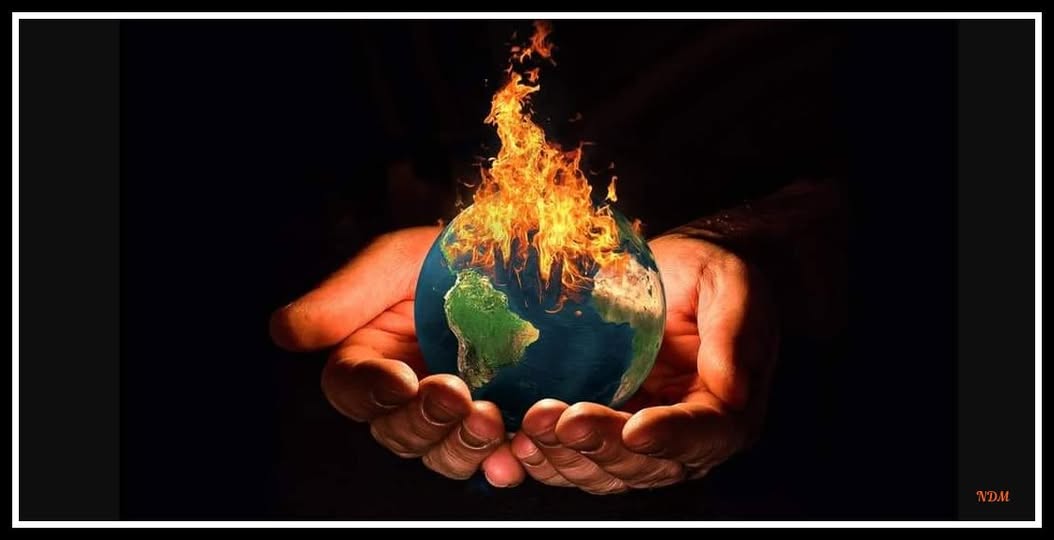
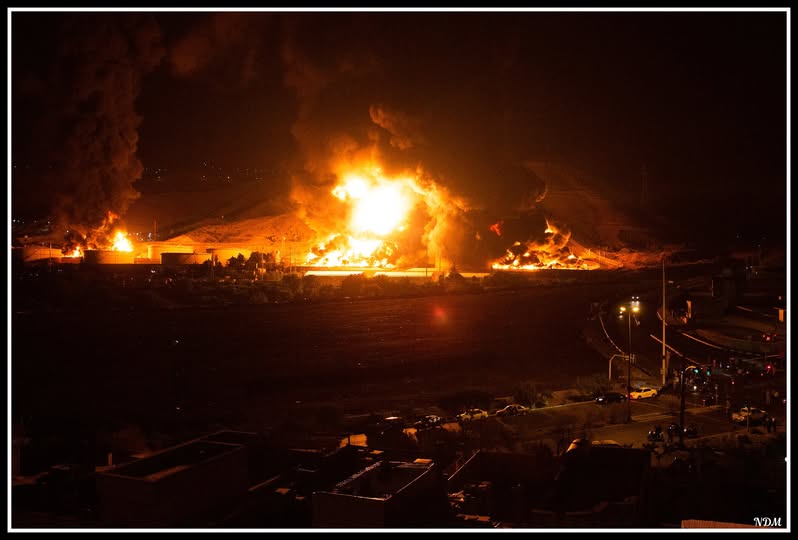
I don’t know. But this will be a critical NATO Summit, just like the G7 was. Because every gathering of world leaders right now carries weight. Every table matters. We are literally and figuratively on fire. And so I’ll post this with the image it deserves: a picture of our world burning. Because that’s what we’re watching.

And I still believe, just barely, that someone in that room will have the courage to try and put the fire out. My grandfather fought in the mud. My father flew through smoke and flak. They never met my granddaughter, but she was the reason. And now the sky they cleared is dark again.

June 22, 2025

Posted: July 4, 2025 in Uncategorized

There Will Be Wars… and Rumours of Wars. The latest strikes on Iran are hard to process. The headlines are loud, the facts are murky, and the implications are overwhelming. And when something this consequential happens, all the unresolved threads of Middle East conflict start pulling at you again.

In a recent post, someone commented, and rightly so, that support for the Jewish people does not equate to support for Netanyahu or the current Israeli government. That distinction matters more than ever. I will not let criticism of government policy be misread as religious bias. I am not an anti-Semite. I am deeply critical of Benjamin Netanyahu, his decisions, his alliances, and the direction he’s taken Israel. That’s not anti-Israel, and it’s certainly not anti-Jewish.

I believe in the right of Israel to exist and for its people to live in peace, just as I do for Palestinians, Iranians, and everyone else caught in the crossfire of leaders too comfortable with war.

The line that keeps echoing for me is from Matthew in the New Testament: There will be wars and rumours of wars. The words have been lifted out of context many times, but whether in or out, they are bouncing around inside my head as I write this. Because this doesn’t feel like resolution, it feels like escalation.

I’m over 65, and I have never known a time where the Middle East wasn’t unraveling, exploding, or bracing for the next round. These aren’t just ancient rivalries. They’re modern power struggles, religious, yes, but also territorial, economic, and strategic. The horror in Gaza, the attacks on Israel October 7th, 2023, the suffering of Palestinians, the strikes in Lebanon, and now Iran.

This latest strike appears to be about nuclear capability. Does Iran have nuclear weapons? No. Do they have uranium enrichment? Yes. Is it legal? That depends on the level, oversight, and agreements, the details that only diplomats can fully parse. The rest of us are left piecing together news and opinion, trying to make sense of it.

Let me be clear: the world is better off without Iran having nuclear weapons. That much I believe. But anyone who tells you they know what happens next is lying, or delusional. Because no one knows. And that’s what makes it so dangerous. One thing seems likely: this will set Iran back, but not for long. Without real diplomacy, enrichment will resume. So who has the ear of the Ayatollah? Anyone? If not, what’s the actual long-term plan?

Kareem Sadjadpour, senior fellow at the Carnegie Endowment for International Peace and one of the most respected analysts on Iran, said something tonight that hit hard:
“What happened tonight could either entrench the regime or hasten its demise. More likely to open a new chapter than to end it.” To me, that’s not hopeful. It’s foreboding. Sadjadpour is known for balance, not alarmism. If he’s bracing for something worse, then so am I.

The United States did not have a direct threat to their land. Even if this strike was “necessary,” even if it checks the box of “right thing to do,” I’m not sure it was the right country to do it. And if it was, I’m deeply troubled by who made the decision.

Donald Trump launched this strike without Congressional approval. No vote. No oversight. Just one man who ordered unilateral military action in one of the most volatile regions on earth. That’s not statesmanship. That’s a man with a god complex playing God with global consequences. That’s not democratic power. That’s something much darker.

According to the International Atomic Energy Agency (IAEA), there is currently no verified evidence that Iran possesses a nuclear weapon. However, uranium enrichment levels have reached just under 60%, a serious concern, but still well below the 90% threshold for weapons-grade material. It’s worth remembering that under the 2015 JCPOA, brokered in part by President Obama, enrichment was effectively capped and strictly monitored, and the IAEA reported full compliance up until Trump unilaterally withdrew from the deal in 2018. Since then, Iran has steadily escalated its nuclear activity. So the question becomes: what triggered what? Was it Iranian aggression that unraveled diplomacy , or the collapse of diplomacy that accelerated Iran’s nuclear ambition? Either way, the agreement is gone, enrichment is up, and we’re now living with the fallout.

And now the questions come. Will this embolden Trump? Will Netanyahu strike again? Will Iran retaliate? Will this spin into something even worse?

Because right now, it feels like a dangerous new drama is unfolding, starring two very dangerous men: one in a long robe, the other in a long red tie.

And if that doesn’t terrify you, it should.