


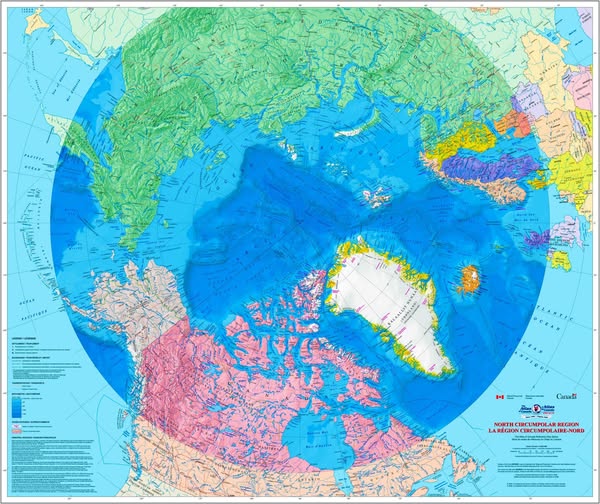
Tonight, I would take a different approach in my post. With all the talk about Greenland I want to tell a different story. Only 2% of Canadians have ever been north of the 60th parallel, which encompasses 48% of our land mass. If you left Toronto and travelled north to Alert it would be the same travel distance as if you left Toronto and went south to Bogata, Colombia. If you look at the map, you will see the part of Canada that almost touches the top of Greenland. That is our air force base CFS Alert. I have been fortunate to have not only been north of 60 but to have spent quite a bit of time in Canada’s North. I believe that maybe some would consider Canada as a better partner for Greenland than the United States. Greenland is primarily Inuit and these people will never be interested in further colonization. That is why they have an an issue with Denmark. Note I said ‘partner’ because to the best of my knowledge Greenland is also ‘not for sale’. Here are my thoughts…NM
When considering potential international partners, Greenland would likely find that Canada offers a more natural, beneficial, and culturally aligned relationship compared to the United States. While the United States may bring economic power and geopolitical influence to the table, Canada’s geographic proximity, environmental priorities, and respect for indigenous cultures make it a more suitable and sustainable partner for Greenland’s long-term growth and development.
1. Geographic Proximity and Shared Arctic Interests
Canada and Greenland are immediate neighbors, sharing the Arctic region and its unique environmental challenges. Both nations have vested interests in preserving the fragile Arctic ecosystem and managing the effects of climate change, such as melting ice caps and rising sea levels. As the Arctic opens up to increased shipping and resource exploration, Canada and Greenland have a common interest in ensuring sustainable development while protecting indigenous communities and the environment. This mutual understanding gives Canada a more aligned approach to Greenland’s goals and concerns.
2. Commitment to Indigenous Rights and Cultures
Canada has a strong record of promoting indigenous rights and recognizing the importance of indigenous knowledge in governance and environmental stewardship. With a large Inuit population in Canada’s northern regions, Canada understands the cultural and political dynamics that Greenland faces as a predominantly Inuit nation. In contrast, the United States has historically had a more complex and often strained relationship with its indigenous populations. Partnering with Canada would allow Greenland to work with a nation that values and respects indigenous governance models, creating a partnership built on mutual understanding and cultural appreciation.
3. Environmental Leadership and Sustainable Development
Canada’s environmental policies, though not without flaws, demonstrate a greater commitment to sustainability and combating climate change compared to the United States. Canada is an active participant in international climate agreements and promotes environmental stewardship, particularly in the Arctic. Greenland’s environment is vulnerable to the consequences of climate change, and a partnership with Canada would ensure that development in the region prioritizes sustainability over exploitation.
4. Similar Governance Structures and Political Values
Canada and Greenland share a tradition of democratic governance, respect for human rights, and emphasis on cooperative decision-making. Canada’s political system, which includes decentralized authority to its provinces and territories, resonates with Greenland’s desire for increased autonomy and self-governance. This alignment in governance models makes Canada a more natural fit for collaboration, where Greenland’s aspirations for independence and sustainable development would be respected.
5. Economic and Research Collaboration in the Arctic
Canada’s Arctic research programs and investments in sustainable development align with Greenland’s interests in leveraging its natural resources responsibly. By working with Canada, Greenland could benefit from joint research initiatives, knowledge sharing, and technological innovations that promote sustainable practices in industries like fishing, mining, and tourism. While the United States tends to prioritize economic gain over environmental sustainability, Canada’s approach would better balance economic development with ecological preservation.
Conclusion
While the United States may offer greater economic resources, Canada presents a more balanced, culturally respectful, and environmentally conscious partnership for Greenland. Canada’s proximity, shared Arctic interests, commitment to indigenous rights, and dedication to sustainable development make it a more natural and beneficial ally for Greenland’s future. By choosing Canada as a primary partner, Greenland would secure a relationship that not only advances its economic interests but also safeguards its culture, environment, and autonomy.
 Nancy's Notes