


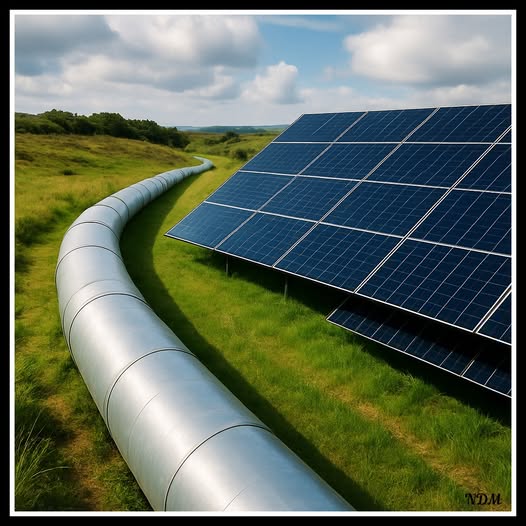
“Pipeline Politics and the Power of Principled Disagreement”
So, apparently, we’re having a controversy, and by controversy, I mean one cabinet minister voiced a cautious take on pipelines while the Prime Minister continues pushing for a coordinated, interprovincial approach. Cue the headlines about “division” and “conflict” and all the other things that make clickbait money.
Here’s what actually happened: Prime Minister Mark Carney laid out a plan to streamline infrastructure corridors across Canada, yes, including pipelines, to reduce duplication, respect the environment, and get this country building again. Then along comes Minister Steven Guilbeault, the former Minister of Environment (and longtime environmentalist), suggesting we should still be “very cautious” as we move forward.
Do I smell dysfunction? Nope. What I smell is maturity, the kind of government where not every MP or minister is a Stepford spokesperson.
Because let’s be honest: the last time everyone was in lockstep, we got the Harper era, where MPs needed written permission to speak in the House, and “debate” was code for “don’t get caught disagreeing with the boss.” Or worse, the current GOP model, where party loyalty means kissing the ring of Donald Trump no matter how unhinged, untruthful, or unconstitutional the order of the day might be.
This isn’t that. This is what happens when a government is made up of people, not puppets. When it comes to complex files like energy infrastructure, you’d want a bit of tension between environment and economy. Otherwise, it’s not a balance, it’s a bulldozer.
And let’s be honest, if there wasn’t this kind of internal discussion, we’d be accusing the Liberals of shutting down dissent. Now we’re calling it chaos when a minister brings a different lens? Come on. You can’t call it a dictatorship one week and then whine about healthy disagreement the next.
Now, let me get personal for a second: as I have mentioned before, my husband’s been an inspector in the oil and gas industry for decades. He’s technically bilingual and has worked extensively on integrity projects, including natural gas pipelines in Quebec. And if you ever want to see environmental caution in action, follow him around a Quebec pipeline site.
As he likes to (somewhat sarcastically) say: “Never a frog nor a snake shall be harmed in Quebec pipeline construction — they are gently scooped up, patted on the head, serenaded with apologies, and placed in a five-star frog relocation spa until their habitat is fully restored.”
And you know what? That kind of care matters. That’s the kind of tension between development and preservation that defines a country like Canada, not the screamfest you get in places where science is a partisan trigger word.
We also need to stop pretending pipeline policy is either “drill baby drill” or “shut it all down.” There’s a middle path, a Canadian path and it’s called responsible development. It’s called making decisions that are both pro-growth and pro-planet. And yes, it’s called having different voices at the cabinet table.
So to the people wringing their hands about Guilbeault and Carney not singing the exact same chorus, relax. This is what it looks like when adults talk things out. We need ministers who bring different perspectives to the table, especially when we’re building the very future they’ll be held accountable for.
I don’t need my government to agree on everything. I need them to listen to each other, weigh the evidence, and make the tough calls. And I trust Mark Carney, banker, economist, and no stranger to hard conversations, to be the kind of leader who welcomes that friction. He’s not scared of principled disagreement. Frankly, he’s probably bored without it.
So no, this isn’t dysfunction. This is democracy, and it’s working.
And if the worst thing that happens this week is a cabinet minister showing signs of independent thought? Well, then we’re doing a hell of a lot better than a country where the pipeline to power starts with a lie and ends with a loyalty pledge.
 Nancy's Notes