


Today, as I write this, U.S. President Donald Trump and Israeli Prime Minister Benjamin Netanyahu are meeting at the White House. The headlines haven’t landed yet, but I think we all know how the press release will read: they had a “productive conversation,” “mutual respect was reaffirmed,” and Trump will likely describe Netanyahu as “a very strong leader,” maybe even “a terrific guy.”
But while those statements are being polished, I’ve been sitting with something more complex, and frankly, more honest, than anything that’s likely to come out of that meeting. I hesitate sometimes to write about Israel. And maybe that’s the right instinct, to pause before speaking about something so layered, so painful, and so steeped in history that I can’t possibly claim to understand it the way others do. Especially not from the perspective of Jewish people, for whom this land, this history, this trauma, and this hope are not theoretical but deeply lived.
But something New York Times columnist Tom Friedman said recently at the Aspen Ideas Festival struck such a chord with me that I’ve been turning it over in my head ever since. And I guess this is less a post than a bookmark of that moment, one I don’t want to lose.
Friedman said that to understand the Middle East, and Israel in particular, you have to hold three truths in your head at the same time. And yes, he acknowledged, that’s not something we’re very good at, especially in the polarized world of North American discourse (campuses and Twitter/X alike). But here they are:
- Israel is an extraordinary place. What the Israeli people have built in just 75 years, out of exile, out of ashes, through wars and waves of immigration, is nothing short of astonishing. A technological, agricultural, and military powerhouse. An improbable success story.
- Israel is doing really bad things right now. Especially in Gaza, and in the West Bank. And it’s not new. The occupation, the dispossession, the deaths of civilians , these are not myths or propaganda. They are real, and they are wrong.
- Israel lives in a crazy neighbourhood. One where it’s surrounded by failed or barely functioning states, some of which are under the grip of Iran, an authoritarian regime exporting chaos. Israel’s security dilemmas are real, and existential.
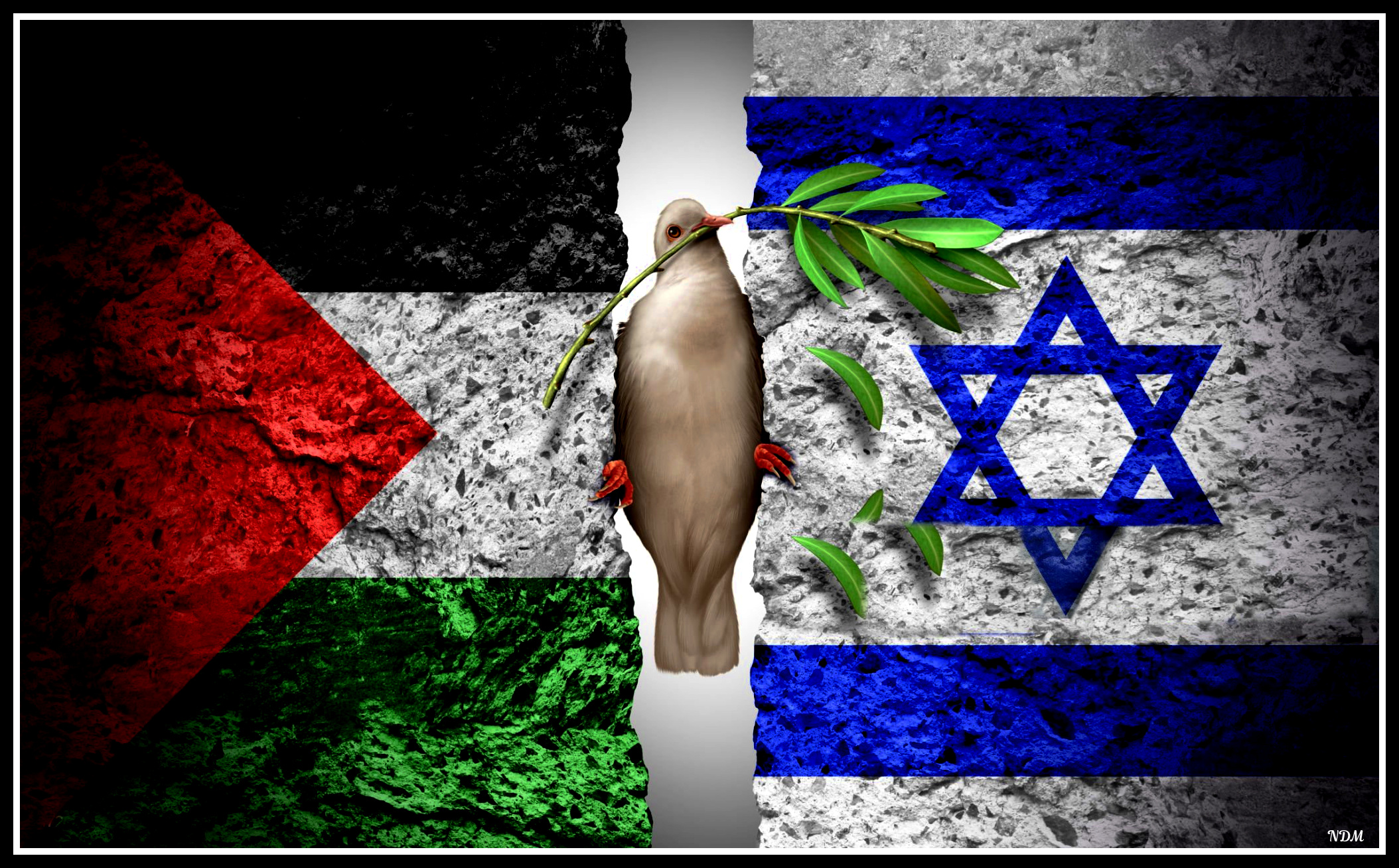
And that’s what grabbed me: the idea that more than one thing can be true at the same time. That Israel can be both remarkable and responsible for grave injustices. That it can be both a beacon and a danger to its own future. That people inside and outside the region can love it and criticize it, sometimes in the same breath.
This framework helped me as someone outside the faith, the culture, and the history, a gentile trying to make sense of something I can’t fully feel. I can’t understand what it means to carry generational trauma like the Holocaust, or to see a homeland as both sanctuary and struggle. So I offer this with all humility. If any Jewish readers find my agreement with Friedman too simplistic or misapplied, I understand. But I’m trying to learn. I’m trying to listen.
What also struck me, and this is something Friedman emphasized, is the deeply uncomfortable truth about Benjamin Netanyahu. According to Friedman, Netanyahu is a man who just presided over a monumental military victory, not just against Hamas, but symbolically against Iran and its network of influence over Lebanon, Syria, and Iraq. And yet, at the same time, Netanyahu is continuing a campaign of destruction in Gaza well beyond the defeat of Hamas, at great humanitarian cost. And at the same time again, he’s pushing forward a domestic judicial overhaul that would weaken Israel’s Supreme Court and, potentially, set the stage for annexing the West Bank.
It’s not just that these things are happening at once, it’s that they are deeply contradictory. And Friedman made a powerful point: the very people who delivered this military success, the elite pilots, the cyber warriors, the scientists and tech minds of Israel’s defense, are often the same people who spent the entire nine months before the Hamas war protesting Netanyahu’s attempts to undermine democracy. These are people who love their country deeply and are willing to defend it with everything they have, but who are also terrified of the direction Netanyahu is dragging it.
That contrast, between military heroism and political despair — has stayed with me. It reminds me again that complexity isn’t a flaw in the conversation. It’s the core of it.
It’s not lost on me that I’m writing this on a day when the headlines aren’t screaming. There’s no new airstrike footage flooding the news cycle at this moment. And yet, like you, I know that every day is escalated in some way. Still, maybe quieter days are when we should be thinking hardest, not in reaction, but in reflection.
This might not be a post that travels far. It’s not spicy, not viral, not packed with certainty. But it’s honest. And it’s grounded in something that I think we need more of: the ability, and the courage, to hold conflicting truths without rushing to flatten them into just one.
So yes, I’ll keep thinking about this.
And maybe that’s the point.

 Nancy's Notes