Archive for July, 2025

April 16, 2025

Posted: July 4, 2025 in Uncategorized

Don’t scroll past this. Seriously! Even if you think French-language politics isn’t your thing — read on. On Sunday night the leaders of the Liberal Party and the Conservative Party set down (individually) on Tout le Monde en Parle. What is that you ask? If 60 Minutes, The Daily Show, and your smartest cousin’s dinner party had a baby — and that baby grew up snacking on sarcasm, politics, and deep cultural takes — you’d have Tout le Monde en Parle. It’s the Sunday night ritual in Quebec. It draws over a million viewers weekly — not just for celebrity fluff, but for real talk. Politicians, artists, thinkers, scandal-ridden CEOs — if you’ve got something to prove (or confess), this is where you go. It’s not a puff-piece show. It’s not a debate stage. It’s more like stepping into the collective living room of Quebec — where everyone’s got a glass of wine, a sharp opinion, and no time for BS. If you do well there, Quebec notices. If you bomb? Quebec really notices. Put simply: It’s where reputations are built… or politely shredded in real time. So when the two men most likely to run the country sit down for solo interviews, you better believe it’s not “just a Quebec thing.” It’s a national preview with cultural teeth. So how did they do?

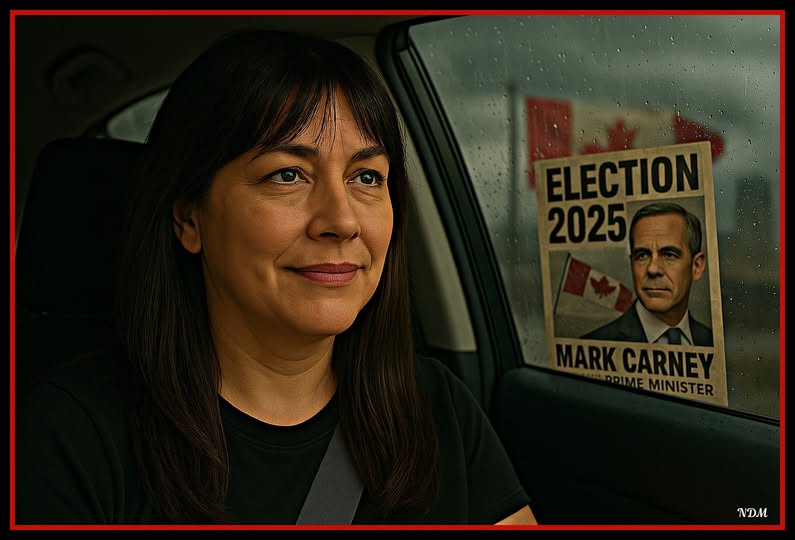
Mark Carney — measured, humble, a little too professional, and fully aware of his weaknesses. He apologized for long answers (in French!) and still made that sound like leadership.

Pierre Poilievre — calm on the surface, barbed underneath. Less attack dog, more cobra in a suit. Still managed to make the word “Bonjour” feel like a threat.

Even the National Post and Edelman Communications called it straight: Carney was sincere. Poilievre was sharp-edged. And Quebec was watching closely. And here’s the moment that matters, and let’s hope it holds true. Quebecers said: “Let’s stop talking about Mark Carney’s French. It’s good enough!!” Because honestly? He said more with a slight accent than most say fluently.

Now, the math: In 2021 in Quebec there were 33 Liberal seats, 34 Bloc seats, 10 Conservative seats and 1 NDP seat. This week? The Bloc’s grip is slipping. Liberals are now in contention for up to 46 seats. Conservatives are circling 12. The bloc? Hanging onto 18.

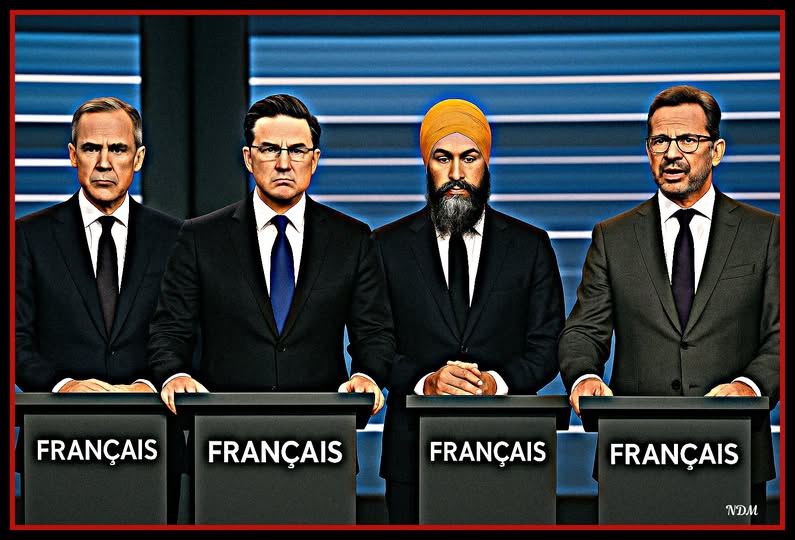
So what happens if those Bloc seats fall? They don’t disappear. They swing. And that swing could tip the country. This is not the time to be anti-Quebec or dismissive of “French politics.” Quebec is part of the equation, and they may solve it before the rest of us finish the question. So remember Wednesday, April 16: French-language leaders’ debate. Be sure to check the time in your time zone. Only in Canada do we move a national debate because the Habs might, maybe, kind of, make the playoffs. Because when culture and politics collide here, hockey wins — and no one even argues about it. And here’s something the rest of Canada needs to clock: Quebec isn’t just talking about ‘its’ sovereignty anymore. Quebecers are asking real questions about Canada’s sovereignty — economic, cultural, democratic. It’s a level of political engagement that deserves national attention, not dismissal. So the tone and tenure for tonight? Poilievre comes in angry and rehearsed, locked and loaded with rage-fuelled zingers, Singh sounds smooth in French but knows he’s one bad night from political oblivion and Blanchet is the hometown sniper — charming, cutting, and ready to play goalie for Quebec nationalism. Carney? He’s the target. Because when you’re in first, everyone else is just fighting to become your headline.This week isn’t just about a pair of debates. It’s about who gets to narrate the next four years — and if you’re not paying attention, don’t be shocked when the plot makes zero sense, the villain gets top billing, and there’s no option to skip the ads… or the consequences. 
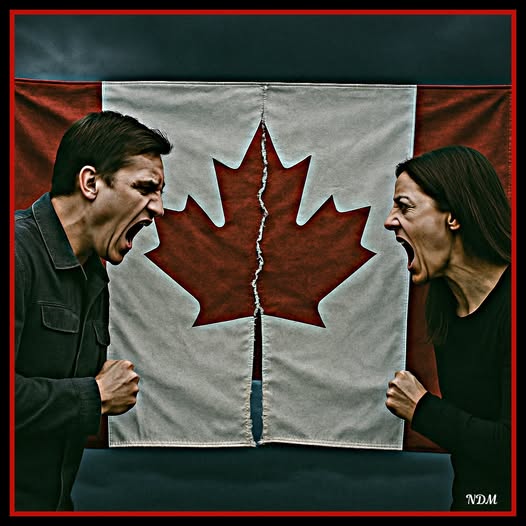
April 15, 2025

Posted: July 4, 2025 in Uncategorized

What Happened to the Vote? (aka: The Funeral for Civil Discourse — now with extra pitchforks) Once upon a time, your vote was between you and a stubby pencil behind a cardboard screen.

Now? It’s between you, 600 conspiracy threads, your aunt’s Facebook posts written entirely in CAPS LOCK, and a guy livestreaming from his truck saying Canada “isn’t even a country anymore.” How did we get here? Maybe it’s because we used to treat voting like a civic duty. Now it’s a personality trait. A team jersey. A litmus test for who gets blocked, unfriended, or uninvited to Easter dinner. And here’s the thing: It’s totally fine to land at different places on the political spectrum. That’s democracy. That’s freedom. That’s literally the point. But radicalization? That’s not a belief. That’s a breakdown. It’s when your opinion builds a bunker. It’s when you stop voting for something and start raging against anyone who thinks differently. It’s not “I disagree with you.” It’s “you’re the reason Canada is dying.” And at that point, you’re not debating—you’re detonating. This didn’t happen by accident. Our politicians figured out that anger sells better than policy. Fear gets more likes than facts. And they handed us torches instead of ballots.

Now, here’s the truth I’ve been sitting with: At my core, this fight—for me—is about battling anger politics. Maybe Pierre Poilievre is just the messenger, but what he’s tapping into… it’s not just frustration. It’s something deeper. Louder. Meaner. It’s fear.
It’s resentment. It’s disenfranchised voices turned into digital mobs. Sometimes it feels like radical religion, other times like economic despair. But it’s never just policy—it’s personal. And poisonous. And somewhere in the background, like a bloated orange spectre, floats Donald Trump—still holding rallies like it’s 2016, still confusing cruelty with charisma, still inspiring wannabe strongmen across borders like he’s the Colonel Sanders of authoritarianism. His greatest export wasn’t policy. It was permission. Permission to say the quiet part loud. To replace facts with feelings. To swap debate for derangement. And now we’ve got Canadian knock-offs trying to rebrand rage as leadership.

So yes—vote. Be passionate. Be proud. But if your vote needs a helmet and body armour just to show up in public… maybe it’s not democracy we’re defending. Maybe it’s just our pride wrapped in barbed wire. And since we’re a full day away from the French debate and an extra one from the English, maybe—just maybe—we can try something wild: Tolerance Tuesday. Bite your tongue. Sit on your hands. Resist the urge to call your cousin a fascist because of a lawn sign. Let’s see what happens when we log off the rage machine and tune into the actual debates. Worst case? You survive 24 hours without melting down in the comments. Best case? Maybe we learn we’re still capable of choosing reason over rage. Even if we have to do it with clenched teeth and one eye twitching.You remember we’re still a country worth fighting for—not just fighting about. 

April 14, 2025

Posted: July 4, 2025 in Uncategorized

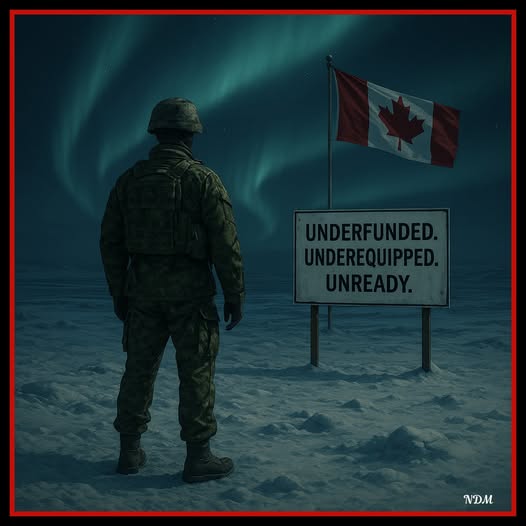
Canada’s Military Crisis is real and personal to many of us. You Can’t Build Bases Without Boots!! Let’s be blunt. Our enemies are evolving. Our allies can’t always be counted on. And Canada’s Department of National Defence is currently held together with polite intentions, rusting gear, and recruitment posters that look like they were designed in 1998. But this one hits close to home. My grandfather fought in the trenches at Ypres and was gassed. It eventually killed him. My father flew in the Second World War. My nephew just retired from active service and served in Afghanistan. My son is currently a pilot in uniform. So don’t tell me defence is just another policy file. For some of us, it’s bloodline-deep. Now, with the world tipping into a new kind of chaos — cyber warfare, Arctic tension, shifting alliances, and the looming shadow of Trump 2.0 — both Pierre Poilievre and Mark Carney are talking about rebuilding Canada’s military. That should be good news. Except…Poilievre says he’ll build bases in the North and buy more equipment — like it’s an episode of “Property Brothers: Arctic Edition.” He’s promised to hit NATO’s 2% target, but offers little about how we fix recruitment, housing, mental health supports, or the fact that we have aircraft without enough pilots. Carney, on the other hand, gets that conflict doesn’t just erupt out of ideology — it follows the money. Tariffs. Resource control. Cyber-espionage. Power vacuums. Carney understands the global financial undercurrents that lead to war — because he’s managed them. He’s the only candidate who’s sat at the G7 table, worked through global financial crises, and advised NATO allies on economic security. And when he talks about defence, it’s not just “buy planes” — it’s “fix the foundation.” Retention. Career paths. Culture change. Real investment in our people before bricks and mortar. Not shiny distractions — structural reform. And yes Carney has also committed to meeting NATO obligations. Because here’s the truth no one wants to say out loud: You can’t defend a country if no one wants to stay in the military. It’s not about flag-waving photo ops or yelling about NATO. It’s about making sure our best and brightest don’t leave after five years because they can’t get decent housing, mental health care, or a career that respects their sacrifice. And let’s stop pretending this can be fixed overnight. You can’t rebuild a military in a single term. So when you hear promises, look deeper. Ask: who understands the economics of conflict? Who knows how to build trust across allies that no longer feel so allied? And who has a plan beyond Instagram clips?

Mark Carney brings more than military rhetoric. He brings context. Strategic insight. And the one thing you can’t Google: credibility on the world stage. If Poilievre’s defence plan is “buy jets, build bases, bash Liberals,” then we better hope our enemies are allergic to soundbites and cold weather-Because while he’s freezing in a tent waiting for a photo op, Mark Carney will already be in the war room… with the economists, the allies, and the exit strategy.

April 13, 2025

Posted: July 4, 2025 in Uncategorized

That is enough!!! This isn’t Facebook for the unhinged. This is a Canadian political content page. Full stop. Not a safe space for chaos agents, conspiracy tourists, or anyone who forgot Canada is, in fact, a sovereign country and not a subplot in some shaky TikTok exposé. I started this page to share quality, original, credited content — the kind that helps people think, not spiral. Lately, though? The floodgates have opened. What used to be a thoughtful place to learn and debate has turned into a submission pile that smells like Fox News and Facebook Marketplace had a baby. And I’m done pretending it’s fine. So here’s the new policy: If you want your post approved, message me directly. If I can’t verify you’re a real person with real intentions, it’s not going up. Period. If your post includes rage memes, shadowy “sources,” or references to lizard people, secret global plots, or how 5G is mind-controlling moose — delete your own account on the way out. Differing views? Great. Manufactured outrage and digital cult recruitment? Not today. And let me be crystal clear: Some of the behaviour I’ve seen over the last 48 hours hasn’t just been inappropriate — it’s been threatening. I’m not here to be intimidated. Not by strangers with sock-puppet accounts. Not by trolls who can’t spell “sovereignty.” I am in an internal debate as to how to continue to message and protect my mental health. If engaging in democracy makes you feel violent, you’re the problem. I will protect myself. I will protect this space. And I will not let fear dictate the conversation. Yes, I post satire. Yes, I use humour — sometimes dark enough that it needs a flashlight. But make no mistake: I take this election seriously. I take Canada seriously. Because this is about my kids, my grandkids, my neighbours, and the country we’re trying to hold together while the algorithms are actively trying to shred it. So if you’re here for good info, sharp commentary, and the occasional political roast — welcome. If you’re here to derail, destabilize, or demoralize — I’m not your admin, and this is not your group. Now, carry on. Just… smartly.

April13, 2025

Posted: July 4, 2025 in Uncategorized

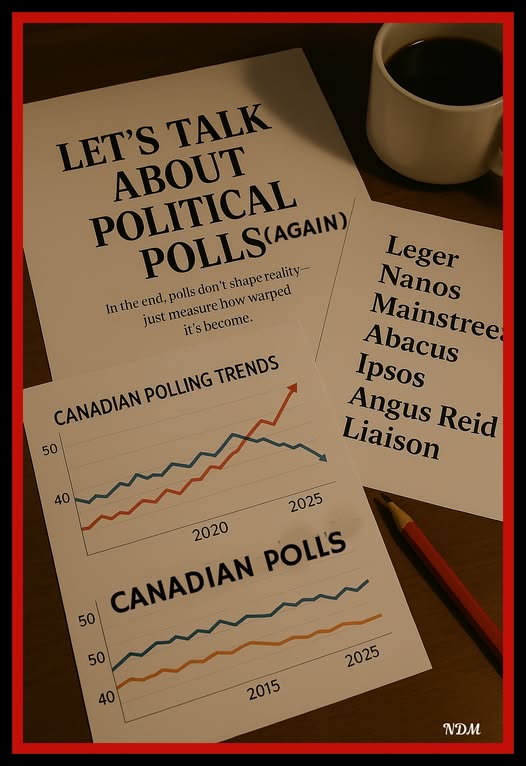
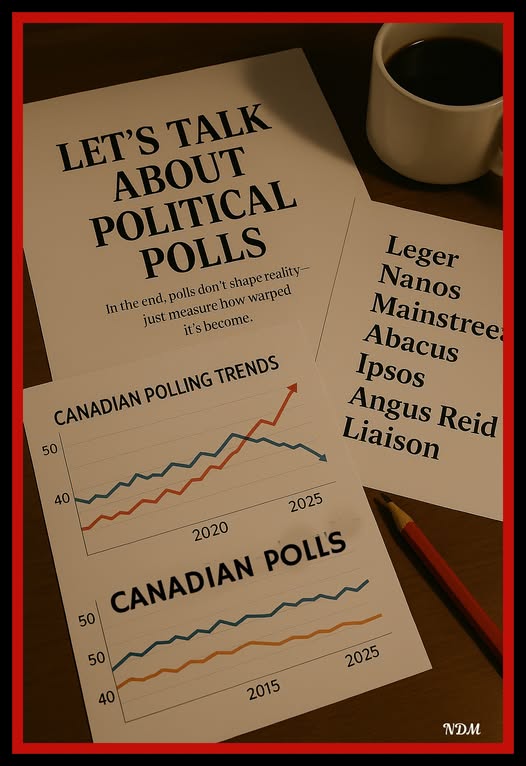
Let’s Talk About Political Polls (Yes, Those Polls). So it’s happening again so I have to update this info. Your cousin just shared a meme claiming the Liberals own the polls. Some bot account says Leger is run out of Mark Carney’s basement. And someone with a flag in their username is yelling that 338Canada is part of a globalist psy-op. Let’s breathe. Then let’s torch the nonsense. Because while actual pollsters are busy doing weighted samples and posting methodologies, some dude in his garage just invented a bar graph in Canva and called it “the real numbers.” And for the record: when you see a poll that puts Pierre Poilievre at 98% in downtown Montreal, maybe don’t forward it to your entire contacts list.

Okay, okay—nobody wakes up excited to read about polling methodology unless you’re the kind of person who finds joy in spreadsheets and C-SPAN reruns. But bear with me, because in the absolute fever dream that is the 2025 Canadian federal election, understanding political polls is like learning how to read the tea leaves in a haunted house—you might not like what you see, but at least you’ll know when the floor’s about to collapse. Now, first things first: the heavy hitters in Canadian political polling. In rough order of reputation and reliability, we’ve got:

Leger, Nanos, Mainstreet, Abacus, Ipsos, Angus Reid, and Liaison.

These firms are all members of the Canadian Research Insights Council (CRIC), meaning they’re bound by strict ethics, privacy guidelines, and the eternal curse of being corrected on Twitter by armchair psephologists. Let’s get one thing straight: polls can be biased. But responsible pollsters account for that by including margins of error. That’s the ±3% you see in the fine print, usually ignored by people who post “OMG LIBS DOWN 2 POINTS” like they’ve just cracked the Enigma code.

Now, a lot of people love to scream: “The polls are bought!”

Well—yes. Obviously. Pollsters are companies. They’re not some monk-like order quietly collecting voter intention in the wilderness. They sell a product: data. Whether it’s Jean-Marc Léger or Nik Nanos, these people run services intended to turn a profit. And who buys that product? Political parties, governments, media outlets—all of whom need this information. Campaigns use it to decide where to send the leader and how to spin the next attack ad. Governments use it to test the public temperature before announcing things like tax credits or poorly branded climate plans. And media? They need it for clicks. The important thing is not who commissions the poll, but whether the methodology is sound, the data is public, and the transparency is there—which, in the case of CRIC-certified firms, it is. You’re allowed to be skeptical, but maybe aim that skepticism at how we interpret polls, not at the fact they exist. Now, to address the elephant in the war room: 338Canada. You’ve probably heard someone say, “Well, 338 says (insert party name) are going to lose…”

Cool. 338 is not a poll. It’s a poll aggregator. Think of it as a very sober oracle who takes all the polls, mixes in past election results, demographic trends, regional factors, and the whispers of the political wind, and then spits out seat projections. So no, 338 doesn’t have secret knowledge. It’s just very, very good at reading the collective mood swings of Canada’s pollsters. Why does all this matter? Because in a chaotic election year—where we’ve got a freshly-minted Mark Carney trying to reboot a shell-shocked Liberal brand, Pierre Poilievre auditioning for the role of Canadian Batman villain, and Jagmeet Singh looking increasingly like the best man at a wedding he wasn’t invited to—the numbers actually help cut through the noise. But here’s the thing: polls are not predictions. They are snapshots. Blurry, maybe a little drunk, and taken under questionable lighting—but snapshots nonetheless.

The map is not the territory. The poll is not the election. And the truth? Well, it’s somewhere between the margins of error and a Tim Hortons drive-thru in Moncton. So before you rage-share that pixelated “real poll” from @TrudeauIsLizardPeople47, ask yourself this: Are you reading data… or just joining a cult with better graphic design? 

April 12, 2025

Posted: July 4, 2025 in Uncategorized

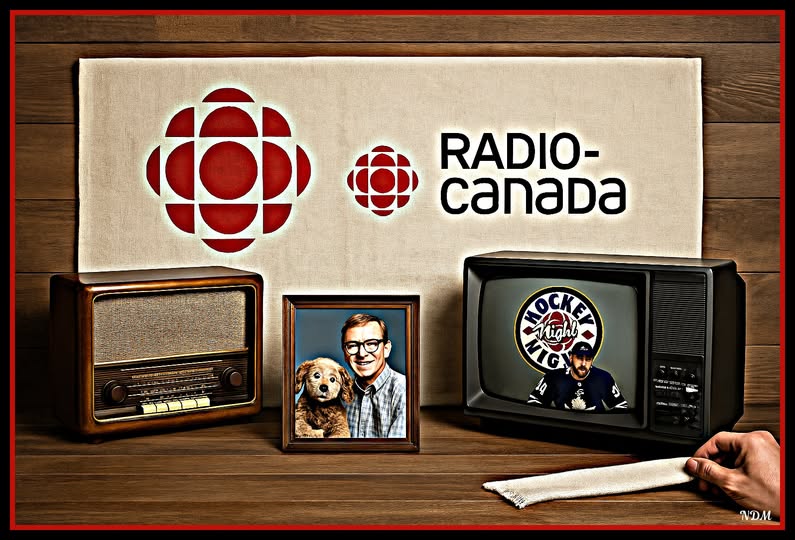
Look, Canada’s on fire—literally and figuratively. We’ve got a housing crisis, Arctic sovereignty threats, and the United States acting like it’s shopping for countries on Facebook Marketplace. And yet, Pierre Poilievre keeps waking up angry at the CBC like it personally foreclosed on his childhood treehouse. I grew up in a time and place where there were three TV channels. That’s it. CTV, CBC English, and CBC French. If the wind shifted or your antenna got bumped by a curious raccoon, you were down to fuzz. The CBC wasn’t just part of my childhood—it was the soundtrack. The Friendly Giant, Chez Hélène, Bobino, and Mr. Dressup raised more Canadians than any government childcare policy ever did. CBC Radio was on in the kitchen before school and on the long drive to the cottage. As It Happens, Quirks and Quarks, The Vinyl Café—these weren’t just shows. They were national rituals. Now people want to scrap it. They say it’s “irrelevant” or “biased.” Right. Because we definitely don’t need publicly funded journalism, cultural programming, or national coverage in 2025—what with all the totally unbiased, not-at-all algorithmically poisoned content people are getting from TikTok and YouTube conspiracy influencers. And those who claim it’s just a mouthpiece for the Liberals? Curious logic. The CBC isn’t perfect, but it’s one of the last institutions that still bothers to show up in Iqaluit, Prince Rupert, and Wabush. It covers Indigenous voices without needing to hashtag it for clicks. It broadcasts in eight languages in the North. It gives us The Fifth Estate, Marketplace, The National, Still Standing, Sort Of, Bones of Crows, and even Run the Burbs. It finds you where you are—radio, TV, streaming, podcast, app, and yes, even YouTube. And let’s put this “Liberal propaganda” thing to bed. This Hour Has 22 Minutes has roasted Trudeau so many times they could legally call it a BBQ. Meanwhile, George Stroumboulopoulos—yes, the leather jacket CBC guy—has openly supported electoral reform and even praised elements of Conservative climate policy when it was rooted in market mechanisms. Shocking, I know: nuance. It’s about silencing a voice that tells Canada’s story—all of it, even the uncomfortable parts. The CBC must remain. Because without it, there’s no This Hour Has 22 Minutes, no The Current, no The National, and no real alternative to American noise. You want to defund that? Be honest. It’s not about budget cuts. It’s about silencing a voice that tells Canada’s story—all of it, even the uncomfortable parts.

Pull that thread called CBC from the Canadian tapestry, and you don’t just lose programming—you unravel a shared national identity.

April 12, 2025

Posted: July 4, 2025 in Uncategorized

I really had something entirely different I wanted to talk about today. But apparently, the algorithm has spoken—and now we need to address the epidemic of people claiming to have read Mark Carney’s book ‘Values’ based solely on a single meme and a hunch. Welcome to Canada’s most exclusive book club: So, Mark Carney did write a book. You’ve probably heard of it because someone in your Facebook feed quoted one line—something about moral capitalism or climate finance or how the market doesn’t know your Grandmother’s worth unless she’s a condo. Now, let’s be clear. Saying you “read Values” because you saw a meme with Carney’s face and a pull quote is like saying you read ‘War and Peace’ because you skimmed the Wikipedia plot summary and still have no idea who Prince Andrei is. ‘Values’ is 600+ pages of economic philosophy, global finance, climate risk frameworks, central banking minutiae, and yes, actual moral reflection. It’s the kind of book that says “read me” only if you think “quantitative easing” sounds like a fun Friday night.

And no, it doesn’t come with pictures. Or a TikTok summary. Or a chapter called “How I’ll Beat Pierre Poilievre at Debate Club.”

It’s dense. Like, make-a-strong-coffee-and-question-your-educational-background dense. Carney isn’t trying to write a self-help manual. He’s trying to argue that we’re in a values crisis because we’ve confused price with worth—and he does this with charts, footnotes, and the occasional side-eye at neoliberalism.

Here’s what the book is actually about: How markets took over our morals, why climate change is an economic risk (not just a weather inconvenience), the failure of leadership in a crisis (hi, 2008), the need to rebuild institutions with integrity. (Yes, he means government. Yes, that includes Canada.), and how, for the love of Milton Friedman, we need to measure more than GDP.

It’s part memoir, part manifesto, part “here’s how I kept the world from collapsing (twice).” But it’s definitely not beach reading—unless your idea of a beach read involves international monetary policy and a deep dive into climate finance disclosures.

TL;DR: (too long didn’t read for us older folks) Here’s the facts folks-‘Values’ is not for the faint of brain. You didn’t read it if you just quoted one paragraph on Twitter (X). It is not a vibes-based book. It’s a “let’s fix capitalism before it eats us all” kind of book. Apparently, reading ‘Values’ now means confidently misquoting it while claiming Mark Carney said: ‘We need to abolish capitalism,’ ‘Canada should be run by bankers,’ or my personal favourite—‘The WEF controls your thermostat.’ Hate to break it to you, but if your take on ‘Values’ fits on a bumper sticker or was shouted by a guy with a YouTube channel called ‘Woke No More,’ you didn’t read the book—you read the comments.”And if you did read it? Respect. You’ve earned your honorary PhD in Boring Things That Actually Matter. So if you are part of that group that read the book cover to cover I invite you to next weeks review-‘that 2008 Financial Crisis documentary you still haven’t watched but definitely think you understand.’

“Claiming you read Values is the new ‘I have a friend who’s an economist.’ You didn’t. You just scrolled past a quote while rage-posting about the WEF and thought, ‘Yeah, that’ll do.'” 

April 10, 2025

Posted: July 4, 2025 in Uncategorized

“The Soundbite and the Snake Oil”

In the year 2025, political literacy has been reduced to a TikTok attention span and the average voter is now expected to decode global trade policy in between ads for protein powder and VPNs. Enter Pierre Poilievre, Canada’s very own algorithmic populist, who recently declared victory over tariffs that didn’t even apply to us. “Why didn’t they remove tariffs on Canada?” he thunders, eyebrows clenched, finger stabbing at some imaginary Trudeau ghost. The crowd roars. The clip goes viral. Nobody checks the footnotes. Well, here’s the boring reality: Canada wasn’t hit with the reciprocal tariffs Trump just suspended. Why? Because they were never applied to Canada in the first place. These were April 2 specials—aimed at, well, most of planet Earth. The usual suspects. Everyone from Asia to Europe to South America got hit. Canada? Not on the guest list. Meanwhile, the real trade obstacles—Trump’s separate steel, aluminum, and auto tariffs—are still very much alive, looming over Windsor like a damn thundercloud. But nuance is boring. Context doesn’t trend.

While Poilievre scripts his media hits tighter than a Netflix true crime doc, Mark Carney does his press conferences live. Unfiltered. No handlers in his earpiece whispering “pivot back to inflation!” If he stumbles, he stumbles in public. Because actual leadership isn’t supposed to be a performance—it’s a process. One that involves answering actual questions in real time, not hiding behind a curated digital fortress. Yes, Carney might drop a stat, or hell, even fumble a French verb mid-sentence. But at least it’s him doing it—not some backroom ventriloquist with a social media degree. Poilievre, meanwhile, doesn’t answer questions. He performs monologues. If Carney is playing chess with Trump, Poilievre is playing Mad Libs with your attention span. And look—we get it. The electorate is tired. Between inflation, housing, and watching the planet roast like a rotisserie chicken, people don’t have time to cross-reference tariff policy with international trade law. But here’s the ask: Please. Listen past the soundbite. Ask what’s not being said. Look at who’s being allowed to skate, and who’s being grilled for breathing wrong. Because when one guy’s feeding you catchphrases and the other’s braving the minefield of live accountability, the difference isn’t just stylistic—it’s moral.

And if we don’t start listening with our heads instead of just our scrolling thumbs, we may wake up to a country where the truth doesn’t just get ignored—it gets outlawed. .

All because we confused the loudest guy in the room with the smartest. Again.

April 9, 2025

Posted: July 4, 2025 in Uncategorized

We’ve rallied. We’ve researched. We’ve argued with our cousins in the comments. But we are mostly talking to our own demographic.

And let’s be real—We’re mostly just talking to ourselves.

Meanwhile, Pierre Poilievre is counting on Gen Z and younger Millennials to be: – too busy– too burnt out– too cynical.

Here’s the thing:
A lot of them have never even heard of Mark Carney.
Not their fault. He wasn’t on their radar. Until February, he wasn’t even in the ring. But now he is.
And it’s on us to make the introduction. So share ONE thing today with someone under 35. Post it. Text it. Drop it in a group chat. Slide it into a TikTok. Bring it up when they’re home doing laundry, or when you’re talking about Easter dinner plans, or when they casually mention rent just went up again.

They don’t need a TED Talk. They need real talk—with bite. Something quick. Something sharp. Something that says:
“This guy? He’s the adult in the room. And he gets it.”

Because they’re not just the future. They’re the firewall.
Against chaos. Against collapse. Against a guy who once thought Bitcoin was a personality trait.

Let’s go. You’ve done the hard part. Now just pass it on. 

April 8, 2025

Posted: July 4, 2025 in Uncategorized

Let’s Talk About Political Polls (Yes, Those Polls)

Okay, okay—nobody wakes up excited to read about polling methodology unless you’re the kind of person who finds joy in spreadsheets and C-SPAN reruns. But bear with me, because in the absolute fever dream that is the 2025 Canadian federal election, understanding political polls is like learning how to read the tea leaves in a haunted house—you might not like what you see, but at least you’ll know when the floor’s about to collapse.

Now, first things first: the heavy hitters in Canadian political polling. In rough order of reputation and reliability, we’ve got:

LegerNanosMainstreetAbacusIpsosAngus Reid, and Liaison.

These firms are all members of the Canadian Research Insights Council (CRIC), meaning they’re bound by strict ethics, privacy guidelines, and the eternal curse of being corrected on Twitter by armchair psephologists.

Let’s get one thing straight: polls can be biased. But responsible pollsters account for that by including margins of error. That’s the ±3% you see in the fine print, usually ignored by people who post “OMG LIBS DOWN 2 POINTS” like they’ve just cracked the Enigma code.

Now, a lot of people love to scream: “The polls are bought!”
Well—yes. Obviously. Pollsters are companies. They’re not some monk-like order quietly collecting voter intention in the wilderness. They sell a product: data. Whether it’s Jean-Marc Léger or Nik Nanos, these people run services intended to turn a profit. And who buys that product? Political partiesgovernmentsmedia outlets—all of whom need this information. Campaigns use it to decide where to send the leader and how to spin the next attack ad. Governments use it to test the public temperature before announcing things like tax credits or poorly branded climate plans. And media? They need it for clicks. “New Poll Drops” is almost as big a deal as “New Stock Numbers.” The important thing is not who commissions the poll, but whether the methodology is sound, the data is public, and the transparency is there—which, in the case of CRIC-certified firms, it is. You’re allowed to be skeptical, but maybe aim that skepticism at how we interpret polls, not at the fact they exist.

Now, to address the elephant in the war room: 338Canada. You’ve probably heard someone say, “Well, 338 says the Liberals are going to lose…” Cool. 338 is not a poll. It’s a poll aggregator. Think of it as a very sober oracle who takes all the polls, mixes in past election results, demographic trends, regional factors, and the whispers of the political wind, and then spits out seat projections. So no, 338 doesn’t have secret knowledge. It’s just very, very good at reading the collective mood swings of Canada’s pollsters.

Why does all this matter? Because in a chaotic election year—where we’ve got a freshly-minted Mark Carney trying to reboot a shell-shocked Liberal brand, Pierre Poilievre auditioning for the role of Canadian Batman villain, and Jagmeet Singh looking increasingly like the best man at a wedding he wasn’t invited to—the numbers actually help cut through the noise. But here’s the thing: polls are not predictions. They are snapshots. Blurry, maybe a little drunk, and taken under questionable lighting—but snapshots nonetheless.

So before you scream into the void about a single poll showing the Greens at 12% in Nunavut, remember this: The map is not the territory. The poll is not the election. And the truth? Well, it’s somewhere between the margins of error and a Tim Hortons drive-thru in Moncton. Because if you’re relying on polls to save your party, your party’s already halfway to hell—you’re just arguing over the playlist. In the end, polls don’t shape reality—they just measure how warped it’s become.