Archive for August, 2025

Here’s what Mark Carney did today.

In a rapidly shifting global landscape, the Prime Minister announced the launch of a new Major Projects Office (MPO) headquartered in Calgary (any comments Premier Smith), with additional offices opening in other major Canadian cities. Backed by legislation already passed this June, the MPO is designed to fast-track nation-building projects, ports, railways, clean energy initiatives, and critical mineral developments. It will create a “one project, one review” approach, reducing approval times to a maximum of two years while upholding environmental standards and Indigenous rights.

Even more, the MPO will help structure financing through the Canada Infrastructure Bank, the Growth Fund, and the Indigenous Loan Guarantee Program, alongside private capital and provincial partners. In other words: real planning, real coordination, real jobs, real growth.

That’s leadership. It’s about building something Canadians can see, touch, and benefit from. It’s about the future.

And meanwhile, here’s what we got from the Leader of the Opposition. Pierre Poilievre stood at a podium and gave Canadians a 30-minute “tough-on-crime” sermon, complete with dramatic tone, perfect salt-and-pepper hair, and rehearsed theatrics. His message? Fear. He painted pictures of home invasions at 2 a.m., of parents forced into split-second life-or-death choices, of a system that punishes victims instead of criminals.

Now, crime is real. The trauma of an intrusion, the fear of glass shattering in the night, that’s real too. I don’t dismiss it. But my greatest fears aren’t criminals breaking into my home. I’m more afraid of tornadoes ripping across the prairie, wildfires swallowing forests, and hurricanes flooding communities. I’m more afraid of global instability, Gaza, Ukraine, and the uncertainty of a world where Trump makes decisions that affect Canadian lives. I’m more afraid because my own son serves in the Canadian Armed Forces, and I know exactly what “instability” can mean for families.

Poilievre doesn’t go there. He doesn’t want to. Because that would mean confronting Trump, confronting climate, confronting complexity. Instead, he leans into American-style “stand your ground” rhetoric, promising to rewrite Canadian law to make lethal force a presumed right.

And to me that is NOT leadership, that’s mimicry. We don’t need to become a northern knockoff of the United States. Their gun culture, their obsession with armed self-defense, their endless cycle of mass shootings, that’s not who we are.

Pierre knows who he’s talking to. He’s speaking to his Conservative base, shoring up support after losing his seat in Ottawa and facing a leadership review. He’s not speaking to Canadians as a whole. And that’s the difference.

When I listen to Mark Carney, I don’t hear someone only talking to Liberals. I hear someone talking to Canadians. He compromises where necessary. He thinks before he speaks. He takes the 10,000-foot view, not the 10-foot spotlight. He knows that being Prime Minister isn’t about playing to the bleachers. It’s about carrying the weight of a nation, even when it means taking on allies, critics, or his own party.

Poilievre, meanwhile, is stuck in performance mode. He hammers away at the one note. But when you only stare at the narrow circle beneath your feet, you miss the horizon. And right now, Canada’s horizon is where the real challenges lie.

Where does he stand on Gaza? On Ukraine? On Trump’s tariffs? On Canada’s economic sovereignty? We don’t know. And I suspect that’s intentional. It’s safer for him to stick with crime monologues than to risk alienating his base by talking about the big picture.

So let’s be clear about what happened today: Mark Carney announced a nation-building office to accelerate infrastructure, clean energy, and jobs. Pierre Poilievre delivered a half-hour performance about fear.

That’s the contrast. One builds, one blusters. One leads, one performs. And I, for one, don’t feel safe leaving Canada’s future in the hands of a performer. Because when the storm clouds gather, and they already are, I want a leader, not an actor waiting for applause. I choose hope over despair.

Today, August 27th, there was another mass shooting in the United States. This time in Minneapolis. A shooter decided that taking the lives of vulnerable children just beginning their school year, children kneeling in prayer at the church attached to their school, was a good idea. The shooter barricaded the church doors to stop anyone from running to safety. That detail alone makes the horror almost too much to comprehend.

The official statements came quickly. From Donald Trump: “I have been fully briefed on the tragic shooting in Minneapolis, Minnesota. The FBI quickly responded and they are on the scene. The White House will continue to monitor this terrible situation. Please join me in praying for everyone involved!” From JD Vance: another version of “We are monitoring this. We are praying.” Both posts ended with an exclamation mark. As if prayer needed emphasis.

Forgive me if I don’t feel moved by another press release telling me to join in prayer. The mayor of Minneapolis said it best: “Don’t just say you’re offering your thoughts and prayers right now because those kids were literally praying.” Holy, does that resonate. They were on their knees, in prayer, when bullets ripped their innocence apart.

So when, exactly, is the point where America realizes there is a problem with guns? I’m not debating the “right to bear arms” here. That was about muskets in 1776, not AR-15s in 2025. I’m talking about access. These are almost always legal guns, bought legally. Often the shooter has a history, criminal, or mental health struggles that somehow didn’t stop them from getting a weapon. And if this person’s pain or illness was known, why wasn’t it addressed, and if it wasn’t recognized, why on earth was access to deadly weapons so effortless? Different states, different rules, same outcome: children bleeding on the ground.

And here’s the data. In the last 20 years: The United States: ~4,000 mass shootings (~120 per 10 million people), Canada: ~20 (~5 per 10 million), United Kingdom: ~10 (~1.5 per 10 million), Australia: ~5 (~2 per 10 million), and Germany: ~30 (~3.5 per 10 million)

The U.S. is an outlier, off the charts. Other countries have mental health issues. Other countries have marginalized populations. Other countries have political anger. But only in America does all of that combine with the sheer availability of guns to create this endless cycle of massacre and trauma.

And here’s what makes it even darker: those mental health issues, especially in marginalized populations, the very people who already have the least access to care are about to get even less support. Cuts to programs. Clinics shuttering. The stigma that keeps people away from help. Into those cracks falls despair. Into those cracks falls violence.

As a mom and a grandmom, I can’t imagine the unbearable pain of sending your child off to school in the morning only to learn they’ll never come home. And yes, say your prayers! Of course say your prayers. But don’t fool yourself into thinking prayers are enough. If I were to pray, it would be that the leaders of the United States, especially the gun-worshipping Republican Party, could finally pull their heads out of the sand (or somewhere else) and face reality. But unfortunately I don’t believe that prayer will be answered. We need more than prayer or at least as the principal of Assomption school in Minneapolis quoted today from an African proverb. “When you pray move your feet.”

The right to bear arms? Bullshit.

Forever Canadian

Posted: August 23, 2025 in Uncategorized

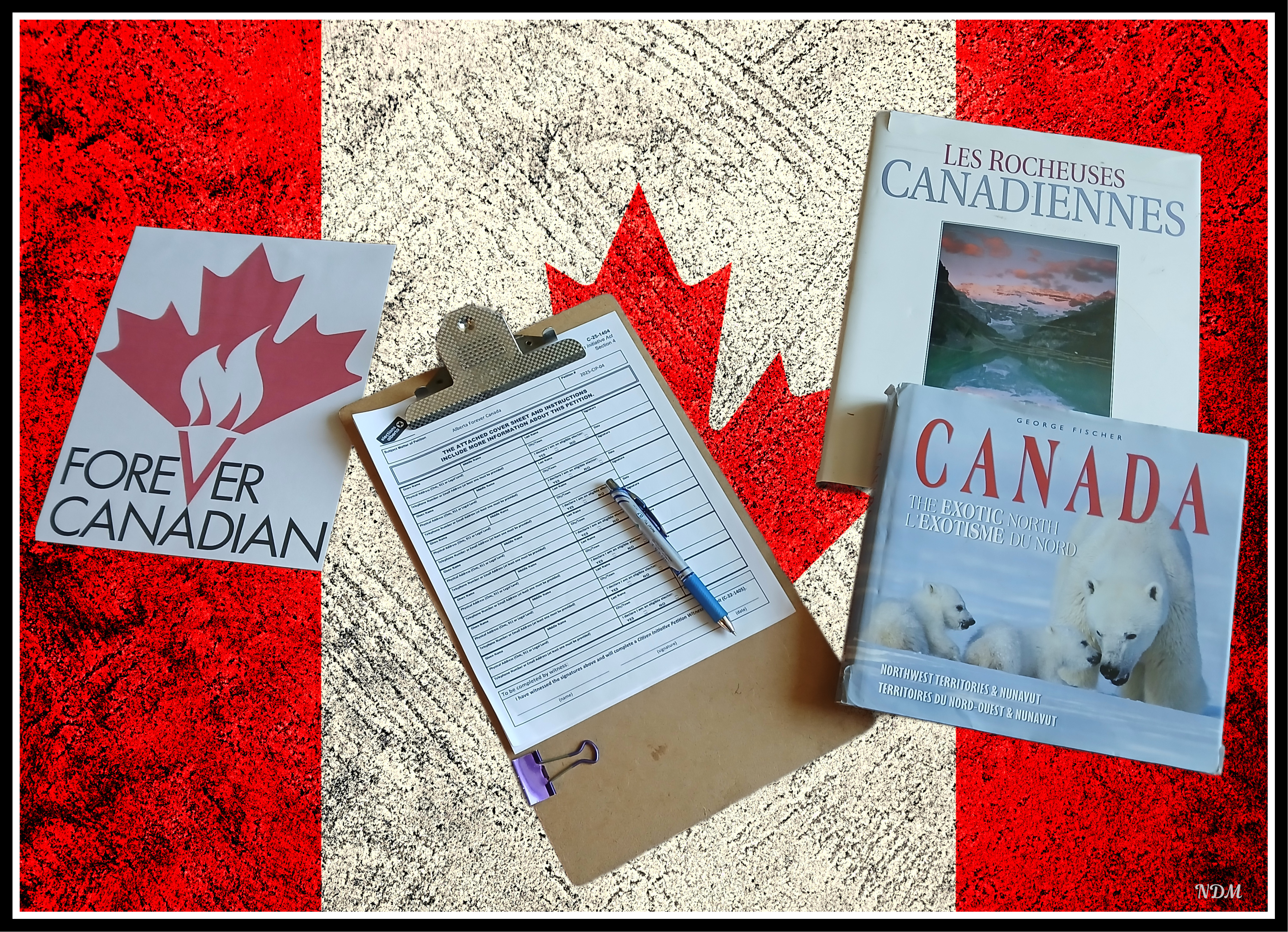
It’s not every day that you get to witness patriotism being written right in front of you, in ink, with signatures, and often with stories that spill out alongside the pen. That’s what the Forever Canadian initiative has felt like for me.

At the start, it seemed like the people showing up were all a little like me, white boomers, carrying the weight of memory and responsibility. But slowly, beautifully, that changed. Grandparents arrived with their grandchildren, not to lecture but to share in something bigger than themselves. Young parents came with toddlers on their hips, saying, “This is their Canada too.” And one night, Alison and I found ourselves invited into a gathering of Indo-Canadian families. At first, we stood out like wallpaper. But once the conversations began, stories poured forward, stories of immigration, of long waits and proud oaths of citizenship, of three generations now fully rooted in this province and fiercely proud to be Canadian.

That is what unity looks like. It isn’t forced. It doesn’t come with slogans or party lines. It grows in the space where people can openly say, “Yes, I want Alberta to remain a part of Canada. Yes, I want to keep this country strong.”

I’ve heard farmers say their neighbors might hang separation banners as a political protest, but in the kitchen over coffee, they admit they don’t actually want to break up Canada. I’ve spoken with people who once felt afraid to fly the Canadian flag because of how aggressively their neighbors flew it upside down. And now, I’ve watched those same people put their names down with a sense of relief, finally able to reclaim their pride in this country without fear. And one of my first signatures was an Indigenous elder, representative of the first peoples of this country, whose presence and contributions remain foundational to who we are as Canadians.

This is something every individual can do right now to support our country. Signing isn’t symbolic, it’s action. It’s saying that as we work through the challenges in front of us, we choose unity over fracture. And this is not just about Alberta. It’s about Canada. It’s about those who have been here for many generations, those who have been here for one or two, and those who have only just arrived. I think often of the people who stood at my table, eager to sign, only to stop themselves with quiet disappointment: “I can’t. I’m PR, permanent resident.” Even they want to add their names, to show their commitment to the future of this country they’ve worked so hard to join. That alone should remind us of the value of what we already have.

Our amazing tapestry is woven from people whose families carved out farms and towns a century ago, alongside those whose grandparents arrived through post-war immigration, alongside those who stepped off a plane only a few years back with little more than their dreams and their determination. They all want Canada to succeed. They all know this country is worth keeping whole.

So yes, this exercise is about what must be done for our country. But maybe just as much, it’s about what we already have, and too often forget to see. Instead of dwelling on what’s broken, this effort has reminded me of what’s still unshakably strong: the love of country, the pride in unity, the refusal to let division win.

On a Saturday morning, as I pack up my things and head out for another pop-up, I feel reinforced and revitalized. And I remember the words of my father, who told me as a child: “When you were born in Canada, you had already won the lottery.” Please, let that remain our truth.

Dear 2025

Posted: August 21, 2025 in Uncategorized

Dear 2025

I am writing from a future you might not recognize, though you shaped it with your choices, and with your silences. I am twenty-one now, stepping out into a world marked by the consequences of what you allowed, or ignored, two decades ago.

You told yourselves it was strategy. That if you ignored him, if you let him rant, if you bargained quietly around him, the danger would pass. But it didn’t. He drew strength from your silence, and others, men just as mad, just as ruthless, saw their chance. The Kremlin made it clear in 2025. Putin never intended a meeting with Zelenskyy, never sought compromise and never intended for there to be peace. He sought conquest. And he found his partner in America’s unraveling.

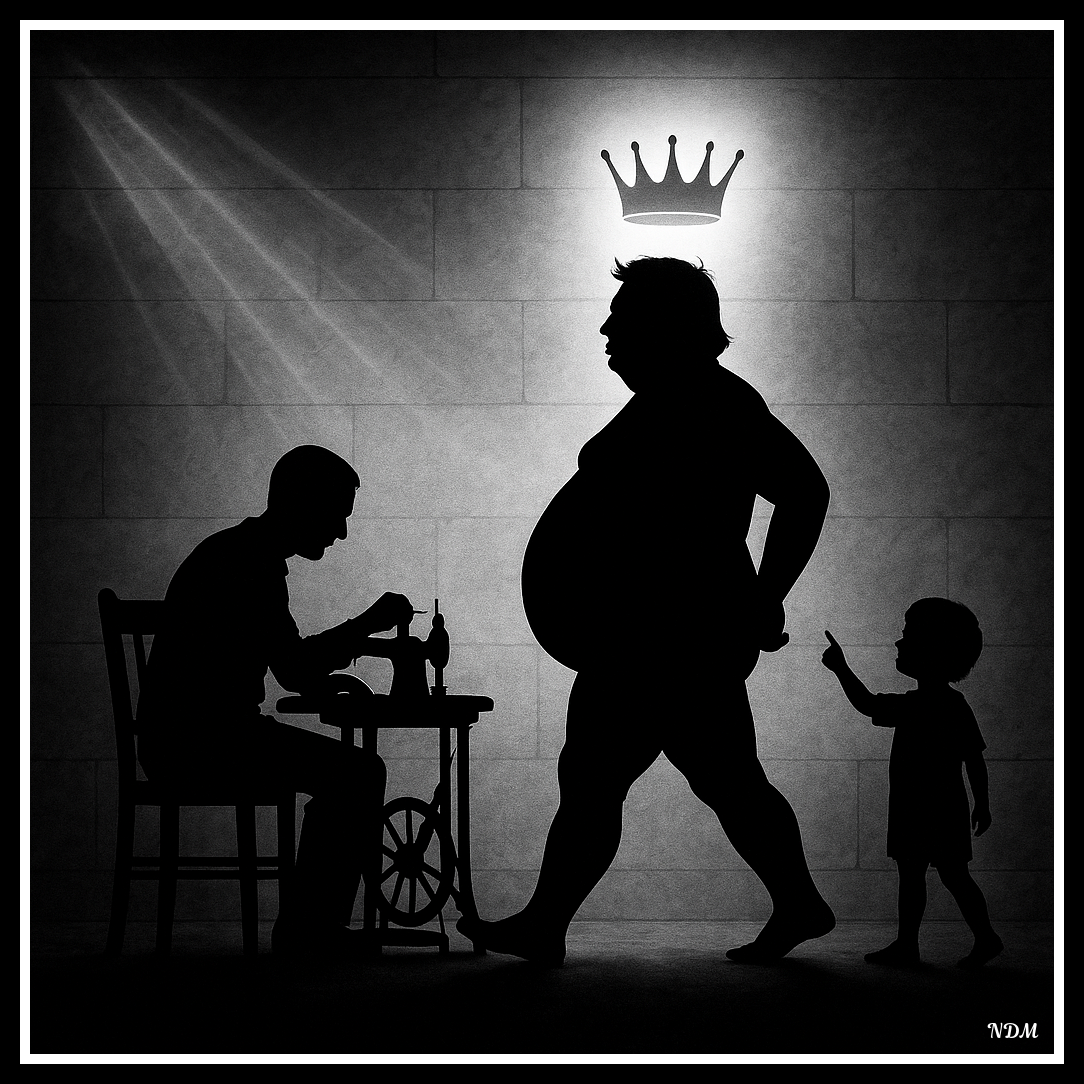
I watch the old recordings of Trumps speeches. Back then, you must have seen the signs. You heard the lies, the unravelling words, the speeches that made no sense. You watched a man who was clearly fading, whose mind slipped and sputtered, whose ego expanded even as his grasp of reality shrank. You knew he was not fit, but you said little. You watched the emperor, bloated and orange, strut naked before you, and still you bowed your heads and pretended he was clothed. And, I wonder, more painfully, how the leaders of the world managed to keep straight faces while bowing at his feet. If they truly believed he was in command of his faculties, that frightens me. If they didn’t, and still played along, that terrifies me even more.

And maybe this is where I speak as a Canadian. We never had the same weight as the United States or Europe, but what we did have were good people, and in 2025 we had a prime minister who spoke the truth. Mark Carney led a smaller country in a world gone mad, and it wasn’t easy. But at least he spoke plainly. And maybe that’s still the type of leadership we should be paying attention to. I also heard that in those days, at home here in Alberta there were voices talking about separation. My own province wondered if it should break away. Thank goodness that mentality was quickly stifled, because if it hadn’t been, Canada might have fractured too. And yet Canada stayed mostly whole and stayed mostly coherent. Despite Canada being a country of conscience for the most part, it was still seriously impacted by the power of the bully to the south. Many Canadians followed the ideology of the movement they called Maga and for that they hold accountability.

You all had a chance to pay attention, to recognize the elephant in the room when it grew too large to ignore. Instead, many of you dismissed it, laughed at it, or told yourselves it couldn’t really be happening. Project 2025 was published, in black and white, a manifesto for dismantling democracy. You could have read it. You could have acted.

Some of you did, I know that. My Nana Nancy and many others spoke up, (I think they were called Boomers) even when people criticized them, even when it would have been easier to stay silent. Nana raised her voice through her writing because she loved this country, this world, and the generations who would come after. I wish more of the younger people had done the same.

Now, in my time, I walk through a world that feels diminished. The great promises of cooperation, of shared progress, feel like faded posters on the wall of a crumbling station. You had all the information you needed, yet you carried on as though time would stop and wait for you to be ready. Do you know what it feels like to grow up with rights you never had? To read about freedoms others once held, and realize they were lost before you were even old enough to claim them? That’s my inheritance. Not opportunity, not choice, not the wide open horizon of possibility, but the rubble left when ego, apathy, and cowardice were allowed to rule.

I write this not because I’m angry with you, but because I live with what your inaction built. I write because I want you, if somehow these words travel back to you, to wake up. Imagine a time machine dropping this letter on your desk in 2025. Would you read it and laugh it off as melodrama? Or would you finally see what was right in front of you?

You always said children were the future. Well, I am that future, and I am telling you: we needed more from you. More courage, more clarity, more refusal to play along with the lie that the emperor’s robes were anything but thin air.

So maybe the time machine is allowing you to read this before we go totally off the rails. Then maybe the world you hand me could be different. Please stop pretending, stop excusing, stop applauding incoherence because it feels easier than facing the truth. The truth is hard, yes. But lies are heavier. They crush generations. I should know. I carry their weight every single day.

So please, for me, for those yet to come, pay attention. Because history does not forgive blindness, and the future cannot survive on silence.

Signed,

Nana’s little girl in 2045

I sat through the Trump Putin spectacle in Alaska yesterday and couldn’t shake the feeling that I’d seen it before, not on network TV, but in a children’s book. It was The Emperor’s New Clothes, rewritten for the 21st century.

Trump strutted like Andersen’s emperor, convinced that he alone had spun some invisible garment of diplomacy. Putin, the sly tailor, flattered him with talk of “trustworthy tone” and vague hints about “bringing back business.” And Zelensky, though not even in the room, is cast as the child, the one who sees the naked truth, but who can’t shout it, because survival demands silence.

Trump called the summit “extremely productive.” He declared that “many points were agreed to,” even though he couldn’t name a single one. His magic phrase of the day was “no deal until there’s a deal,” as if tautology is a policy achievement. By his own standard, the summit was a failure. Trump had promised a ceasefire. He didn’t get one. He left Alaska empty-handed, hoping his performance would pass for substance. And like the emperor parading through town, he expected the rest of us to nod and applaud.

Putin was delighted to oblige. He wrapped Trump in threads of illusion: “If Trump had been president, there would have been no war.” “We had a trustworthy conversation.” “This is the starting point.” All empty cloth. The so called “root causes” Putin insists must be addressed are just his old justifications, that Ukraine isn’t real, that NATO is a threat, that Russia must have its vassal. He hasn’t given an inch on territory, on sovereignty, on the reality of his invasion. What he has done is what tailors of illusions do best: buy more time, flatter the client, and smirk as the crowd pretends to see fabric that isn’t there.

Zelensky wasn’t on stage yesterday, but he is at the heart of this story. He knows the emperor is naked. He knows the tailor is lying. But he cannot shout it from the crowd, because doing so risks the only lifeline his country has: American weapons and aid.

So he waits, and he listens, and he will have to respond carefully later today. He’ll walk the tightrope again, praising the effort without endorsing the illusion, and hoping that, somehow, his country doesn’t get traded away in a deal of smoke and mirrors.

Commentators confirmed what anyone with eyes could see, there was no breakthrough, no fabric, no garment, just spectacle. Former defense secretary Leon Panetta was blunt: the fundamental test of this summit was a ceasefire, and it failed. Fareed Zakaria called the atmospherics “cringeworthy,” but admitted it was better that Trump came away with nothing than with a dangerous concession. Analysts pointed out that Putin’s language of “root causes” hasn’t changed in three years.

And if the absurdity of the red carpet weren’t enough, they capped it off with what would normally thrill me. It was in essence an air show: one B-2 stealth bomber flanked by four F-35 fighters. That’s some serious star power. Air Force muscle and fifth-generation stealth all rolled out, not for NATO allies, not for democratic partners, but for Vladimir Putin. It was performance at its finest, and exactly the sort of pageantry the tailor expected for the emperor’s parade.

I’ll admit, part of me dreaded Trump walking away with a win. The idea of him basking in the glow of “peace in our time” was unbearable. But of course ultimately I hoped that maybe a ceasefire could emerge, because human lives matter more than my distaste for Trump’s ego parade.

Hillary Clinton captured the paradox when she said she’d nominate Trump for the Nobel Peace Prize if he pulled off a deal. She could say that precisely because she knew he wouldn’t. But it was also a reminder of the stakes that even those who loathe him would grit their teeth and clap if he ended the war. That’s the moral burden of leadership: sometimes you have to applaud the emperor if peace is real, even if you can see his naked backside.

And yet, if you step back from the red carpet and the flyover, the truth is simpler: Putin got what he came for. A hold on new sanctions. More time to maneuver. No ceasefire. Every day of delay is a day he can sell oil, move weapons, and dig deeper trenches.

What happens in the next few weeks, whether his forces escalate or hold steady, will tell us whether this “productive” summit was just a photo op or the prelude to something darker. My bet? The tailor knew exactly what he was weaving.

So here’s where the fairy tale leaves us: The emperor insists he is clothed in glory. The tailor whispers flattery and sells him nothing. The child sees the truth but cannot shout it. And the crowd stands in the square, half-pretending, half-gasping, all waiting for the moment the illusion collapses.

But unlike Andersen’s story, this one doesn’t end when someone blurts out the truth. The emperor keeps parading. The tailor keeps spinning. And the child has to live in a world where truth is too dangerous to say aloud.

Trump said last night: “We didn’t get there, but we have a good chance of getting there.” The problem is, no one knows where “there” is, or if it even exists.

For now, Ukraine still burns, Russia still stalls, and America still pretends. The emperor struts naked through the square, the tailor smirks, and the child watches in silence.

But the reality is that fairy tales are bedtime stories and wars are not.

Oceanfront? NO!

Posted: August 14, 2025 in Uncategorized

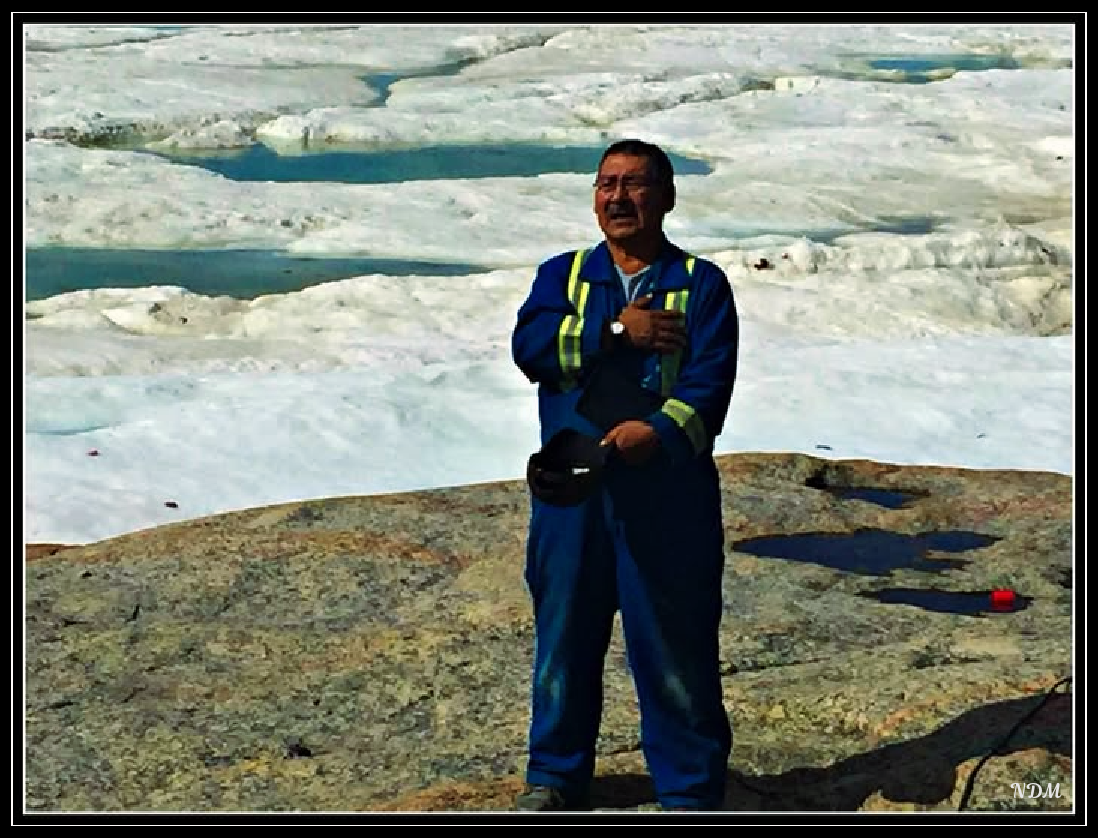
Oceanfront Property? NO not Ukraines and not Canada’s. The photo you see here was taken in Taloyoak, Nunavut, during an air show in mid-June in 2017. The man’s name is Guy. He had rushed from work to make it in time. He stood on that rock with the ice flows behind him, hand over heart, as we played O Canada before the show began.

What struck me wasn’t just the backdrop, or the sheer beauty of the North, but the pride on his face. Pride in his country, despite the weight of history: colonization, residential schools, the day-to-day realities of life in the Arctic that most Canadians will never fully know. That moment crystallized for me why the North matters so much.

It’s not an empty expanse. It’s home. It’s culture. It’s people. And it makes up a massive portion of Canada’s landmass. A part of our identity too often treated like a distant afterthought until someone from far away sees an opportunity in it.

That’s why tomorrow’s meeting in Alaska between Donald Trump and Vladimir Putin makes my stomach turn. Because when men like this talk about “oceanfront property,” whether it’s Ukraine’s Black Sea coast or Canada’s Arctic coastline, they don’t see Guy. They don’t see communities. They see leverage.

The White House has been calling this a “listening exercise.” And if it “goes well,” Trump says he’ll immediately schedule a second meeting, this time with Zelensky at the table. But let’s be clear: Putin’s starting position isn’t some mystery. He wants:

  • Recognition of all his territorial gains in Ukraine.
  • A permanent NATO ban.
  • Caps on Ukraine’s military capacity and weapons.
  • Elections in Ukraine — under Russian occupation.

That’s not a negotiation starter. It’s the terms of surrender. Zelensky can’t agree to that without betraying his own people, which is why he’s made it clear: ceasefire first, then security guarantees, then talks. The Kremlin’s agenda is much wider than Ukraine. They’re openly talking about arms reduction, space cooperation, economic deals, and, here’s the one that hits me personally, Arctic resource exploration. That’s not just Alaska’s Arctic. That’s Canada’s Arctic too. Our sovereignty. Our land. Our people.

Putin’s already wins something just by walking into that room. After years of sanctions and diplomatic isolation, he gets to tell his people (and the world) that he’s back at the “top table” of global power. Trump’s giving him that stage before a single concession is made.

We’ve also learned something about the mood going in. In recent months, Trump’s frustration with Putin has grown. He’s been asking aides and Europeans what’s changed about the man since his first term. Some experts say it’s COVID. U.S. intelligence believes Putin grew paranoid during the pandemic, limiting his contacts, surrounding himself with fewer voices. Maybe that’s shifted his short-term goals, perhaps he’d pocket some territorial gains or pursue economic deals, but on Ukraine’s sovereignty, the maximalist demands are unchanged. And U.S. intelligence still can’t fully read how Putin makes decisions.

Trump thinks he can. He’s been telling people he’ll know within minutes whether the meeting is “successful.” That’s a dangerous kind of confidence when you’re dealing with a leader who has ruled for decades, plays the long game, and genuinely believes he’s winning.

And then there’s the question of who’s in the room. The last time Trump met with Putin, he had no advisors. No one to reality-check him in the moment, no one to push back if the conversation drifted into dangerous territory. We don’t even know if the translation will be airtight. Putin speaks English, Trump doesn’t speak Russian. That’s already an advantage to one side. And if the closest thing to a “foreign policy advisor” in the room is Steve Whitkoff, a fellow real estate tycoon with zero diplomatic experience, then the only thing being traded here is property metaphors.

Between Wednesday’s meetings with European leaders, which included Prime Minister Mark Carney and Zelensky, and Friday’s summit, there’s talk of “cautious optimism.” But seriously, what does that even mean? What does “progress” look like in a room where one man’s goal is international legitimacy and the other thinks he can wing peace talks on instinct?

This is where I come back to the North. I’ve been there. I’ve seen what it looks like, felt what it feels like. At the northernmost tip near Alert, you can almost touch Greenland. No wonder it’s on the radar for men who think in maps and power plays. I don’t want to resurrect the Greenland conversation, but it’s there. And it’s why I feel the vulnerability in my gut. The Arctic isn’t just strategic, it’s human. It’s ours. And the thought of two men with imperial appetites circling it? That part is hard to even write about.

“Oceanfront is everything,” Trump said about Putin’s desire for Ukraine’s coastal regions. But in the North, oceanfront isn’t everything. It’s not for sale. Not in Ukraine. Not in Canada. Because it’s not just land, it’s people. And people aren’t bargaining chips.

Life is short

Posted: August 12, 2025 in Uncategorized
Tags: , , , ,

Life is short…I am writing this as one of my highest-level appeals. Please, I implore you to pay attention.

On November 6th, when the U.S. election ended, I spoke to the people closest to me about what it meant for our world. Intellectually, I knew the dangers. I talked about them often. But deep down, I didn’t believe we would end up here. I was upset enough to stop writing about politics for months. I hoped it wouldn’t come to this.

But here we are. Donald Trump, and let’s stop sugarcoating this, is a dangerous man. I believe he is a psychopath. If he is capable of genuine love, perhaps some child or grandchild will tell me so. I cannot comprehend a human being with such a lack of compassion, such an absence of moral core, without some clinical explanation.

And now we have the National Guard moving into Washington, D.C. We don’t know exactly what’s next, another city, another country? On Friday he will be in Alaska, where the only thing separating Russia and North America is a narrow strip of the Bering Strait. Trump is set to meet with Vladimir Putin there. That’s not just a photo op. And it terrifies me. What exactly will Trump promise him? What would he give away? We know Putin doesn’t respect Trump, but he can use him. And that’s more dangerous.

The picture I’m using for this post comes from Alaska, but it’s not just any Alaska picture. It’s my late friend Marcus Payne, flying his beloved aircraft over his homeland’s ice fields. Marcus was a Renaissance man of unbelievable talent. He wasn’t just an airshow pilot and TV personality, he was a U.S. Air Force veteran, a lawyer, a Washington lobbyist, a missionary, and an environmentalist. And oh, the political conversations we had. We lost him tragically nine years doing what he loved, but I can tell you, we would have had a lot to talk about now. He believed in living with purpose, and he understood how fragile both our environment and our democracies are. That’s why this image matters, because the stakes we face are as sharp and real as the glacier walls beneath his wings.

For my fellow Albertans flirting with separatism, listen carefully: if you think Alberta could somehow be better off alone, you are wrong. You will not be strong enough, no matter how much oil and gas you have, to stand against the American machine. You will lose control over your resources. You will lose your say in how they are managed. And you will be at the mercy of leaders who would happily trade your future for their personal gain.

I’ve written post after post asking people to explain how Pierre Poilievre would operate in today’s geopolitical climate, the one Mark Carney is currently navigating. I’ve yet to see a single thoughtful, detailed answer. Publicly, I get slogans. Privately, I get messages that range from nonsensical to outright frightening. But not once has anyone been able to describe how Poilievre would handle Trump, Putin, or China while safeguarding Canada’s sovereignty.

Although I always write from the heart, with passion, urgency, and the hope that people will better inform themselves, this time is different. This one is affecting me more deeply. No one likes to think about being in the last part of their life. But I never imagined I’d be in this stage terrified for the world I’m leaving behind for my children, grandchildren, and everyone who comes after. My need to speak up is more urgent than it has ever been. I will not let anyone say I stayed silent. I will not have it said that I didn’t try to help people understand how critical our situation is.

I know it’s hard to know what we can do. People ask me all the time, “But what can I do?” Maybe my words here don’t feel as effective as they could be. After all, most of my readers already think like I do. But if you have friends in the U.S., or anywhere else in the world, share this with them. We need to go beyond “I hate Trump” or shallow political insults. We need to talk about what his leadership really means.

These are not just distraction tactics from Trump. It’s his lifetime pattern. Call it narcissism if you like, but it’s something far beyond the everyday kind.

So, who still stands by him? In my view, there are four groups:

1. The MAGA base, statistically more likely to be less informed or less educated. That’s not an insult, it’s reality. But it’s also no excuse. 2. Christian fundamentalists who are sometimes organized under banners like The Family, who push a narrow, rigid worldview into public policy. Their vision of morality is less about compassion and more about control. 3. Billionaires (and “billionaires-lite”) they care only about increasing already obscene fortunes, no matter the human cost. and 4. Republican lawmakers who have abandoned any vision of what is right, and sold their integrity to cling to power.

And to those lawmakers, I ask again: did you not think of your daughters when women’s rights were stripped away? Where are you as education and research to benefit your grandchildren is erased. And how can you ignore that the United States is beginning to look more like The Handmaid’s Tale than the “land of the free”? And to the daughters and sons of these lawmakers, the millennials, the Gen Xers, please speak up. Maybe hearing it from you will pierce the armour of power and greed. Someday those lawmakers will be on their deathbed, and will their final words be, “My God, I ignored my own child so I could hold onto my seat”? How pitiful.

We are standing at a point where silence is complicity. Our voices have to be loud, so loud they can’t be ignored, so loud they carry across borders and into the rooms where decisions are being made. Every single person’s voice matters, no matter how small you think your reach is. I, for one, will use mine in every way possible. If my role in this fight is to write these words, to push, prod, and occasionally shove people into paying attention then I will keep doing it. Not because I like shouting into the void, but because I refuse to be like one of those legislators lying on my deathbed thinking, I didn’t do enough.

Hope and defiance can live in the same breath. Hope says there is still time to change things. Defiance says we will fight like hell to make sure we do. So write, speak, march, vote, shout, actually whatever your voice looks like, use it. Because the worst thing we can do right now is nothing. And nothing is exactly what those in power are counting on.

August 10, 2025

Posted: August 10, 2025 in Uncategorized

It’s Sunday morning, after a hell of a week. A week where I’ve been juggling more than one family medical crisis, not minor ones, and doing it the way I’ve learned to survive: research, investigate, organize, deploy. Keep the exterior calm, keep the machinery running, don’t let the cracks show. People tell me, “If I didn’t know you were telling the truth, I wouldn’t believe it.” And I understand why. But inside, I’m barely holding the seams together.

And I think that’s exactly where the world is right now. We are moving through events that should be shaking us to our core, but instead we’re treating them like background noise. We’ve normalized chaos.

Look at this week alone. A war criminal who cannot set foot in most of the world without risking arrest is being welcomed into the United States for a meeting with Donald Trump in Alaska on Friday. Let’s not kid ourselves, Vladimir Putin is not flying across the globe to “negotiate peace.” He’s told us outright, in conversations like the one with Steve Witkoff, that his goal is total control of Ukraine. Full stop. And Trump? Trump has no cards here. Putin thinks he’s a fool, and he’ll play him accordingly.

Then there’s Israel, officially deciding to take over Gaza, as if annexation will magically erase decades of conflict and humanitarian crisis. The silence from the President of the United States on this is deafening.

And here in Canada, we need to understand something uncomfortable: we are a vulnerable country. To the United States, we are what Ukraine is to Russia. Donald Trump has already told us, in his own words, that he’s doing everything he promised he would do. If one of those promises was about controlling Canada’s future, why wouldn’t we take him at his word? If you want to call that fear-mongering, fine. But reality doesn’t care about our comfort zone.

Not in a generation have we seen the kind of instability we’re facing now. And unfortunately, we are removed from the people Tom Brokaw called “The Greatest Generation”, our parents, grandparents, and great-grandparents who defended democracy through both the First and Second World Wars. They’d lived through depression, dictatorship, and the real possibility of losing their freedoms. They knew what was at stake, and they acted like it. I’m not sure we’re ready for what’s coming, and that scares me more than the crises themselves.

Because make no mistake, we are in it. And most people are walking through it half-asleep. I understand the need for balance, to protect our own lives, our own communities, the things we can control. But numbness is not resilience. We are in a live situation with stakes that can’t be overstated, and too many people are treating it like tomorrow’s problem. So for Canada in this story? I remain committed to giving Mark Carney the room to navigate this without making a fatal move. I understand the people asking, “But what is he actually doing?” My answer: if you’re skeptical about Carney’s capability, tell me, IN DETAIL what you think Pierre Poilievre would be doing differently right now. And then ask yourself if that answer makes you feel safer.

Because this is not a time for hollow slogans. This is a time for plans. For strategy. For leaders who don’t flinch under pressure. Some are doing as I described above. Researching, investigating, organizing, and then they deploy. I’ve learned in my personal life that functioning under pressure doesn’t mean you’re unaffected, it means you keep moving because stopping isn’t an option.

Canada is remaining calm and our leadership is speaking out. But much of the world is not doing the same thing right now. I prefer someone steering the boat calmly toward a destination to someone drifting blind until they’re smashed apart on the rocks. Because by the time some realize it, there won’t be enough pieces left to put back together. I still believe PM Carney is watching the weather and navigating his route carefully. These are defining moments for our world.

August 3, 2025

Posted: August 10, 2025 in Uncategorized
Tags: , , , ,

UPDATE: It is important to note that I wrote this to explain the structure of the process. There are many aspects of it that should be revisited and one that I often mention in more detailed conversations around the exclusion of Hydro power in the calculation. So take this as a very general explanation as it was intended.

Equalization payments 101. I’m beginning to believe a lot of citizens skipped grade six. Jason Stephan, MLA for Red Deer and member of Alberta’s Treasury Board, posted today about what he viewed is the money Alberta ‘sends’ to Quebec saying it’s “too bad Quebec didn’t separate.”

Let’s just pause on that for a second. A sitting MLA who is responsible for provincial finances is wishing a founding province had left Confederation. Because of taxes? That’s not just a cheap political shot. That’s a fundamental misunderstanding of how Canada works. And how the equalization system works.

And unfortunately, he’s not alone. So let’s try this one more time at a grade six civics level, since that seems to be where the understanding stopped. Equalization isn’t Alberta sending cheques to Quebec. It’s not a personal donation to daycare in the Maritimes.

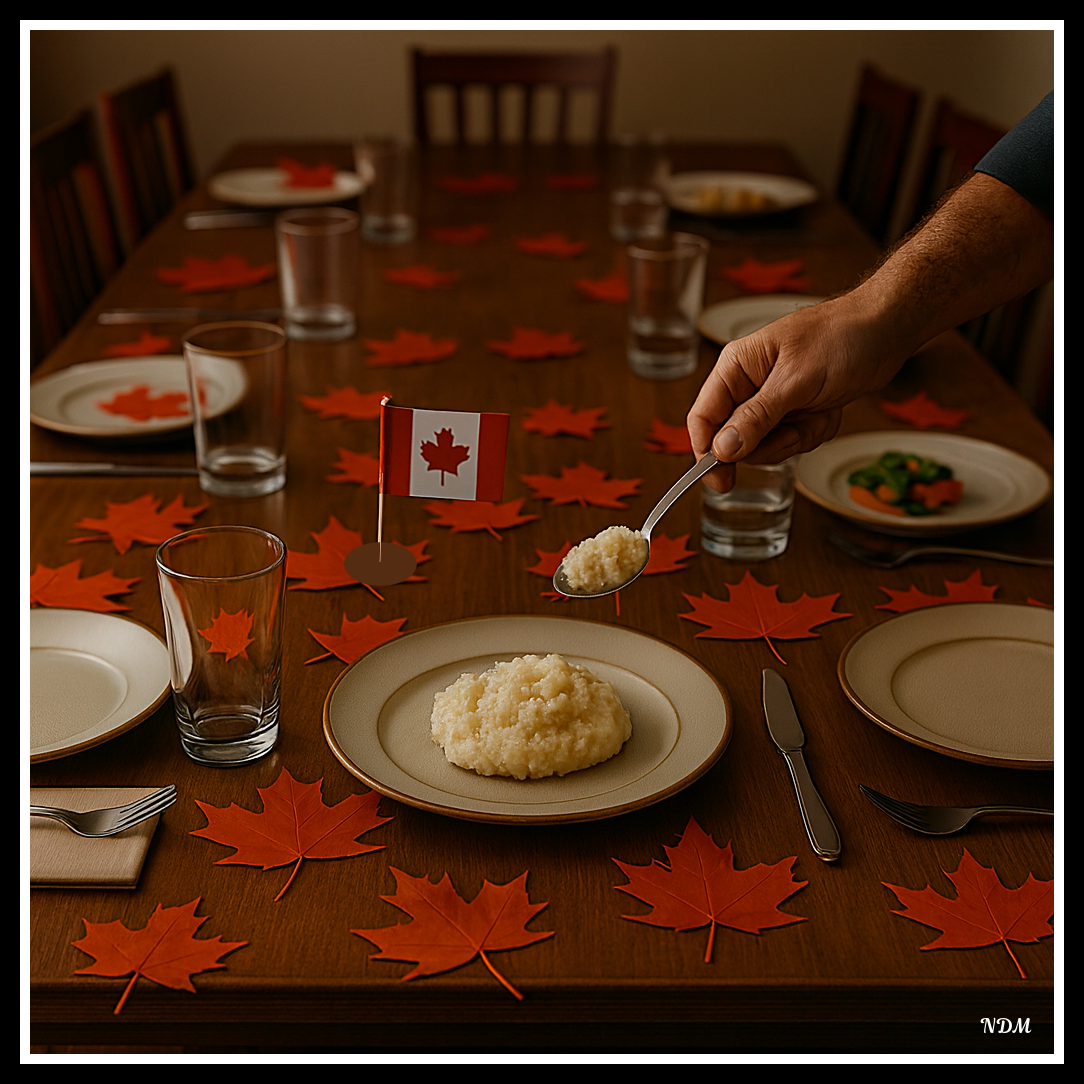
Here’s the truth. Canada is a country, not a profit-sharing corporation. Let’s think of it like a big family. Alberta is the high-earning sibling who makes good money, works hard, maybe brags about it a bit too much at Thanksgiving. New Brunswick? That’s the older relative. Wise, tough, but not pulling in as much these days. Quebec? Well, Quebec is the family member who insists on doing everything their own way but still shows up for supper.

And like any decent family, we try to make sure everyone has what they need, even if we don’t all contribute the same amount.

That’s where equalization comes in. Here’s how it actually works. The federal government collects taxes from across the country (and yes, Alberta pays a big chunk because we earn more. Please know that’s not punishment, it’s math). Then, based on a formula, it gives equalization transfers to provinces that don’t have the same ability to raise their own revenue. That means more help for places like New Brunswick, PEI, and Manitoba so they can offer public services at reasonably similar levels and tax rates. Provinces like Newfoundland for example have been both the successful family member and the one that needed some help on occasion.

And just to be crystal clear Alberta does not send money directly to other provinces. No one’s mailing cheques from Edmonton to Quebec City. Equalization payments come from the federal government to each provinces.

And about that formula? It can be reviewed. And it has been including during the Harper years. So if Jason Stephan thinks it’s broken, maybe he should dig into those files before continuing the negative narrative. While he’s at it, maybe he can get a memo to Premier Danielle Smith because if there’s one thing this Premier loves more than chaos, it’s finding someone else to blame for it.

Canada is not a zero-sum game. Every province brings something to the table. Not all bring cash and thank God, because if money were the only measure of worth, we’d be a pretty soulless country.

Right now, we’re dealing with global instability, trade tensions, economic insecurity, war, and climate pressure on everything from food to fuel. The job right now is to take care of our own. That means defending each other, not dividing each other.

If we need to revisit how the family handles its finances, then fine we will. But not in the current situation our country (family) is in. And not because one provincial politician needs a distraction from his own lack of solutions.

Maybe Quebec is the kid who’s still living at home, expects dinner on the table at six, and reminds you regularly they might move out if the menu ever changes. Alberta is the sibling who just landed a big promotion and can’t stop telling everyone else how to run their lives. Annoying? Absolutely. But guess what? They’re both still family.

Because in the end these provinces are all part of this amazing country and in my view we are family. And like any real family, we all have a seat at this table. No one gets to kick anyone else out.

We argue. We pass the potatoes. We fight over who has to do the dishes. But we also make sure everyone’s plate has something on it. That’s not weakness. It’s the strength of the system.

So if the way we split the bill needs a second look, we’ll do that. Together. Like grown-ups. But let’s not confuse family finances with family values. Because from this citizens point of view we make sure everyone gets dinner on their plate. We argue, we grumble, and sometimes we roll our eyes at each other. But we don’t cut anyone out just because it’s politically convenient.
We show up. We share. We do the work. That’s what being Canadian actually means.

August 2, 2025

Posted: August 3, 2025 in Uncategorized

This one’s a little different than what I usually write but it’s been on my mind, and maybe it’s been on yours too.

In the past few weeks, I’ve had more than a few people reach out, asking the same thing: “What can we do? How do we push back when so much feels out of our hands?” My answer is this: Do what you can, where you are, with what you’ve got. For me, it’s writing. But it’s also being intentional with my wallet. Every dollar is a choice. And right now, those choices matter more than ever.

When Trump started spewing garbage about Canada being the “51st state,” and the tariff threats rolled back in, we had a moment of clarity. Canadians started rallying to support each other. Buying local. Choosing Canadian. Showing up for small businesses. It was fierce. It was patriotic. It was hopeful. But lately I feel like it’s faded.

Summer’s here. Canadian produce is everywhere. Farmers’ markets are full. And there are small non CUSMA industries making some great products. And yet, just yesterday, I caught myself about to click “Buy Now” on Amazon. I stopped myself. What the hell am I doing?

This isn’t about guilt. It’s about attention. Awareness. Intention. We’re not powerless, but we do need to be reminded. We need to recommit to buying Canadian first, not just for pride, but for our future. The next CUSMA review is coming, and it won’t be friendly. We’re dealing with a U.S. government that’s perfectly comfortable slapping tariffs on our industries while treating Canada like a trade afterthought. If we don’t push back with purpose, we’ll pay for it in lost jobs, shuttered businesses, and even more dependency. Trump intends to win using economic power. Our governments (most) are doing what they can to negotiate and help. Note Danielle Smith receives the ‘non’ participation award.

We won’t get it perfect. Some things just aren’t made here. Some people don’t have the financial flexibility to spend extra. And that’s okay. It’s not about purity, it’s about participation. If you can only shift 25% of your habits, that’s still a shift.

The other day, I sampled a grainy mustard from a family farm in southern Alberta. The farmer himself was doing the demo. It was a dollar more than what I’d usually spend and I almost walked away. But it was damn good. And I realized in that moment that this is what matters. Real people, real products and real community. I bought two jars. It felt like something small that actually mattered.

Same with coffee. I’ve swapped out the big brands for Three Sisters, a roaster out of BC that’s now my favourite. That wasn’t just about nationalism, it was just good coffee. But now it’s also about choosing home first.

I’ve cancelled cable, too. Tired of paying into a media machine dominated by U.S. networks that filter everything through their political noise. I’ll figure out my news another way. But I won’t keep funding a system that doesn’t care about my country unless it’s looking for leverage. And I’m saying no to U.S. travel.That’s not bitterness. It’s boundaries.

Luckily, we have options. We have trade partnerships with Mexico and the EU that give us access to excellent products, often with higher labour or environmental standards than the ones we’re importing from the States. If we have to look elsewhere, look there.

So if you’re asking what you can do, start here: Revisit the apps and websites that help identify Canadian-made goods. Ask your grocery store where their products come from and tell them why you care. Choose local when you can. Even once in a while makes a difference. Shop at a farmer’s market. Pick Alberta beef or Manitoba pork. Grab Ontario wine, Alberta mead and honey or Okanagan fruit. If you’re reaching for any product, check if there’s a domestic one nearby. If not, maybe Mexico or Europe instead of the U.S. We don’t have to do everything. But we do have to do something.

This isn’t a one-time blip. It’s a new normal. It’s going to take vigilance, not just passion. We rallied once. We need to rally again. With intention. With consistency. And with clarity about what’s at stake.

So no, I can’t fix the global trade system from my kitchen table.

But I can choose what lettuce I buy. I can choose what coffee I drink. I can write this. And if you’re reading it, maybe you’ll choose something different today too. I’m not just done buying American. I’m done sleepwalking. And if that makes me one jar of mustard closer to a more resilient Canada I’ll take it.