Archive for August, 2025

August 1, 2025

Posted: August 3, 2025 in Uncategorized

Last night, Donald Trump signed the executive order.

We knew it was coming. We’ve been circling this moment for days. And he made it official: tariffs on Canadian imports, those not covered under CUSMA, are now 35%, up from 25%.

Sounds dramatic. And it is. But before anyone spirals, let’s get something clear. Between 80% and 90% of our exports are CUSMA-compliant, which means they’re still crossing the border tariff-free. Some sources suggest the number could be as high as 90% and I hope that’s the case. But I’ve chosen to use the 80% figure to be cautious and not overstate the protection CUSMA offers. There are still a significant number of businesses, especially smaller ones, that either don’t meet the origin requirements or don’t have the capacity to navigate the complex paperwork needed for certification. So while the majority of our trade is covered, I think it’s important not to gloss over the vulnerable share that isn’t.That matters. Trump wants this to feel like a full shutdown. It’s not.

The approximately 20% that just got hit? That’s often small and mid-sized businesses who either don’t meet the complex “rules of origin,” or haven’t been able to file the mountain of paperwork to prove they do. Global supply chains. Raw materials. Unfinished parts. It’s not nothing. But it’s not everything either.

And yet, even with all that said, that’s not the headline. The real concern remains the sectoral tariffs that haven’t moved such as lumber, autos, steel and aluminum, autos. That’s where the real pain is. That’s where entire towns such as Quesnel, Windsor, Hamilton, Trois-Rivières and Nackawic hang in the balance. And those sectors remain under siege.

Trump again tried to justify this latest hit by blaming fentanyl and Canadian “inaction”, which is laughable, if it weren’t so reckless. Canada accounts for 1% of fentanyl entering the U.S. And Carney’s government has already been investing heavily in border enforcement, drug interdiction, aerial surveillance, and the toughest border legislation in our history.

So no, this isn’t about fentanyl, or dairy or fairness. It’s about power, control amd performance. And it’s personal. That much is crystal clear.

Sometimes I wonder if I’m just repeating myself. Saying the same thing over and over again. And maybe I am. But then I remind myself that this is exactly why I have to keep saying it. Because this isn’t about scoring points. It’s about protecting truth in a storm of lies. It’s about telling the story before someone else rewrites it for us.

I stayed up late, flipping channels, listening to the analysts, the trade experts, the chaos. And somewhere in that mess, I heard a quiet comment that stuck with me: a researcher compared Canada to the Doozers from Fraggle Rock, those tiny green builders who kept constructing while the Fraggles tore everything down. That’s us right now. We build. Quietly. Relentlessly. No matter who’s smashing the walls around us.

And just before I went to bed, Prime Minister Mark Carney released a statement, and to be blunt, it echoed exactly what I’ve been thinking, “While the Canadian government is disappointed by this action, we remain committed to CUSMA… The U.S. average tariff rate on Canadian goods remains one of the lowest for all its trading partners. For each impacted sector, the Canadian government will act to protect Canadian jobs, invest in our industrial competitiveness, buy Canadian and diversify our export markets.”

This is the tone I needed to hear. Not panic just a focus on being intentional. Carney didn’t match Trump’s bluster. He focused on what we can control. Things such as cutting interprovincial trade barriers, investing in national infrastructure, using Canadian workers and resources, and becoming our own best customer.

And then this line. We need to keep this front and centre. “We can give ourselves more than any foreign government can ever take away.”

The timing of a Canadian offensive, if one is even needed, is still to be determined. But let’s not forget that we have tools. We have leverage. From reciprocal tariffs to the natural resources the U.S. depends on, to the American bonds that we hold. There are many forms of pressure we’ve yet to apply. We don’t fight recklessly, we fight with strategy, discipline, and purpose. And that means knowing when to act, and when to hold.

There’s your contrast. One man weaponizes policy like a tantrum. Another leans into building a country that doesn’t flinch.

So to simplify here’s where we stand. 80% of Canadian trade remains protected under CUSMA, 20% just got squeezed harder especially for smaller firms, sectoral tariffs are still the real crisis and once again Trump is spiraling, lying, blaming, and inflating.

And Canada? We’re building. With purpose. With partners. With grit.

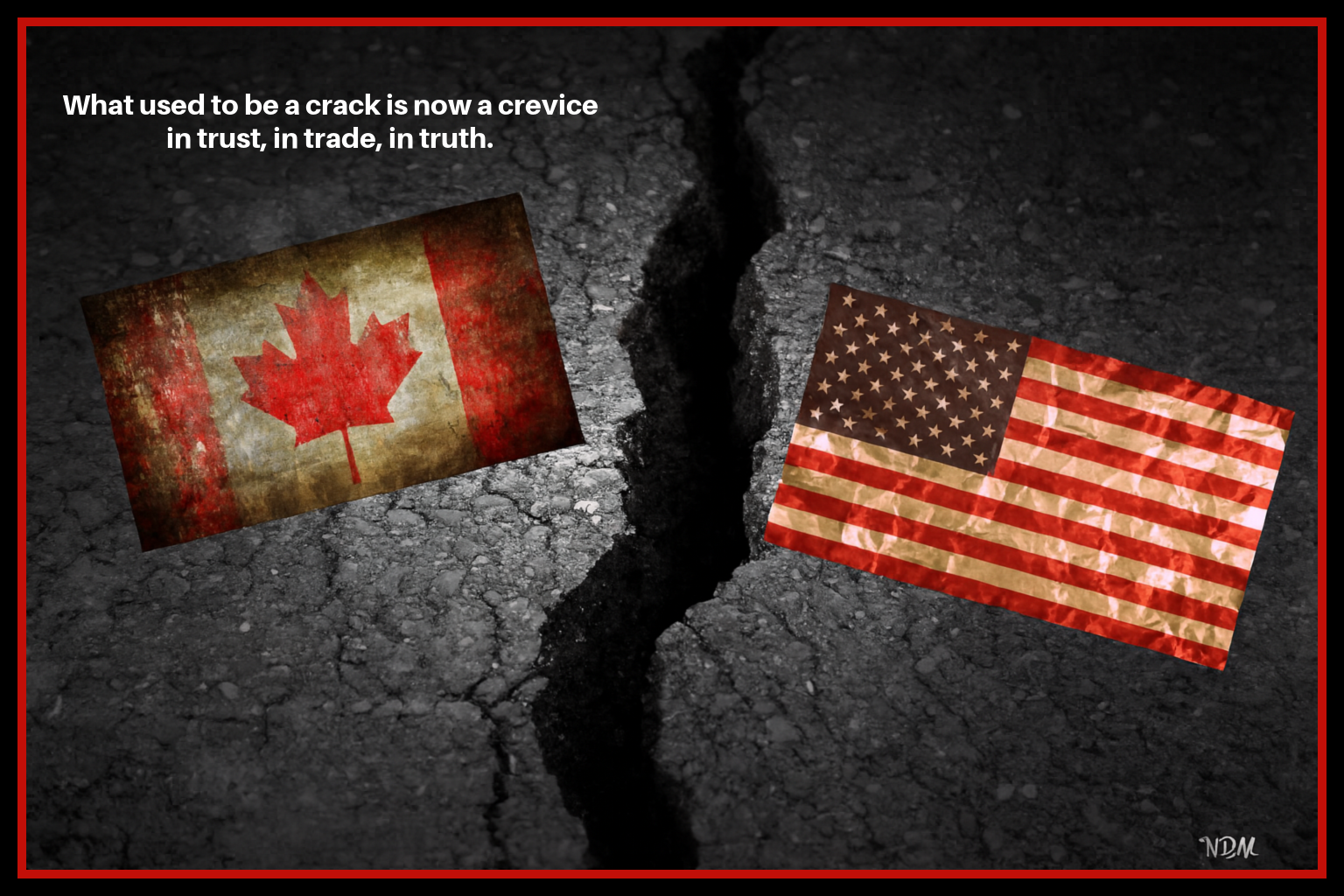
I didn’t set out to write every day. I didn’t plan on logging this much road. But if even one person feels a little more grounded, a little more informed from what I share then it’s worth it. The crack in the road may widen but so will our resolve.

Canada Strong and Free!
July 30, 2025

Posted: August 3, 2025 in Uncategorized

August 1st is coming and its tense. Canadians, and Canadian businesses are nervous. That’s understandable. But nervous doesn’t mean panicked, and it certainly doesn’t mean acting stupidly. What we need now is belief. Belief in what we have. Belief in who we are. Belief in the strength that has always shown up when we’ve needed it most.

That’s a quote, or at least the spirit of one, from Arlene Dickinson. And when she speaks, a lot of us in this country listen. She’s not just a Dragon’s Den celebrity, she’s a business leader who understands Canada, and the mindset of people trying to make a living through ups and downs, pressure and politics.

I share that perspective. And as we stare down the barrel of Trump’s tariff threat deadline, we need to remember who we are, and who we’re not. Because here’s what we are not: We’re not weak. We’re not reckless. And we’re not going to be bullied into bad deals just because someone else signed a press release and called it a win.

Before we get into the weeds, let’s consider this. What happens if the outcome isn’t what we like? What if the announcement is performative or one-sided or vague? Because here’s what people forget. The vast majority of what we’ll hear will be unilateral impositions by Donald Trump. They’re not “deals.” They’re dictates. They’re done to appear like diplomacy. And that distinction matters.

Now, I’m not a global economist or a geopolitical strategist. I’m not inside Mark Carney’s brain. But I do trust one thing and that’s his focus. Every time he speaks about these talks, it’s clear: he’s focused on getting the best deal for Canada. Not a deal for a photo op. Not a deal to please a TV audience. A deal that benefits us and holds up over time.

I’ve spent the last few days digging into the so-called “agreements” Trump has touted with Japan, the EU, and the UK. And let me be blunt: I’m not impressed. Let’s start with Japan. It is vague at best. It reads more like a framework than an actual agreement. There are few hard targets, no enforcement mechanism, and no timeline. So how do you even know if it’s real? You don’t. It’s Trump-style diplomacy: big on bluster, short on detail, and designed for the optics. The EU? Even more complicated. Yes, it’s a bloc, but every single one of its 27 member countries must ratify any final agreement. I can’t imagine France’s François Bayrou agreeing to anything without climate considerations or Hungary’s Viktor Orbán deciding to be compliant. They can block it. And if just one country doesn’t sign off? It collapses. So let’s not pretend this is a done deal.

And Ursula von der Leyen. Sitting there while Trump ranted about windmills and not a word. Just a polite nod. That told me all I needed to know. That moment wasn’t about policy it was about playing the game to keep Trump happy.

Now back to Canada, because that’s what really matters here. Mark Carney is not going to walk into a room and agree to something he knows we can’t deliver on. That’s not the kind of leadership we need, and thankfully, it’s not the kind we have. But that won’t stop the critics. They’ll say, “Why can’t we do what Japan did?” or “Why didn’t we sign like the EU?” Well because those weren’t real deals. And this isn’t pretend.

So while Trump stands on podiums making grand declarations, Carney is working behind the scenes on trade corridors, supply chains, and logistics frameworks that will make Canada stronger, not just now, but for generations. That’s not part of Trump’s thought process. That’s not even on his radar. For him, it’s all about spectacle. It agitates me, genuinely, that we’re even comparing a thoughtful, long-term economic strategy to this showboating nonsense. We need to stop pretending these things are equal.

We don’t know what the outcome will be on August 1st. But I do know this: whatever gets announced, read it twice. Because the truth is usually hiding behind the fireworks. And if it costs me a little more, in the short term, to support a process that protects my kids’ future and Canada’s long-term interests, then I’m okay with that.

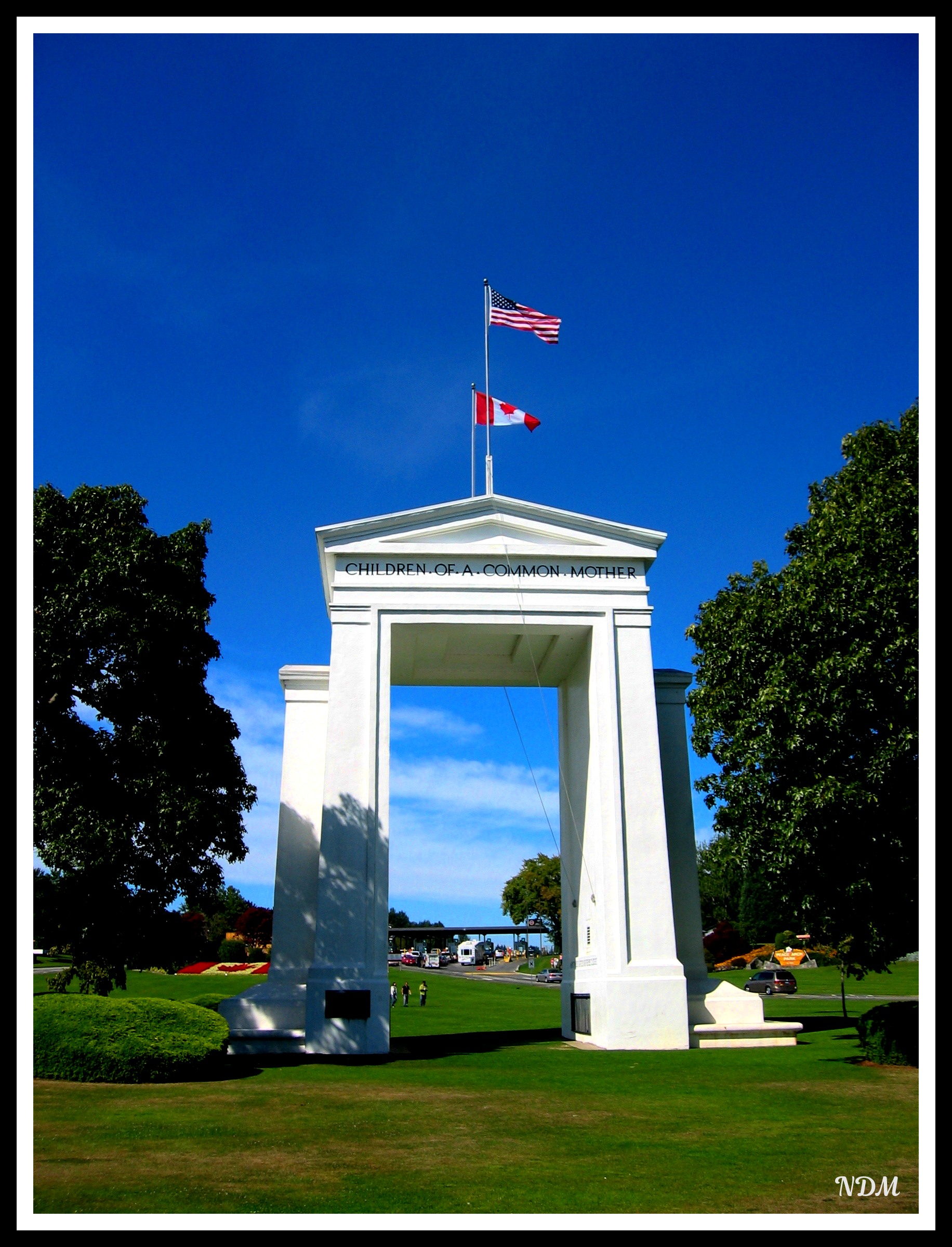
Because belief isn’t just a feeling. It’s a choice. And today, I choose to believe in Canada. And maybe it’s fitting that the image here is the Peace Arch, that quiet border crossing between British Columbia, and Washington. The monument itself was built in 1921 to celebrate the longest undefended border in the world, a symbol of friendship and cooperation between two nations who have stood side by side in war, trade, and peace. Etched into that arch is the inscription: “Children of a common mother.” and on one of the gates the powerful words, “May these gates never be closed.” You can’t look at those words today without feeling a knot in your throat. Because while the border may still be open, the spirit behind those words feels fragile. Strained. At risk. And that, right there, is the tragedy.

So no, this isn’t just about economics. It’s about sovereignty. It’s about decency. It’s about the kind of country we want to be, and the kind of country we want to leave for those coming after us. So while connection between our countries may never be the same economically, I will hold on to the hope that those gates never close.

July 28, 2025

Posted: August 3, 2025 in Uncategorized

Trump’s suddenly a compassion filled humanitarian? Please pass the barf bag. I am disgusted.

What better way to dodge the Epstein spotlight than to suddenly slap on a halo and pretend you’re a saint? Give me a break. In the past 24 hours, Donald Trump has magically rebranded himself from chaos agent to humanitarian-in-chief. We’re now meant to believe he’s deeply concerned about starving children in Gaza. Please don’t forget that this is the same man who dismantled U.S. contributions to global food aid and let warehouses full of emergency supplies rot under his watch. He undermined international relief systems, and we’re expected to buy his wide-eyed concern for the suffering?

He says he’s sent $60 million in food support last week, but of course, adds that it’s “being stolen.” Yes Trump. Leave a backdoor out.

Then there’s his whiplash-inducing shift on Russia. Suddenly, if Putin doesn’t shape up, he says he’ll impose tariffs and sanctions in 10 to 12 days. Why not 14? That’s usually his favourite magical time frame to kick the can. But no, this one’s “10 or 12,” because well there’s reasons. Because vague is the game when you have no plan.

And now this morning, he’s sitting with UK Prime Minister Keir Starmer like some elder statesman of peace and compassion. A man who once said he’d bomb civilians, now wants credit for caring? The same man who tried to shake down Ukraine for dirt, now cloaks himself in concern for their suffering?

And then, surprise surprise, out comes what I’ll refer to as the ‘God card.’ I wouldn’t be surprised if next week we get a carefully staged photo of him clutching a Bible, again, upside down, standing outside a burned-out aid truck.

You can almost picture this scene: Trump, pacing, saying to his loyal contingent as they brief him that the Epstein files case is heating up further, “My best shot is if they think I am concerned about starving children. People will forgive when they see me stepping up.”

That’s what this is. Not a change of heart. A change of strategy. An image rehab tour disguised as moral awakening. Because here’s the truth: the Epstein case isn’t going away. His name is being whispered in the halls of Congress, screamed on podcasts, and sprayed across conspiracy-laden timelines. Trump’s proximity to that fire is real. And like any cornered animal, he’s doing what he does best distracting, deflecting, and inventing a new storyline to survive the moment.

So no, I’m not saying don’t welcome food aid or pressure on Russia. By all means, let the man throw us a bone if it gets results. But let’s not pretend we’re watching a redemption arc. This isn’t rebirth. It’s repackaging.

The core of the man hasn’t changed. He’s not Moses parting the Red Sea. He’s just trying to drain the swamp of headlines with his own crocodile tears.

Today’s soft-focus messiah routine is just the latest act in the show. Because if the press and the public start to believe he’s suddenly found empathy, maybe, just maybe, they’ll forget that his name keeps surfacing in one of the darkest scandals of the century.

Don’t be fooled by this charlatan. This isn’t compassion, it’s camouflage. A man doesn’t grow a heart overnight. He just grows more desperate. I am definitely not fooled but am grateful for aid that will come from the American people. Today’s tearful saviour is tomorrow’s tantrum thrower. And he knows that if he doesn’t sell this “Compassion Trump” character well enough? Epstein stays on the menu.

July 27, 2025

Posted: August 3, 2025 in Uncategorized
Tags: , , , ,

What did I actually just witness? Normally, I wouldn’t be doing a post at this time of day. But because I’ve spoken recently about the importance of this U.S.–EU deal and what it could signal to Canadians, I felt it was important to put something out there right away. Just a reminder that this is where I stand right now. My opinion might change if more information becomes available. (Imagine that, a person adjusting their view based on facts! Wild, I know.)

So here we go. We just watched Donald Trump and Ursula von der Leyen announce what was alternately called a deal, a framework, a partnership, and, let’s be honest a show. It happened at Trump’s golf course in Scotland, following what we’re told was a meeting that lasted less than one hour.

Let me repeat that: less than one hour.

So, I ask you: What real trade deal between the world’s two largest economies, involving $750 billion in energy, $600 billion in U.S. investments, “hundreds of billions” in military purchases, and no documentation, gets hammered out in under 60 minutes?

It doesn’t. This was performative. And it worked, for Trump. He got to sit there and declare “the biggest deal ever made,” while von der Leyen smiled politely, said all the right diplomatic things, and let the man-child bask in his imaginary glory.

But here’s the problem: we still don’t know what this actually is.

There was no written agreement. No release of the framework text. No clarity on timelines for these alleged investments. No mention of climate policy, which is foundational for the EU in every negotiation. Steel? Still untouched. Pharmaceuticals? Excluded. CHIPS? Deferred to Trump’s favourite timeline: “two weeks.”

The numbers thrown around were large. $750B, $600B, “hundreds of billions” seem completely unverified. And without a timeframe, they mean nothing. I could say I’m buying a cottage in the Muskokas. Sounds great. Doesn’t make it true. Not unless I’ve got a few hundred years and a magic money tree.

So, what does this mean for Canada?

Well, we don’t know yet. But we should be paying attention.

This vague spectacle doesn’t necessarily threaten us, but it does signal how Trump is approaching trade: with optics first, substance later (if ever). We’ve got our own looming deadline on tariffs, and despite new relationships being built we still have our own deeply integrated economic ties with the U.S. but also expanded economic ties with the EU. How this deal unfolds could very well shape the tone of upcoming negotiations with Canada.

That’s why I’m not panicking but I am watching. Because Ursula von der Leyen has been in real, ongoing talks with Prime Minister Mark Carney. On climate, regulation and on trade standards. My instincts say they’ve spoken recently, maybe even this morning. And while I do think concessions were made between the EU and the U.S., I do not believe this agreement is as it was presented.

Ursula played this smart. Savvy, even. She gave Trump the optics he needed without surrendering the EU’s deeper priorities or at least not visibly. But a reminder: until there’s a document with dates, mechanisms, and enforcement, there is no deal. There is, at best, a placeholder. At worst, a photo op.

And we need to remember, too, that Canada has its own long-standing relationship with the EU, built on predictability, regulation, and climate accountability and a new enhanced relationship built on relationship where our Prime MInister is considered to be a key allie. I don’t believe that relationship disappeared just because Trump needed a stage today. If anything, I’m more convinced that the real diplomacy is still happening, off-camera.

So here I am, asking questions, reflecting out loud, and inviting feedback. I’m not claiming to have the answers, just raising the red flags I see flapping wildly in the Scottish wind.

And for anyone wondering how it all landed, I’ll just leave you with this image: the EU and U.S. flags, side by side, planted squarely in a sand trap. Fitting, really. They walked out claiming the biggest deal ever made, and left it resting in the sand, soft beneath the surface. Not exactly solid ground. Some might even call it quicksand.

July 26, 2025

Posted: August 3, 2025 in Uncategorized
Tags: , , , ,

I might have to start getting up at 4 a.m. (or start doing lives, because Trump’s tantrums don’t respect my posting schedule)

I’ve discovered something. My commitment to writing thoughtful posts the night before and publishing them at 7 a.m. is becoming less of a routine and more of a liability. Because, between 10 p.m. and sunrise, Donald Trump inevitably throws another tantrum, drops another truthless screed, or tries to dismantle international relations. It’s exhausting. But here we are again.

I had a whole post lined up, and then Trump declared he was “done negotiating” with Canada. And now people are asking me, “Nancy, do you still think Mark Carney is the right one to handle this?”

Yes. I stand exactly where I stood. Carney is the only one in this country who has both the credentials and the composure to deal with Trump basically by not ‘dealing’ with him at all. Because, as I’ve said before and I’ll keep saying: you don’t negotiate with crazy. You route around it.

And that’s exactly what Carney is doing. Let’s not forget what he said the night he became Prime Minister. I’ve quoted it before and I’ll paraphrase again: ‘the Canada–U.S. relationship as we knew it is over.’ And maybe that’s what some of us are still struggling to accept. Maybe I am too.

A few weeks ago, I posted an image of a cracked road that resonated widely. Well, that crack? It’s now a full-blown canyon. And unless something, or someone, removes the unstable force at the center of it, we’re not crossing that bridge any time soon.

Now, here’s what you didn’t hear in Trump’s tantrum: according to credible sources, the real trigger was money. Trump demanded what’s been described as a “one-time loyalty fee” from Canada, a price to be paid for tariff relief. Call it a handshake. Call it a favour. Call it what it is: extortion.

And Carney? He told him to pound salt. Or, more accurately, he told him no, the Canadian way: quietly, firmly, and repeatedly.
Trump didn’t take it well.

And that’s why we’re here. This wasn’t a trade breakdown. This was a mobster getting snubbed by a banker who saw the scam coming ten miles away. The threats and the 35% tariff bluff are because Carney wouldn’t buy in.

And here’s something Canadians and Americans need to understand: when Trump says he’ll “have all these deals in place,” they’re not negotiated agreements. They are imposed conditions. One-sided ultimatums dressed up as diplomacy. There’s no give and take. No mutual interest. Just a string of threats, followed by declarations of success when the other party either folds, or walks.

Please, for the sake of truth and sovereignty, don’t take him at his word. Don’t listen to the noise. Do your due diligence. Read real sources. Get the straight goods on what he’s actually done, not what he claims to have done. Because the words are meaningless. The record is what matters.

Meanwhile, Carney’s been building the bypass: finalizing the Canada–Mexico Trade Corridor, with no American permission slip required, locking in historic agreements with the EU and Japan, launching Canada’s Energy and Transportation Sovereignty Corridor, connecting provinces and territories coast to coast to coast, and preparing retaliatory tariffs and a Buy Canadian strategy that actually hits Trump where it hurts, his electoral map.

Trump has taken a detour to Scotland, where even his ancestral homeland wants no part of him. He renamed a golf course after his mother, hoping to buy affection. It didn’t work. The cliffs, the castles, the wind-swept resistance, they said no. The land of fierce rebellions and long memory doesn’t forget. To my ancestors from those highlands: thank you. You did us proud.

Now, tucked into this week’s schedule is another meeting we should all be watching: Trump is expected to meet with representatives of the European Union. I’m hoping they hold the line, as they’ve publicly indicated they would, in standing by Canada in this process. Whether they stand firm or bend will speak volumes. At least, it will to me. So let’s put a sticky note on that one. Bookmark it and watch it. Because the outcome of that meeting could quietly shape the next chapter in all of this.

And as for Canada? We’re not backing down. We’re not bending.
And if being “tough and nasty” is what it takes to defend our sovereignty? Then yeah, we are. Nicely. I am happy to have that handle. Because Canada doesn’t do fealty. We do strategy. We do dignity.

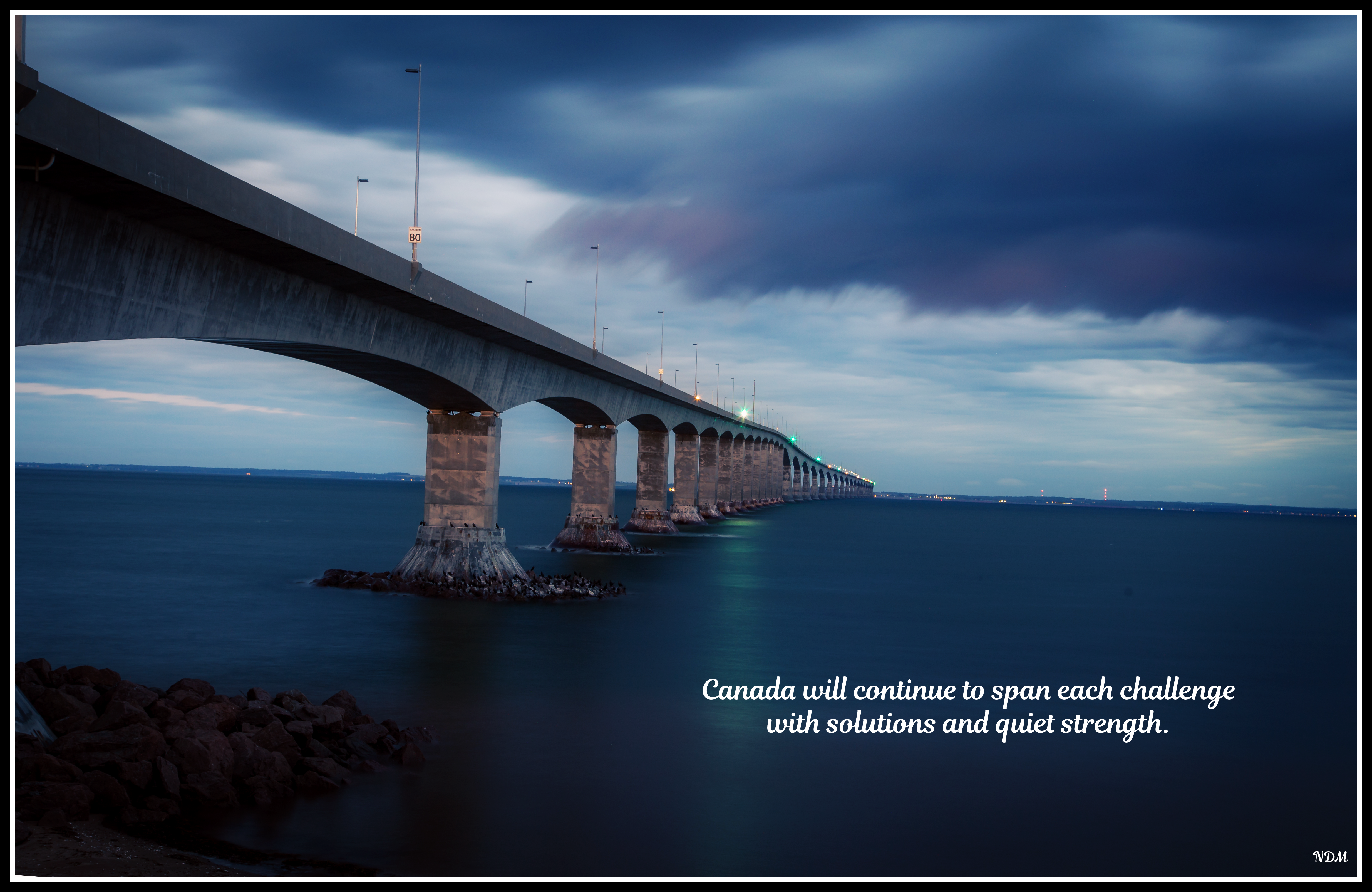
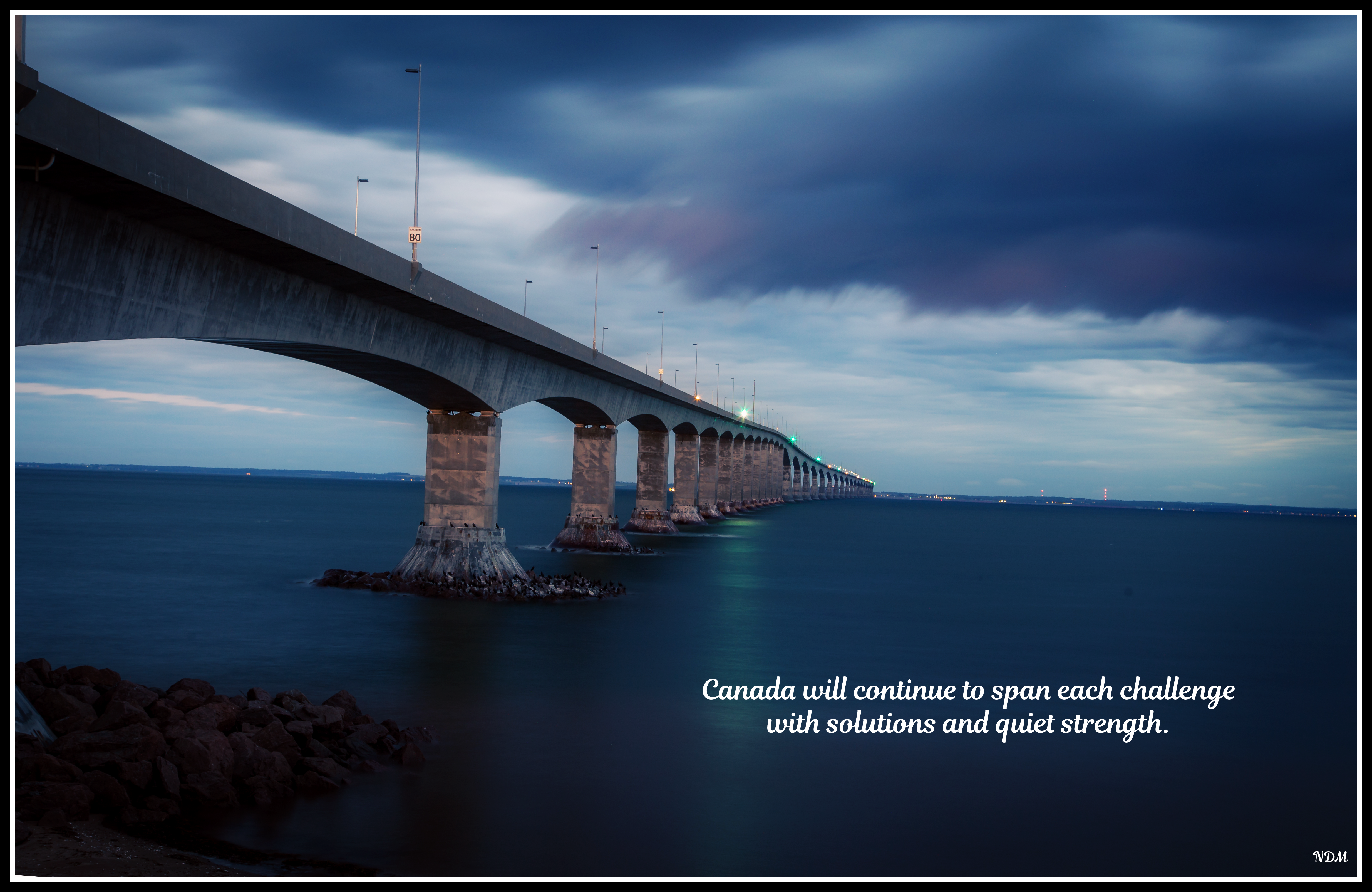
We’re already partway across a long, solid span, something real, something built to last. It stretches across deep waters, connecting more than just provinces. It represents who we are: a country that doesn’t flinch when the crossing gets tough. We’re not at the other side yet. But the pillars are strong, the direction is clear, and we’re moving forward. One kilometre at a time. No turning back now.

July 25, 2025

Posted: August 3, 2025 in Uncategorized
Tags: , , , ,

There are some things I’ve avoided writing about. Not because I don’t care, but because I care so deeply. I’m afraid I’ll say the wrong thing. I worry that I don’t know enough. I worry that someone will be offended. But some images burn so deeply into your brain that silence feels like complicity. And today I didn’t allow myself to scroll past. I forced myself to look at every one of those images.

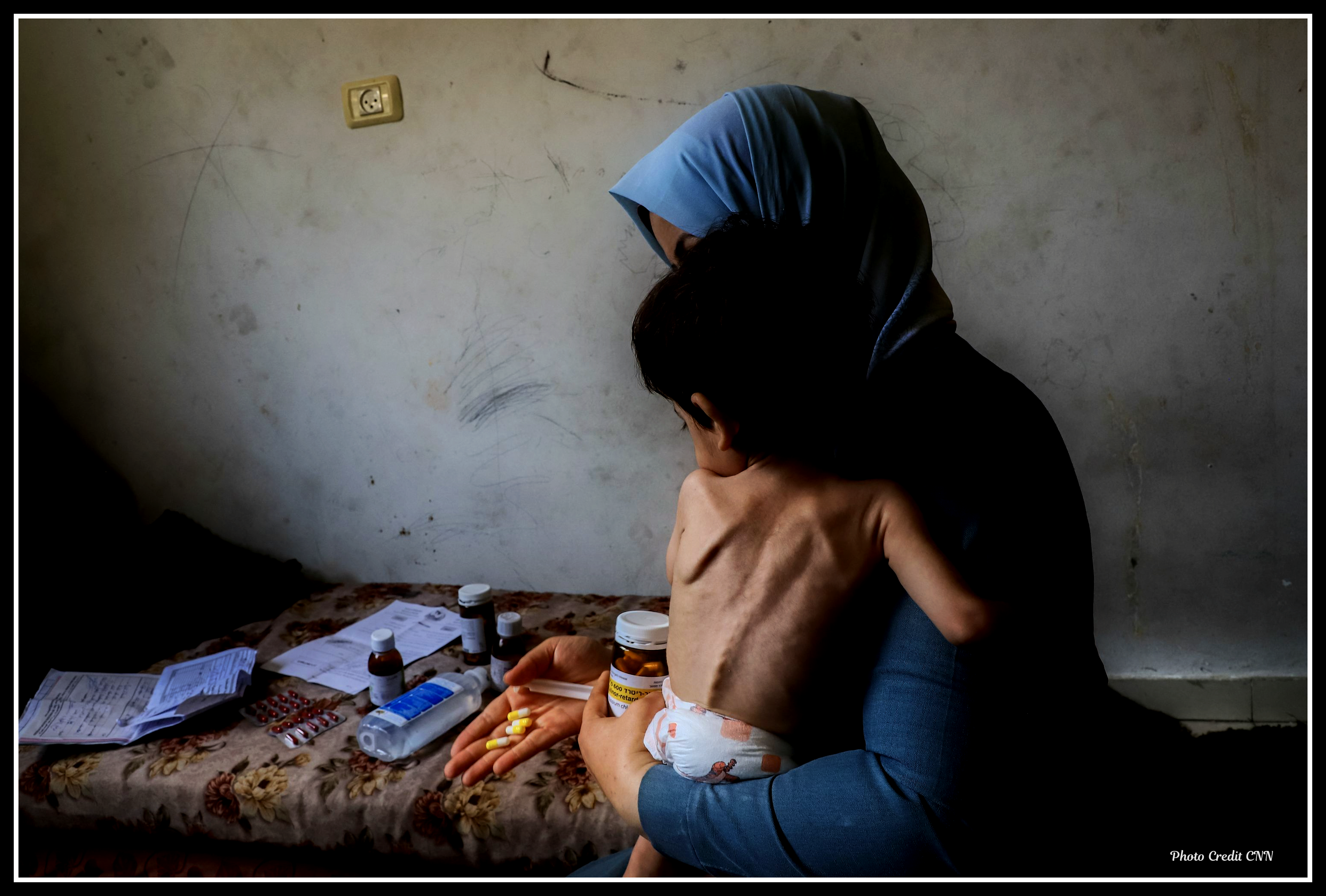
You know the ones I mean. The images coming out of Gaza, of children starving, of skeletal babies with wide eyes and no voice left to cry are more than I can bear. And more than anyone should bear.

Let’s put something on the table right now: Hamas is a terrorist organization. It has done enormous harm, not only to Israel but to its own people. That is not in dispute. I’m not here to defend terrorists. No one should be. But this is one of those times when more than one thing can be true at the same time.

We can condemn Hamas AND condemn the deliberate blockade of food to civilians.

We can mourn the horrific attacks of October 7 AND be outraged at a policy of collective punishment that leaves children to die of hunger.

We can believe in Israel’s right to exist AND still demand that humanitarian law be followed by everyone.

And so here it is: no child on this planet should be starving. No child should be shot at while trying to reach food. And yet we are seeing both. In real time. On our screens. And the world is fumbling through excuses. Some claim that Hamas steals the food, that they’re to blame. But let’s talk facts. The United Nations and the World Food Programme, highly trained, internationally respected humanitarian bodies are not being permitted to run this operation. Why? Because the U.S. and Israel say they’ll “handle it.” But they are NOT handling it.

The World Food Programme has publicly stated they are ready to deploy 400 aid distribution sites to avoid the kind of chaos that leads to violence and desperation. But they are being blocked. Not invited to the table. And what a bitter irony, people starving, and we’re locking out the people with food.

The International Red Cross and Red Crescent Movement, also prepared and willing, is being sidelined. These organizations exist for moments exactly like this, war, disaster, famine, and yet they’re standing by with full capacity while children die.

Tonight, Prime Minister Mark Carney issued a statement. And while I’ve been critical that he maybe wasn’t speaking out enough, this was important: “Canada condemns the Israeli government’s failure to prevent the rapidly deteriorating humanitarian disaster in Gaza. Israel’s control of aid distribution must be replaced by comprehensive provision of humanitarian assistance led by international organizations. Many of these are holding significant Canadian-funded aid which has been blocked from delivery to starving civilians. This denial of humanitarian aid is a violation of international law.”

From me to PM Carney: ” Thank you for taking this step. For saying out loud what needed to be said. But this is only the beginning. We need more than condemnation. We need action. Canada must now push harder, louder, and with real urgency to ensure that aid flows. Words matter. But what you do next matters more.”

Under international humanitarian law, including the Geneva Conventions, civilians must be protected during conflict. Aid must be allowed to flow. Blocking it is not just immoral. It’s illegal. Some will respond to this with more “What about Hamas?” noise. But I’m going to say it clearly: I’m not entertaining that in this post. I know what Hamas is. We all do. But if your outrage ends there, and doesn’t extend to starving children then it’s not really outrage, is it? It’s politics. And politics should never be more important than human life.

We don’t know when this war will end. Maybe not for a long time. But we can’t wait for peace to begin humanitarian aid. When my children were young, they’d get up from their comfy beds, eat breakfast, cereal, toast, maybe pancakes on weekends, and head off to school. There were swimming lessons, football practice, and rainy movie nights curled up in the fifth wheel.

I know not every child in North America has that life. My kids knew that too. We talked about it. We volunteered. We supported programs in our community to help those who had less. This is not comparable. In North America, even when families struggle, food exists. Programs exist. There is no systemic blockade between a child and their survival. What’s happening in Gaza isn’t poverty. It’s manufactured starvation. It’s children dying not because there’s no food, but because we are refusing to let it reach them. Mothers are burying children with bloated bellies and sunken eyes. Kids are dying, not just from bombs but from emptiness.

So I’m done staying quiet. I’m done worrying about who I’ll offend. Because if this offends you, if demanding food for children offends you, then I don’t think we’re on the same team.

I am an Albertan. I am a Canadian. But ultimately, I am a citizen of the world. And as a citizen of the world, I have to scream this: We need to let the aid in. Now.

Please speak up. No matter what country you’re in. Contact your MP, your congressperson, your representative. Write. Share. Demand that humanitarian organizations like the UN, the World Food Programme, and the Red Crescent be allowed to do their jobs.

The war may not be over. But the starvation can be. If you can scroll past starving children and still argue about politics, you’re not defending your values, you’re burying them.

July 20, 2025

Posted: August 3, 2025 in Uncategorized

People sometimes ask if I have a direction with what I write. Fair question. I cover local, provincial, national, international, whatever’s rattling around in my brain that day. And today it’s climate. It’s chaos. It’s leadership failure. And it’s Alberta, where the Premier’s hatred of the federal government now outweighs her responsibility to govern.

Let me start with something I’ve said before: I support Mark Carney. That’s not new. And one reason I do is because he talks about the systems we need, not just slogans. And one of the things I am hoping he will initiate is a National Emergency Response system. Every week, we get another reminder why we need one.

Wildfires are getting more frequent, more dangerous, and more expensive. That’s just fact. Add in hail the size of baseballs, tornadoes that used to be unheard of here, and floodwaters that sweep in without warning, and the reality is: this isn’t “extreme weather.” It’s just “the weather” now. Our new normal.

Last night was another hailstorm in the “Hail Core Corridor.” That’s my new term for what used to be Alberta suburbia and is increasingly more often an uninsurable zone. People can’t get home insurance anymore, or they’re paying premiums that would make a mortgage broker cry. And we pretend this is normal.

It’s not. We need a national climate emergency strategy. Fires, floods, hail, tornadoes, and drought. We need coordinated disaster planning across the country. Maybe it’s FEMA-style, maybe something new, but pretending it’s someone else’s problem has run its course.

Which brings us to Jasper. The Town of Jasper is a municipality, run by local council, governed under the Muncipal Government Act and responsible to the people of the town. It sits geographically inside Jasper National Park. That overlapping setup means both federal and provincial authorities are involved in emergencies. And that’s exactly where things collapsed last year.

Jasper’s independent wildfire review of the 2024 fire found that Alberta’s government hindered the response. Provincial fire crews were told by the province not to assist initially, leaving Jasper’s tiny local team to deal with a growing wildfire. In a normal year, provincial support, especially air tankers, would’ve been automatic. But not under this government.

Why? Because Danielle Smith saw federal land and picked a jurisdictional fight. Instead of working together, Alberta tried to seize control of the fire response, causing confusion and delays. The Premier’s reaction? “This report comes as a shot out of the blue. It’s unfair, it’s untrue, and I would like them to withdraw it.”
Danielle Smith

It wasn’t a partisan document. It was a third-party review meant to learn lessons. But Smith took it personally, because she always does. I guess the significant loss of property and potential loss of life were not more important than challenging the Federal Government.

Now here is where my concern about local governments deepens. Smith’s government has been centralizing power in ways that should concern everyone, not just progressives. We’ve seen municipal authority stripped or overridden in Edmonton, Calgary, and rural areas. Jasper is just the latest example of a Premier who wants control without responsibility.

We’re watching creeping authoritarianism.

I write about a lot of things but this one touches on everything I care about. My fear for what’s happening to municipal leadership. My heartbreak at what Alberta could be and what it’s becoming. The dangerous, archaic way our provincial government is treating climate change. The pressure on a new federal government to lead while being stonewalled by provinces like ours. And the fact that the news cycle, here and across Canada, and in fact around world is so consumed by the daily meltdown of American politics that climate disasters get buried.

But the smoke isn’t going away. Neither is the hail. Or the floods. Or the fire bans. Or the evacuation alerts. And neither is Danielle Smith, unless people start realizing what’s actually burning.

And so back to wondering who I write these for? I write for those of us who refuse to look away. Who still believe we deserve a province, and a country that leads with honesty, protects with purpose, and plans for a future beyond the next news cycle.

Because climate doesn’t care about jurisdiction. And smoke doesn’t check who’s in charge before it rolls in. Danielle Smith can scream “federal overreach” all she wants, just like Trump screams “fake news”, but neither one of them can gaslight the weather.

July 18, 2025

Posted: August 3, 2025 in Uncategorized

Note: This piece was written just before this morning’s U.S. decision to claw back funding from public broadcasting. While that move directly impacts Americans, it’s a flashing warning light for Canadians too. Much of our media is already U.S.-owned or heavily influenced, and public broadcasting, here and there, is one of the last remaining tools for independent journalism and cultural integrity.

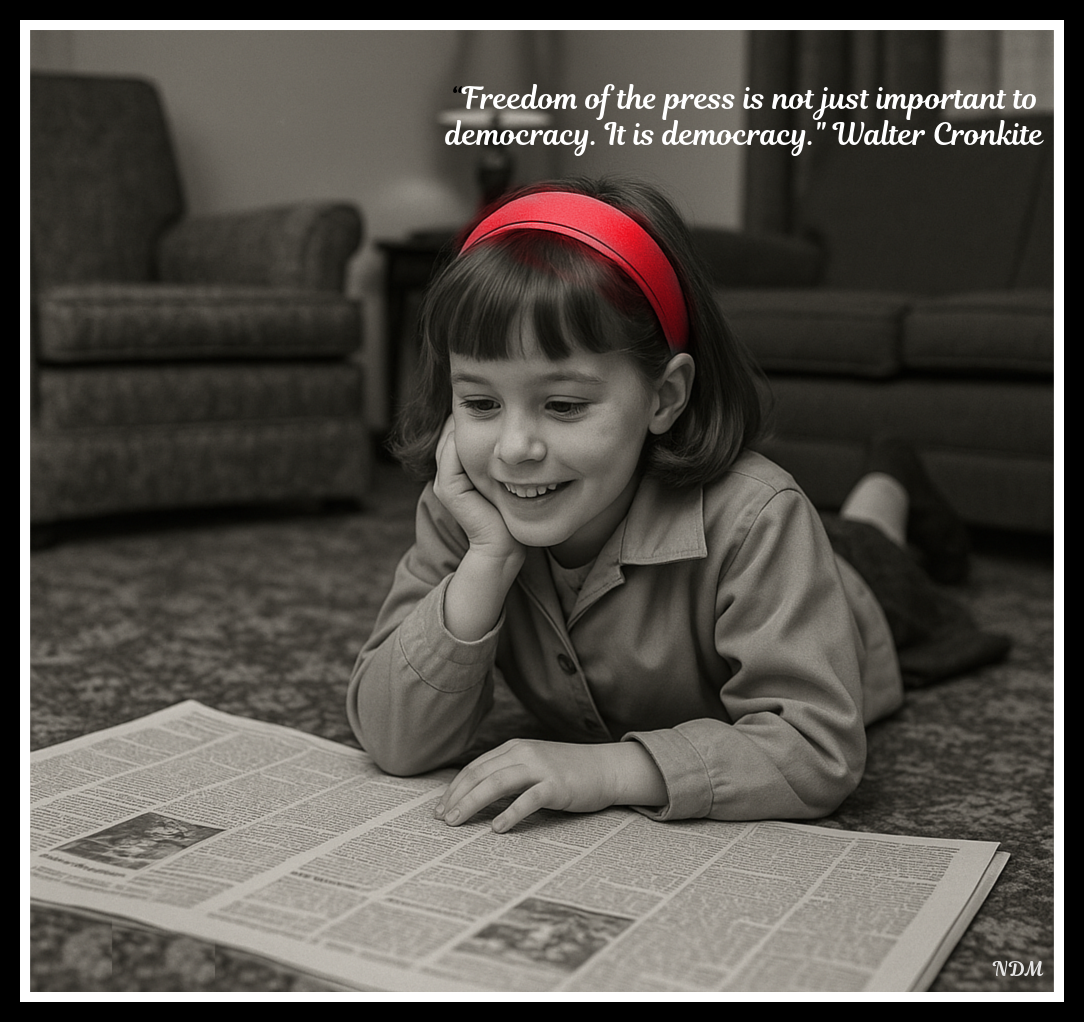
Walter Cronkite once said, “Freedom of the press is not just important to democracy, it is democracy.” Let those words sink in. Not “a part of.” Not “nice to have.” It is democracy. And right now, that democracy is on life support.

I spend all of my days now trying to gather my thoughts, too many thoughts, really, all swirling around one question: how the hell did we get here? I look at the state of the media, the state of our politics, the slow-cooked erosion of journalistic freedom, and I’m trying to understand why more people aren’t sounding the alarm. Or maybe they are. Maybe we’re just not hearing them anymore over the white noise of distraction and denial.

Stephen Colbert’s show was cancelled yesterday. And sure, not everyone loves his flavor of commentary, he wasn’t for everyone. But for many, he was the voice that helped them laugh when things felt unfunny, made them think without preaching, and reminded us that satire has always been a form of protest. Satire, like journalism, only survives when the powerful allow it to. When someone at the top decides it no longer serves their interests, it disappears, presented as a programming change, but no less political in consequence.

I grew up in a household where the newspaper was sacred. I watched my father, every single day with that great big broadsheet stretched out in front of him like a shield and a sword. He didn’t just read it. He used it, to understand the world, to prepare for conversation, to teach me that knowledge was the first defense against ignorance. He believed that if I could read the stock market page, the baseball scores, the opinion section, even the classifieds (some I was definitely not interested in), then I’d be able to speak to anyone about anything, at least with some basic context. That was the point: not that I would learn everything from the paper, but that I’d be inspired to keep learning. That foundation of curiosity was the real education. If something piqued my interest, I was expected to go deeper. And I did.

And yet in another breaking news twist, the Wall Street Journal now claims to have a copy of a letter Trump sent to Jeffrey Epstein, one they’ve described as salacious in tone. That letter has sparked outrage, threats of lawsuits, and a fuming Donald Trump, who reportedly demanded Rupert Murdoch suppress its release. Murdoch, apparently, didn’t listen.

So now the question becomes: who’s controlling who? We used to worry about governments controlling the press. That was the red flag, right? Censorship. State media. Propaganda. But now it’s murkier, and maybe more dangerous. Because what happens when it’s billionaires controlling the press and the government? Or worse, when the lines blur so completely that you can’t tell who’s pulling the strings? Is it Murdoch controlling governments through headlines? Or is it governments using billionaire-owned media as their megaphone? When one feels slighted, can they take the other down with a few strategic leaks or lawsuits? Where exactly is the power wielded, and more importantly, who’s protecting the public interest in that game?

And here in Canada, we’re not immune. Most of our major newspapers are owned or influenced by American corporations. The rest lean heavily to the right, propped up by some provincial flirts with censorship through court-defying legislation and thinly veiled book bans. We criticize “state media” in Russia or China while pretending that corporate media, aligned with political interests, is somehow different. It isn’t.

We have been warned by leaders and scholars. Thomas Jefferson warned us: “Our liberty depends on the freedom of the press, and that cannot be limited without being lost.” Benjamin Franklin said: “Whoever would overthrow the liberty of a nation must begin by subduing the freeness of speech.” John F. Kennedy said: “A nation that is afraid to let its people judge the truth and falsehood in an open market is a nation that is afraid of its people.”

That’s not just historical hindsight. That’s prophecy. And it’s happening now.

I’m not a journalist. What I write is opinion, informed by facts and shaped by lived experience. I try to get it right, but I’m not claiming neutrality. But I do know this: journalism used to mean something. It meant truth-seeking. It meant accountability. Now it often means survival in a market of clicks, outrage, and algorithms.

And if we’re honest, Donald Trump played a masterful role in normalizing the attack on truth. He stood at podiums and mocked reporters to their faces especially those who asked the hard questions. And we winced, or we looked away. But we didn’t stop him. And now that brazenness has metastasized. Now it’s expected. And now we are watching American democracy slide into something much darker, much faster, than any of us thought possible.

We’re not just consuming the news anymore, we’re watching the news about the news. Meta-media. Layers of spin. Stories about stories. Satirists being silenced. Journalists being discredited. And citizens being told: don’t worry, we’ll tell you what to think.

No. I want to think for myself. I want to know that the press is allowed to press. I want to know that a government afraid of free speech is still seen as a threat and not just south of the border. Because when the freedom to say it disappears, the freedom to be disappears right behind it.

Walter Cronkite’s words still echo: “Freedom of the press is not just important to democracy. It is democracy.” That’s where we begin. And that’s where we end.

July 16, 2025

Posted: August 3, 2025 in Uncategorized

July, 1969 : From Launch to Legacy, Awe Then and Now

Today my post will be less politics and more on Canada Strong, Free and Proud. Thirteen years ago, I wrote the following words about the death of Neil Armstrong, and about a moment in time that still lives vividly in my memory:

“I am generally not one to put a lot of value to celebrity and generally do not find my heroes in pop culture. But today as I heard of the death of Neil Armstrong; the first man on the moon, I suddenly felt profoundly sad. But why? Certainly he had been a pilot; something always close to my heart and several years ago my Dad had shared a table with him at an aviation event. But that was not the connection I was feeling. It was much more than that. It was the knowledge that I am now a full generation away from the little girl that sat riveted in front of that TV set on July 20th, 1969 when Neil Armstrong and then Buzz Aldrin set foot on the moon. I had spent weeks waiting for the event. I had scrapbooks full of every article or newspaper clipping I could find. My family did not leave the room on that Monday afternoon as we waited for the landing of the module on the surface of the moon, and stayed later still as we waited the 6 hours until Neil Armstrong placed his boot on the dusty lunar surface and proclaimed ‘That is one small step for a man; one giant leap for mankind.’ These men were my heroes. My father kept saying that this would be remembered as an amazing moment in our lives. It was a different world. We were in an era that still had ‘awe’. We could not computer generate a trip to another planet with a resolution that looked like we were really there. But what we did have was a grainy black and white picture that told us that as a society we had gone somewhere we had previously only imagined in our dreams. My father was right. I do remember July 20th, 1969 as an amazing moment in my life; partly because of it being a great moment in history but more so because I can still sense the incredible feeling of having shared that moment with my family. So the profound sadness I feel is not about the loss of a man I do not know. It is the sadness that yet another special moment in my life is now such a distant memory.”

At the time, I suggested that we were no longer living in an era of awe. But in hindsight, I realize I was wrong. Awe returned. And for me, it came in the form of someone remarkably close to home, someone born the very same year I was, who also sat in front of a television on July 20, 1969: Commander Chris Hadfield.

Chris Hadfield didn’t just become an astronaut, he became a storyteller, a scientist, a musician, an educator, and a symbol of Canadian excellence. He reminded us that space wasn’t just about rockets and math, it was about perspective, wonder, and responsibility.

I’ve been fortunate enough to connect with him more than once. I met him at the Canadian Aviation Hall of Fame when he was inducted and my father was already an inductee. We had the opportunity to speak and spend time together then, a deeply meaningful moment, given how aviation had already bound my family to these kinds of historic milestones. Later, during an aviation tour, our paths crossed again. Somewhere, I have a photo of the two of us, Chris Hadfield and me, with the world in the background.

I was also invited to the splashdown event at the Canadian Space Agency in Saint-Hubert, Quebec following his return from the International Space Station, in part because of the original piece I had written about Armstrong, and maybe also because I had tapped into something we all feel when space reminds us of our shared humanity. Chris Hadfield didn’t need a press agent or a spotlight to be extraordinary. He’s just real. And through his words, his photos, his voice, he reawakened that sense of awe in a whole new generation.

So today, on the anniversary of the Apollo 11 launch, I want to honour the memory of that little girl in New Brunswick, eyes wide with wonder as the rocket left Earth, and I want to celebrate the fact that the awe didn’t end with Armstrong.

It continued, and in my case, it came full circle through a Canadian who still makes us look up.

This post isn’t my usual political reflection, but sometimes, we need to come back to the core of who we are. These are the moments that shaped me, and they continue to define what I believe about leadership, humility, exploration, and national pride. This is Canada Strong. This is Canada Free. This is Canada Proud.

And once again, it turns out my Dad was right, a single moment in time really can define a lifetime.

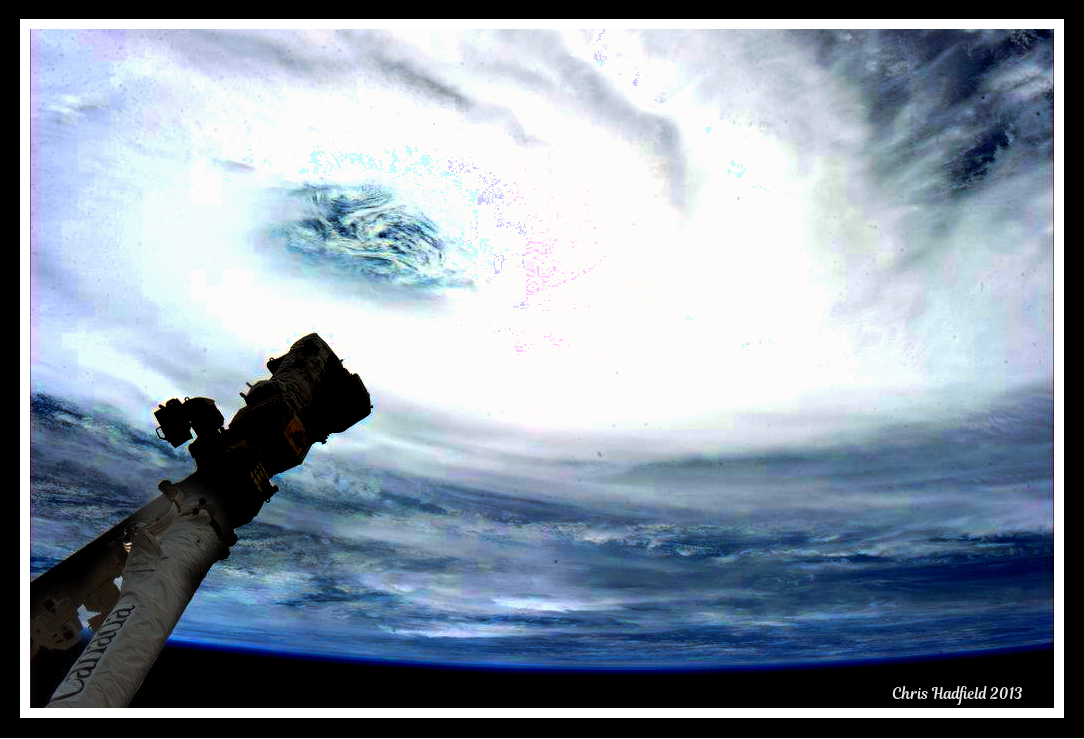
“Eye of the Storm” This photograph, taken by Commander Chris Hadfield aboard the International Space Station in March 2013, shows Tropical Cyclone Haruna over Madagascar, with Canadarm2, a Canadian invention, pointing directly at the eye of the storm. A powerful reminder that Canada’s presence in space is not just symbolic, but deeply integrated into international exploration and innovation.

Photo credit: Chris Hadfield, 2013

July 9, 2025

Posted: August 3, 2025 in Uncategorized
Tags: , , , ,

So, Benjamin Netanyahu is reportedly nominating Donald J. Trump for the Nobel Peace Prize. Because of course he is. What better way for Bibi to flatter his own ego while distracting from his horrific international reputation.

The rationale? Supposedly because of the Abraham Accords, a set of diplomatic agreements signed in 2020 during Trump’s first presidency, normalizing relations between Israel and a few Arab nations: the UAE, Bahrain, Morocco, and Sudan. These were significant steps, no doubt. But let’s not kid ourselves, they came with arms deals, the complete sidelining of the Palestinian people, and the distinct whiff of transactional diplomacy. The ink wasn’t even dry before Trump turned the moment into a 2020 campaign asset and Netanyahu used it to flex before an audience of increasingly uneasy Israeli voters. Fast forward to 2025.

Now, before anyone panics: this nomination isn’t for this year’s Peace Prize, unless Netanyahu managed to quietly submit it before the January 31 deadline, which no one seems to believe he did. That means we’re likely talking October 2026. So, deep breath. You’ve got time to be disillusioned in stages.

Previously every time Trump’s name got mentioned in the same breath as the Peace Prize I’d feel my blood pressure spike. It offended me, not just politically, but morally. The very idea that a man who actively undermined alliances, courted despots, mocked the international order, and fanned the flames of domestic insurrection could receive that prize? It felt obscene.

But something has shifted. And it’s not because I’ve become indifferent to peace. Quite the opposite, it’s because I care so deeply about the concept of peace that I’ve decided not to look for its validation in the Nobel.

Let’s talk about the rules for a second. The Nobel Peace Prize, according to Alfred Nobel’s will, should go to the person or organization that has done “the most or the best work for fraternity between nations, the abolition or reduction of standing armies, and the holding and promotion of peace congresses.” That’s a noble goal. But in practice? The rules are discretionary. There’s no official short list, no vetting of criminal records, no requirement for lasting peace, just significant action that someone, somewhere, thinks nudged the world in the right direction.

Eligible nominators include members of national parliaments, heads of state, university professors, and past laureates. Netanyahu, as a sitting prime minister qualifies. And if the committee wants to take it seriously, they can. Or they can file it under “we’ll pretend to read this later” and move on.

But here’s where it shifts for me. Because if this nomination is what it takes to get Trump back onside with supporting Ukraine then I’m not sure I care about the price of that bribe. Because today Trump reversed course and endorsed continued U.S. weapons aid. If dangling a gold medallion in front of him helps even a little in resisting Putin’s bloodlust, fine. Let him have the shiny object.

Because the truth is, the Peace Prize has already been handed to people with long shadows. Henry Kissinger, and Yasser Arafat, and really even Barack Obama win was aspirational more than earned. The award has always been half idealism, half geopolitics. Sometimes it celebrates courageous changemakers. Other times it gets used to slap a sauve on a festering wound and call it healing. So if that’s the game, I’m not going to rage at the players anymore.

I used to think the prize itself stood for something unshakable. But peace is not a PR strategy, and we cheapen it when we hand out accolades like participation medals in a global ego contest. So if Trump wants a Nobel to cap his legacy, let him chase it. If it keeps him vaguely pointed in the direction of global cooperation, fine. Everyone’s got their own fight to fight. And I’m not going to fight over this one.

Because here’s where I’ve landed: I’m not shocked anymore. I’m not angry. I’m not even disappointed. I’m done caring. The Nobel Peace Prize? It just doesn’t mean anything. And whether Trump wins it or not? It has no bearing on the things I actually care about, like whether people are still dying in Gaza, or if Ukraine gets shelled into a crater, or if children anywhere have to grow up in rubble.

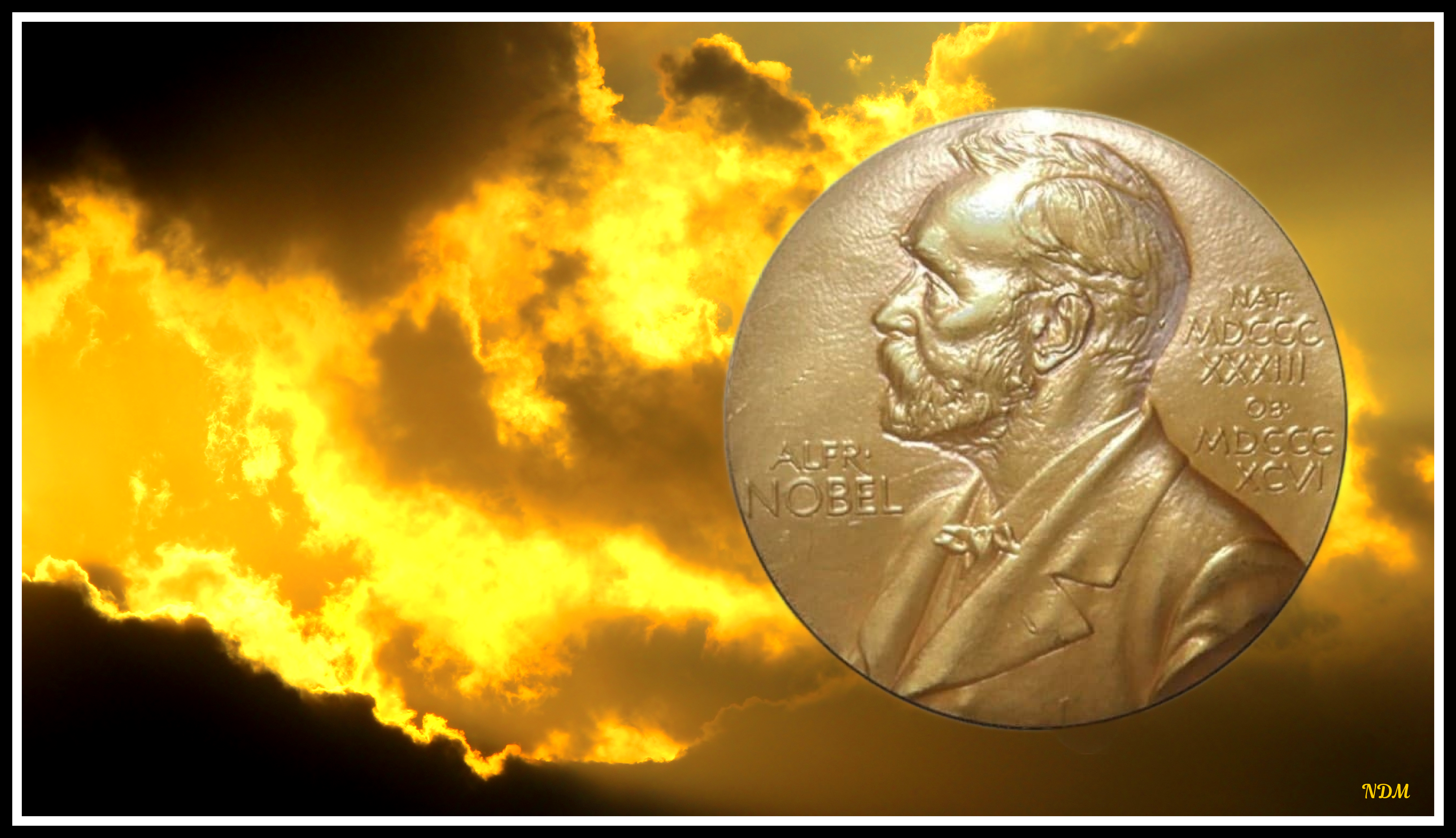
Give him the prize. Wrap it in velvet. Let him hang it in Mar-a-Lago next to a fake Time Magazine cover. If it shuts him up and slows the march to another war, I’m good with that. Because in the grand scheme, whether he wins it or not is just not the most important thing to me anymore. Peace is. Not props. Not pageantry. As for the signficance of this medal. Maybe it once stood for something but now I question that and I’m fine if they give it to whoever needs it to behave, like the promised treat if the tantrum stops. If it keeps the missiles grounded and the egos quiet, hand it over and move on. I just can’t waste my energy on this one. Not when there are actual lives at stake elsewhere. Not when the prize itself has already been gamified. Not when the possibility is that someone behaves better just because they want a sticker.