


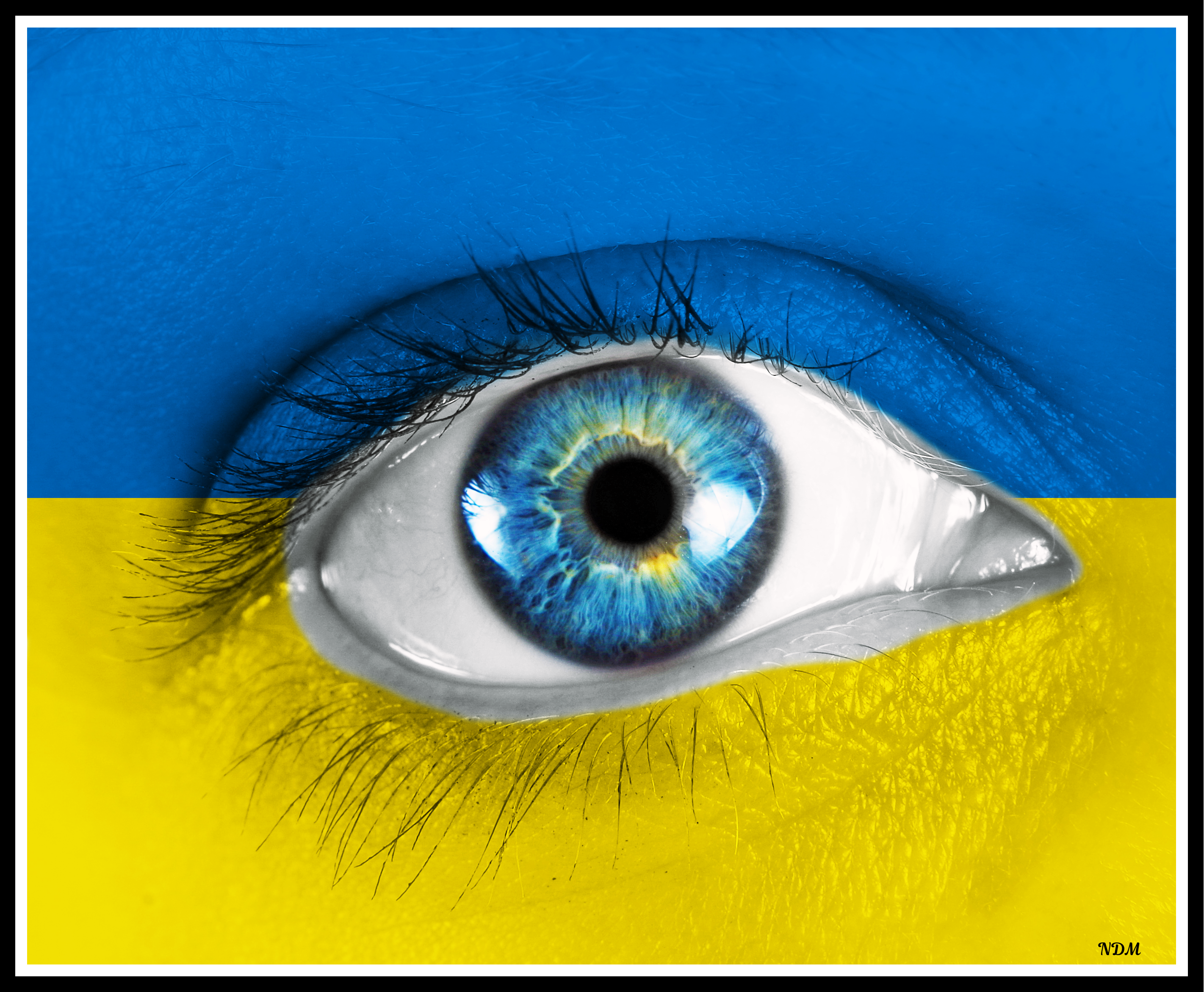
I’m sorry, but we have to go back to a dark conversation. It’s hard, from where we sit in our relatively safe corner of the world, to fully grasp the geopolitical weight of what is unfolding. Most of us have never lived under bombardment, never fled our homes with minutes to spare, never had to choose between surrendering dignity or surviving another winter under attack. But for those who still carry the memories of our last great global conflicts, for those whose families understand occupation, invasion, and loss, this moment is not theoretical. They know exactly what this means.
And we need to be honest with ourselves too. Canada is not insulated from this. We may feel far from Europe’s danger, but we share a border, not by fence line but by Arctic geography, with Russia. That reality doesn’t go away because we find it uncomfortable. It’s not fear-mongering to acknowledge it; it’s realism. Geography will not change. And when Russia pushes the boundaries of the international order, those ripples reach us whether we want them to or not.
And today, President Volodymyr Zelensky made it clear: Ukraine is standing at the edge of an impossible choice. He warned that the country may soon face “either the loss of dignity or the risk of losing a key partner.” Dignity is not a stray word. It’s a deliberate reference to Ukraine’s 2014 Revolution of Dignity, when Ukrainians overthrew a corrupt, Moscow-aligned president and claimed a democratic, European future. They fought for sovereignty once. Now they’re being cornered into signing it away.
Because the 28-point “peace plan” Donald Trump is pressuring Ukraine to sign before Thanksgiving is not a peace plan. It is a Russian-authored blueprint, awkwardly translated into English, and presented as diplomacy. Ukraine didn’t help write it. Europe wasn’t consulted. Congress was blindsided. But Putin’s allies were deeply involved.
The plan begins by restating Ukraine’s sovereignty, something Russia already promised in 1994 and promptly violated in 2014. From there, it accelerates: Crimea and vast sections of Ukraine’s eastern industrial heartland would be ceded to Russia. Ukraine would be forced to shrink its military. And Russia would face zero accountability, not for the torture chambers, not for the mass graves, not for the sexual violence, not for the deliberate targeting of civilians.
Instead, the plan offers full amnesty: no claims, no charges, no justice. Then comes the financial contortion. The world is being told Russia will “rebuild Ukraine,” except the reconstruction is mostly for the territories Russia would keep. Frozen Russian assets would be used to clean up Russia’s own destruction, and the improved regions would then belong to Russia. Europe, again not consulted, would unfreeze more Russian assets and contribute an additional $100 billion. And then the U.S. and Russia would split the profits.
Europe pays. Russia gains land. Trump gets to call it a deal.
Ukraine would also be required to amend its constitution to permanently reject NATO membership which has been Putin’s obsession for decades. And the plan attempts to reframe the United States not as a NATO ally but as some kind of “mediator” between NATO and Russia. It’s an unmistakable attempt to weaken the alliance system that has kept Europe stable since World War II.
NOTHING in this plan hides its purpose. It dismantles the post-war rules-based order and drags the world back to a time when powerful nations carved up smaller ones and called it “peace.”
This is the pressure Zelensky faces. This is the trap being set for a country already exhausted by loss, displacement, and years of Russian brutality. And somehow, through all of this, we’re meant to pretend Donald Trump has changed. That he’s independent. That Putin no longer has influence over him.
But this document reads like it was drafted in Moscow and couriered straight to Trump’s desk. It mirrors Putin’s priorities word for word. And it confirms something we already suspected: Trump is still firmly aligned, ideologically, politically, and predictably, with Vladimir Putin.
The geopolitical risk to Europe is enormous. A fractured Ukraine doesn’t bring peace; it creates a corridor of instability stretching from the Baltics to the Balkans. It emboldens Russia. It fractures NATO. And it signals to every authoritarian regime that borders can be erased if you find the right Western politician to help rebrand your land grab.
We may be far from Ukraine’s front lines, but Canada is not outside this story. Our security relies on an international system that punishes aggression, not one that rewards it. Our geography ties us directly to Russia in the Arctic. And our history, our real, lived history, reminds us why appeasement has always been the most dangerous path of all.
The world cannot afford to look away. And I know I’m not able to look away. And you shouldn’t look away.
 Nancy's Notes