


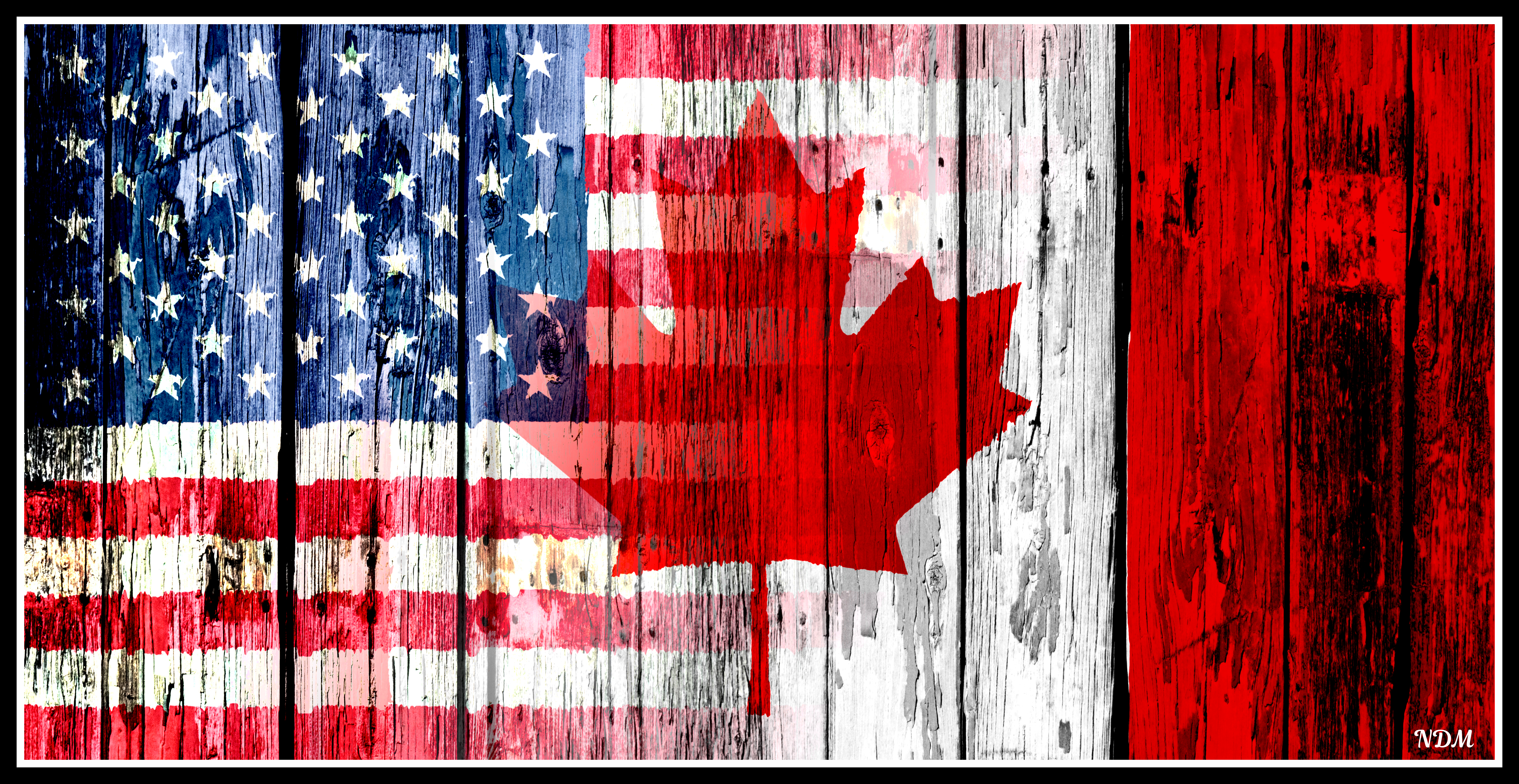
People keep telling me I’m “not writing from a Canadian perspective”. So let me be uncomfortably blunt: everything I write, whether it’s about Washington, Moscow, Venezuela, or the moon, is through a Canadian lens. Because in 2025, there is no such thing as an American crisis that stays on the American side of the border. What happens there reaches us in real time. Economically, militarily, socially, digitally and emotionally.
Anything I write about the U.S. is about Canada. And this week, the danger became impossible to soften.
Two months ago, Pete Hegseth stood before senior U.S. military leaders and said the quiet part out loud, not hinted at, not theorized, not coded. No, he declared, “We don’t fight with stupid rules of engagement. We untie the hands of our war fighters to intimidate, demoralize, hunt, and kill… Just common sense, maximum lethality, and authority for war fighting.”
Maximum lethality. Untie the hands, intimidate, demoralize, hunt, andkill. That is not doctrine nor strategy. That is permission.
So when the world watched the evolving, contradictory explanations around the second strike on a drug boat, one that looks chillingly like a war crime, none of us should be surprised. The guardrails are gone. They told us they were removing them. They said it right into the cameras.
And as Canadians we’re supposed to shrug and say, “U.S. politics are weird right now”? This isn’t “weird.” This is destabilization and destabilization doesn’t need a passport to cross borders. My nephew, who served his entire career in the Royal Canadian Air Force and now continues with them in a civilian role wrote something earlier this year that I keep returning to. I’m paraphrasing, but he described standing on a tarmac in Afghanistan watching Star Spangled Banner draped coffins being loaded onto a plane. He talked about serving beside Americans who lived, laughed, fought, bled, and grieved as brothers, never caring what flag was on your shoulder as long as you showed up. He believed, deeply, that those same American generals would never obey an order to turn their military against Canada. He believed it was unthinkable. And in March, I believed that too. But this is not March. And the United States is not the same country it was even eight months ago.
Last night’s National Security Strategy should have stopped the world in its tracks. Instead, it barely caused a ripple because we’ve all become numb to shock. But we cannot afford numbness. Not here in Canada. Not when the document refers to Canada, explicitly, as a vassal state. If you look up that term, it means the following. ‘A state that has a mutual obligation to a superior state or empire, similar to a subordinate in a medieval feudal system.’
This is how Trump’s America now views Canada. Not as an ally. Not as a partner. Not as a neighbour with whom it shares the longest peaceful border in the world. But as a subordinate with obligations to an empire.
Read that again. And if you still think Trump is a “good guy,” and that the far-right radical politics sweeping across North America are some kind of righteous populist uprising, then you’re reading the wrong post and the wrong blogger or exactly the one you needed.
People often tell me that my writing calms them. But today, I don’t think I can do that. Today is not about calm. Today is about clarity. About looking at the shift happening south of us, militarily, politically, psychologically, and understanding that Canada is not insulated.
And yes, of course we need to pay attention to what’s happening right here at home, not to hide from the global picture, but because what’s unfolding in Alberta is part of that global picture. The erosion of institutional trust, the attacks on journalism, the flirtation with authoritarian rhetoric, the manufactured chaos, it all mirrors, almost perfectly, what we saw in the U.S. before their political centre collapsed. And the truth is, action always begins closest to home. We can’t fix the entire world, but we can damn well protect the ground we’re standing on. If we don’t get our house in order here, if we don’t recognize the direction these currents are pulling us, then political chaos becomes a gift to anyone who sees Canada not as a nation to respect, but as a chess piece to be moved.
And as much as this fear sits in my chest like a stone, I remain grateful, profoundly grateful, that Mark Carney is the one steering the ship in this moment. Steady when the world is lurching. Calm when our neighbour is convulsing. Focused when others are consumed by rage, impulse, and decline. But leadership can only work when a country understands the stakes.
I wish I could tell you everything will be fine. I wish I could offer comfort instead of warning. But the truth is that Canada is vulnerable. Not because we are weak, but because the reality around us has changed faster than we have been willing to admit.
And the most dangerous thing we can do right now, as Canadians, as Albertans, as people who love this country, is pretend that the ground beneath us isn’t shaking. I am still optimistic. I wouldn’t write any of this if I weren’t. I believe in us. I believe in what we can be. I believe in our capacity to meet the moment. But optimism is not the same as denial. And today, the truth is simple and unavoidable: When an unstable superpower drops its guardrails, every nation in its shadow had better wake up. Because history does not wait for those who refuse to see it coming.
 Nancy's Notes