


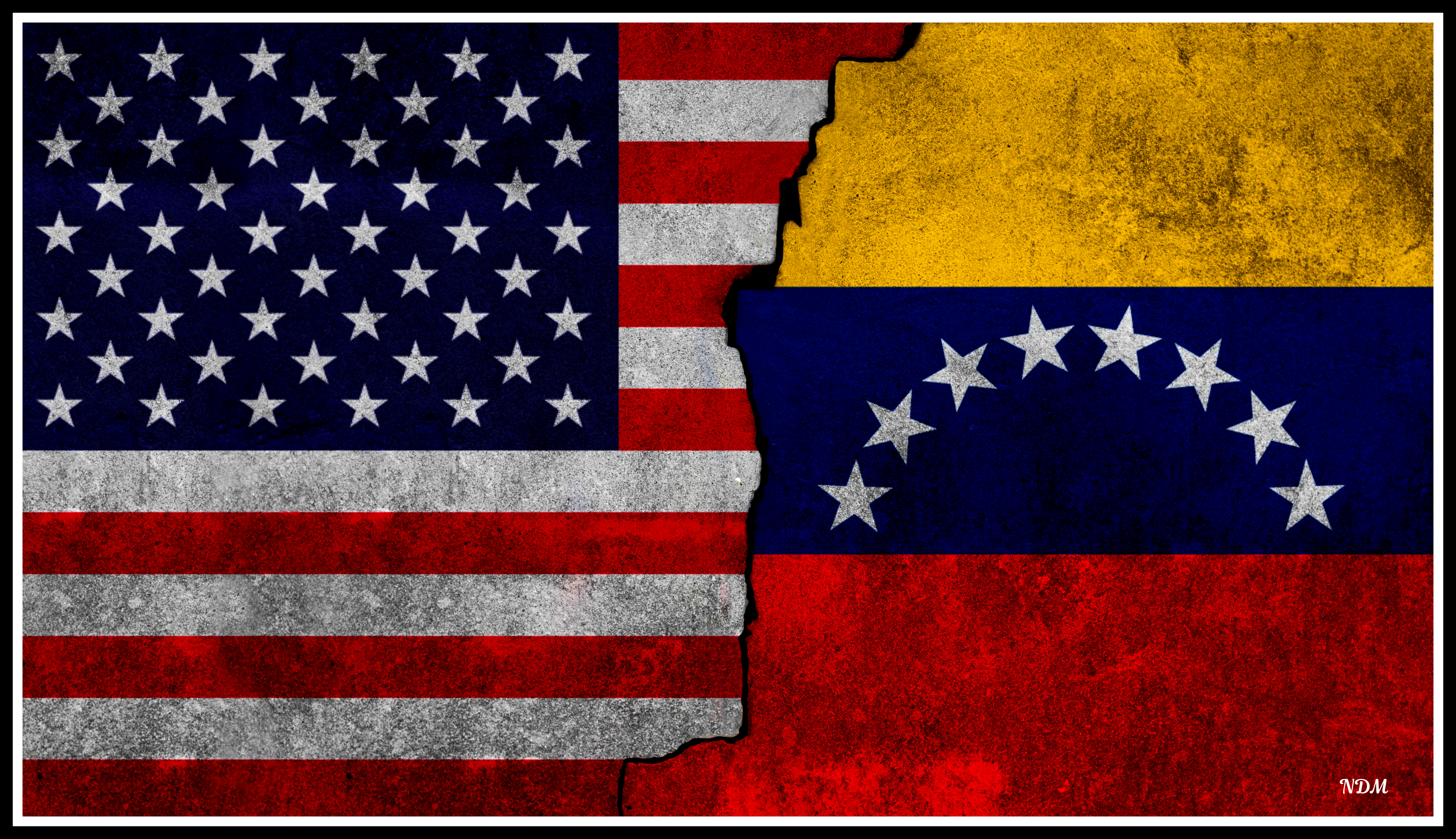
I’ve been wrestling for days with how to write about Venezuela.
I went down the research rabbit hole. Oil, sanctions, nationalization, corporations, authoritarianism, currency, and eventually hit an uncomfortable but honest wall: this is not a story that fits neatly into the 750–850 words I usually work within. This story can’t be flattened and things are escalating fast.
Then last night, I was given a gift. Another writer, Gordon F.D.Wilson, shared a piece that did what I was struggling to do. Through an aviation story (you know that got my attention), he captured the danger of what happens when the wrong people are in the cockpit and everyone else is strapped in as passengers. I’m not going to rewrite his work. I strongly encourage you to read it yourself. What is clear to me through my own research and his brilliant words, is that Venezuela matters far beyond Venezuela.
Let’s start with what is not up for debate. Venezuela is ruled by an autocrat. Nicolás Maduro is a corrupt, authoritarian leader who dismantled democratic institutions and presided over immense human suffering. But the story being told about Venezuela right now keeps shifting, and we need to pay attention. At first, we were told recent U.S. actions were about drugs. Fentanyl was even framed as a kind of weapon of mass destruction. Then the focus quietly moved from drug boats to oil tankers. By that point, fentanyl had vanished from the narrative altogether. We were no longer talking about drugs. We were talking about oil, shipping lanes, trade, currency, and power.
That’s the moment the explanation stopped making sense, and the behavior starts to matter more than the justification. The United States government did not lose Venezuelan oil. A U.S. corporation did. That is a distinct difference.
Venezuela’s oil sits on Venezuelan land. That doesn’t excuse corruption, mismanagement, or authoritarian rule, but it does implicate the claim that oil was “stolen” from the United States. Foreign investment does not equal permanent ownership of a country’s natural resources. If it did, sovereignty would be little more than a polite illusion.
This is where the history becomes too complex for slogans. Venezuela’s story involves decades of corporate dominance, oil nationalization, OPEC, sanctions, internal decay, and a slow, chilling slide from democracy into autocracy. If you want to see how an elected leader consolidates power over time, start with Hugo Chávez and work forward. But complexity is precisely what power prefers to erase.
Which brings us to the new U.S. National Security Strategy. This document quietly reframes America’s role in the world. Less global steward and more hemispheric enforcer. The Western Hemisphere is framed as America’s neighborhood its responsibility, its sphere.
That language should make every resource rich country in the Americas pause. The security doctrine shift, enforcement follows. And enforcement rarely arrives with clean explanations. One day it’s fentanyl. The next day it’s sanctions. Then it’s China. Then it’s oil. The story keeps changing. The actions do not.
And I can’t stop thinking about what this logic implies for Canada. I know what you’re saying “Canada is not Venezuela.” But Canada is resource rich. Our energy sector is deeply integrated with the United States. Our oil is traded in U.S. dollars. Our economy has been intertwined by design. If foreign investment quietly becomes conflated with ownership, if access starts to look like entitlement then sovereignty becomes thinner than we like to admit. The moment corporate loss is reframed as national injury, the line between partnership and pressure starts to blur. Let’s just say the phrase follow the money has never been more applicable. Your response President Trump?
This is where Wilson’s aviation metaphor lingers with me. We’re all passengers, distracted by turbulence in the cabin, while decisions are being made in the cockpit. The danger isn’t only the autocrat we can see. It’s the systems, incentives, and cronyism that decide who gets to fly the plane and whose laws apply when they become inconvenient.
I don’t have all the answers but I am seeking to understand. This situation is evolving, and the oil, currency, and enforcement implications are genuinely complex. But I do know this. Simple stories are being told about Venezuela right now, and simple stories are almost always dangerous. Especially as they relate to the United States right now. The Art of The Deal meets Follow The Money. So…if you want the deeper dive, the longer read that traces the full arc and asks the hardest questions, I strongly encourage you to read Gordon F.D. Wilson’s piece.
And this morning I need us to pay attention to what the U.S. leadership is counting on us not noticing, especially now, when people are tired, distracted, and trying to tune out the news over the holidays. But are we paying attention to who’s actually flying the plane, before the turbulence becomes something much worse.
 Nancy's Notes