


Today I finally tried to turn my attention back to some practical things that needed doing, the kind of everyday details that make life feel normal again. While searching through old emails, I stumbled across a video of my son giving a presentation for an undergraduate psychology course.
I remembered the class. I remembered the assignment. He had forwarded it to me for feedback. He was talking about Stanley Milgram’s obedience experiment. What I hadn’t remembered was how deeply unsettling the subject is when you hear it laid out plainly. Sitting there listening to him explain it again, not just as a parent, but as someone watching the world right now, something clicked into place for me.
After the Second World War, and following the Nuremberg trials, the world struggled with how ordinary people could participate in extraordinary harm. Over and over, those on trial offered the same justification. They were following orders. They were subordinate. They believed responsibility rested elsewhere. That explanation disturbed many people at the time, including Milgram, who wanted to understand how obedience actually operates in everyday people.
In the early 1960s, Milgram conducted a series of experiments in a controlled university setting. Participants were recruited from the general public and told they were taking part in a study on learning and memory. They were assigned the role of “teacher.” On the other side of a barrier was a “learner,” who was actually an actor participating in the study.
The teachers were instructed to ask questions. When the learner answered incorrectly, the teacher was told to administer an electric shock. The shocks were not real, and the researchers knew this. The teachers did not. They believed the person on the other side was actually being harmed.
Each wrong answer required a stronger shock than the last. As the voltage increased, the learner cried out, begged to stop, and eventually went silent. When teachers hesitated, an authority figure in a lab coat calmly instructed them to continue.
These teachers were not cruel people. They did not want to hurt anyone. But most of them complied. All of them reached levels of shock they believed could cause serious harm, and the majority went all the way to what they believed was a lethal level. Not because they were evil, but because they were being told to proceed by someone they perceived as legitimate authority.
Relistening to my son explain this again in the video I understood why this has been sitting at the edge of my thinking for months.
I have spent a long time writing about obedience. About military service members facing questions around legal and illegal orders. About institutions filled with good people trying to reconcile their conscience with their role. About watching behaviors escalate while being framed as lawful, necessary, or unavoidable.
I am speaking directly to citizens of the United States, to those in positions of power around the President, and to those who support or excuse what is unfolding. And I am also speaking to Canadians who align themselves with the same ideology, who cheer it on, excuse it, or believe it could never happen here simply because a different flag is flying.
In just the last 48 hours, there have been shootings in two cities involving I.C.E. and a person is dead. All in the name of immigration enforcement. Now comes the what as become familiar, leaders speaking in lock step. They sure didn’t lower the temperature. They turned it up full blast.
This is where Milgram stops being a classroom lesson.
This is the voltage increasing. Not all at once, but increment by increment. Through rhetoric. Through policy. Through the suggestion that something bad will happen if people do not comply. Through reassurance that responsibility belongs somewhere else.
Milgram described what he called an “agentic state,” where people stop seeing themselves as moral decision makers and begin to see themselves as instruments carrying out someone else’s will. That shift does not require hatred. It does not require belief. It only requires authority and pressure.
That is what makes this moment so dangerous. Soldiers are being moved into more places. I.C.E. agents are being deployed into communities. Enforcement actions are intensifying. And too many people in power are either encouraging this escalation or refusing to stop it.
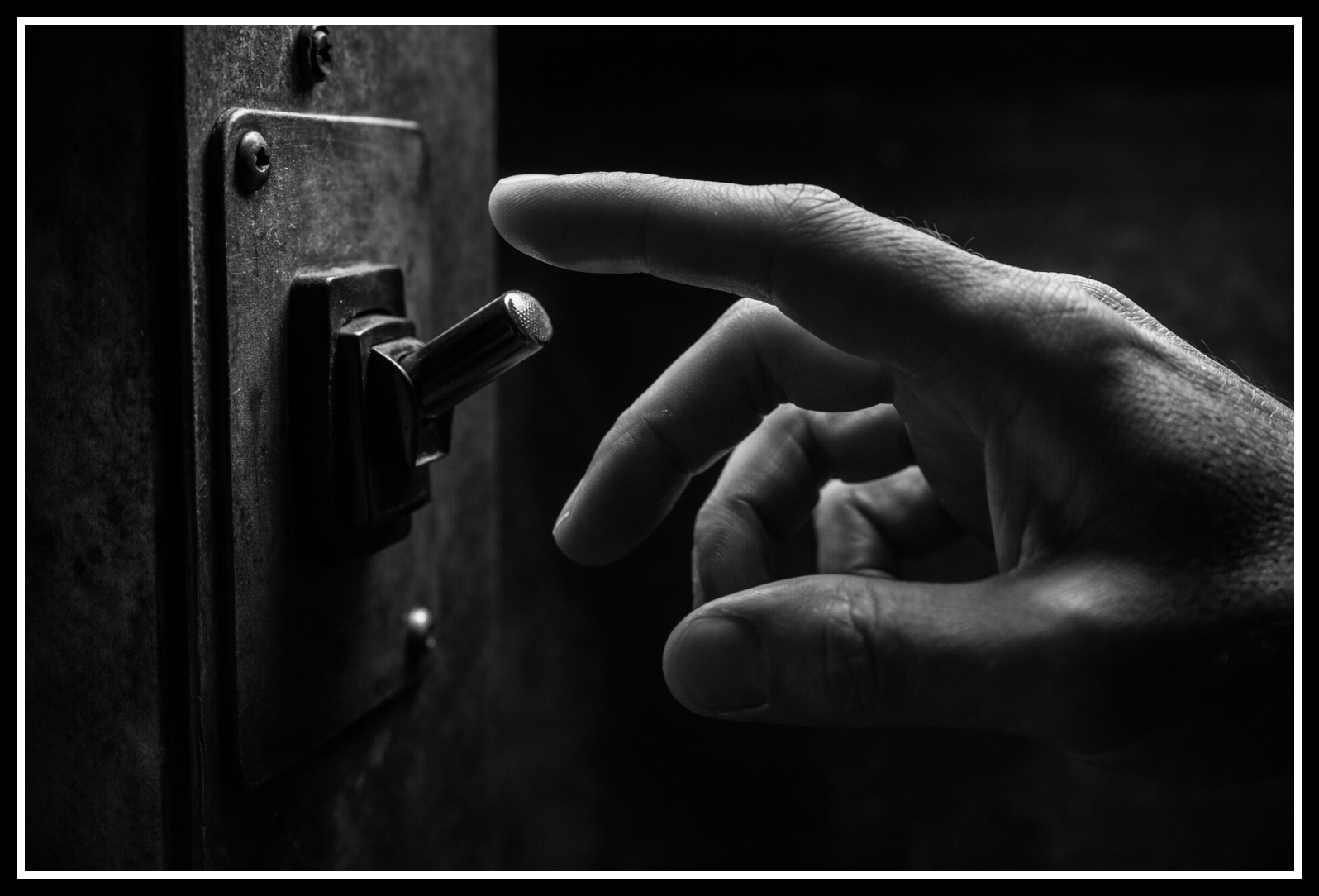
Congress and the Senate may not be holding the switch, but they are not stepping away from the experiment either. And the people carrying out these actions are increasingly being placed in the exact psychological position Milgram warned about. Obey now. Question later. Responsibility is not yours.
Someone I follow once said that history does not repeat itself exactly, but it echoes. That feels painfully true right now. This is not the past replaying itself, but it is the same pattern resurfacing under new conditions.
Milgram’s experiment is not obscure. It is taught in basic psychology classes. But it is easy to forget what it actually tells us. Democracies do not unravel only through loud extremism. They unravel through compliance. Through good people doing what they are told because they believe they have no other choice.
That is why I am writing this today. Not to accuse, and not to sensationalize, but to remind. If this moment feels unsettling, that is because it should.
Obedience is not inherently wrong. But obedience without moral accountability is how ordinary people become participants in extraordinary harm. And once we understand that, we lose the excuse of ignorance.
Yesterday, Donald Trump was asked by the New York Times whether there are any limits to his global power. His answer was simple. “My own morality, my own mind, is the only thing that can stop me.” And what exactly does that mean?
If we do not think everything I have just written matters, there is your reminder. Milgram did not study monsters. He studied people. And he showed us what happens when authority is unchecked, responsibility is displaced, and obedience becomes the point.
 Nancy's Notes