


I don’t often post on Sundays. But as we head into another unpredictable week, I wanted to set a tone. A fairer one, I hope.
There is a rhythm to politics that most of us don’t consciously track, but we feel it anyway. Generally, the second Monday after the Christmas break is when things actually begin to move. New polls appear, conversations restart and overall the volume rises.
The strange thing is, it doesn’t feel like we ever got a break this year. The world didn’t pause. The headlines didn’t soften. The stakes didn’t reset. It has felt relentless, and that may be part of why everything feels so charged right now.
Over the past week, especially since the incident in Minnesota, there has been a lot of discussion about how people can look at the same images and come away with completely different interpretations. Some say that divide falls neatly along party lines. I’m not convinced it’s that simple.
It reminded me of that moment years ago when the internet argued endlessly about the color of a dress. Some people were certain it was one thing. Others were just as certain it was another. Scientists explained perception. Psychologists talked about context. What stayed with me wasn’t the answer, but the reminder that none of us sees the world objectively.
We all look through a lens. This is how I write. This is my lens. You have yours.
And I want to be fair about something. I cannot expect everyone to be as impassioned about geopolitics, history, or international power dynamics as I am. If your priority is paying rent, affording groceries, or figuring out whether you will ever be able to buy a home, then places like Greenland or Yemen feel distant and abstract. They do not feel urgent. I understand that but I also struggle with it.
Because distance is often an illusion. What feels far away geographically or politically has a way of arriving at our doorstep faster than we expect. Take Greenland. Most people in North America have never spent much time thinking about it. Americans have not. Canadians have not either. It is a place on a map, vaguely northern, rarely discussed. So when serious conversations arise about control, security, or influence there, many people shrug. If something happens, it happens. It does not feel connected to their lives.
If you are sitting in a small town like Monroeville, Alabama, or in Bieseker, Alberta, Greenland does not feel relevant. You are focused on your own survival. That makes sense.
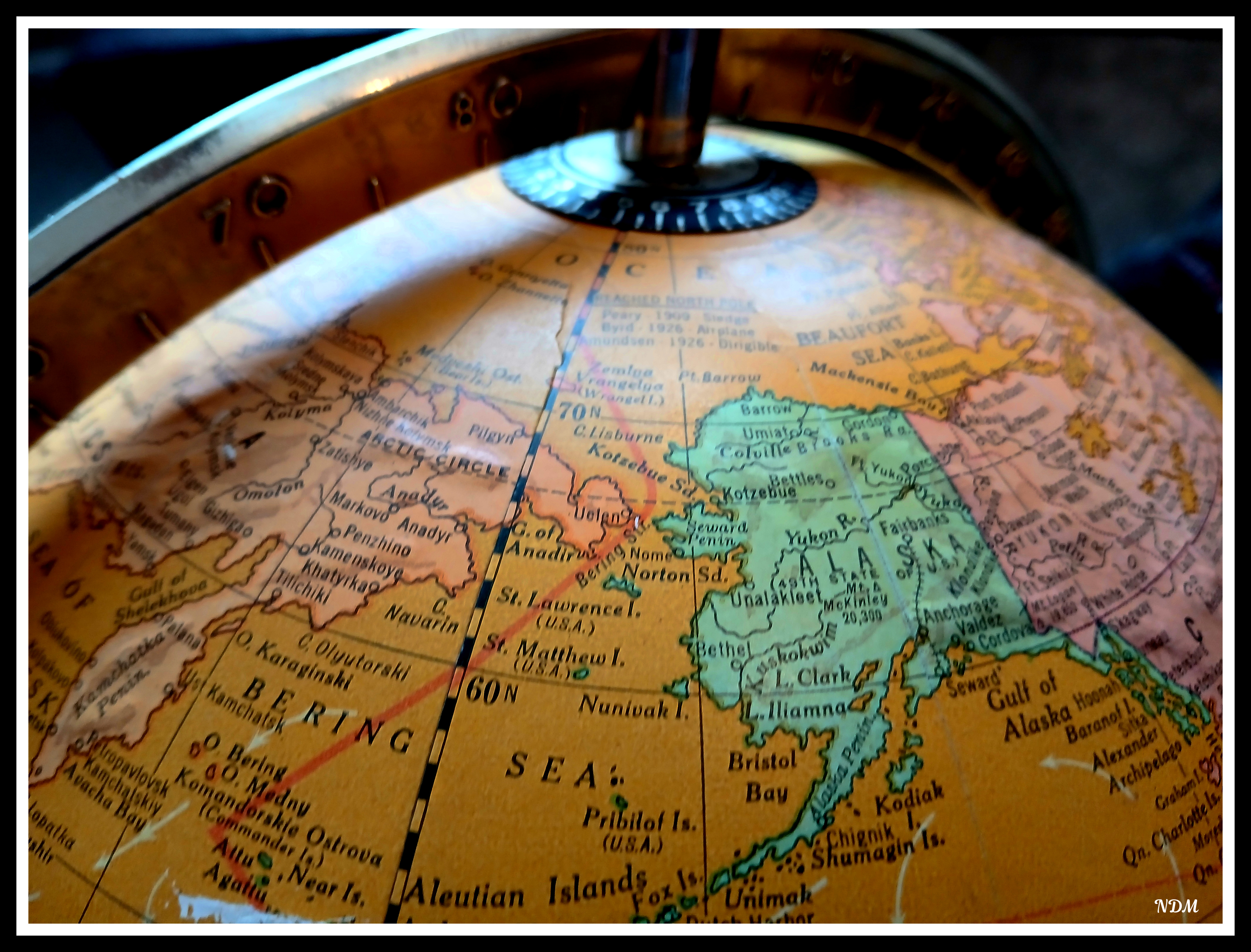
I see it differently because I think in maps and globes. Because I have knowledge of the North. Because I try to hold a broader picture in my head, even when it is uncomfortable. That does not make me smarter or more informed. It simply means my lens is different.
So I am not angry at people who do not share my sense of urgency. I am not dismissive of people whose lives do not allow the time or energy to follow deep investigative journalism or long historical threads. But I am asking something of you.
I am asking people to consider that the bigger picture matters even when it feels disconnected from daily life. That global events do not happen in isolation. That every decision, every conflict, every power shift affects the next thing.
Sometimes that requires something as simple as pulling out a map. Look at where places actually are. Look at who borders whom. Look at alliances and proximity. Look at trade routes and security corridors.
For example, when Donald Trump says he does not want Russia as a neighbor, take ten seconds to look at a map. Look at Alaska, then look at Russia and the Bering Strait. Look at how close the two countries already are. Facts like that matter, because they reveal how careless some statements really are.
We are living in a moment where major issues stack on top of one another. Iran, Greenland, Venezuela, energy policies, trade and domestic unrest. And underneath all of it are unresolved truths that struggle to surface because distraction is constant and convenient.
When transparency is delayed, when accountability is buried under noise, when facts are drowned out, it does not just damage trust in institutions. It damages trust in reality itself.
As we head into this week, I do not pretend to have answers. I am processing in real time, just like everyone else. But I will say this may be my last gentle post for a while. My only real goal here is simple. If one person who normally scrolls past deeper material decides to read a piece of history, or learn something about NATO, or understand a little more about the Cold War, or simply take a moment to look at a map and see the world differently, then this was worth writing.
I do not need everyone to be as impassioned as I am. But I do hope more people will look. Because understanding the world we live in is no longer optional. And if a simple glance at a globe can expose the nonsense, then maybe the real danger isn’t ignorance, but how comfortable we’ve become with it.
 Nancy's Notes