


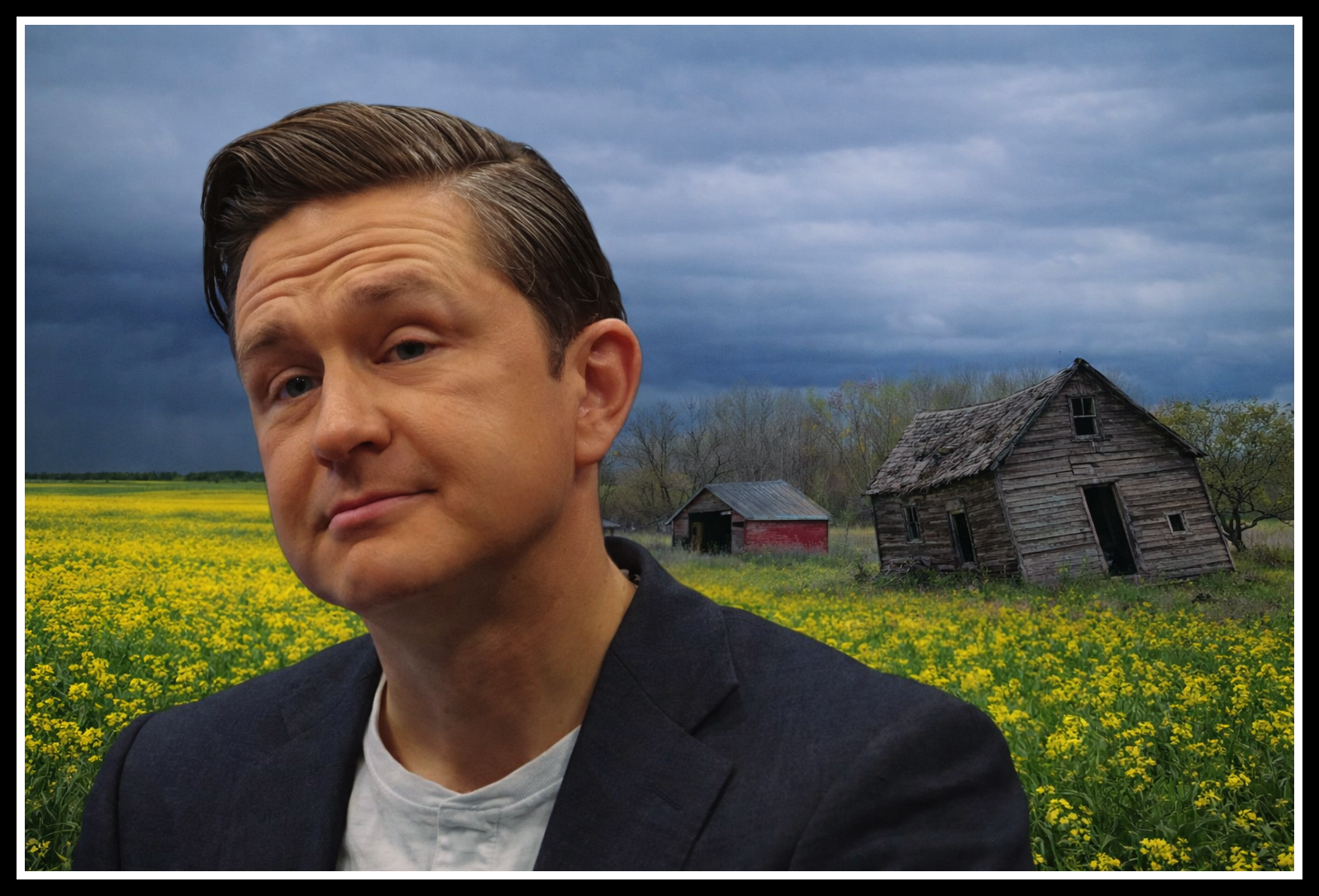
I know. I am forever trying to find a fairy tale to explain modern politics. Maybe it is because fairy tales make hard things easier to see. Maybe it is because the stories we were told as children were never really for children at all. They were about power, risk and survival. So bear with me.
Yesterday at the Economic Club of Canada, Pierre Poilievre delivered two speeches inside one.
The first was Gravitas Pierre. He managed to present himself as measured and calm. Quoting Marcus Aurelius and saying Donald Trump was wrong about trade. Calling the “51st state” line unacceptable. Proposing an all party committee on the USMCA review. Speaking about stability and focusing on what Canada can control at home.
I listened carefully. I always do. I have written before that if you believe the government is getting something wrong, then tell us what you would do differently. That is fair. So I was prepared to hear him out.
The second speech was Strategic Contrast Pierre. That was the part aimed directly at Mark Carney. That was where he warned against declaring a permanent rupture with the United States in favour of a strategic partnership with Beijing. That was where he said Canada’s prosperity and security are inseparable from a stable relationship with the United States.
And this is where the real debate lives. No serious Canadian wants a rupture with the United States. It is our largest trading partner, our defence ally, our neighbour in geography and history. Our supply chains are integrated. Our energy systems are connected. Our agricultural exports move south and beyond.
But integration is not immunity.
The current government’s argument has not been to replace Washington with Beijing. It has been that the global order is shifting, that American politics has moved toward protectionism and transactional leverage, and that Canada must diversify accordingly. Diversification is not betrayal. I see it as more of an insurance.
Out here in Western Canada, we understand insurance. Farmers hedge against drought. Energy producers hedge against price swings. You do not tie your entire year to one unpredictable weather system and call that loyalty. You plan for volatility.
Which brings me back to the fairy tale.
In The Three Little Pigs, one pig builds with straw because it is quick and easy, assuming tomorrow will look like yesterday. The second builds with sticks, sturdier but still dependent on the hope that the environment will remain manageable. The third builds with brick, not because he dislikes the wolf, but because he understands that the wolf is a structural fact.
The wolf does not respond to sentiment. It does not care about tone. It tests whatever stands in front of it.
That is the divergence in front of us. One diagnosis says this disruption is temporary and the old house will stand again with a bit of calm and cooperation. The other says the disruption is structural and that we must reinforce before the next gust of wind arrives.
Recalibration means strengthening ties with Europe, building alliances with other middle powers, reinforcing defence commitments, expanding trade in Asia beyond any single country, and building economic sovereignty at home so leverage runs both ways. That is not anti American. It is pro Canadian.
I know some readers assume they already know which political box I sit in. Over almost fifty years of voting, they would likely be surprised. I have voted based on leadership and competence each time. I do not cheer for jerseys only.
So yes, I listened to Pierre Poilievre with an open mind. He deserved that. He showed discipline. He moderated his tone. He stepped more seriously into foreign policy territory. But be assured I am NEVER going to be a Poilievre supporter. I am just making sure I listen so I can write from an objective position.
Lowering the volume is not the same as reinforcing the structure. Canada is a trading nation of almost forty million people woven into global capital markets, defence alliances, and supply chains. Our farmers, our energy workers, our manufacturers, our ports, and our Arctic sovereignty depend on resilience in a world that is less predictable than it was twenty years ago.
We can prefer the house we remember, the one that felt sturdy enough in calmer weather, or we can acknowledge that the storm patterns have changed and build accordingly. Canada does not get to rely on fairy tales about how things used to work. It gets consequences if it misjudges the wind.
 Nancy's Notes