


I have spent the last several hours listening, reading, and trying to separate confirmed fact from broadcast momentum. There are now widespread reports, including from Al Jazeera citing Israeli sources, that Iran’s Supreme Leader, Ayatollah Ali Khamenei, has been killed. It is unquestionably a historic moment. But history is not the same thing as clarity.
The United Nations Secretary General has warned that military action carries the risk of igniting a chain of events no one can control in one of the most volatile regions in the world. He went further and said that the peace of the world could be significantly impacted by today’s events. That is not rhetorical language. That is diplomatic alarm.
Let me also be clear about something else. Ayatollah Ali Khamenei presided over a regime that has brutally suppressed its own people and destabilized the region for decades. That truth does not require hesitation. But more than one thing can be true at the same time. A regime can be oppressive, a leader can be dangerous, and a military escalation can still be strategically reckless. Those realities do not cancel each other out.
Here is where I struggle. If Iranian nuclear capability was significantly degraded last June, as we were told, why is this moment suddenly urgent? If the threat was contained then, what changed now? And if it was not contained then, were we misled? These are not partisan questions. They are questions of credibility. I know to say distraction as in Epstein for Trump and Palestine for Israel is not the factual based presentation I strive for but I can’t help going there.
The President has used the word war. If this is war, then Congress has a constitutional role. That role does not disappear because timing is sensitive or intelligence is classified. If unelected members of a cabinet can be cleared to receive intelligence, then elected representatives of the American people can be cleared as well. Going to war cannot be a matter of executive instinct alone.
And if the Supreme Leader is in fact dead, what does that actually change? He was eighty six years old so the regime would be keenly aware of his life expectancy. Iran is a layered system with succession planning. The Islamic Revolutionary Guard Corps retains operational power. Removing a figurehead does not automatically dismantle an institution. It can just as easily radicalize it further.
Retaliation has already spread beyond a single battlefield. Cities in the region are feeling the impact. Military bases are on alert. The Strait of Hormuz sits there as an economic tripwire. Twenty percent of the world’s oil moves through that corridor. This is not a contained event.
Trump promised no new wars. He promised a focus at home yet today we are hearing the language of war. I am frightened by the scale of what is being set in motion. Not because the Iranian regime is defensible. It is not. But because decapitation is not the same thing as strategy. Regime change is not a slogan. It is a mechanism. And that mechanism has not been explained.
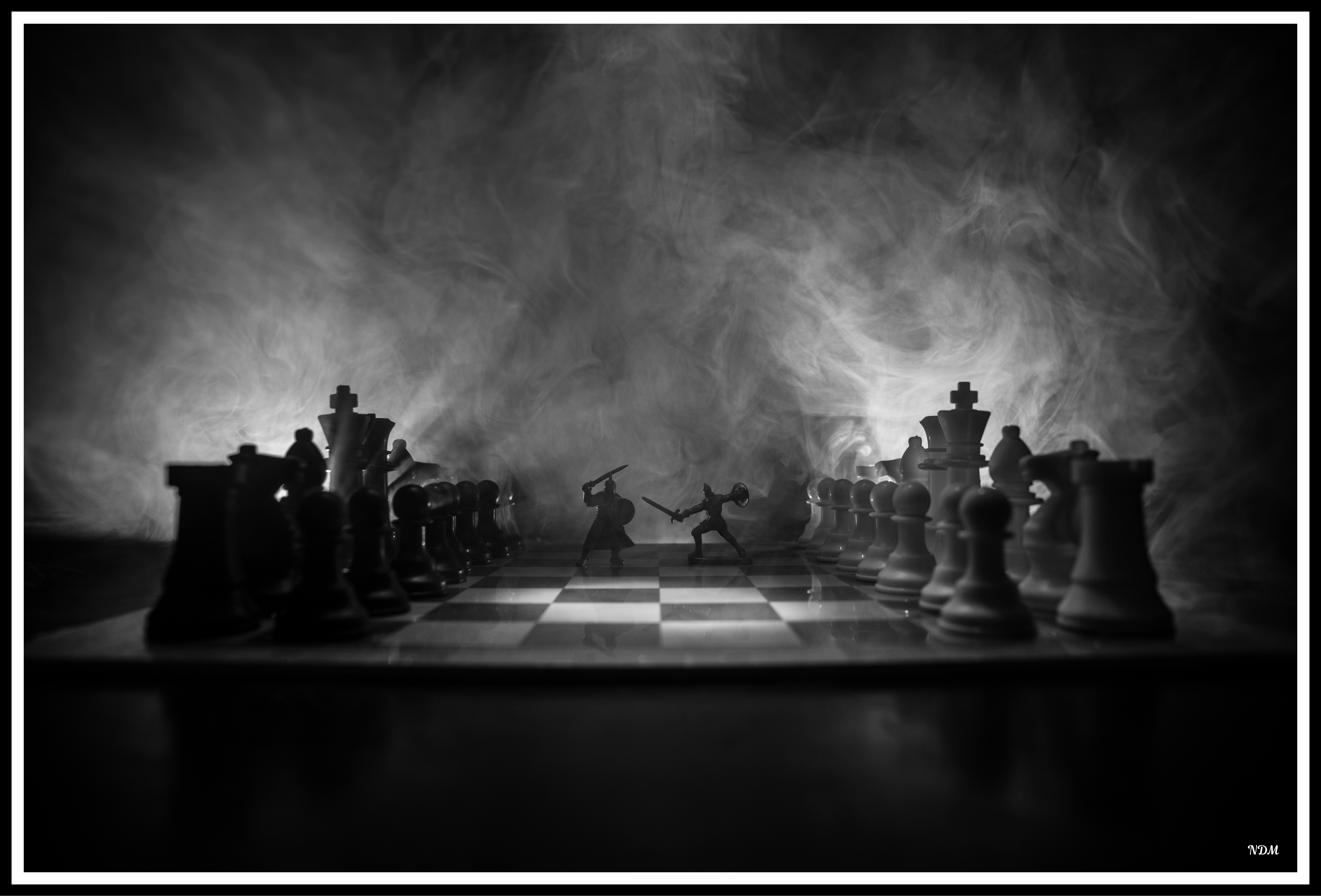
A king may be gone. Perhaps removing a king feels decisive but it is not the same thing as winning the game. The board remains, the pieces remain, the alliances remain, the grievances remain and the institutions that hold power inside Iran remain. Strategy is not the capture. It is what follows. And that part has not been explained. Is this the beginning of yet another forever war, one that slowly widens until alliances are pulled in and treaty obligations are tested? If this escalates and American forces are struck directly, NATO consultations are not theoretical. Canada is not a spectator in that scenario.
The world is watching because this may not be only about Iran. It may not be only about the Middle East. The economic shockwaves, the alliance structures, the great power calculations, the precedent being set about leadership strikes and regime change, all of it extends far beyond one border.
The question is no longer whether a king has fallen. The question is how far the consequences of that move will travel.
 Nancy's Notes