Archive for March 20, 2026

No One Is Taking The Off Ramp

Posted: March 20, 2026 in Uncategorized

I was supposed to wake up this morning thinking about the first day of spring.. Renewal and energy. That feeling that maybe, just maybe, things are starting fresh again. I wanted to sit in that for a while. A little bit of peace. A little bit of bliss.

That lasted about twenty minutes.

Back to the real world. The more I listen, and the more I realize we are not watching one conflict. We are watching three different realities collide, and we keep trying to make sense of it as if everyone is playing the same game.

They are not! There are many players involved, but three are controlling the road right now. The United States, Israel and Iran. And the problem is not just what they are doing. It is that each one defines success in a completely different way.

Which means they are not just moving at different speeds. They are heading toward entirely different destinations.

Right now, the United States feels like a fully loaded truck halfway down a mountain, realizing the slope is steeper than expected and the brakes are starting to heat up. The plan was control. The reality is momentum. So now the focus shifts. Not to victory, not to dominance, but to management. To finding an off ramp.

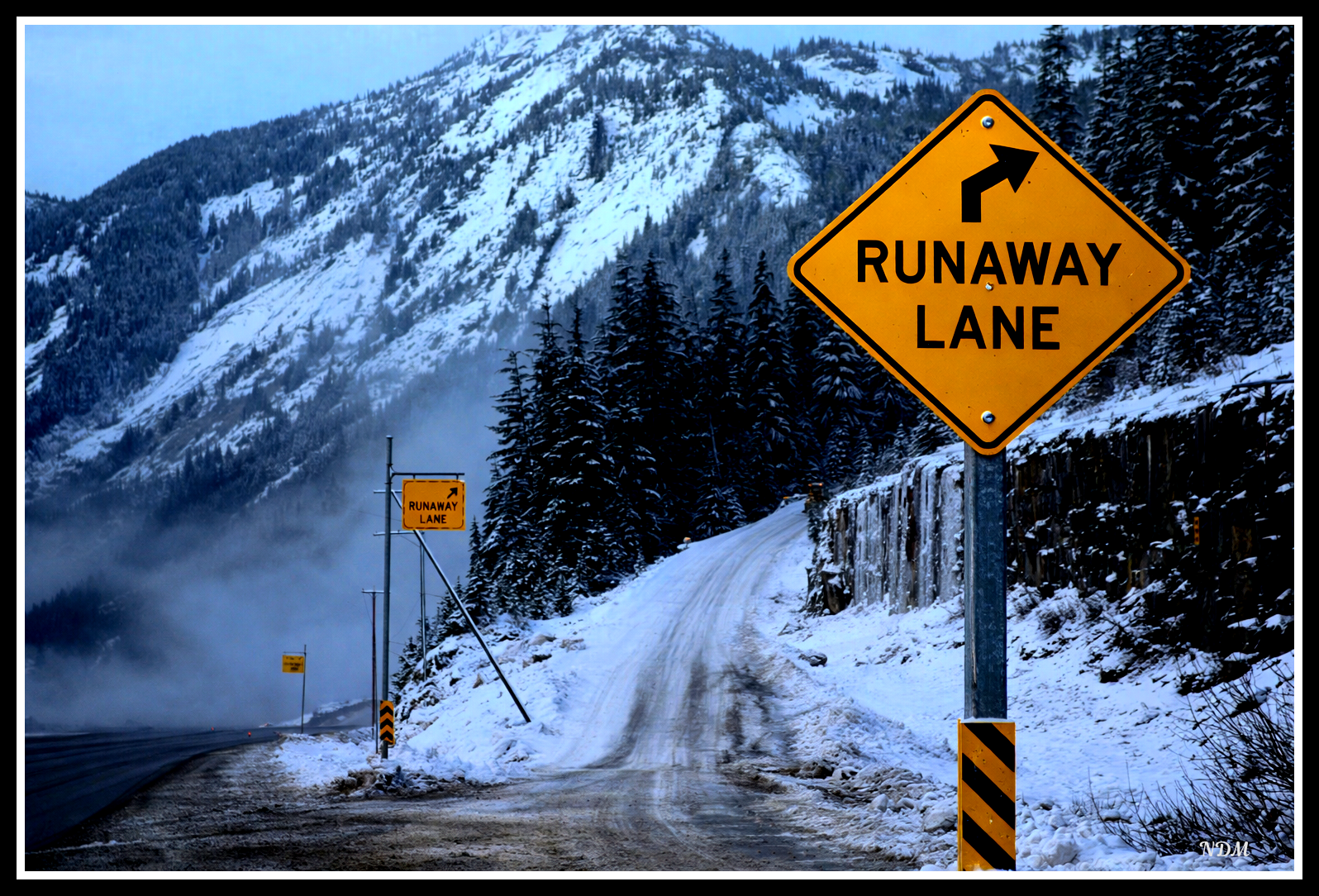
In the real world, those are called runaway lanes. They are built for moments when things are already moving too fast and the only option left is to redirect before it all goes sideways. You do not take that road because you are winning. You take it because you are trying to limit the damage. But that option only works if you take it early enough.

Israel did not stumble onto this mountain. Israel entered it knowing exactly what the terrain looked like. Their objective has been clear. Decapitation. Not a range of possible outcomes. The entire objective. Remove the leadership, the structure and the threat at its source.

So while the United States may be scanning for a way to slow things down, Israel is still pressing forward. Because from their perspective, slowing down too early is failure. If the objective is not achieved, then the risk taken to get here means nothing.

And then there is Iran. Iran is not trying to win in the way we tend to define winning. Iran is trying to endure. Because for Iran, survival itself is victory.

We have seen this logic before. A side can claim success by simply not losing. If the regime is still standing at the end of this, it will not matter how much has been hit along the way. That will be framed as resilience, not defeat.

So now you have three drivers on the same mountain. One is looking for a way to slow down. One is committed to reaching the bottom at full speed. And one is simply trying to stay on the road.

And we keep asking why the messaging does not line up. Well if your agendas are all different it’s hard for the messaging to align.

Now layer in the language we are being asked to accept.

We are told this is about an imminent threat based on intelligence information. But when you listen closely, the definitions start to shift. Imminent becomes capability. Capability becomes possibility. Possibility becomes justification.

And somewhere in all of that, we are expected to stop expecting the factual sources. That is the part that should make people uncomfortable.

Not because we expect perfect clarity. But because when the word imminent is used to justify action, the burden of proof is supposed to go up, not down.

Now add one more piece. Boots on the ground. We hear that phrase used carefully, almost like a technical distinction. As if you can place Marines into a region and still maintain the comfort of saying this is not war in the way people think of war. But boots on the ground means something very real. It means people are now physically present in a space where events can change quickly. It means proximity to risk. It means the line between “not engaged” and “suddenly involved” can disappear in a moment no one planned for.

So when I hear that Marines are being deployed but we are not supposed to interpret that as escalation, I find myself asking a very simple question. If they are not there to fight, then what exactly are they there to be ready for? And once they are there, how easy is it to leave? Because the off ramp does not become easier once those marine boots touch the shore.

And now the Pentagon is preparing a request in the range of 200 billion dollars to take to Congress. That is not the language of de-escalation. That is not what an off ramp looks like. You do not prepare that kind of investment if you believe you are about to step off the road. You prepare it if you expect to stay on it.

And here is the part we cannot ignore. Those three countries are not the only ones on that road.

The rest of the world is on that mountain with them. Smaller countries. Middle powers. Neighbours. Allies. Economies tied together in ways that most people do not think about until something breaks. They are not driving the trucks. They are the smaller vehicles around them. The ones trying to stay in their lane, trying to get where they are going, trying not to get pulled into something they did not start and cannot control.

And when the big trucks start moving like this, when one is accelerating, one is trying to veer off, and one refuses to give way, the danger is not just what happens between them. The danger is what happens to everyone else.

Because smaller vehicles do not get a say in how that mountain is driven. They adjust, they brake, they swerve or they get hit.

This is not a closed system. It never is. Every move made by those three machines ripples outward through energy markets, through supply chains, through alliances, through countries that suddenly find themselves closer to the edge of something they never chose.

So while we debate definitions and strategy and whether an off ramp still exists, those smaller units on that road are just trying to make it to the other side. And they do not get to decide how fast the trucks are going.

That is the part that keeps me from enjoying that quiet moment I had planned this morning. Not the politics nor the personalities but the reality that we are watching three different endgames unfold at once, with no shared agreement on where this stops.

That is a collision waiting to happen, because the off ramp is only useful if someone is willing to take it, and right now no one seems interested in slowing down.

My Leadership Team

Posted: March 20, 2026 in Uncategorized

Meet my daily leadership team. Laika, my senior lady, is a lab/husky cross and a part-time alarm system. Murphy, the blue heeler, operations manager, highly alert, zero chill when gophers are involved. And Mocha, the seal point ragdoll, leading from a position of absolute comfort and imagined authority, looking like a perfectly frothed chai latte… but definitely not a pumpkin spice one.

Honestly… parts of this feel a little too familiar, maybe like things in the world we live in. But unlike the world out there, these three keep it simple: Eat, sleep, walk, poop, cuddle and repeat.

So today I’ve decided I’m opting out. The only sh*t I’m dealing with is the kind that comes with a leash and a poop bag. The only barking I’m entertaining is coming from my own backyard.

No big declarations. No noise for the sake of noise. No pretending to have all the answers. Just fresh air, quiet, and a reset.

Indeed, today will be a dog’s day. And honestly, that feels like the smartest plan on the table. Because the kind of chaos happening out there right now… is a lot harder to clean up than anything on this acreage.

My readers come from everywhere. Different countries, different political views, different walks of life. But I come from Atlantic Canada, from a place where people understood something very simple about survival. You needed each other. Friendship mattered. Loyalty mattered. Respect mattered. Relationships mattered.

Following the Second World War, my father took over a bankrupt flight school in Moncton, New Brunswick. On paper it was not a promising venture. The region was economically depressed and the weather was notoriously difficult for aviation. By most conventional measures it was exactly the kind of business people would advise you not to buy. But my father understood something that does not appear on balance sheets. He understood relationships.

He did not think small and he did not think locally. While many aviation businesses of the time focused only on their immediate region, my father believed the world itself was the market. He built relationships across the aviation world with instructors, pilots, mechanics, suppliers, and operators who became part of something larger than a single company. Over time those relationships became the backbone of the business. It was a model that many aviation training schools in Canada would later follow, but at the time it was not the traditional way of thinking. My father believed that if you treated people well and built trust over time, opportunity would travel much farther than geography.

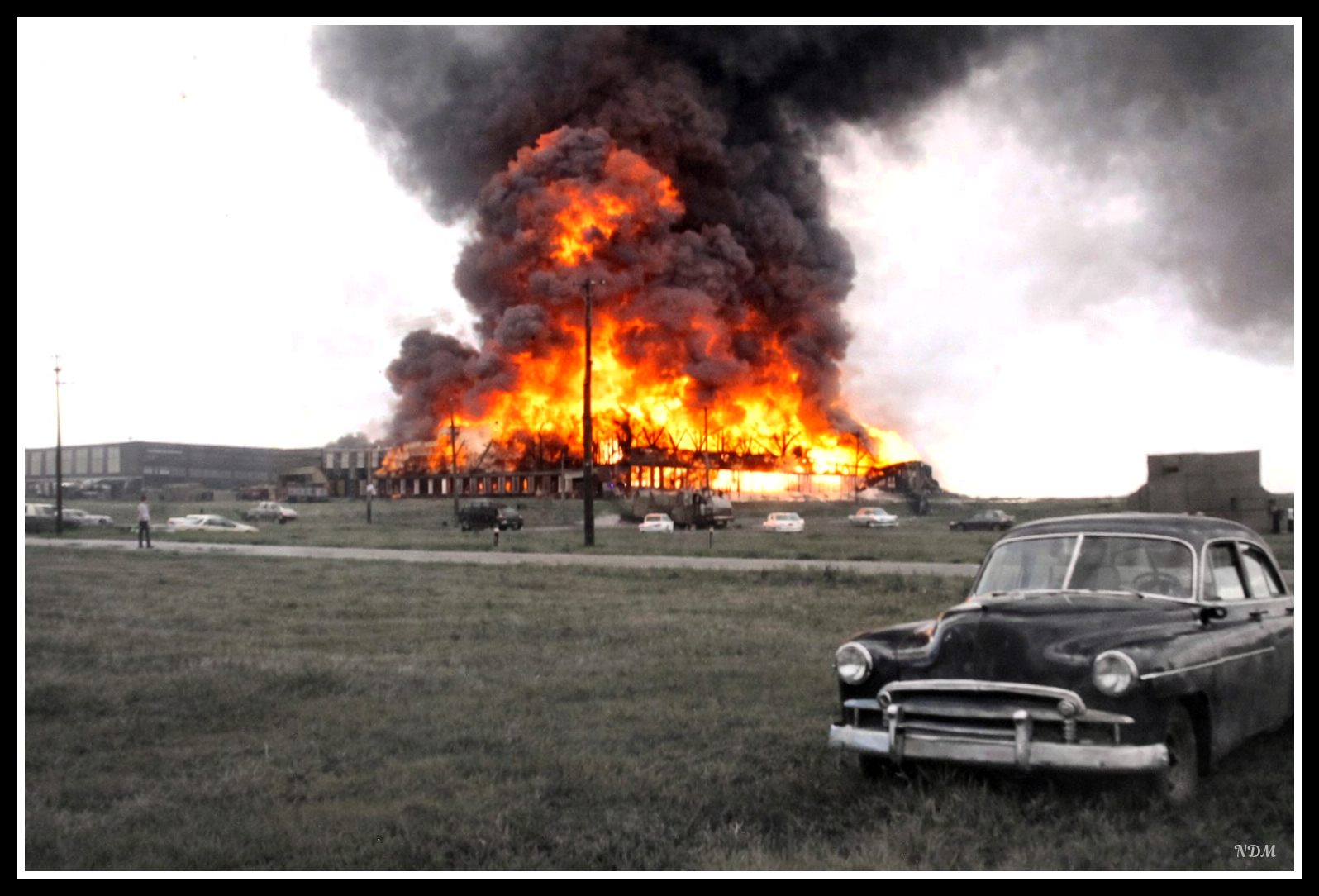
Then one day the business burned to the ground.

At the time the school operated out of a repurposed Second World War wooden hangar, the kind that might as well have been a tinderbox. When the fire came it destroyed everything.

On July 12, 1965. I was five years old, but I remember it like yesterday. What the photographs show is the massive smoke rising into the sky. What I remember are the flames that could be seen above the roofline before that smoke took over the sky. Everything was gone. Everything except the relationships.

Within twenty-four hours, the operation was open again, running out of a rented trailer. The phone company installed a line almost immediately. The aircraft that happened to be out flying that day, the only ones that survived simply because they were not in the hangar, were already back in the air. People stepped in. Not because they were obligated. Because they believed in the work and they believed in each other. Those relationships had been built over years, long before the fire ever came.

I have been thinking about that story a lot the last few days as I watch the tension building between countries that have long called themselves allies.

Following the Second World War, the world was rebuilding as well. Nations were forming partnerships and institutions designed to prevent another global catastrophe. NATO would soon emerge from that moment. It was not simply a military agreement. It was built on the belief that relationships between countries mattered. Countries that trusted each other and respected each other would be stronger together than they would ever be standing alone.

Those relationships helped shape the stability of the modern world. But relationships, whether between people or between nations, are fragile things. They depend on trust. They depend on respect. They depend on the understanding that partners matter not only when you need them, but all the time.

Watching events unfold now, I find myself thinking about the generation that built those systems in the first place. Tom Brokaw called them the Greatest Generation. Many of them came home from the war determined to build something better. Businesses. Communities. Partnerships between nations that might prevent the world from falling apart again.

That generation is almost gone now, and perhaps that is part of why this moment feels emotional to me.

Because when I think about what they built, I do not think first about power or dominance. I think about relationships. I think about the quiet understanding that trust and respect were not optional pieces of the system. They were the foundation that made the whole thing work.

My father never assumed anyone would come running to help him. He spent years building the kind of relationships that made people want to. And the lesson from that day in July of 1965 has never really left me. You do not build relationships the day the hangar burns down. You build them quietly over years. And you protect them with respect long before the fire ever comes.

The Ides of March

Posted: March 20, 2026 in Uncategorized

Today is March 15th. Most years that date passes quietly. Someone might remember the Shakespeare line from Julius Caesar, “Beware the Ides of March.” In history class it felt distant, almost theatrical. This year it feels different.

For the last few nights, I’ve found myself waking in the middle of the night and doing something I hate admitting. I reach for my phone and glance at the notifications, wanting to know if something catastrophic happened in the two hours I managed to sleep.

That’s not a healthy habit. I know that. But I also know I’m not the only one doing it.

Today, however, began beautifully. One of those clear late-winter prairie days where the sunlight reminds you that spring is slowly making its way across Alberta. And I had the absolute joy of spending time with my granddaughter. There is something about a small child that instantly resets your soul. For a few hours the world becomes very simple again. Laughter. Curiosity. A tiny hand reaching for yours. As I watched her laugh and chase bubbles in the sunlight, completely absorbed in the wonder of the moment, I felt that deep joy only a grandchild can bring. But I would be lying if I said there wasn’t also a quiet sadness sitting beside it, knowing that for many children around the world that same carefree moment is something they may never experience simply because of where they were born, the religion they were raised in, or the political and ideological battles of the adults around them.

And then you get back in the car and drive home and the larger world comes rushing back in. The weight of it all.

Later tonight much of the world will be watching the Oscars. Pop culture has never been something that matters much to me, although I will admit I might glance at the red carpet and the spectacle of it all. What I will be listening for, though, are the moments when someone inevitably steps past the glamour and speaks about the world beyond that stage. It happens almost every year. Sometimes awkwardly, sometimes courageously. And given the moment we are living through right now, I suspect there will be voices trying to remind us that the world outside the theatre doors is carrying a very different weight.

Lately I have been struggling with something that I suspect many people who follow global events closely are feeling but not saying out loud. The sense that the ground beneath the world’s politics has shifted so dramatically that it’s hard to know where the center even is anymore.

I get called a lot of things online these days. “Woke.” “Radical left.” “Libtard.” It would be funny if it weren’t so exhausting. Because philosophically I have always considered myself a centrist, probably slightly center-left if someone forced me to choose a label. I believe in democratic institutions. I believe in careful policy. I believe in economic reality and fiscal responsibility. I believe in international cooperation. I believe human lives matter regardless of the passport they carry.

Apparently those positions are now considered radical.

What troubles me most right now is the way empathy itself has become polarized. That kind of reaction makes you stop and wonder what is happening to our collective sense of humanity. Because surely the one thing we should all be able to agree on is that the unnecessary death of children is tragic, whether those children are in Gaza, Israel, Iran, Ukraine, or anywhere else on this planet. Children are not geopolitical actors. They are simply children.

At the same time the world seems to be moving deeper into a dangerous phase of great-power politics. The United States, Russia, China, Iran, Israel, each operating with their own strategic interests, their own narratives, and their own audiences.

The thing that troubles me most about the current moment is not simply the conflict itself. It is the assumption that military force can solve problems that history repeatedly shows cannot be solved that way.

If the goal is to fundamentally reshape a nation like Iran, that is not something accomplished through airstrikes alone. Iran is a country of nearly ninety million people with enormous internal security structures, multiple armed forces, and a deeply entrenched ideological system. History has shown us in Iraq, Afghanistan, and Libya that removing one piece of a political structure rarely produces the clean outcomes people imagine at the beginning of wars. Often it unleashes forces no one fully understands.

And then there is another contradiction I cannot quite wrap my head around. We are constantly told that the United States possesses the greatest military force in the history of the world, the most powerful Navy, the most advanced Air Force, the strongest Army ever assembled. If that is truly the case, then why are other nations now being asked to send their ships, their aircraft, their pilots, their sailors, and their soldiers into harm’s way? Especially when those same nations were never asked for their opinion before this conflict began.

Alliances matter. They always have. But historically alliances involve consultation, shared decision-making, and shared responsibility for the consequences. Asking others to join a war after the fact, particularly when those lives will be placed at risk, raises difficult questions that responsible governments have an obligation to consider very carefully.

Meanwhile the alliances of the world are shifting. The United States once positioned itself as the “leader of the free world.” Today many nations are quietly recalibrating their relationships as American politics becomes increasingly transactional and inward-focused.

And in the middle of all of this are countries like Canada. We are not a superpower. But middle powers can matter. Diplomacy, economic cooperation, and multilateral relationships are the tools countries like ours have always relied on.

Which is why I find myself genuinely grateful for the leadership Canada currently has. I do not often speak about politicians with that level of sincerity, but Mark Carney represents something that feels increasingly rare in modern politics: seriousness. He is building economic relationships, strengthening alliances, and working to position Canada in a rapidly changing global order.

That does not make someone radical. It makes them pragmatic.

Yet if the online comment sections are to be believed, supporting stability, diplomacy, and economic cooperation somehow places you on the extreme left. If that is the label someone wants to give me, I suppose I will live with it.

Perhaps that is why days like this feel so heavy. Because for all the talk of strength, security, and victory, wars are rarely carried by the people who speak about them the most. They are carried by young pilots, sailors, and soldiers who will live with the consequences, and by civilians who never chose to be part of the story in the first place. Leaders will argue about strategy, television panels will debate who is winning, and markets will open tomorrow morning as though the world can simply absorb another crisis. But the real measure of leadership has never been how loudly a nation can declare its power. It is whether those in charge remember why that power exists in the first place. Standing in the sunlight today after spending time with my granddaughter, I found myself hoping that somewhere inside the calculations likely being made tonight, someone still remembers that the purpose of power was supposed to be protection.

Because somewhere tonight, a child is still chasing bubbles in the sunlight, and the rest of us should never forget that protecting moments like that is the entire point.

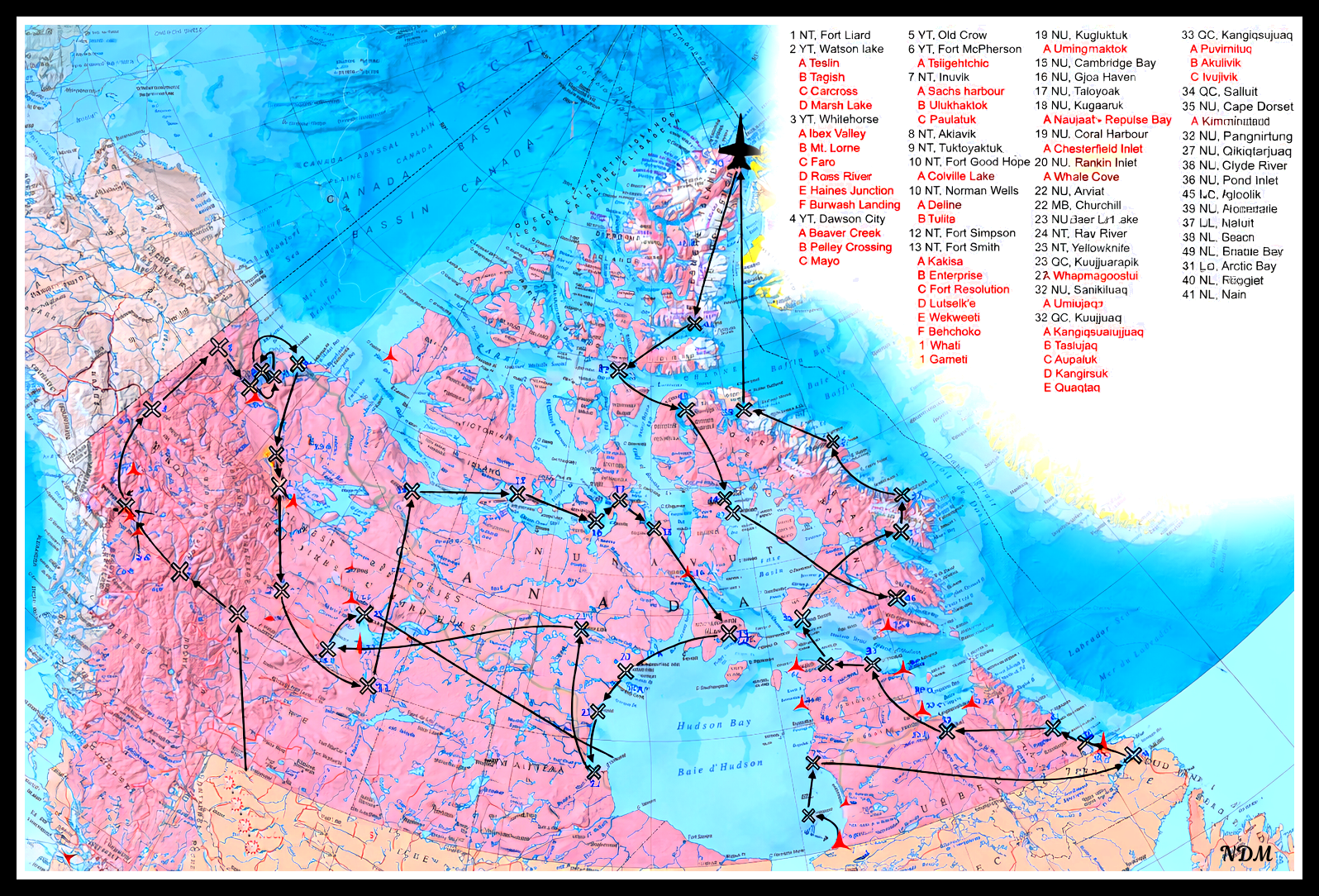
There’s a place I talk about fairly often because it’s a place that truly has my heart, as the expression goes. Northern Canada. What I’m referring to specifically are the territories: Yukon, Northwest Territories, and Nunavut. What is becoming more and more apparent in the coming years is the issue of Arctic sovereignty, and Canada is entering a moment where we must take that responsibility seriously.

The last time Canada felt the need to demonstrate sovereignty in the High Arctic was during the early years of the Cold War, and the story of how that was done is not one of our proudest chapters. In 1953, the Canadian government relocated eight Inuit families to the High Arctic, specifically to Grise Fjord on Ellesmere Island. The families came from what is now Nunavik in northern Quebec, an Inuit region that many Canadians still do not realize exists. The relocation was intended to strengthen Canada’s territorial claim by establishing a permanent population in the far north.

The families were promised homes and abundant wildlife for hunting, and they were told they could return home after a year if the relocation did not work. Those promises did not materialize. Instead, these families found themselves thousands of kilometres away from the land they knew. The animals followed different migration routes then what they knew. The seasons behaved differently. Even the landscape itself required a completely different understanding in order to survive.

Yet survive they did. They learned the migration routes of whales and animals and hunted across vast territories they had never known before. They relied on one another and on their resilience because there was no other choice. Many Canadians are unaware of this history, but it matters in the conversation we are having today because the North is once again becoming central to Canada’s national priorities.

Before talking about the new announcements, it’s important to understand what life in the North actually looks like. People often use the word remote rather casually. Someone might talk about having a cottage somewhere in northern Ontario or Saskatchewan and describe it as remote. But the Arctic exists on a completely different scale.

In Nunavut, for example, there are no roads connecting communities. None. The only roads that exist are the small ones within the hamlets themselves. Travel between communities happens by air, by boat during the short summer season, or by snowmobile across the land when conditions allow. Even that doesn’t fully convey the distances involved. Many communities are separated by hundreds, sometimes many hundreds, of kilometres of land and water.

It is a scale of geography and isolation that most Canadians have never experienced.

Only about two percent of Canadians have ever travelled to the territories. And even among those who have, most have visited Whitehorse or Yellowknife. Those are important northern cities, but they remain relatively southern in Arctic geography and can resemble towns in northern Alberta or northern British Columbia. The High Arctic is something altogether different.

Yesterday, the Prime Minister announced investments that directly relate to this region and to Canada’s future there. The plan involves approximately $35 billion in defence and infrastructure spending focused on the North. Much of that funding comes from a modernization effort tied to NORAD, the binational North American aerospace defence command Canada operates jointly with the United States.

The plan includes upgrades to northern bases, including runway expansions so they can support Canada’s new jets. Hangars, roads, and other operational infrastructure will be built or upgraded across Arctic locations. Forward operating sites will be strengthened in Inuvik, Yellowknife, Iqaluit, and Goose Bay. Additional operational hubs will be created in Whitehorse and Resolute, where equipment can be stored and troops staged when needed. Smaller operational nodes will also be established in Nunavut communities such as Cambridge Bay and Rankin Inlet.

The goal is to allow Canada’s military to deploy and operate across the North year-round, even in the most remote regions.

These investments extend beyond strictly military infrastructure. The announcement includes improvements to civilian airports in communities such as Rankin Inlet and Inuvik, along with major transportation projects including the extension of the Mackenzie Valley Highway and the development of the Grays Bay road and port project. If completed, that project would create Canada’s first overland connection to a deep-water port on the Arctic Ocean and help move strategic minerals from northern regions to global markets.

These are enormous undertakings. While the announcement is often described as a $35-billion investment, the broader NORAD modernization effort could represent closer to $87 billion over time when measured on a cash basis rather than standard government accounting.

That naturally raises the question some people will ask. Is this too little, too late? Personally, I don’t believe it is too late. But it has been a long time coming. The Arctic is no longer a distant policy discussion. It is becoming one of the most strategically important regions on the planet. Shipping routes that were once blocked by ice are becoming more accessible. Strategic minerals, energy resources, and the Northwest Passage are increasingly part of global conversations about trade, security, and economic development.

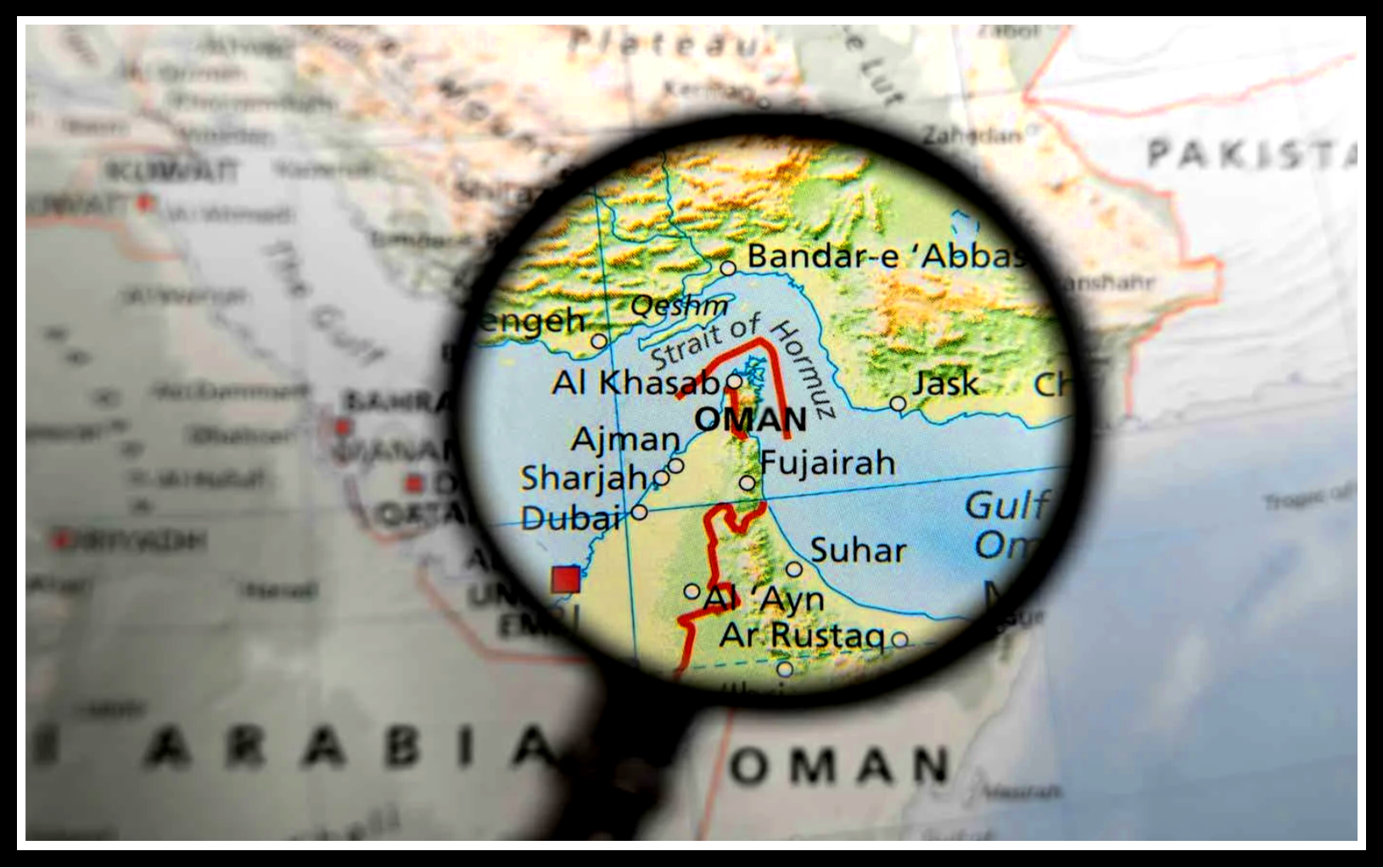
We often think geopolitical tensions happen somewhere far away, but the world has become very small. If you want an example of how a relatively narrow geographic location can influence global stability, you only need to look at the Strait of Hormuz, a small stretch of water with enormous implications for the entire world.

The Arctic has the potential to become just as strategically significant. That means Canada cannot afford to ignore it.

At the same time, there is something we must never forget as we move forward. The story of those Inuit families relocated in 1953 should remain part of this conversation. Canada cannot build its future in the North by making decisions about the region without the people who live there. This must be done with northern communities and Indigenous leadership at the table from the beginning. Done properly, these investments could strengthen infrastructure, improve connectivity, and create opportunities for people who already call the Arctic home. Done poorly, they risk repeating mistakes we already know too well.

Most Canadians will never see the High Arctic with their own eyes. But it remains an essential part of who we are as a country. And in the decades ahead, it may also become one of the most important places in determining Canada’s future.

For those of us who have spent time in northern communities, the North is not an empty expanse on a map. It is a living place filled with remarkable people whose resilience and ingenuity have allowed them to thrive in one of the harshest environments on Earth.

The work ahead will not be easy. It will take time, investment, and patience. But the Arctic is not simply Canada’s northern frontier.

It is Canada’s responsibility.

Someone is going to shape the future of the Arctic. That is inevitable. The question is whether Canada will do it, or whether we allow others to do it for us. And if that ever happens, we will learn something the hard way: sovereignty is not something you keep simply because it appears on a map. You keep it because you show up. Because if we don’t, someone else will.

And that is a future that would change Canada in ways most of us are not prepared to imagine.

Truth To Task

Posted: March 20, 2026 in Uncategorized

.As a Canadian watching this unfold from just across the border, I keep finding myself in the same place many Americans seem to be. None of this feels very different from the questions that were being asked on day one of this strike. No one doubts that Iran has long been a destabilizing force in the region or that it has supported terrorism. That reality isn’t really in dispute. But when nations begin talking about sending their children and grandchildren into harm’s way, the standard for doing so has to be extraordinarily high.

Those of us who watched the wars in Iraq and Afghanistan unfold, and who watched the years that followed, know what happens when a conflict begins without a clearly articulated reason, a defined endgame, and a credible exit strategy. I watched those wars with the added weight of knowing that a member of my own family was serving there. When people you love are the ones being sent into harm’s way, the conversation about war stops being abstract very quickly.

From the outside looking in, it is difficult to understand how Americans are being asked to support something of this magnitude without those answers being made crystal clear.

I held off writing anything more about this for several days because I honestly thought it might burn hot for a moment and then begin to cool. Conflicts sometimes do that. But as we move closer to the two-week mark, that possibility seems to be fading. The damage continues to accumulate. Missile inventories depleted. Drones launched. Interceptors fired. Cities struck. Civilians caught in the middle. Soldiers already injured. Every day another piece of the global machinery grinds a little harder. And yet the explanation behind it all still feels oddly fluid.

One of the new words introduced into the conversation this week was that the war was an “excursion.” Now, when I hear the word excursion, I think of something very different. I think of the optional trips that get offered when I’m on vacation in Mexico, a zip-lining excursion through the jungle or maybe a sunset catamaran cruise where everyone watches the sky turn orange before heading back to the resort for dinner.

I do not think of airstrikes, missile exchanges, and the possibility of sending young soldiers into a country of ninety million people.

Words matter. And right now the words keep changing. At one point, we were told the war was “very complete.” Hours later, we were told it was only just beginning. It would last weeks. There would be no timeline. It was limited. It might expand. Victory was close. Victory required unconditional surrender.

Somewhere in the middle of all of that, I heard a retired general mention a phrase that stuck with me. The military calls it ‘Troop-to-Task.’ It’s a basic principle of planning. Before launching an operation, commanders define the mission and then calculate the resources required to accomplish it. Soldiers, medics, engineers, intelligence, logistics, and supply chains. Basically, the entire structure that turns a plan into reality.

But that math only works if the task itself is clear. Listening to the conversations this week, it’s difficult to escape the feeling that the task keeps moving. One day the mission is nuclear containment. The next day it’s eliminating missile capability. Then it’s protecting global shipping lanes. Then it’s regime change. Then it’s unconditional surrender. Those aren’t small adjustments in strategy. Those are entirely different wars.

And every time I hear the phrase ‘Troop-to-Task’ my mind keeps shifting it slightly. I hear ‘Truth to Task’. Because before anyone starts calculating troop numbers, before anyone starts discussing escalation or victory, someone should be able to answer a much simpler question. What is the truth of the task? Is this about Iran’s nuclear program? Is it about regime change? Is it about oil flows through the Strait of Hormuz? Is it about geopolitical messaging?

Those answers matter. They matter because they determine the cost, in lives, in resources, and in consequences that ripple far beyond the battlefield.

There’s a line from Henry Kissinger during the Vietnam War that resurfaced this week that has been rattling around in my head as well. Kissinger once observed that in asymmetric conflicts the United States loses by not winning, while the other side wins simply by not losing. Listening to analysts talk about Iran’s strategy, asymmetric warfare, drones, mines, missile launches, disruption of shipping lanes, it’s hard not to hear that echo again. One side seeks decisive victory. The other side simply needs to simply still be standing when it’s over.

Which brings me back to those three words. Truth. Troops. Task.

If the truth isn’t clear, the troops shouldn’t be there. And if the task isn’t clearly defined, declaring victory becomes nothing more than a press release.

This moment isn’t about ideology or party loyalty. It’s about whether the person making decisions that could reshape the global order actually understands the weight of those decisions.

And from where I’m sitting, just above the 49th parallel, that confidence simply isn’t there. People are welcome to disagree with me here. Honest debate is part of how democracies stay healthy. But if the only argument someone has left is that Donald Trump’s improvisational leadership is exactly what the world needs in a moment like this, then this probably isn’t the place for that conversation. There are plenty of other corners of the internet for that. This one isn’t it.

30 Days

Posted: March 20, 2026 in Uncategorized

There are moments when a politician says something and you immediately know they have never actually lived through what they’re talking about.

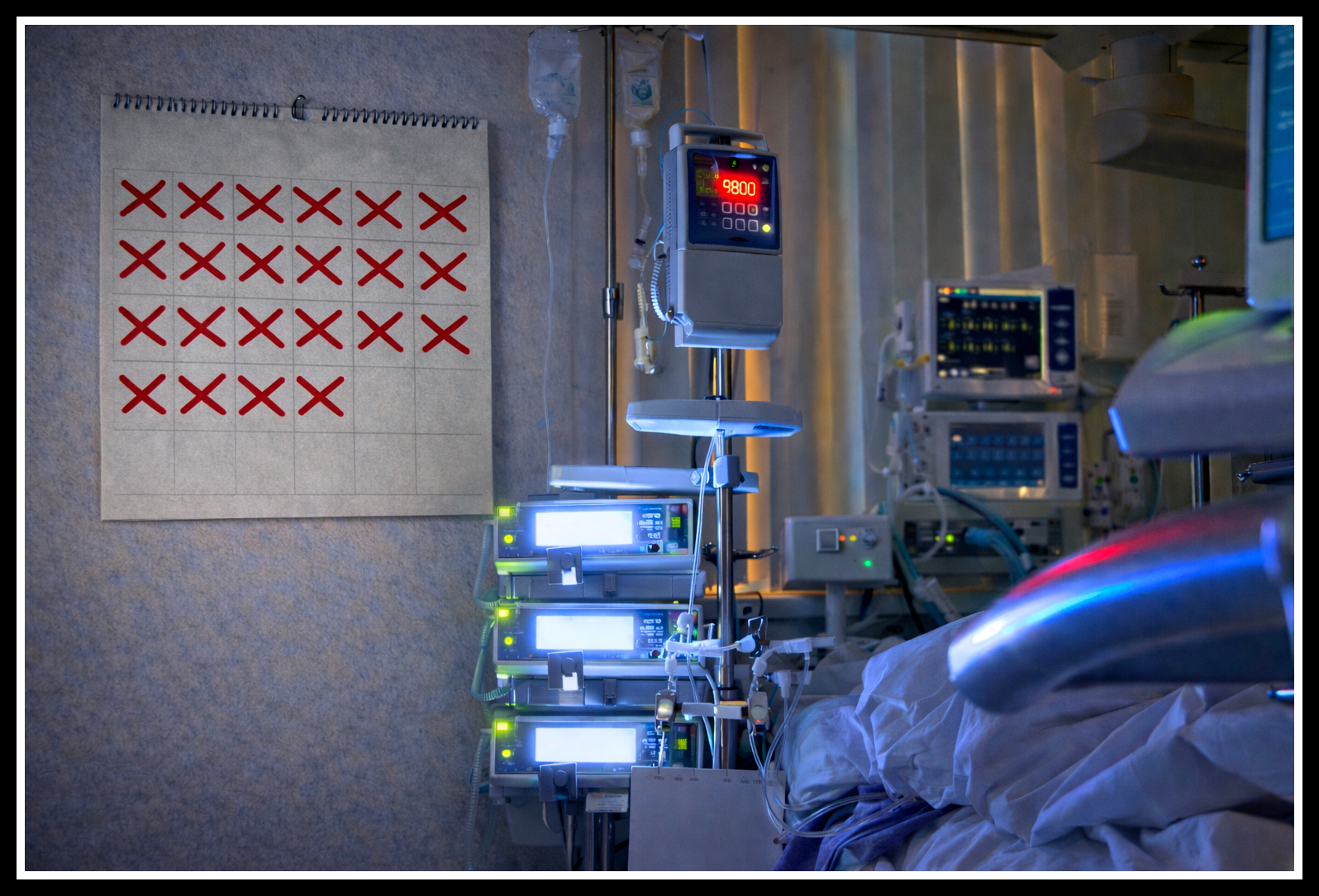
On Saturday Alberta Premier Danielle Smith described how healthcare should work in Alberta. She said that when someone arrives at a hospital they should be seen within four hours. If they need to be admitted, tests should be completed within twenty-four hours. If they require a hospital bed they should stay perhaps five to eight days. And she said no one should ever remain in hospital longer than thirty days.

Thirty days.

I have spent the last five years watching my husband fight for his life inside Alberta’s healthcare system, and I can assure the Premier of one thing: illness does not run on a political timeline.

My husband was a healthy fifty-five-year-old man when COVID entered our lives in April of 2020. This was before covid vaccines and during a time when hospitals were locked down and families were not allowed inside. When he was admitted, I did what thousands of Canadians did in those early months of the pandemic. I sat in the hospital parking lot waiting for updates that came by phone. I watched the entire series of Schitt’s Creek sitting in that parking lot. I read books. Mostly I stared at my phone and waited. No one told me there was a timeline for illness.

He survived. But our journey through the healthcare system was far from over.

In 2022 Mario became sick again. By the time he was taken by ambulance to the hospital he was already critically ill. Scans revealed thirteen large masses on almost every major organ in his abdomen, the liver, pancreas, gallbladder, colon and spleen. A palliative care doctor came into his hospital room and told us they believed it was metastatic cancer, likely originating in the pancreas or liver, and that we should prepare for end of life.

The next morning the pathology report came back. The diagnosis was stage four high-grade diffuse large B-cell lymphoma. Compared to what we had been told the day before, it felt like a miracle. But what follows a diagnosis like that is something most people cannot imagine until they are living it. Suddenly, your vocabulary fills with words you never expected to know. Biopsies, bone marrow tests, ports and chemotherapy protocols with names like R-CHOP. Endless blood work, endless scans, and teams of specialists trying to determine how aggressively the disease must be treated. Some people receive a cancer diagnosis before they are seriously ill. Mario was not one of those people. By the time he was diagnosed, he was already critically ill and hospitalized. It’s a good thing no one put a limit on how many days they could provide care.

Treatment began immediately, and it was aggressive. The chemotherapy alone involved five powerful drugs and brought complications of its own. He developed a pulmonary embolism. He acquired MRSA, a resistant staph infection that required treatment that shut down his kidneys.

Through all of this there were extraordinary people inside Alberta’s healthcare system, doctors, nurses and specialists navigating a system that is clearly under pressure but still held together by the people working within it. And through all of those weeks, surrounded by tests, infections, complications and uncertainty, not one person walked into that hospital room and said, “Well sir, it’s day twenty-eight. We’re going to need to wrap this up.” Because that is not how cancer works.

Eventually Mario was discharged and continued chemotherapy outside the hospital. By the time he finished treatment the two-hundred-and-five-pound man I had married weighed one hundred and thirty-three pounds. He survived that too.

Then on June 8th, 2024, another chapter began. Mario had been outside working in the yard for several hours. Then the fellow helping him came into the house and said he thought Mario needed a glass of water. I grabbed one and went outside. At that exact moment Mario began to lose consciousness.

Our youngest son was home who serves in the Canadian Armed Forces and immediately began CPR while I called 911. He performed compressions but could get no pulse or respiration. EMS arrived within fifteen minutes and took over CPR. Still no pulse. Firefighters arrived and took over the compressions and they did not stop.

From the moment Mario collapsed to the moment they were preparing to call his death, forty minutes had passed. Then I saw his chest rise. At minute forty-two. He was rushed to hospital, intubated and placed in a deep medical coma. Survival after an out-of-hospital cardiac arrest is already low. After forty minutes it is almost unheard of.

But our son had started immediate CPR which meant oxygen was still reaching Mario’s brain.

And then the waiting began again. Teams of doctors, literally teams worked to determine what had happened and whether he would recover.

Days passed. Weeks passed. And then he woke up. Slowly his cognitive ability returned and then his physical strength. Forty minutes of CPR leaves broken ribs and a battered sternum but he was alive. I remember looking at the Intensivist and asking how this was possible. Immediate quality CPR.

During these five years I have said many times that I am not sure how families manage this system without someone advocating for them every step of the way. I am a very resource-driven person. English is my first language. I am not afraid to ask questions or push when something doesn’t make sense. Even with those advantages, navigating the system was incredibly difficult.

Our sons were part of that journey in different ways. Chris’s military training allowed him to begin CPR that day in our yard. Our other son married a healthcare professional, and I cannot tell you how many times her knowledge helped guide me through terminology, decisions and questions I never expected to face. Even with that support, this was not easy to navigate. There were many more hospital visits as health care providers found the best treatments etc. for my husband but most were within the magic 30 day number although several surpassed the five to eight threshold. Imagine!

Which brings me back to the Premier’s remarks. After everything our family has lived through since 2020, COVID, stage four lymphoma, aggressive chemotherapy, MRSA, pulmonary embolisms and a forty-two-minute cardiac arrest, I can say with certainty that not one doctor, nurse, paramedic, firefighter or specialist ever looked at a calendar and said, “Well folks, thirty days is the limit.”

What saved my husband’s life was not a timeline announced at a podium. It was people. And thank God the people doing the real work in Alberta’s healthcare system don’t operate on a thirty-day deadline. And tests within 24 hours will require additional machines and more manpower and anyway you may not even be seen in the ER within 24 hours.

And if Danny ever wants a slightly more detailed education on how healthcare actually works in Alberta, I’d be happy to have that conversation. After the last five years, I’ve had a pretty intensive course in it.

And I’ll even try to keep it simple. Four hours. Twenty-four hours. Five to eight days. Thirty days. Those numbers might work on a government briefing note but not on a human body in a health crisis.

One week into this conflict, and the world already feels different.

Before I go further, I want to say something clearly because from time to time it seems to need repeating.

I am not a journalist. I am not a historian. I am a citizen who writes from a human perspective. When I write, I try to ground what I say in facts. I try to look at history. I try to apply some of the objectivity that good journalism demands. But at the end of the day my writing comes from lived experience, personal reflection, and basic humanity.

That is what this space has always been.

And that is not going to change, no matter how loudly someone yells about it in the comment section.

Now to the reality we are all watching unfold. The United Nations High Commissioner for Human Rights is calling for answers following a strike last Saturday on an Iranian elementary school that reportedly killed at least 165 people. Human Rights Chief Volker Türk has condemned the attack and is demanding a prompt and transparent investigation. At this point neither Israel nor the United States has claimed responsibility, although Washington says it will investigate.

At the same time the conflict that began only seven days ago with U.S. and Israeli attacks on Iran, followed by Iranian retaliation, continues to spread across the region. It is costing the U.S. $1 Billion dollars per day. The damage is now being felt not only in Iran and Israel but across in excess of a dozan countries in the Gulf. The United Nations is warning of significant humanitarian, economic, and environmental consequences if the escalation continues.

And yet if you listen to the messaging coming out of Washington, you would be forgiven for wondering whether anyone actually knows what the plan is. Over the past week we have heard a rotating set of explanations from Donald Trump, Pete Hegseth, Marco Rubio, and others. One day the objective is limited action. The next day it is deterrence. Then it is not regime change. Then suddenly the message becomes unconditional surrender followed by rebuilding Iran under leadership the United States finds acceptable. That last one kind of sounds like regime change and nation-building, don’t you think?

When the stated objective of a war changes from day to day, that is not strategy. That is improvisation.

At the same time the administration is reportedly meeting with major American defence contractors such as Lockheed Martin and Raytheon to increase weapons production as the Pentagon works to replenish supplies already drawn down during the opening phase of this conflict. If everything is proceeding according to a clear plan, that development alone should make people pause.

No matter what anyone eventually calls the outcome of this conflict, success, failure, or something in between, one thing is already clear.

It is going to be expensive. And not just in dollars.

That brings me back to something I tried to say yesterday when I posted about the young men and women who serve. The people who ultimately pay the price for wars are not the politicians who announce them. They are the young men and women who are asked to fight them.

For my Canadian friends, I want to say something directly. This is not a moment for us to be tearing each other apart politically. I do not care whether you like Mark Carney or whether you support another party. Some issues are bigger than our daily political arguments.

If this conflict were ever to widen to the point where NATO becomes directly involved, decisions would move far beyond the control of any single Canadian leader. Article 4 and Article 5 of the NATO treaty exist for moments when allied security is threatened. If those mechanisms were ever triggered, the decision would not simply belong to the Prime Minister, the leader of the opposition, the Canadian Armed Forces, or anyone else sitting in Ottawa.

That is not how alliances work. Once those commitments are activated, the response becomes collective.

And it certainly will not belong to the families whose sons and daughters wear the uniform of the Canadian Armed Forces.

I am not suggesting that NATO involvement is inevitable. But I am saying that we should understand the world we are living in and stop pretending that events happening across the ocean cannot affect us.

So here is my request. Pay attention and step back from the constant political shouting and recognize that the world is moving through a dangerous moment. Hope that diplomacy finds its footing again. Hope that cooler heads prevail.

Because if this conflict widens and alliances are triggered, the arguments happening online tonight will not matter very much.

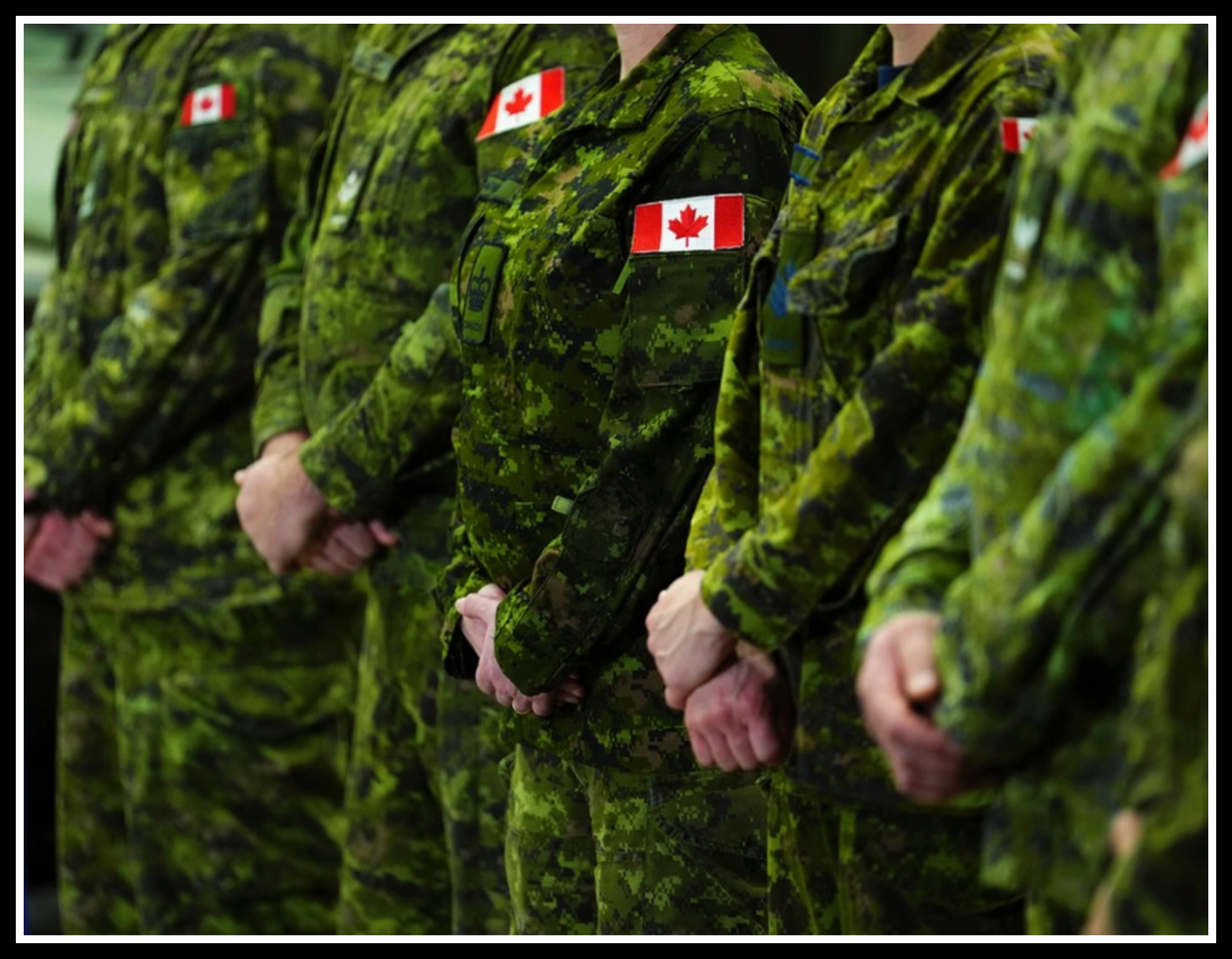
The people who will answer that moment will be the young men and women wearing the maple leaf on their sleeve. And when we remember that, the least we can offer each other right now is a little more humanity and a little more empathy.