


I was supposed to wake up this morning thinking about the first day of spring.. Renewal and energy. That feeling that maybe, just maybe, things are starting fresh again. I wanted to sit in that for a while. A little bit of peace. A little bit of bliss.
That lasted about twenty minutes.
Back to the real world. The more I listen, and the more I realize we are not watching one conflict. We are watching three different realities collide, and we keep trying to make sense of it as if everyone is playing the same game.
They are not! There are many players involved, but three are controlling the road right now. The United States, Israel and Iran. And the problem is not just what they are doing. It is that each one defines success in a completely different way.
Which means they are not just moving at different speeds. They are heading toward entirely different destinations.
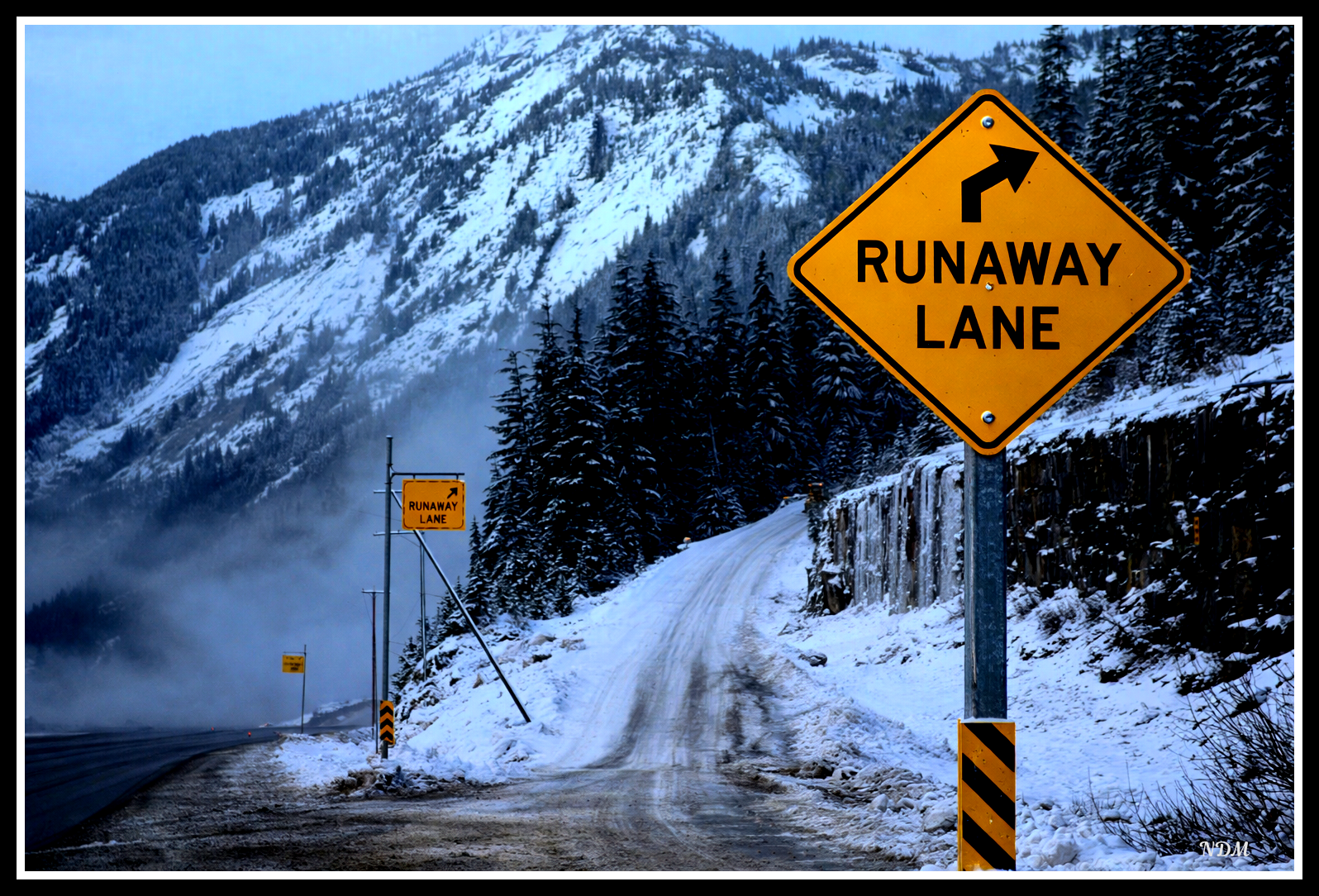
Right now, the United States feels like a fully loaded truck halfway down a mountain, realizing the slope is steeper than expected and the brakes are starting to heat up. The plan was control. The reality is momentum. So now the focus shifts. Not to victory, not to dominance, but to management. To finding an off ramp.
In the real world, those are called runaway lanes. They are built for moments when things are already moving too fast and the only option left is to redirect before it all goes sideways. You do not take that road because you are winning. You take it because you are trying to limit the damage. But that option only works if you take it early enough.
Israel did not stumble onto this mountain. Israel entered it knowing exactly what the terrain looked like. Their objective has been clear. Decapitation. Not a range of possible outcomes. The entire objective. Remove the leadership, the structure and the threat at its source.
So while the United States may be scanning for a way to slow things down, Israel is still pressing forward. Because from their perspective, slowing down too early is failure. If the objective is not achieved, then the risk taken to get here means nothing.
And then there is Iran. Iran is not trying to win in the way we tend to define winning. Iran is trying to endure. Because for Iran, survival itself is victory.
We have seen this logic before. A side can claim success by simply not losing. If the regime is still standing at the end of this, it will not matter how much has been hit along the way. That will be framed as resilience, not defeat.
So now you have three drivers on the same mountain. One is looking for a way to slow down. One is committed to reaching the bottom at full speed. And one is simply trying to stay on the road.
And we keep asking why the messaging does not line up. Well if your agendas are all different it’s hard for the messaging to align.
Now layer in the language we are being asked to accept.
We are told this is about an imminent threat based on intelligence information. But when you listen closely, the definitions start to shift. Imminent becomes capability. Capability becomes possibility. Possibility becomes justification.
And somewhere in all of that, we are expected to stop expecting the factual sources. That is the part that should make people uncomfortable.
Not because we expect perfect clarity. But because when the word imminent is used to justify action, the burden of proof is supposed to go up, not down.
Now add one more piece. Boots on the ground. We hear that phrase used carefully, almost like a technical distinction. As if you can place Marines into a region and still maintain the comfort of saying this is not war in the way people think of war. But boots on the ground means something very real. It means people are now physically present in a space where events can change quickly. It means proximity to risk. It means the line between “not engaged” and “suddenly involved” can disappear in a moment no one planned for.
So when I hear that Marines are being deployed but we are not supposed to interpret that as escalation, I find myself asking a very simple question. If they are not there to fight, then what exactly are they there to be ready for? And once they are there, how easy is it to leave? Because the off ramp does not become easier once those marine boots touch the shore.
And now the Pentagon is preparing a request in the range of 200 billion dollars to take to Congress. That is not the language of de-escalation. That is not what an off ramp looks like. You do not prepare that kind of investment if you believe you are about to step off the road. You prepare it if you expect to stay on it.
And here is the part we cannot ignore. Those three countries are not the only ones on that road.
The rest of the world is on that mountain with them. Smaller countries. Middle powers. Neighbours. Allies. Economies tied together in ways that most people do not think about until something breaks. They are not driving the trucks. They are the smaller vehicles around them. The ones trying to stay in their lane, trying to get where they are going, trying not to get pulled into something they did not start and cannot control.
And when the big trucks start moving like this, when one is accelerating, one is trying to veer off, and one refuses to give way, the danger is not just what happens between them. The danger is what happens to everyone else.
Because smaller vehicles do not get a say in how that mountain is driven. They adjust, they brake, they swerve or they get hit.
This is not a closed system. It never is. Every move made by those three machines ripples outward through energy markets, through supply chains, through alliances, through countries that suddenly find themselves closer to the edge of something they never chose.
So while we debate definitions and strategy and whether an off ramp still exists, those smaller units on that road are just trying to make it to the other side. And they do not get to decide how fast the trucks are going.
That is the part that keeps me from enjoying that quiet moment I had planned this morning. Not the politics nor the personalities but the reality that we are watching three different endgames unfold at once, with no shared agreement on where this stops.
That is a collision waiting to happen, because the off ramp is only useful if someone is willing to take it, and right now no one seems interested in slowing down.
 Nancy's Notes