Archive for the ‘Uncategorized’ Category

July 16, 2025

Posted: August 3, 2025 in Uncategorized

July, 1969 : From Launch to Legacy, Awe Then and Now

Today my post will be less politics and more on Canada Strong, Free and Proud. Thirteen years ago, I wrote the following words about the death of Neil Armstrong, and about a moment in time that still lives vividly in my memory:

“I am generally not one to put a lot of value to celebrity and generally do not find my heroes in pop culture. But today as I heard of the death of Neil Armstrong; the first man on the moon, I suddenly felt profoundly sad. But why? Certainly he had been a pilot; something always close to my heart and several years ago my Dad had shared a table with him at an aviation event. But that was not the connection I was feeling. It was much more than that. It was the knowledge that I am now a full generation away from the little girl that sat riveted in front of that TV set on July 20th, 1969 when Neil Armstrong and then Buzz Aldrin set foot on the moon. I had spent weeks waiting for the event. I had scrapbooks full of every article or newspaper clipping I could find. My family did not leave the room on that Monday afternoon as we waited for the landing of the module on the surface of the moon, and stayed later still as we waited the 6 hours until Neil Armstrong placed his boot on the dusty lunar surface and proclaimed ‘That is one small step for a man; one giant leap for mankind.’ These men were my heroes. My father kept saying that this would be remembered as an amazing moment in our lives. It was a different world. We were in an era that still had ‘awe’. We could not computer generate a trip to another planet with a resolution that looked like we were really there. But what we did have was a grainy black and white picture that told us that as a society we had gone somewhere we had previously only imagined in our dreams. My father was right. I do remember July 20th, 1969 as an amazing moment in my life; partly because of it being a great moment in history but more so because I can still sense the incredible feeling of having shared that moment with my family. So the profound sadness I feel is not about the loss of a man I do not know. It is the sadness that yet another special moment in my life is now such a distant memory.”

At the time, I suggested that we were no longer living in an era of awe. But in hindsight, I realize I was wrong. Awe returned. And for me, it came in the form of someone remarkably close to home, someone born the very same year I was, who also sat in front of a television on July 20, 1969: Commander Chris Hadfield.

Chris Hadfield didn’t just become an astronaut, he became a storyteller, a scientist, a musician, an educator, and a symbol of Canadian excellence. He reminded us that space wasn’t just about rockets and math, it was about perspective, wonder, and responsibility.

I’ve been fortunate enough to connect with him more than once. I met him at the Canadian Aviation Hall of Fame when he was inducted and my father was already an inductee. We had the opportunity to speak and spend time together then, a deeply meaningful moment, given how aviation had already bound my family to these kinds of historic milestones. Later, during an aviation tour, our paths crossed again. Somewhere, I have a photo of the two of us, Chris Hadfield and me, with the world in the background.

I was also invited to the splashdown event at the Canadian Space Agency in Saint-Hubert, Quebec following his return from the International Space Station, in part because of the original piece I had written about Armstrong, and maybe also because I had tapped into something we all feel when space reminds us of our shared humanity. Chris Hadfield didn’t need a press agent or a spotlight to be extraordinary. He’s just real. And through his words, his photos, his voice, he reawakened that sense of awe in a whole new generation.

So today, on the anniversary of the Apollo 11 launch, I want to honour the memory of that little girl in New Brunswick, eyes wide with wonder as the rocket left Earth, and I want to celebrate the fact that the awe didn’t end with Armstrong.

It continued, and in my case, it came full circle through a Canadian who still makes us look up.

This post isn’t my usual political reflection, but sometimes, we need to come back to the core of who we are. These are the moments that shaped me, and they continue to define what I believe about leadership, humility, exploration, and national pride. This is Canada Strong. This is Canada Free. This is Canada Proud.

And once again, it turns out my Dad was right, a single moment in time really can define a lifetime.

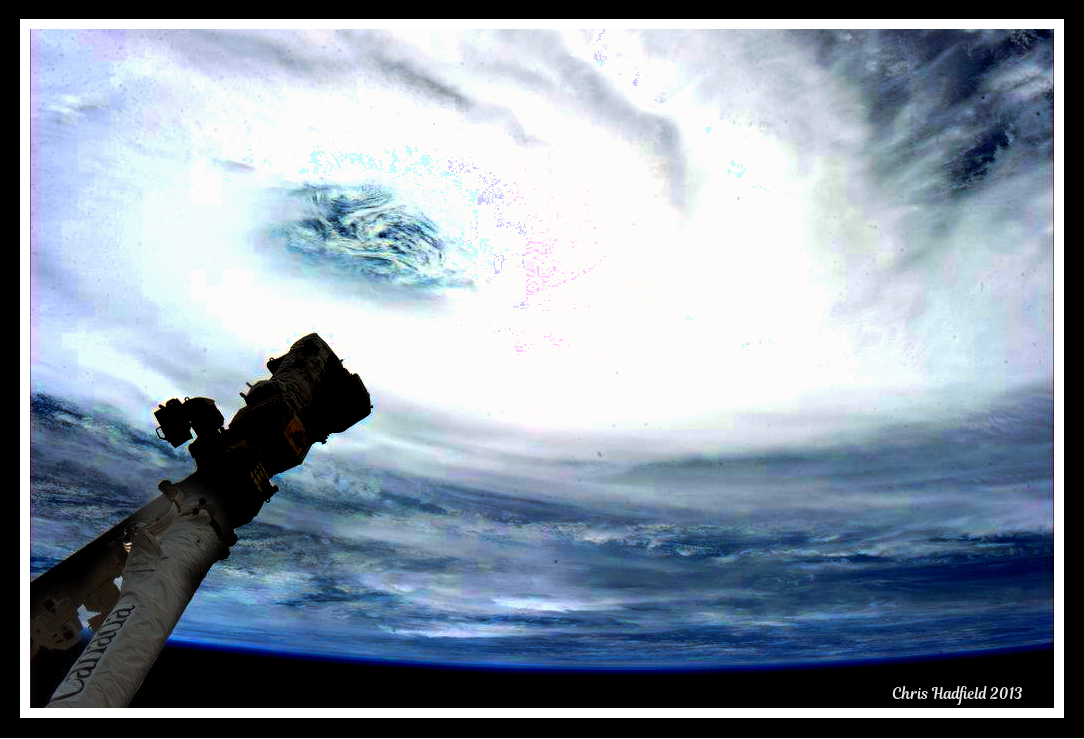
“Eye of the Storm” This photograph, taken by Commander Chris Hadfield aboard the International Space Station in March 2013, shows Tropical Cyclone Haruna over Madagascar, with Canadarm2, a Canadian invention, pointing directly at the eye of the storm. A powerful reminder that Canada’s presence in space is not just symbolic, but deeply integrated into international exploration and innovation.

Photo credit: Chris Hadfield, 2013
July 9, 2025

Posted: August 3, 2025 in Uncategorized
Tags: , , , ,

So, Benjamin Netanyahu is reportedly nominating Donald J. Trump for the Nobel Peace Prize. Because of course he is. What better way for Bibi to flatter his own ego while distracting from his horrific international reputation.

The rationale? Supposedly because of the Abraham Accords, a set of diplomatic agreements signed in 2020 during Trump’s first presidency, normalizing relations between Israel and a few Arab nations: the UAE, Bahrain, Morocco, and Sudan. These were significant steps, no doubt. But let’s not kid ourselves, they came with arms deals, the complete sidelining of the Palestinian people, and the distinct whiff of transactional diplomacy. The ink wasn’t even dry before Trump turned the moment into a 2020 campaign asset and Netanyahu used it to flex before an audience of increasingly uneasy Israeli voters. Fast forward to 2025.

Now, before anyone panics: this nomination isn’t for this year’s Peace Prize, unless Netanyahu managed to quietly submit it before the January 31 deadline, which no one seems to believe he did. That means we’re likely talking October 2026. So, deep breath. You’ve got time to be disillusioned in stages.

Previously every time Trump’s name got mentioned in the same breath as the Peace Prize I’d feel my blood pressure spike. It offended me, not just politically, but morally. The very idea that a man who actively undermined alliances, courted despots, mocked the international order, and fanned the flames of domestic insurrection could receive that prize? It felt obscene.

But something has shifted. And it’s not because I’ve become indifferent to peace. Quite the opposite, it’s because I care so deeply about the concept of peace that I’ve decided not to look for its validation in the Nobel.

Let’s talk about the rules for a second. The Nobel Peace Prize, according to Alfred Nobel’s will, should go to the person or organization that has done “the most or the best work for fraternity between nations, the abolition or reduction of standing armies, and the holding and promotion of peace congresses.” That’s a noble goal. But in practice? The rules are discretionary. There’s no official short list, no vetting of criminal records, no requirement for lasting peace, just significant action that someone, somewhere, thinks nudged the world in the right direction.

Eligible nominators include members of national parliaments, heads of state, university professors, and past laureates. Netanyahu, as a sitting prime minister qualifies. And if the committee wants to take it seriously, they can. Or they can file it under “we’ll pretend to read this later” and move on.

But here’s where it shifts for me. Because if this nomination is what it takes to get Trump back onside with supporting Ukraine then I’m not sure I care about the price of that bribe. Because today Trump reversed course and endorsed continued U.S. weapons aid. If dangling a gold medallion in front of him helps even a little in resisting Putin’s bloodlust, fine. Let him have the shiny object.

Because the truth is, the Peace Prize has already been handed to people with long shadows. Henry Kissinger, and Yasser Arafat, and really even Barack Obama win was aspirational more than earned. The award has always been half idealism, half geopolitics. Sometimes it celebrates courageous changemakers. Other times it gets used to slap a sauve on a festering wound and call it healing. So if that’s the game, I’m not going to rage at the players anymore.

I used to think the prize itself stood for something unshakable. But peace is not a PR strategy, and we cheapen it when we hand out accolades like participation medals in a global ego contest. So if Trump wants a Nobel to cap his legacy, let him chase it. If it keeps him vaguely pointed in the direction of global cooperation, fine. Everyone’s got their own fight to fight. And I’m not going to fight over this one.

Because here’s where I’ve landed: I’m not shocked anymore. I’m not angry. I’m not even disappointed. I’m done caring. The Nobel Peace Prize? It just doesn’t mean anything. And whether Trump wins it or not? It has no bearing on the things I actually care about, like whether people are still dying in Gaza, or if Ukraine gets shelled into a crater, or if children anywhere have to grow up in rubble.

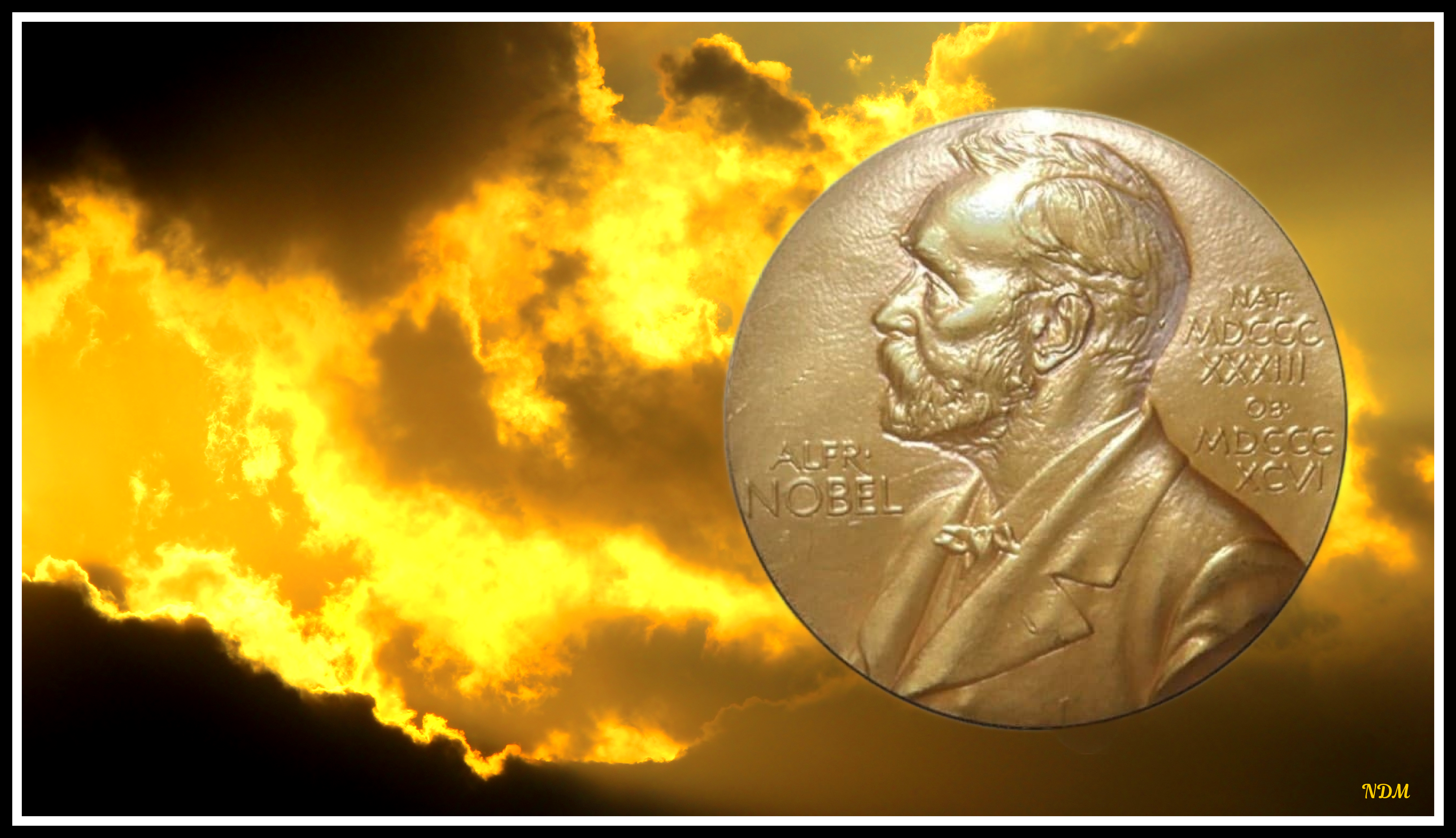
Give him the prize. Wrap it in velvet. Let him hang it in Mar-a-Lago next to a fake Time Magazine cover. If it shuts him up and slows the march to another war, I’m good with that. Because in the grand scheme, whether he wins it or not is just not the most important thing to me anymore. Peace is. Not props. Not pageantry. As for the signficance of this medal. Maybe it once stood for something but now I question that and I’m fine if they give it to whoever needs it to behave, like the promised treat if the tantrum stops. If it keeps the missiles grounded and the egos quiet, hand it over and move on. I just can’t waste my energy on this one. Not when there are actual lives at stake elsewhere. Not when the prize itself has already been gamified. Not when the possibility is that someone behaves better just because they want a sticker.

Are You There, God? It’s Me Nancy.

While Alberta is the current battleground, this isn’t just a provincial issue. What’s happening here is part of a much larger movement. A deliberate push to drag us back to some imagined “better time” the kind of sanitized, patriarchal past that Donald Trump has built his entire political brand around. And now that same “make it great again” mindset is leaking north, into our schools, our politics, and even our school libraries.

There are a number of books I grew up with, and still hold close, that are now somehow in question. And honestly? I find that profound. Disturbing. Even dystopian.

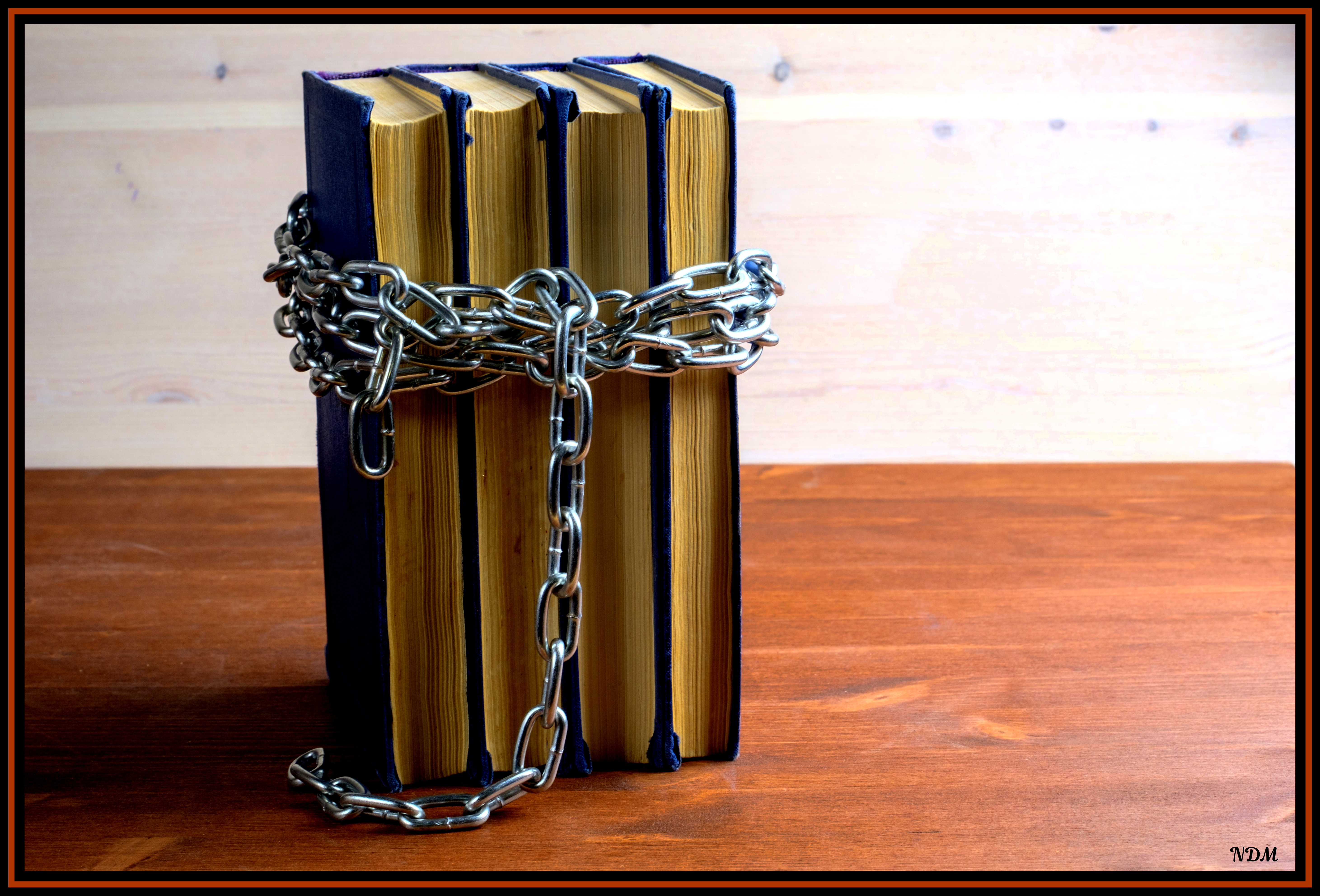
Harry Potter is under attack. A Wrinkle in Time is “controversial.” To Kill a Mockingbird and Of Mice and Men, classics that exposed racism, poverty, and injustice, have been yanked off shelves in libraries across North America. And The Handmaid’s Tale? Honestly, that probably belongs in Social 30 as mandatory reading. It’s hardly even fiction anymore.

But the one that hits me hardest? Are You There God? It’s Me, Margaret. by Judy Blume. That book was my coming-of-age manual. It talked about things like puberty, periods, insecurity, bras, boys, and yes, even questioning religion. It was honest and awkward and wonderful. And it made me feel seen. I can’t imagine my pre-teen years without it. I also can’t imagine that the millions of people who read it somehow turned into deviants just because it dared to mention menstruation.

And yet, here we are. A time when books that deal with real experiences, LGBTQ+ identity, racial injustice, gender roles, trauma, faith, are being framed as threats. Not discussed. Not debated. Just… banned. There are books being targeted simply because they reference homosexuality. For some, that’s apparently enough to warrant removal from a library shelf. So I guess we should also be pulling the Bible out of schools too? I mean, if we’re banning things with sex, violence, and controversial ideas, it fits the bill. No?

I used to think this kind of censorship only happened in movies. In places far away. In ultra-conservative, evangelical Southern U.S. towns where dancing wasn’t allowed. You know, Footloose territory. But I live in Canada, well specifically Alberta. And lately, it’s starting to feel like I’m living in that very script, only this time, it’s real. Policies are being drafted. School boards are being pressured. Ministers of Education are drawing lines. Librarians are afraid.

And students? They’re being told that their realities are “too political” or “too inappropriate” to exist in print. I’ve used the phrase “evangelical right” more than once. Maybe that needs some nuance. Maybe not. Because when you strip away the branding, the strategy is clear: control the narrative, limit access to ideas, and silence anything that doesn’t fit the worldview.

The quiet but powerful Christian nationalist network in the US has influence stretching from Washington to local school boards. Throw in a little Dominionism, sprinkle in some Take Back Alberta, and voilà, you’re not in Footloose anymore. You’re in something far more organized right here in Alberta.

Let me tell you a story. I remember being about 12 or 13, and my parents, clearly uncomfortable having “the talk” handed me and my sister this four-volume set called the Life Cycle Library. Picture it: early 1970s, plain soft covers, cartoon illustrations of intercourse (not live action, don’t panic), and honest, clinical information about bodies, puberty, and yes, sex. It even gently touched on homosexuality.

This was over 50 years ago. In a conservative (Red Tory) household. And it was fine. It wasn’t shameful. It wasn’t corrupting. It was information. And it was given with trust that we could read it, think about it, and maybe even ask questions. That’s what books do. They inform. They stretch your understanding. They make awkward things a little less scary. And sometimes, they make you feel like you’re not alone.

When I was a kid, I devoured books. Not just Judy Blume or L.M. Montgomery, I read Dale Carnegie at 9 and was knee-deep in a medical conspiracy book called World Without Cancer by 12. Maybe that wasn’t typical. But the point is: I wasn’t censored, and I turned out okay. Mostly.

This isn’t a fringe debate anymore, it’s at our school board meetings, our provincial legislature, and our kitchen tables. It’s here. Now we have education ministers making sweeping declarations about which books don’t belong in schools. No clarity. No context. Just vague threats and moral panic. I don’t even know which of these “offending” books are actually in the schools and libraries. Is this a real purge or just political performance art? Either way, it’s dangerous. And it’s happening here.

If we don’t stand up for the right to read, the right to think, someone else will decide for us what our children aren’t allowed to know. If you’re scared of kids reading about periods or pronouns, maybe the problem isn’t the books. Maybe it’s the people banning them. Because this was never about protecting kids. It’s about controlling them. And once you start banning books, what you’re really banning is empathy, perspective, and truth.

That’s not moral leadership. That’s authoritarianism.

July 7, 2025

Posted: July 8, 2025 in Uncategorized
Palestine and Israel crisis as a geopolitical conflict and war between the Palestinian and Israeli people and Middle East security concept and struggling finding a diplomatic agreement

Today, as I write this, U.S. President Donald Trump and Israeli Prime Minister Benjamin Netanyahu are meeting at the White House. The headlines haven’t landed yet, but I think we all know how the press release will read: they had a “productive conversation,” “mutual respect was reaffirmed,” and Trump will likely describe Netanyahu as “a very strong leader,” maybe even “a terrific guy.”

But while those statements are being polished, I’ve been sitting with something more complex, and frankly, more honest, than anything that’s likely to come out of that meeting. I hesitate sometimes to write about Israel. And maybe that’s the right instinct, to pause before speaking about something so layered, so painful, and so steeped in history that I can’t possibly claim to understand it the way others do. Especially not from the perspective of Jewish people, for whom this land, this history, this trauma, and this hope are not theoretical but deeply lived.

But something New York Times columnist Tom Friedman said recently at the Aspen Ideas Festival struck such a chord with me that I’ve been turning it over in my head ever since. And I guess this is less a post than a bookmark of that moment, one I don’t want to lose.

Friedman said that to understand the Middle East, and Israel in particular, you have to hold three truths in your head at the same time. And yes, he acknowledged, that’s not something we’re very good at, especially in the polarized world of North American discourse (campuses and Twitter/X alike). But here they are:

  1. Israel is an extraordinary place. What the Israeli people have built in just 75 years, out of exile, out of ashes, through wars and waves of immigration, is nothing short of astonishing. A technological, agricultural, and military powerhouse. An improbable success story.
  2. Israel is doing really bad things right now. Especially in Gaza, and in the West Bank. And it’s not new. The occupation, the dispossession, the deaths of civilians , these are not myths or propaganda. They are real, and they are wrong.
  3. Israel lives in a crazy neighbourhood. One where it’s surrounded by failed or barely functioning states, some of which are under the grip of Iran, an authoritarian regime exporting chaos. Israel’s security dilemmas are real, and existential.

And that’s what grabbed me: the idea that more than one thing can be true at the same time. That Israel can be both remarkable and responsible for grave injustices. That it can be both a beacon and a danger to its own future. That people inside and outside the region can love it and criticize it, sometimes in the same breath.

This framework helped me as someone outside the faith, the culture, and the history, a gentile trying to make sense of something I can’t fully feel. I can’t understand what it means to carry generational trauma like the Holocaust, or to see a homeland as both sanctuary and struggle. So I offer this with all humility. If any Jewish readers find my agreement with Friedman too simplistic or misapplied, I understand. But I’m trying to learn. I’m trying to listen.

What also struck me, and this is something Friedman emphasized, is the deeply uncomfortable truth about Benjamin Netanyahu. According to Friedman, Netanyahu is a man who just presided over a monumental military victory, not just against Hamas, but symbolically against Iran and its network of influence over Lebanon, Syria, and Iraq. And yet, at the same time, Netanyahu is continuing a campaign of destruction in Gaza well beyond the defeat of Hamas, at great humanitarian cost. And at the same time again, he’s pushing forward a domestic judicial overhaul that would weaken Israel’s Supreme Court and, potentially, set the stage for annexing the West Bank.

It’s not just that these things are happening at once, it’s that they are deeply contradictory. And Friedman made a powerful point: the very people who delivered this military success, the elite pilots, the cyber warriors, the scientists and tech minds of Israel’s defense, are often the same people who spent the entire nine months before the Hamas war protesting Netanyahu’s attempts to undermine democracy. These are people who love their country deeply and are willing to defend it with everything they have, but who are also terrified of the direction Netanyahu is dragging it.

That contrast, between military heroism and political despair — has stayed with me. It reminds me again that complexity isn’t a flaw in the conversation. It’s the core of it.

It’s not lost on me that I’m writing this on a day when the headlines aren’t screaming. There’s no new airstrike footage flooding the news cycle at this moment. And yet, like you, I know that every day is escalated in some way. Still, maybe quieter days are when we should be thinking hardest, not in reaction, but in reflection.

This might not be a post that travels far. It’s not spicy, not viral, not packed with certainty. But it’s honest. And it’s grounded in something that I think we need more of: the ability, and the courage, to hold conflicting truths without rushing to flatten them into just one.

So yes, I’ll keep thinking about this.

And maybe that’s the point.

July 6, 2025

Posted: July 8, 2025 in Uncategorized

On July 5th, 2025, as much of Texas woke to what should have been a hot and quiet long weekend, everything changed in a matter of hours. Flash flooding, violent, fast, and utterly unforgiving, tore through parts of Central and East Texas. Bridges collapsed. Homes were swept from foundations. At the time of writing, the death toll stands at 70. Dozens are missing. And I can’t stop thinking about the sky.

Let me explain. I was raised in a family business where aviation wasn’t just a profession, it was a way of life. And in aviation, especially before Foreflight and real-time radar apps, weather wasn’t a side topic. It was the topic. My father talked about pressure systems over breakfast. We learned to read clouds before we could parallel park. When your safety and livelihood depend on the weather, you don’t take it lightly.

Even now, decades later, I check five weather apps, scan radar, read METARs and TAFs, and still go outside to squint at the sky, just to be sure and that’s just to do gardening. Some people think I’m overdoing it. I think I’m paying attention.

That brings me back to Texas. The storms that hit on July 5th weren’t a surprise to forecasters. Some parts of the state received flash flood watches the evening before. Others got warnings the morning of. But here’s the thing, “a warning” is only useful if it comes in time, if people understand what it means, and if systems are in place to act on it. In Texas, in some places, the water rose in minutes. Hardened ground from drought couldn’t absorb a drop, so the rain just ran, taking everything in its path.

Did people get warned? Some did. But too many didn’t get enough notice, or didn’t trust the alerts. And here’s where it gets political, whether we want it to or not.

The U.S. National Weather Service has been under strain for years. Budget cuts, staff shortages, and now even a further reduction in weather balloon launches. Those cuts, furthered through DOGE have eroded the capacity to give the kind of hyper-local, real-time data that saves lives. A weather balloon costs about $300. They were among the “non-essential” items cut and those losses haven’t been reversed.

I don’t mean to be flippant, but how many weather balloons could you launch for the cost of one political parade or a golf weekend? What value do we place on knowing what the atmosphere is doing before it unleashes itself on us?

And I know people get tired of alerts. I do too. We get them constantly now, severe thunderstorms, tornado watches, snow squalls, extreme heat. Sometimes nothing happens. Sometimes the radar looks worse than what reaches the ground. But here’s what I know from aviation: when something’s uncertain and potentially lethal, you plan for the worst and hope for the best.

I will always prefer a false alarm to a missed warning. Always.

We are lucky in Canada. Not perfect, but lucky. We still have meteorologists with funding, tools, and a weather service that issues alerts proactively. Sometimes they seem premature, or overblown. But when I see a red banner across my screen, I don’t roll my eyes. I lean in.

Because I can still hear my dad muttering about “unstable air” as he watched the cloud bases lower. I can still feel the hum of tension before a storm when a decision was made to cancel a flight, not because the radar was dramatic, but because something didn’t feel right. I learned that you don’t ignore risk just because it’s inconvenient.

And as I looked at footage from Texas, roads turned into rivers, families clinging to rooftops, I couldn’t help but think: how much of this was preventable? Not the rain itself. But the death. The destruction. The disbelief.

We are in an age where weather is going to come at us faster, harder, and more unpredictably than we’re used to. And let’s be clear: climate change is not up for debate. It is real, it is here, and it is accelerating the frequency and severity of these events. This isn’t just “bad luck” or “Texas weather.” It’s what happens when a destabilized climate system collides with underfunded public infrastructure. Floods, fires, droughts, and storms, these aren’t isolated events anymore. They’re the new normal.

And so, we have a choice: to invest in knowledge, in alerts, in public systems that keep us aware and alive, or to spend money on things that look good on television but do nothing when the skies open.

As for Canada, we’ve had our share of wildfire seasons that stretched the limits of provincial response. The need for a coordinated national fire strategy, and yes, that applies to the U.S. too, is urgent. But I’ll leave that for another post.

For now, I’ll keep doing what I’ve always done. I’ll look at the increasingly detailed radar available to all of us. I’ll read METAR reports when someone in the family is flying. I’ll check multiple weather apps and still look out the window, because the sky is still the best indicator I know.

And I’ll never apologize for checking it one more time.

July 4, 2025

Posted: July 4, 2025 in Uncategorized

To my American friends. I know I’m not supposed to care this much. I’m Canadian. I should turn off the news, shrug my shoulders, and tell myself it’s not my fight. I should roll my eyes at your politics, scoff at the fireworks, and say, “If you’re really going to hand it all over to one man, then you’re on your own.”

But I can’t. Because what happens to you doesn’t stay within your borders. Because every tremor in Washington sends aftershocks across the world. And because, whether I like it or not, your country is still tethered to mine, economically, culturally, diplomatically. When America sneezes, Canada gets pneumonia. And right now, it feels like you’ve got a full-blown democratic hemorrhage.

So when I see you gearing up for another Fourth of July, red, white and blue streamers, hot dogs, parades, and speeches about liberty, I can’t help but feel the world tilt a little more off its axis.

So what exactly are you celebrating? Freedom? Independence? From what? From facts? From institutions? From your own damn Constitution?

I grew up admiring the United States. The scale of it. The confidence. The belief in ideas bigger than one person. But somewhere along the way, something got hollowed out. The flag is still flying, sure, but it’s covering something dark, and decaying fast.

This past week was proof. A giant, flashing billboard that read: ‘We’re not even pretending anymore.’ I watched members of Congress and Senate, elected to serve the people, fold like cheap lawn chairs under the weight of one man’s threats. I saw backroom deals crafted not in the interest of Americans, but to secure loyalty, silence dissent, and grease the machinery of a government increasingly run by fear, not policy.

That wasn’t compromise. That wasn’t negotiation. That was hostage-taking. And then the bill passed. A bill that carved out billions, not for schools or healthcare or housing, but to help faciliate immigration detention and other tools of control. You tell me: who did that bill serve? Did it serve a single mother in Ohio? A veteran in Arizona? A teacher in Georgia? No. It served power. Consolidated, corrosive power.

And now, as the smoke clears from the Capitol, you light up the sky with fireworks in celebration. The contrast is staggering.

You don’t need to hear this from me, but maybe it matters more because I’m not American. I’m watching from across the border trying to process how the country that prides itself on freedom of speech is silencing journalists. How the country that fights wars in the name of democracy is dismantling its own. How the country that invented the phrase checks and balances now seems to believe that loyalty to one man outweighs the rule of law.

It’s like watching someone burn down their own house and throw a block party in the front yard while the roof collapses behind them.

After Nov 6th I took a break. I had to. From the headlines. From the outrage fatigue. I turned it off. Stopped watching the cable carnage and disappeared into a haze of documentaries and crime series, because those felt less disturbing than reality.

But when our Canadian federal election kicked into gear, I plugged back in. And what I saw this past week snapped me out of every last shred of numbness. Because you can only tell yourself it can’t get worse so many times before you realize, it already has.

And so, I ask: What exactly is the Fourth of July this year? A celebration of what’s been preserved? Or a distraction from what’s been destroyed? Maybe patriotism isn’t what I thought it was. In Canada, we’ve often looked at American pride and felt like we lacked something. We don’t pledge allegiance. We don’t sing our national anthem in every school. We’re quieter. Less performative. But now I think maybe I’ve misunderstood it. Maybe patriotism isn’t about pageantry. Maybe it’s about protecting what matters even when it’s not convenient. Maybe it’s about asking hard questions, even when the answers are ugly.

Because let me tell you something uncomfortable: tyrants don’t destroy democracies alone. They need help. They need people to stay silent. They need people to rationalize. So no, I won’t be celebrating with you. But I won’t look away either. Because deep down, I still want to believe that enough of you are wide awake. That you see it. That you feel the fire under your feet. That you know the difference between real freedom and manufactured consent.

And if you don’t? Then this isn’t a holiday. It’s a funeral with fireworks.

July 2, 2025

Posted: July 4, 2025 in Uncategorized

Canada’s model for health care is the envy of the world. In the U.S. Donald Trump is tearing theirs apart and Alberta has a leader that supports the American model. Millions of Americans just lost access to basic coverage under Donald Trump’s so-called “big beautiful bill.” And I can’t stop thinking about it, because I know exactly what it means when a health system works… and when it doesn’t.

This is a very short version of a very long story. There were dark nights, painful setbacks, near-deaths, and small mercies. I make it sound neat here, but it wasn’t. Not even close. Still, you’ll get the gist.

Of course we have had our share of emergency visits and surgeries over the years but our family’s medical journey escalated in 2020, before covid vaccines, when my healthy husband, at only 55, was hospitalized with COVID. He survived, barely, but that moment marked a turning point. His health was never quite the same again.

In October 2022, we were hit again, this time, far harder. He had been feeling unwell for months, and finally, he collapsed. Scans showed masses across nearly all his abdominal organs: liver, pancreas, spleen, gallbladder, colon. A palliative care doctor told us it was likely terminal metastatic cancer. “Prepare for end of life,” they said. But within a day, chemistry results revised the diagnosis: Aggressive High Grade Diffuse Large B-cell Lymphoma stage 4. It wasn’t good news, but better than originally thought.
Chemotherapy began immediately and the treatment nearly killed him. There were two drug-resistant staph infections, kidney failure from antibiotic toxicity, pulmonary embolisms, and malnutrition.

Aggressive chemotherapy continued and by April the grapefruit-sized tumors had shrunk to the size of walnuts. Some were gone altogether. He was sick from chemo, his 6’1 body weighed just 135 lbs but he was alive.

Then in March 2024, our youngest son, just in his twenties, with a career dependent on his eyesight, woke up with almost no vision in one eye. His optometrist saw him immediately and diagnosed a retinal detachment. Within 15 minutes, we were rushing to a retinal surgeon, one of the best in the country, on-call that day by chance. Five hours later, he was in surgery. The surgeon chose a more painful but more effective technique to preserve his vision, because he understood what was at stake for a young man whose eyes are his livelihood. There was no invoice. No haggling. No deductible. Just… care.

Then just 8 weeks later, June 2024, and we nearly lost my husband again. He’d been working outside in the heat, still thin and depleted from his cancer ordeal. He collapsed. No pulse. No breath. Cardiac arrest.

Our son, still recovering from eye surgery was home. His training from the Canadian Armed Forces kicked in. He began CPR immediately. EMS arrived in 9 minutes. Firefighters shortly after. Forty minutes passed with no signs of life. They were preparing to call his death.

And then… a gasp. Once at hospital he was intubated, placed in a medically induced coma, and against all odds, he woke up days later, dazed but intact. Only 10% of out-of-hospital cardiac arrests end in survival. Almost none after 40 minutes. He beat the odds, because of immediate CPR, and because our system responded.

Since then, he has had several cardiac procedures, including the installation of a cardiac device that will assist his heart if it fails again. And the system continues to hold him. There are still follow-ups. Still supports. Still care.

I’ve said many times: I was able to fight for my family because I’m resource-driven, maybe a little relentless, and am English first language. That matters. It shouldn’t, but it does. I could push, research, ask the right questions, and advocate. But even with those advantages, I still marvel that we got what we did, because I’ve seen what happens in countries where people don’t.

During this time I joined many online support groups, for cancer, cardiac arrest, retinal detachment. I’ve met people from around the world. Some in developing nations, yes. But what shocked me most were the stories from Americans.

People denied life-saving surgery because of co-pays. Young people going blind because of insurance loopholes. People dying because they couldn’t afford the heart devices.

This isn’t anecdotal. This is systemic.

The United States is not failing at health care, it is succeeding at a system that was never built to care for everyone in the first place.

It brags about innovation while millions are locked out. It sells the dream of opportunity while robbing people of the basic chance to survive.

Here in Canada, we complain about hallway medicine and long waits, and we should. We need to keep fighting for improvement. But we must never forget the alternative. Because when cancer attacked my husband we were treated without question. When he flatlined for 40 minutes, they brought him back. When my son’s vision was slipping away, they saved it.

All of that happened because we live in a country where health care is a right, not a privilege. Doctors have told us that the health care costs for the past 5 years would have been between 4.5 and 5 million for what is some of the most expensive and resource intensive care our system offers. And our family didn’t have to decide between treatment and bankrupcy.

So no, I won’t stay quiet while Trump guts another piece of his country’s safety net and I won’t pretend Canada doesn’t have something worth defending here.

I am terrified for the millions of Americans now left without care, watching their lives shrink to the size of a co-pay. And I am profoundly grateful to live in a country where health care, however imperfect, is still based on need, not net worth. And don’t be fooled, Alberta, Danielle Smith is dragging us in that direction, and far too many are nodding along. We should be strengthening public care, not selling it off piece by piece.

June 30, 2025

Posted: July 4, 2025 in Uncategorized

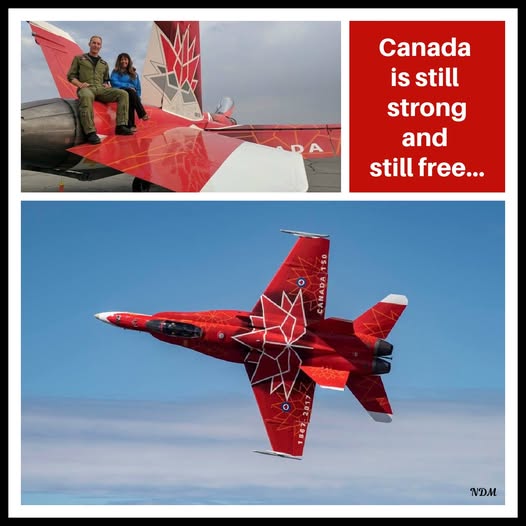
There’s a trade-off for putting my opinions out into the world, and my family has made it very clear: no images, no specifics. That’s the boundary. And I respect it. So instead, I post what I can, like this photo of me, messy hair and all, sitting on the Canada 150 F-18 sitting on the tarmac in Yellowknife on July 1, 2017. That jet? That sky? That’s where so much of my pride lives anyway. Aviation. Military service. It’s the country I love.

I wasn’t going to write another Canada Day post. But here we are on the edge of something. A moment in my life, a moment for our country, and a moment for the world. It’s all pressing in. And somehow, that photo, wild and imperfect, captures exactly what I’m feeling: reverence, pride, tension, and the ache of transition.

Because this isn’t just about celebration. It’s also about decision. Last night, Prime Minister Mark Carney made the call to hold back the digital services tax (DSA). Some are calling it a climbdown. I call it strategy.

Was it a revenue loss? Yes. But sometimes you make a decision to abort a landing and do a go around. The U.S. under Trump is playing hardball. Carney knew that. We all should’ve known that. And as I said in my post a few days ago protecting Canadian jobs, from autos to aluminum might mean stepping back on the DSA for now. That tax was always a card to play. And he played it.

Not weakly. Wisely.

Some of you voted for Carney because of climate, or housing, or health care. And I support those things too. But many of us, especially those of us watching the geopolitical weather patterns, voted for him because we knew he could handle the chaos from the south. And now, in real time, he is. Steady hands, sharp mind, no bluster.

The other side of July 1st is where things get real. We’ll see if the trade talks hold. We’ll see if Trump escalates. We’ll see if calm can prevail. But I know this: we’re not rudderless. We’ve got someone who understands the game, sees the next moves, and refuses to let Canada get steamrolled.

I look out over blue skies today and think of the last hundred years. Not just the image of that centennial jet, but the men in my family who flew and fought before me. We are nearing the 100th anniversary of the start of World War II. And somehow, that history is humming under everything right now. The stakes feel high because they are. For our economy. For our democracy. For our future.

And that’s why I posted the photo. Not because it’s perfect—but because it’s real. Because it’s mine. And because it reminds me of what we’re trying to hold onto in this moment.

Hold the line, this flight’s not over, and the storm isn’t done circling.

June 30, 2025 NDM

June 28, 2025

Posted: July 4, 2025 in Uncategorized

UPDATE-June 30-From below-(“The digital tax, while important, isn’t on the same level as autos, steel, or critical trade infrastructure. That makes it a useful card, not a dealbreaker, but a chip worth playing.”) It looks like PM Carney played his card last night!

This one’s for my fellow Canadians, and for my American friends peeking over the fence to see what this tech tax is all about.This Tuesday, July 1st, marks Canada’s 158th birthday. And while the fireworks and face paint will be out in full force, I’ll be keeping it simple. I’ll be sitting with my own gratitude. Gratitude for having had the privilege, not the luxury, the privilege, of visiting or living in every province and territory in this country. Not just flying over, not just ticking a box, but really being there. From ferry terminals in Newfoundland to frozen airstrips in Nunavut, to the shores of Vancouver Island and yes, even downtown Winnipeg in February. That’s not a brag. That’s a love story.

Because once you’ve seen this country, really seen it, you don’t just understand Canada. You feel it in your bones. And maybe that’s why I take it personally when a human thundercloud from the south decides to try and muscle us around on the eve of our national holiday.

Enter Donald J. Trump, stage far-right, with a Friday afternoon meltdown that absolutely no one asked for. In his infinite insecurity, Trump announced, from his personal echo chamber, Truth Social, that he is suspending all trade negotiations with Canada. Why? Because Canada is implementing a Digital Services Tax.

Let’s be clear: this isn’t a tariff. It’s a 3% tax on massive digital platforms such as Google, Meta, Amazon, and X. Any digital platform provider that makes more than $20 million annually from Canadian users is subject to the tax. The law has been in the works for years, passed through Parliament, and delayed only while countries debated a global approach. First payments are due June 30th, and it’s retroactive to 2022. So no, this wasn’t sudden. It was scheduled.

Why the outburst now? Because someone in Northern California, maybe Zuckerberg, maybe another tech billionaire who isn’t used to paying tax anywhere, picked up the phone. And Trump, never one to miss a cue from a donor, did what he does best: threw a fit. Probably exacerbated because he’s stuck in D.C. this weekend trying to pass his ‘Big Beautiful Bill’ with no golf cart in sight and needed something, anything, to distract from a week of complicated headlines.

But here’s what Trump didn’t mention: this tax reflects the modern reality of global commerce. We’re not taxing wheat, we’re taxing clicks, targeted ads, and e-commerce platforms profiting off Canadians. It’s not specific to the U.S.-if Musk moves his head office to South Africa it will still apply. It just happens that these companies are mostly based in the U.S. And for the record, 11 U.S. states already have digital taxes of their own. So let’s not pretend Canada is doing something radical. France, the UK, Italy, Spain, they’ve already done it. We’re just finally collecting.

This isn’t about punishing America. It’s about fairness. Big Tech earns billions here. They should pay their share here. Trump’s tantrum is less about principle and more about protecting his billion-dollar buddies who’d rather pay lawyers than taxes.

Let’s also not forget: this wasn’t a surprise. His administration, trade lawyers, industry groups, everyone knew the June 30th deadline was coming. So no, this isn’t shock. It’s theatre.

And here’s where Mark Carney enters, cool, steady, fluent in global finance. While Trump blasts all caps into the ether, Carney might be quietly playing the long game. The digital tax, while important, isn’t on the same level as autos, steel, or critical trade infrastructure. That makes it a useful card, not a dealbreaker, but a chip worth playing.

Trump claims he holds all the cards. Maybe not this one. And let’s not forget: this wasn’t Carney’s policy. The digital tax was promised under the last government and kept in motion by the Finance Minister. But if Carney’s playing it smart, which I believe he is, then this timing might be less a problem and more a quiet opportunity. He doesn’t need to bellow. He just needs to hold firm.

No, I’m not panicked. I’m annoyed. Because this isn’t a real crisis, it’s a Friday fit from a guy who got a phone call and couldn’t go golfing. And while Trump’s trying to stir up a trade war over three percent, the rest of us are just trying to enjoy a long weekend and maybe catch a few rays and roast a few hot dogs.

And as I write this I am reminded that my summer holidays may never again include the U.S. Out of principle primarily but maybe a bit out of fear. If I handed over my phone and someone scrolled through what I’ve written about Trump, I’d either be detained, deported, or returned to sender with a sticky note that reads “Do not admit.”. And frankly, for now at least my travel dollars are better spent here, on Canadian soil, in Canadian communities, under skies that, for all our challenges, still feel like home.

So Happy Canada Day weekend. You beautiful, complicated, quietly confident country. We’ve got work to do, yes. But we’ve also got decency, intelligence, and a government that speaks for the people.

And to our southern neighbours: we hear you. We’re watching, we’re hoping, and we know that somewhere underneath the noise, you’re trying to hold on to something good, just like we are. So as we head into Canada Day, we’ll be raising our glasses, lighting our fires, and feeling pretty damn proud of this country that, despite its flaws, is still worth fighting for. And while I won’t be at your party on July 4th, consider this your invitation to ours.

We’ve got room for reason, not for rage. Canada’s 158th birthday starts now. Come by for the lakes, the laughter, and the decency. And while we may want to tax your tech billionaires, we don’t plan to read your texts or seize your phone at the border. We’re Canadian, not paranoid.

June 27, 2025

Posted: July 4, 2025 in Uncategorized

Alberta feels like America’s northern cousin. The one with a chip on its shoulder.

Let’s go back to something I say often: I live in Alberta. I raised my children here. I’ll likely die here. And I don’t say that with resignation, I say it with a weird mix of gratitude and grief.

This is a province gifted, yes, gifted, with oil and gas riches that changed its destiny. But Alberta today doesn’t act like a province that hit the resource jackpot. It acts like the bratty kid who inherited a trust fund and now blames everyone else for his lack of character.

So let’s rewind the tape. Alberta became it’s own province in 1905, carved out of the Northwest Territories. Our early settlers were tough as nails immigrants from Eastern and Western Europe who came to farm the land. And it wasn’t easy. The soil was thin, the weather was cruel, and the wind never shut up. Farming here was never a fairytale. You had to work for every single bushel, and even then, it might blow away

Then came the 1930s. Drought hit. Crops failed. Families starved. My own family has photos from P.E.I., trucks full of potatoes headed west because Albertans were hungry. Not for profit. For survival. When Alberta was on its knees, other Canadians fed us. Let’s remember that before we shout about “equalization” and “economic tyranny.”

Although oil was initially found in 1914 it didn’t gush until the ’50s. And with that came money. Landmen came knocking. Farmers became royalty owners. And slowly but surely, the persona changed. We began to believe that wealth was our destiny. That we were owed.

Enter: Danielle Smith. Premier of grievance. Queen of magical thinking. The folksy voice of rebellion, denial, and “common sense”, if common sense means conspiracies and suing hospitals. She has her own version of Trump’s “I alone can fix it” mantra, though in her case, it’s more like “Ottawa broke it, I’ll pretend to fix it, and we’ll sue someone in the process.”

And just like Trump, she’s mastered the political art of distraction. The moment things get real, out come the shiny objects: provincial policing, a separate pension plan, another tantrum about Ottawa mistreating Alberta. It’s nonsense. It’s theatre

Dammit, we need to get over this. Alberta isn’t a victim. We are a unique province, as is every province. That’s the whole point of Canada. New Brunswick doesn’t have oil sands. Manitoba doesn’t have mountains. Saskatchewan doesn’t have tidewater. Alberta doesn’t either, which, by the way, is why we keep fighting for access. The strength of this country has never come from pretending we’re the centre of the universe. It’s come from working together. From resilience. From interdependence.

And I am damn sick of Danielle Smith making us sound like we’re anything less than Canadian.

The UCP? They clap like Maple MAGA marionettes. They mangle facts. They pretend private health care isn’t creeping in. They sell choice like it’s freedom, while cutting public services in the back room. And they act like Alberta’s wealth emerged from thin air, not from the collective efforts of thousands of workers, federal infrastructure, and yes, partnerships across this country.

I’m not anti-Alberta. I am Alberta. I’ve driven the back roads. I’ve served in elected roles and participated in more town halls and community meetings then I can count. The oil and gas industry helped support my family. But I also know what it means to count on the rest of the country.

And now I see my grandchild (I know I talk about her all the time-I’m kind of smitten) entering a world where we’re teaching the next generation that blame is a birthright and victimhood is a political strategy. I didn’t sign up for that Alberta.

Because here’s the thing: we’re still a province. We are not a sovereign nation. We’re not a global power. We are not the United States, though increasingly we’re showing their worst habits. A Premier who thinks she’s smarter than scientists. A party that worships her no matter how absurd the claim. A public so exhausted, we’re starting to tune out, which is exactly the plan.

So yes, I’m watching Alberta lose itself. I’m watching good people buy the snake oil again. I’m watching this Premier act like this is her province, her movement, her right. And I’m here to say: no, it’s not.

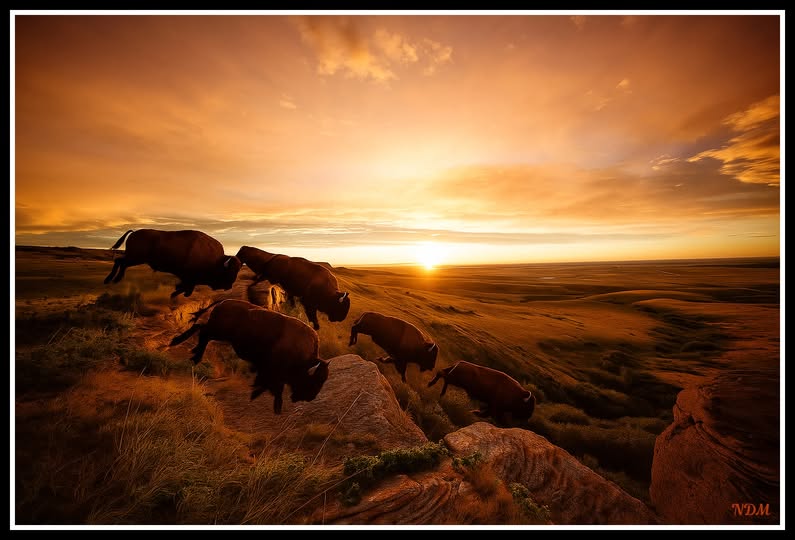
This is a country. And it’s not hers. It’s ours. So let’s not be the buffalo herded toward the edge, misled, confused, and sacrificed.
Because make no mistake: the cliff is real. And the drums are already beating.