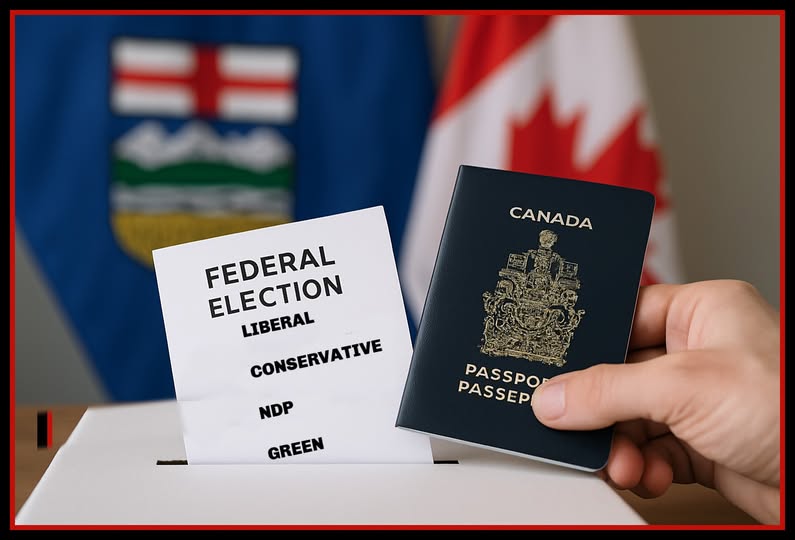
So this post looks for some audience participation…
Media Strategy Deathmatch: Poilievre vs. Carney
If politics is theatre, then Pierre Poilievre is the angry solo act at an open mic night—jeans too tight, veins too visible, shouting down hecklers he personally invited. His media strategy is simple: control the narrative, kill the questions, and if a journalist so much as breathes unapproved air, accuse them of being a Trudeau-funded parasite. His press conferences are less Q&A and more hostage situations for microphones. Mark Carney, on the other hand, floats in like the ghost of central banks past—articulate, measured, and slightly annoyed that he has to explain monetary policy to people who think “fiscal restraint” is a type of keto diet. He doesn’t fear the media. He treats them like analysts at a quarterly earnings call: welcome, but don’t waste his time. If Poilievre wants to defund the CBC, Carney wants it to pivot to Bloomberg.
Carney holds pressers. Poilievre holds grudges. Carney takes questions. Poilievre takes names. Carney reads the Globe. Poilievre doomscrolls Rebel News. One plays chess. The other demands to know why the queen has more power than the king.
And spare us the crowd-size flexing, Pierre. Anyone can pack a barn full of rage in Alberta. Try holding court in downtown Toronto without blaming immigrants, bikes, or central bankers for your vibe. In short: if you’re a journalist, Carney will challenge your premise. Poilievre will challenge you to a cage match in a parking lot outside a Canadian Tire.
Your turn. Post ONE question you’d ask either Carney or Poilievre. Be clever. Be sharp. Be ruthless. And keep it under 15 words—or we assume you’re running for office and ignore you entirely.
And remember: if your question can be answered with “because Trudeau,” it’s already been incinerated in the Poilievre campaign furnace.
“Welcome to the Bot Wars: How to Survive the Right-Wing Disinformation Machine Without Losing Your Mind (or Your Soul)” Let’s start with the obvious: something reeks in the Canadian infosphere, and it’s not the ketchup chips. It’s the sweet, synthetic stench of algorithm-fed rage bait, right-wing echo chambers, and disinformation campaigns that make your uncle’s Facebook feed look like a Russian psy-op training manual. And at the centre of this toxic storm? The Conservative Party of Canada — or at least, the very enthusiastic fan club they’ve somehow acquired online. Now, let’s be fair. I’m not saying Pierre Poilievre is holed up in a basement with a troll farm in Ottawa, personally retweeting memes about Mark Carney being a lizard in a Bank of Canada skin suit. But the vibes? Immaculately suspicious. This is politics by meme warfare. You’ve got sockpuppet accounts quoting Nietzsche to defend tax cuts for billionaires. You’ve got anonymous posters ranting about Carney’s globalist ties like they just uncovered the lost files of the Da Vinci Code. And it spreads. Fast. Faster than facts, faster than nuance, faster than a Liberal fundraising email you never opened.
So what do we do? We don’t stoop. We don’t lie. We don’t make up stories about Pierre being a deepfake creation of Jordan Peterson and Joe Rogan in a lab. (Tempting, yes. Productive, no.)
Instead, we sharpen our knives — metaphorically — and we go in with truth and contrast. Yes, Mark Carney worked at Goldman Sachs. Cool. You know who else worked there? People who stabilized the global economy after the 2008 crash. He also ran not one, but two central banks through crisis — and came out of it with his reputation intact. That’s like walking through a pit of lobbyists and emerging without a single PAC donation stuck to your shoe. Meanwhile, what does Poilievre offer? Gold bars. Bitcoin sermons. A plan to bulldoze public institutions with the smug smile of a guy who thinks a smirk is a policy. We don’t need to pretend Carney is perfect — he’s not. We should be critical thinkers. But that doesn’t mean we sit back while trolls with six burner accounts pump out AI-generated garbage about him being a UN puppet sent to microchip your dog. We combat lies with facts, yes — but we win hearts with fire, humour, and clarity.
Here’s a good line to keep in your back pocket: “If the worst thing you can say about Carney is that he’s smart, global, and competent, I’ll take that over a YouTube-influencer-in-a-suit trying to blow up the CRA.”
So no, this isn’t about blind loyalty. It’s about intellectual survival. It’s about building a political culture where we don’t get hijacked by rage clicks and paranoia. The far-right thrives on chaos. That’s their fuel. Ours? Strategy. Substance. And yes — a little well-placed sarcasm. Because if democracy’s on fire, I’d rather hand the hose to Mark Carney than watch Pierre Poilievre roast marshmallows in the ashes.
For years, I thought I was politically orphaned. Raised by self-declared Red Tories, I grew up believing there was a place in the political landscape for people who were fiscally responsible, socially compassionate, and allergic to extremes. Turns out, that place was like Narnia—real in theory, impossible to find on a map.
“Red Tory,” they’d say at the dinner table, with pride. A term I once thought meant “liberal who liked spreadsheets” or “conservative who didn’t hate people.” It was a dignified kind of centrism—one that respected institutions but wasn’t shackled by them, that could balance budgets and still fund libraries.
But as the political spectrum bent into a pretzel over the years, that red tory identity became… well, kind of vintage. I wasn’t left-wing enough for the left, not right-wing enough for the right, and definitely not unhinged enough for Twitter/X.
Enter: Mark Carney. Is he the Second Coming of Red Toryism? I don’t know, but I’d like to believe he’s at least Red Tory–adjacent. A man who speaks in full sentences, believes in climate science and markets, and doesn’t treat nuance like a communicable disease? Be still my pragmatic heart. Carney walks into a room and doesn’t make me want to Google “How to move to Scandinavia.” He talks like someone who has read a book and written a balance sheet. He’s got that rare vibe of a person who’s balanced billion-dollar budgets and waited patiently in a Shoppers Drug Mart line during flu season. So maybe, just maybe, I’m not politically homeless anymore. Maybe there’s room again for the practical idealists, the moderate radicals, the spreadsheet socialists, the “yes to public transit, no to populism” crowd.
Maybe Red Tories weren’t extinct—just waiting for the right guy with an Oxford brain and a Bay Street backbone to dust off the label and make it cool again. Call it what you want—Red Tory, sensible centrist, adult-in-the-room—but if Carney’s leading, I’m following.
I can’t stop thinking about the board game Risk and Donald Trump’s obsession with world domination. You know the board game Risk, I’m sure, where you gobble up continents, stack tiny armies, and throw diplomacy out the window in favor of brute force and dumb luck. It’s a game for people who think “foreign policy” means yelling louder. In other words, it’s basically Donald Trump’s foreign policy manual. Trump isn’t running a country—he’s playing a game. And we’re all the plastic pieces. Greenland is back on the menu. Basically, he tried to buy it from Denmark like it was beachfront real estate? Greenland, in his mind, is prime Risk real estate: cold, resource-rich, and sitting there not making him any money. A total waste. Then there’s Panama. The Canal is crucial in Risk—it’s the shortcut to domination. In real life, Trump’s been making noise about “reasserting control over global trade routes.” Translation: slap tariffs on everything that floats and threaten infrastructure like it’s a negotiation tactic from The Art of the Deal: Dictator Edition.And what about us here in Canada. Tariffs are back, naturally. This time, he’s calling them “economic retribution.” Steel. Cars. Semiconductors. Solar panels. If you can manufacture it, he can tariff it. This isn’t trade policy—it’s a toddler flipping over the game board because he’s not winning fast enough. Ukraine? Remember the 24-hour peace plan he bragged about? Clock’s still ticking. Putin hasn’t budged, NATO’s on edge, and Trump’s main contribution so far has been alienating allies and whispering sweet nothings to authoritarian regimes. Turns out global conflicts don’t respond well to vibes and golf claps. And Gaza? The man treats it like a cable news segment—loud, messy, and ultimately disposable. He’s managed to escalate tensions, undermine humanitarian efforts, and offer absolutely nothing resembling a solution. Just slogans, ultimatums, and the kind of clarity that comes from never actually reading a briefing. Because here’s the thing: Trump doesn’t want a resolution. Resolution is boring. Peace doesn’t sell hats and crypto. Peace doesn’t get cheers. What gets cheers is conflict, chaos, domination—Risk. He’s not leading. He’s playing. And he’s the kind of gamer who hasn’t slept in days, refuses to read the rules, and still thinks he’s one move away from winning the whole damn thing. “Problem is, the world isn’t a board game—and we’re not his pieces.”
“Welcome back to Dispelling the Rumours and Managing Disinformation, where facts slap fiction in the face before breakfast.”
So, Mark Carney once invested in American oil and gas. Scandal! Someone sound the national anthem in reverse and burn his toque! Or—hear me out—maybe we all take a collective breath and admit that unless you’ve got every dime locked into a GIC at a credit union in Hanna, you might not be the patriotic investor you think you are.
Let’s get real. In the pre-Trump, pre-apocalypse, somewhat-functioning-democracy version of the United States, investing in American companies wasn’t controversial—it was basic common sense. You know, before the U.S. decided to cosplay as a failing empire and we all had to start checking our news apps with one eye closed.
And while we’re on the topic, how many Canadians actually know where their investments are? Like, really know. Because unless you’ve got your RRSP in a shoebox under your bed labeled “100% Maple Syrup Stocks,” there’s a good chance you have exposure to U.S. markets. Apple? Amazon? Microsoft? Hello? These aren’t headquartered in Winnipeg.
Let’s also not forget that most of us don’t sit down and build our investment portfolios from scratch like Gordon Gekko (if you know you know) with a Canadian flag. We have advisors, pension funds, index funds—and those funds? They go global, baby. Including our dear neighbours to the south, with whom we share a border, a trillion-dollar trade relationship, and about seven Tim Hortons franchises in Buffalo.
So yeah, Carney invested in U.S. energy. Big whoop. He also ran the Bank of Canada, led the Bank of England, and tried to keep the global economy from going full Mad Max. He’s basically the adult in the room while everyone else is arguing over what brand of maple syrup counts as “true north.”
Let’s stop pretending this is a scandal and admit what this really is: a very selective outrage party thrown by people whose own TFSAs are probably 30% American tech and 10% “wait, I thought Tesla was Canadian.”
So this morning, we all woke up to a fresh helping of unsubstantiated tariffs—because apparently, chaotic international trade policy is back on the menu. Some countries got walloped like a piñata at a toddler’s birthday party. Canada? We caught a glancing blow. And Alberta? We walked away with a paper cut and a raised eyebrow.
Now, let’s not pretend this lucky break was thanks to Premier Danielle Smith cracking some international code. Alberta didn’t sidestep this because of some genius provincial plan. This wasn’t solved in Calgary with a press conference and a cowboy hat. Trump’s team knows that oil and gas tariffs would have met significant resistance from American consumers and businesses. This is federal-level heavy lifting—there’s a full team from Ottawa, actual trade professionals, in Washington right now advocating for Canadian interests. You know, the people who read briefing notes on purpose.
Because when Trump is involved, you need more than vibes and volume. This is a man who can flip from tariffs to tweets faster than you can say “TARIFF,” who?” It takes serious strategy, not solo stunts, to keep us out of the blast zone.
So if Alberta came out of this mostly unscathed, it’s not because someone in Edmonton solved international trade overnight. It’s because there’s a team in Ottawa that actually knows how to navigate a Trump storm, without needing a parade about it.
Yesterday was just the opening act. Trump’s trade chaos isn’t over, but fortunately, the federal team is already backstage, tuning the instruments.
As for Danielle Smith—someone might want to let her know it’s a symphony, not a solo.
Donald Trump has recently claimed that he’s “liberating” the United States, specifically through tariffs, aimed at countries he believes have taken advantage of America.
Liberation? That word carries the weight of history. Real liberation is when the gates of Auschwitz were opened. It’s when Nelson Mandela walked out of prison after 27 years. It’s when nations clawed their way out from under the boot of dictatorship or colonial rule. Liberation is when someone is finally able to breathe freely after generations of systemic oppression.
Tariffs are not liberation. Trade negotiations are not liberation. Even the toughest economic policy isn’t liberation. It might be strategy, or even strong-arming—but let’s not pretend it’s on par with people being freed from death camps or political prisons.
Words matter. And when a president uses a term so sacred—so deeply tied to human survival and resilience—to describe his own economic choices, it doesn’t just feel wrong. It feels like an insult to every person who’s ever actually needed to be liberated.
If Trump thinks imposing tariffs is equivalent to freeing a nation from tyranny… well, maybe someone should hand him a history book instead of a microphone.
This is definitely my opinion, and note I do not name a party in this post, but it’s time to make this political relationship social media official and explain why I’m supporting Mark Carney, and I thought you might want to, too. I never thought I’d fall for a former central banker, but here we are. In the vast and wild world of politics, where charisma often trumps competence and shouting gets more airtime than substance, Mark Carney feels like a unicorn: calm, credible, and—dare I say—actually kind of cool?
Okay, maybe “cool” is a stretch. He’s no TikTok star. But if solving complex economic problems, navigating global financial crises, and leading with actual integrity gets you going, then welcome to the fan club. Politics had become something to be checked in on every four years, kind of like going to the dentist. Uncomfortable, a bit painful, but necessary. Then the world got weirder, the stakes got higher, and suddenly, who leads our country felt like the most personal question of all.
I care about economic stability. I care about climate change. I care about housing, about young people being able to build a life here, about truth-telling and steady leadership. And the more I looked around, the more I kept coming back to Mark Carney. So why? Let’s start with the resumé: former Governor of the Bank of Canada and the Bank of England. The guy practically wrote the manual on crisis management—and didn’t lose his moral compass while doing it. He’s been a vocal advocate for sustainable finance, helped launch the Task Force on Climate-related Financial Disclosures (TCFD), and has made it clear that a functioning economy and a livable planet are not mutually exclusive goals. In other words: he gets that capitalism needs a conscience. And while other leaders are busy rehearsing soundbites, Carney brings something refreshingly rare—substance over spectacle. What I like most isn’t just his brain (though, let’s be honest, the man is frighteningly smart). It’s that he listens. He doesn’t talk down to people. He doesn’t treat politics like a sport. He treats it like a responsibility.
In a time when political discourse often feels like a bar fight—loud, messy, and completely detached from reality—Carney is the guy calmly explaining how the fire started, how to put it out, and how to fireproof the place next time. All without breaking a sweat. For clarity this isn’t just about being a “fan” of a politician. This is about wanting a better Canada. One that supports working people without leaving the next generation drowning in debt. One that can tackle climate change with urgency and clarity. One that can lead on the world stage without losing its soul. One that supports working people without leaving the next generation drowning in debt. Supporting Mark Carney isn’t about being starstruck—it’s about being serious. About choosing a leader who doesn’t just have the credentials, but the character to lead us through turbulent times. So…We’ve tried politics as performance. We’ve tried outrage. Maybe it’s time we tried competence, clarity, and a bit of calm. That’s why I’m supporting Mark Carney.
No drama. No gimmicks. Just leadership that looks like it actually belongs in 2025.
And hey—if we end up with a Prime Minister who can explain inflation without making your eyes glaze over and doesn’t look like he’s about to start a podcast called “Alpha Leadership Unleashed”? That’s just a bonus
***As yesterday proved to be an exceptional day in the world of misinformation and bots, messaging to my inbox that outnumbered the people in this group, I felt it was time to put some energy into researching accurate, cited, and legitimate information on the bot world as it relates to our Canadian Federal Election. Regardless of your political philosophy or partisanship, please scrutinize everything that comes into your social media, email, or inbox with a critical eye. I know some of these posts are long, but I encourage people to educate themselves and research what they read. Please don’t attach yourself to a meme or image that supports your own beliefs without questioning its legitimacy. NM ***
Are Bots More Involved for the Conservatives or the Liberals in Canada’s Current Election?
The role of bots and other automated accounts in shaping political discourse has been a growing concern in recent Canadian elections. As of the most recent federal election in Canada, evidence suggests that while both the Conservative Party of Canada (CPC) and the Liberal Party of Canada (LPC) have seen bot activity in their favor, the impact and prevalence of bot networks seem to be more significantly aligned with the Conservatives.
Evidence and Analysis
Studies on Bot Activity in Canadian Elections A study conducted by the University of Toronto’s Citizen Lab and the Canadian Communications Security Establishment (CSE) reported that misinformation and bot-driven amplification have targeted Canadian elections, although on a smaller scale than seen in the United States. Their findings suggested that during the 2019 and 2021 federal elections, the Conservative Party benefited from a higher volume of automated engagement, often amplifying criticism of Prime Minister Justin Trudeau and the Liberal government.
According to a 2021 study by The Conversation, nearly 25% of Twitter activity during the election campaign was generated by accounts that exhibited bot-like behavior, and a disproportionate amount of this activity aligned with pro-Conservative or anti-Liberal narratives.
The study also noted that Conservative-leaning hashtags, such as #TrudeauMustGo, were frequently boosted by bot networks to amplify opposition to Trudeau’s policies.
Misinformation and Targeted Narratives Bots involved in Canadian elections have been known to push misinformation and polarizing content. A report by The Digital Democracy Project found that misinformation targeted at Trudeau and the Liberals, particularly on issues like climate change, immigration, and the COVID-19 pandemic, was amplified by automated accounts.
The narrative often painted Trudeau’s government as weak on national security or overly progressive, which resonated with conservative-leaning audiences.
Pro-Conservative accounts, many exhibiting bot-like behavior, pushed narratives that aligned with the CPC’s platform, criticizing carbon pricing, immigration policies, and vaccine mandates.
Conservative Social Media Strategy The Conservative Party has historically been more aggressive in its social media strategy compared to the Liberals. A report from McGill University analyzed social media activity in the 2021 election and found that Conservative messaging was more widely amplified through automated or coordinated accounts. Conservative-aligned content, particularly related to anti-Trudeau sentiments, was widely spread on platforms like Facebook, Twitter, and Reddit.
Pierre Poilievre, the current Conservative leader, has also embraced a strong online presence and mobilized support through platforms like YouTube and Twitter, where bot engagement tends to amplify his message.
Liberal Bot Activity and Counterpoints While the evidence points to more bot activity favoring Conservatives, it is important to note that the Liberal Party is not immune to bot involvement. Some reports have identified bot networks promoting pro-Liberal or anti-Conservative narratives, although the scale appears smaller in comparison.
In the 2021 election, some automated accounts pushed messages that supported Liberal policies on climate change and pandemic response, though the volume of bot activity in favor of the Liberals was considerably lower than that of the Conservatives.
Conclusion
While bot activity has been observed in support of both the Conservative and Liberal parties during Canadian elections, research and analysis suggest that bot networks have been more actively aligned with the Conservative Party’s narratives and messaging. The amplification of anti-Trudeau and pro-Conservative content through bots has had a notable influence on shaping online discourse and public perception. However, as technology continues to evolve and influence democratic processes, it remains essential to scrutinize and mitigate the impact of automated accounts on Canada’s political landscape. NDM
Sources:
University of Toronto’s Citizen Lab: Report on misinformation and election interference (2021).
The Conversation: Analysis of bot activity in Canadian elections (2021).
McGill University Digital Democracy Project: Social media influence during the 2021 election.
Canadian Communications Security Establishment (CSE): Reports on cyber threats to Canadian democracy.
Tonight, I would take a different approach in my post. With all the talk about Greenland I want to tell a different story. Only 2% of Canadians have ever been north of the 60th parallel, which encompasses 48% of our land mass. If you left Toronto and travelled north to Alert it would be the same travel distance as if you left Toronto and went south to Bogata, Colombia. If you look at the map, you will see the part of Canada that almost touches the top of Greenland. That is our air force base CFS Alert. I have been fortunate to have not only been north of 60 but to have spent quite a bit of time in Canada’s North. I believe that maybe some would consider Canada as a better partner for Greenland than the United States. Greenland is primarily Inuit and these people will never be interested in further colonization. That is why they have an an issue with Denmark. Note I said ‘partner’ because to the best of my knowledge Greenland is also ‘not for sale’. Here are my thoughts…NM
When considering potential international partners, Greenland would likely find that Canada offers a more natural, beneficial, and culturally aligned relationship compared to the United States. While the United States may bring economic power and geopolitical influence to the table, Canada’s geographic proximity, environmental priorities, and respect for indigenous cultures make it a more suitable and sustainable partner for Greenland’s long-term growth and development.
1. Geographic Proximity and Shared Arctic Interests
Canada and Greenland are immediate neighbors, sharing the Arctic region and its unique environmental challenges. Both nations have vested interests in preserving the fragile Arctic ecosystem and managing the effects of climate change, such as melting ice caps and rising sea levels. As the Arctic opens up to increased shipping and resource exploration, Canada and Greenland have a common interest in ensuring sustainable development while protecting indigenous communities and the environment. This mutual understanding gives Canada a more aligned approach to Greenland’s goals and concerns.
2. Commitment to Indigenous Rights and Cultures
Canada has a strong record of promoting indigenous rights and recognizing the importance of indigenous knowledge in governance and environmental stewardship. With a large Inuit population in Canada’s northern regions, Canada understands the cultural and political dynamics that Greenland faces as a predominantly Inuit nation. In contrast, the United States has historically had a more complex and often strained relationship with its indigenous populations. Partnering with Canada would allow Greenland to work with a nation that values and respects indigenous governance models, creating a partnership built on mutual understanding and cultural appreciation.
3. Environmental Leadership and Sustainable Development
Canada’s environmental policies, though not without flaws, demonstrate a greater commitment to sustainability and combating climate change compared to the United States. Canada is an active participant in international climate agreements and promotes environmental stewardship, particularly in the Arctic. Greenland’s environment is vulnerable to the consequences of climate change, and a partnership with Canada would ensure that development in the region prioritizes sustainability over exploitation.
4. Similar Governance Structures and Political Values
Canada and Greenland share a tradition of democratic governance, respect for human rights, and emphasis on cooperative decision-making. Canada’s political system, which includes decentralized authority to its provinces and territories, resonates with Greenland’s desire for increased autonomy and self-governance. This alignment in governance models makes Canada a more natural fit for collaboration, where Greenland’s aspirations for independence and sustainable development would be respected.
5. Economic and Research Collaboration in the Arctic
Canada’s Arctic research programs and investments in sustainable development align with Greenland’s interests in leveraging its natural resources responsibly. By working with Canada, Greenland could benefit from joint research initiatives, knowledge sharing, and technological innovations that promote sustainable practices in industries like fishing, mining, and tourism. While the United States tends to prioritize economic gain over environmental sustainability, Canada’s approach would better balance economic development with ecological preservation.
Conclusion
While the United States may offer greater economic resources, Canada presents a more balanced, culturally respectful, and environmentally conscious partnership for Greenland. Canada’s proximity, shared Arctic interests, commitment to indigenous rights, and dedication to sustainable development make it a more natural and beneficial ally for Greenland’s future. By choosing Canada as a primary partner, Greenland would secure a relationship that not only advances its economic interests but also safeguards its culture, environment, and autonomy.