Archive for the ‘Uncategorized’ Category

Read The Menu Carefully!

Posted: February 11, 2026 in Uncategorized

Heather Cox Richardson wrote on February 9th something that made me stop and think. As she usually does. Many of you who read me already read her, and if you do not, you should. I am not a historian, nor am I a journalist. I am, at heart, a storyteller who tries to stay grounded in facts and lived reality. Heather Cox Richardson is the historian. She is one of the voices I turn to when I want to understand the deeper roots beneath today’s headlines. And in the past year, one name keeps resurfacing, a name many had barely considered until recently, yet now seems to echo constantly. William McKinley, the so called Tariff King, whose policies fused tariffs, economics, and expansion into a single driving force. Geography followed advantage. Power followed usefulness. And within that machinery sat Puerto Rico.

Puerto Rico was never brought in as an equal. It was absorbed as useful. Yes, Puerto Ricans are American citizens, but Puerto Rico is not a state, it is a territory. Its people cannot vote in presidential elections. They live inside the system, yet without full voice. Citizens, but not treated as equal citizens. Governed, yet not fully represented. Included, but not equal. That reality has never fully disappeared, and it continues to shape how Puerto Rico exists within the American structure today.

Then came the modern reminder. Bad Bunny. I am not here to analyze a halftime show, that is not the point. The point is the reaction, the insistence from some that he is “not American.” A man born in Puerto Rico, a U.S. citizen, still viewed by some as outside, as less than, as not fully belonging. This is not about music. It is about hierarchy. It is about how systems decide who is fully included and who is simply useful.

When I think of Puerto Rico, I think of a beautiful Caribbean island that has too often been mistreated, overlooked, and controlled without equality. And that reflection leads somewhere important. An 1898 edition of Harpers Weekly once showed Uncle Sam plucking “sugar plums,” the desired fruits of empire. They were not candy, they were land, resources, and strategic footholds. Those sugar plums did not vanish, they changed geography, and the gaze moved north.

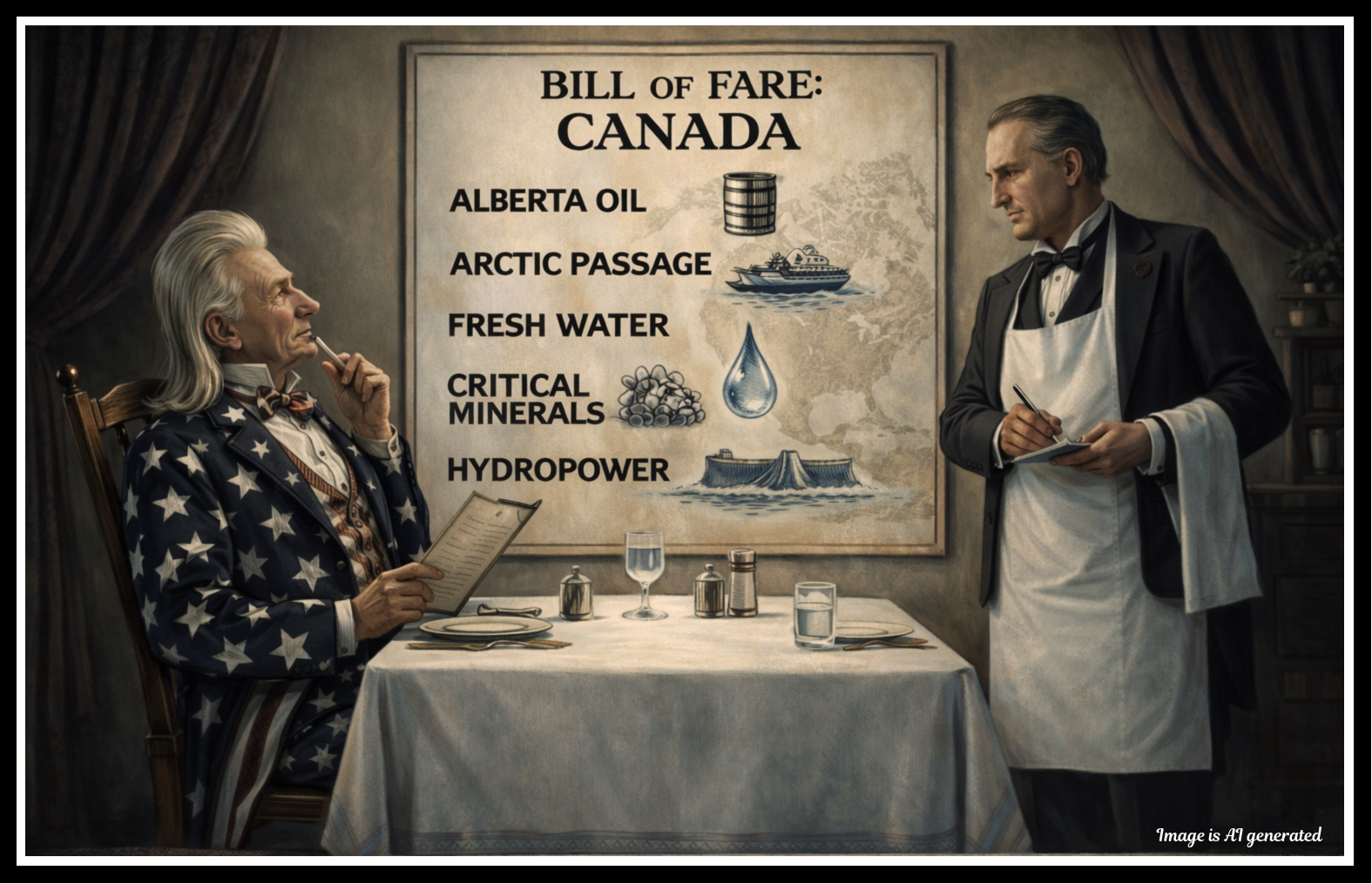
Today, the desired fruits look different. Oil and gas, fresh water, critical minerals. hydropower, the Arctic including The Northwest Passage. Strategic geography and strategic leverage. The map changed, but the instinct did not. Usefulness first, equality optional. And that is where this conversation reaches Alberta, and ultimately all of Canada. To those Alberta separatists who imagine advantage, strength, or special standing by moving closer to power, look again at Puerto Rico, not symbolically, but practically. A place valued for what it provides, not empowered for what it is, governed within a structure where decisions are made elsewhere, for interests beyond its own.

So let us make this simple. Imagine a restaurant. From the outside it looks exciting, successful, irresistible. You read the reviews carefully and notice a pattern. Only certain people are treated well, others are tolerated for what they bring. Some leave respected, others leave diminished. Would you still go, convincing yourself your experience would be different, that you would somehow be welcomed as an equal. Look again at the sign on the door. It does not say Partners, it says Suppliers. And once inside, you are not seated at the table, you are on the menu.

Heather Cox Richardson does not write about the past to stir nostalgia, she writes to reveal continuity. Tariffs were never just economics, expansion was never just geography, and power has always moved toward what is useful. Trump did not create this instinct, but under this administration the pattern is no longer subtle, and now Canada, in all its regions and resources, is increasingly viewed through that same lens.

The sugar plums of 1898, the desired fruits of that era, did not disappear. They transformed into the resources most valuable today. Energy, water, minerals and access to new geographies, gateways and futures. So Alberta before anyone imagines strength remember it will be without equality, sovereignty without control, and belonging without respect. I implore you to remember that simple truth. And as Mark Carney warned at Davos, if you are not at the table, you are on the menu.
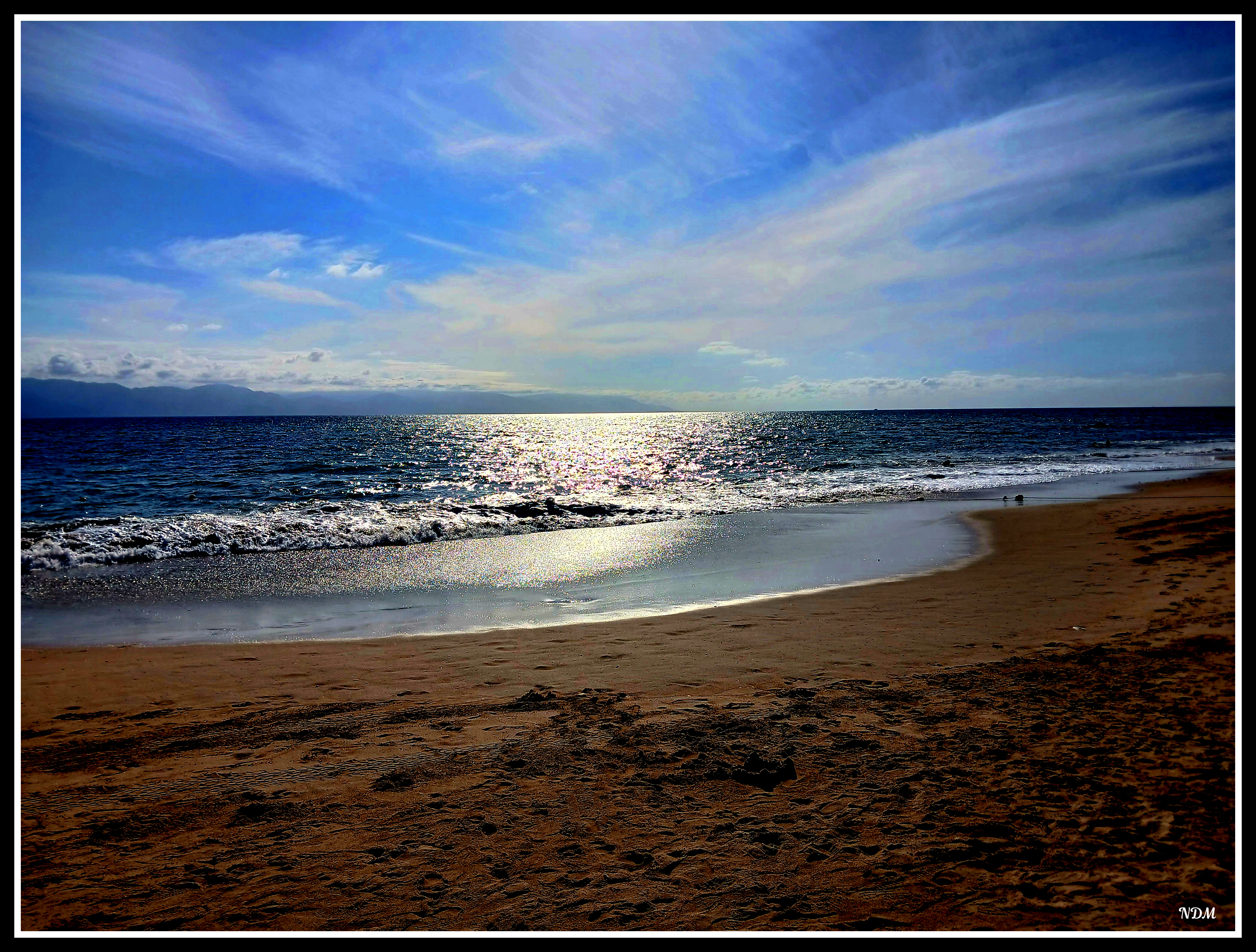
Some research is conducted in laboratories. Some in boardrooms. And then there is the kind conducted from a lounge chair beside the ocean in Mexico, notebook in one hand, listening while the world talks when it thinks no one is studying it. The tide rolls in, the tide rolls out, and along the shoreline patterns form, shift, and sometimes disappear altogether. Over time, even the most unscientific observer begins to notice movement.

Over the past eighteen months, and more specifically across five separate visits to Mexico, through a series of entirely informal and definitely non-scientific conversations, I found myself repeatedly asking the same three simple questions. How do you feel about your president right now? Do you think your president thinks about Canada, and if so, how? And finally, what comes to mind when you think about Canada today? Not exactly Ipsos-level methodology, but surprisingly effective somewhere between the second coffee and sunset.

The conversations spanned five touch points. June 2024, October 2024, June 2025, October 2025, and now February 2026. The demographic was never intentionally selected, yet remarkably consistent. Predominantly age fifty-five plus, roughly sixty-five percent Caucasian, twenty percent Latino, fifteen percent Black. Mostly Canadian and American, with a scattering of Europeans who wandered into conversational orbit, often unintentionally becoming part of the “study.” Not a perfect sample, not even close, but a consistent one. And consistency, even poolside, tells a story.

What emerged was not statistics, but stages. Emotional and perceptual stages. Something between disbelief, adjustment, and political whiplash. Like footprints in the sand, each stage left a trace of where people stood at that moment in time.

Let us call them the Five and a Half Stages of Political Reality.

Stage One: The Comfortable Dismissal (June 2024)
Concern existed, but belief did not. People spoke about political upheaval the way one speaks about a distant storm over the horizon. Interesting, perhaps troubling, but surely not coming this way. Canadians continued buying winter escapes in Arizona and Florida. Americans spoke in hypotheticals. Nothing felt imminent. Nothing felt irreversible.

Stage Two: The Nervous Chuckle (October 2024)
The numbers tightened, and the tone shifted. Jokes became thinner, laughter shorter. Surely, people said, this could not actually happen. Surely the system would hold. Canadians still travelled south, though conversations carried a new edge. Americans began speaking less in hypotheticals and more in probabilities, though still wrapped in disbelief. Trump wouldn’t be that bad.

Stage Three: The Quiet Realization (June 2025)
The hypothetical became reality. The tone did not explode. It sank. This was not outrage. Canadians began saying, I will still go to the U.S. for now, but perhaps not forever. Americans spoke more cautiously, often lowering their voices, as if the political climate had become something navigated rather than debated. Geography began to matter. Border states sounded different from southern states. Urban voices differed from rural ones. Certainty was fading.

Stage Four: The Settled Shock (October 2025)
Realization hardened into acceptance, though not comfort. Canadians who once said they would “wait and see” began saying they would “wait, but not invest.” Some stopped travelling south. Some quietly sold property. Not dramatically or angrily but rather decisively. Among Americans, something unexpected appeared. Fatigue. Not necessarily political opposition, but exhaustion. The emotional volume dropped, yet the weight increased. Even casual conversations began sounding less like debate and more like reflection.

Stage Five: The Reflective Discontent (February 2026)
And now we arrive at the present, sitting beside an ocean that keeps rewriting the shoreline. Across conversations among travellers who vote, who pay attention, who historically leaned conservative, one pattern stands out. Contentment is rare. Pride sounds quieter. Uncertainty sounds louder. Vermont does not sound like Wisconsin. Wisconsin does not sound like Texas. Yet across geography, a shared unease hums beneath the surface.

Three distinct lenses emerged. A Canadian lens, reflecting reaction and changing cross-border behaviour. A European lens, observing from a distance with growing disbelief. And an American lens, revealing not just opinion, but something resembling evolving voter intention and emotional reassessment. This was never polling, but it was unmistakably movement.

Among Canadians, there is a clear alignment with our current national leadership and a growing discomfort with the direction of American leadership. What began as watchful patience has, for many, turned into quiet decision. Fewer winter homes, fewer long stays and fewer dollars flowing south. It’s still not loud nor dramatic. But it is deliberate.

Europeans observe from a distance, no longer trying to interpret, no longer trying to persuade. They watch, they shake their heads, and they move on, often with the calm certainty of people who have already made up their minds.

But it is the American conversations that feel most significant.

From Vermont to Wisconsin to Texas, across geography and ideology, something deeper is shifting. Not slogans. Not outrage. Recognition. A quiet understanding that this is not the country they imagined for themselves. A desire, sometimes whispered, to return to something steadier, something recognizable, something that once allowed them to celebrate their nation rather than explain it.

And perhaps that is the unwritten stage now forming. Not denial, shock or fatigue. Something closer to rediscovery.

The tide is still moving, quietly reshaping the shoreline one small shift at a time. Old footprints fade, new ones press forward, and without announcement the path begins to turn. Across conversations, across geography, across doubt and fatigue, something unmistakable is happening. More Americans are no longer standing still, no longer looking backward, but beginning to choose where they want their country to go next. The direction has changed and this time, they know it.

The Weight Of Remembering

Posted: February 5, 2026 in Uncategorized

It has been another one of those weeks away from the pen. Not because there is nothing to write about. Quite the opposite. There is too much. Too many headlines, too many fractures and too many moments where you stop, look at the world, and realize you cannot quite hold all of it in your head at once. But here we are.

Last night, I was in an elevator in Mexico. As I often do, I asked where people were from. Part curiosity and part instinct. Sometimes it stays light. Sometimes it does not. This time, it did not.

My elevator companion was from the Edmonton area. Ninety years old. Well put together. Clear eyed. The kind of woman who has lived long enough to choose her words carefully. She asked how I felt about what is happening in Alberta. I told her the truth. It breaks my heart.

She began to cry. Deep, uncontrollable sobs. She spoke about having lived a long life believing the world was moving, however imperfectly, toward something better. That there would come a time when she could look at the future her children and grandchildren were inheriting and feel some peace. Instead, she finds herself watching conversations unfold that she never imagined would be happening in Canada, let alone in Alberta.

When the elevator doors opened, she was still crying. She sat down in the lobby, visibly shaken. I sat with her.

That is when she told me her family’s history. Her parents were killed by the Nazis during the Holocaust. She said the story of how she survived is long and painful. She did not tell it and I did not ask. Some histories are not meant to be unpacked between strangers. They are meant to be carried.

What she was grieving was not policy or politics. Not a single moment or issue. It was the feeling of watching memory thin. Of sensing that the lessons paid for in human lives are beginning to feel distant to people who never had to carry them. That what once felt unthinkable is now sometimes spoken without hesitation.

Later, I was sitting by the pool with a couple from Winnipeg that I have come to know over the past few days. He and I talk easily, loudly, about everything and nothing. His wife is quieter, observant. She has been reading a book I had heard about for years but never opened. Sapiens.

So I downloaded it. I am early into it, and parts may be debated forever, but the core idea stayed with me. Humans did not survive because we were the strongest. We survived because we cooperated. Because we created shared stories, shared meaning and shared understanding of belonging.

Those shared beliefs allowed strangers to trust one another. To build communities. To imagine a future beyond themselves.

But every step forward carried a cost. Agriculture brought stability, but also hierarchy and ownership. Structure created order, but also distance. As societies grew more complex, we began to live inside systems of our own making, sometimes forgetting the human purpose beneath them.

I often write about policy and politics. That is where the arguments usually live. But the woman in the elevator was not grieving politics. She was grieving something more fundamental. The slow erosion of connection. The fear that we are forgetting what binds us to one another in the first place.

Before we were provinces or parties or positions on a map, we were people who survived by staying connected. Canada has always drawn strength from that understanding. Not sameness, but belonging. Not agreement on everything, but a shared commitment to one another.

Alberta is part of that story. So is every other corner of our country. And perhaps what many are feeling right now is not rage, but sorrow. Not division, but fear of losing something deeply human.

This post may read as quieter than some of what I usually write. That is intentional. It does not speak to the specifics of what is unfolding in Alberta, in the United States, or in other parts of the world right now. What it speaks to is the ground beneath all of it. The conditions that allow these moments to take hold in the first place. But make no mistake, the time for anything but clear and bold words is almost gone.

My tone will be stronger in the coming weeks. When history starts to feel abstract, people get bold in all the wrong ways. They say things out loud that once lived only in whispers. They drift toward ideas earlier generations buried for a reason. I see it creeping into conversations at home, surfacing across Canada, and echoing far beyond our borders. And the woman in that elevator reminded me that none of this is theoretical. Memory exists because it had to. Because someone survived long enough to warn us.

And some warnings are not meant to fade quietly into history. They are meant to be remembered, clearly, while we still have the choice to listen.

When the bough breaks…

Posted: January 27, 2026 in Uncategorized

Yesterday, my trigger didn’t come from a headline or a breaking-news banner. It came from something far more ordinary. I was doing business work, half-listening to a representative from an energy company in North Carolina, somewhere near Raleigh. He was talking about their storm response, freezing rain, infrastructure damage, and restoration timelines. The kind of technical conversation that usually fades into the background.

At one point, he mentioned crews coming in from Canada.

I stopped for a moment. Of course they’re coming in from Canada. Because that’s what Canada does. That’s what Canadians do. We show up. We send people. We help stabilize systems that aren’t ours, even as words coming out of the White House question our motives, our sovereignty, our usefulness. Even as we’re talked about like a problem instead of a partner.

I shook it off and went back to work. And then he said something else. “The thing about ice is that it continues to cause problems after the storm has passed.” He was talking about freezing rain; actual ice. Not politics, uniforms or ideology. The physical aftermath of a storm that looks finished but isn’t.

And that’s when my hands stopped for real. Because that sentence describes exactly where we are. Over the past few days, words from the White House have led some people to believe the worst might be over. That the temperature has come down. That the tone has shifted. That maybe the storm has passed.

But a lull is not repair. A pause in the storm doesn’t undo the damage already done. And when pressure has been applied long enough, the real question isn’t whether the noise stops. It’s what breaks afterward.

We keep being told to calm down. To stop overreacting. To trust that nothing is really going to happen. That this is all hyperbole, whipped up by traditional media, by content creators, by liberals, by left-wing radicals, by anyone who apparently still possesses a functioning frontal lobe.

I understand how hard it is to be objective about your own country, your own politics, your own leader. I get that. Truly. But an awful lot of rational minds outside the United States, outside the immediate circle of influence of the White House, are seeing this very clearly including our prime minister.

Storms are obvious and loud. Storms are speeches, threats, executive orders, chaos by design. Storms dominate the news cycle and exhaust everyone at once.

The aftermath is different. The aftermath is a consequence. It’s what quietly and invisibly weakens systems until something gives days or weeks later. Power lines fall when the sun comes out. Trees collapse when the wind has died down. Trust fractures long after everyone thinks it’s safe again.

But this storm met a person. Not a uniformed soldier on a battlefield. Not a politician. Que to the image of a registered nurse standing in a VA hospital. Someone whose life was defined by care, by empathy, by service without grandiosity.

When Alex Pretti spoke these words in 2024, he was honoring someone else. “Today we remember that freedom is not free. We have to work at it, nurture it, protect it, and even sacrifice for it. May we never forget and always remember our brothers and sisters who have served so that we may enjoy the gift of freedom. In this solemn hour, we render our honor and our gratitude, onward in gratitude.”

He was not speaking about himself. He did not wear a uniform. He was not imagining martyrdom. He was expressing a shared moral understanding that once anchored the free world. That service creates obligation. That sacrifice demands protection. That freedom depends on care as much as courage.

What makes this moment so painful is not that those words were meant for him. They were not. It is that the values he spoke about collided with systems already under strain, and he paid a price for failures that were never his to carry.

This was not destiny. It was not inevitability. It was the moment when accumulated pressure met a human life.

This may have been when the bough broke. It may be not just the storm itself, but the point where long ignored stress finally snapped something visible. The moment when people could no longer pretend the danger was abstract, exaggerated, or safely contained.

This isn’t just an American question. Is this something people in Canada can see? Can we see how democracies don’t fail all at once, but through accumulation on the branches? Through normalization? Through believing that once the noise quiets, the danger has passed?

It is almost unbearable to consider that the moment when something finally shifted could be associated with someone so empathetic, so grounded, so unwilling to center himself.

Alex Pretti did not live with grandiosity. He lived with care. And if his murder becomes a turning point, it will not be because he was meant to carry that burden. It will be because the free world failed to reckon with the ice that was already accumulating on the branches.

As a Canadian, this lands deeply. We understand winter as a long game. We know that surviving the storm is only half the work. The rest is dealing with what’s been weakened underneath, economically, diplomatically, psychologically. And as someone who has lived through real crises, I know this truth in my bones. The absence of immediate danger does not mean safety has returned.

The storm easing is not the end of the risk. It’s the moment when you find out what broke.

Read It Again

Posted: January 25, 2026 in Uncategorized

When something happens in a faraway land, it is tragic. When it happens in your neighbour’s community, it feels different. And when that neighbour starts telling you they are taking over your house and you have no choice, you had better stop pretending this is theoretical.

Listen carefully. We are hearing the same warnings over and over from content creators, journalists, historians, and political leaders. Maybe it feels repetitive. Maybe people are getting numb. But repetition becomes necessary when the lesson is not sinking in.

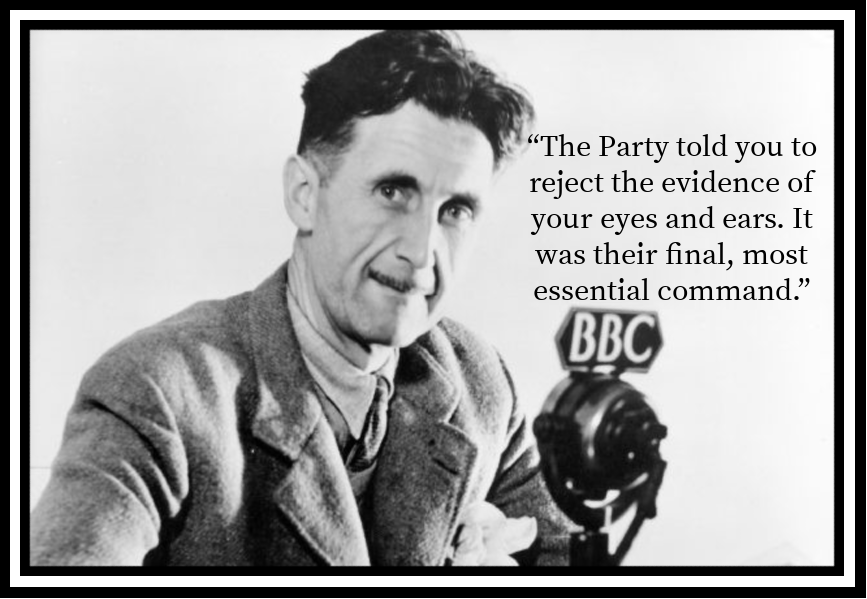
George Orwell wrote in 1984: “The Party told you to reject the evidence of your eyes and ears. It was their final, most essential command.”

I know we are hearing this quote a lot lately. That is not because it is fashionable. It is because it is applicable. So please read it again and then again.

If you need evidence, look at what happened in Minnesota yesterday. Then listen carefully to the words that followed from leaders in the United States. The gap between reality and narrative is no longer subtle. It is deliberate.

Another Orwell line should be ringing loudly right now: “Freedom is the freedom to say that two plus two make four.” And yet we are being told that two plus two equals whatever number is politically convenient. Whether it is job numbers, accountability, violence, or blame, facts are not being debated. They are being overwritten.

This may be the most chilling Orwell quote of all: “Power is not a means; it is an end. One does not establish a dictatorship in order to safeguard a revolution; one makes the revolution in order to establish the dictatorship.” Read that again.

Because the chaos and distraction we are living through are not accidental. They are not about solving a border issue. They are not about safety or order. They serve one purpose: to keep people in a constant state of disruption and fear.

When human beings are traumatized, even on a small, personal scale, our ability to think clearly is impaired. Multiply that by millions. Make it daily. Make it international. This is not just political turmoil. It is collective psychological stress. And when people are overwhelmed and emotionally flooded, they stop being able to discern. They stop being able to focus long enough to demand accountability. That is not a side effect. That is the point.

Not everyone has read George Orwell’s 1984 or Animal Farm. Not everyone has read Margaret Atwood’s The Handmaid’s Tale. But you do not need to have read dystopian literature to recognize it when you are living beside it. What is happening in the United States does not stay in the United States. Canada is not a spectator. The democratic world is not a spectator.

What happened in Minnesota was horrific. Alex Pretti should not be reduced to a political caricature or erased by a false narrative. Alex Pretti was a caregiver. Alex Pretti’s life was defined by service. The image of Alex Pretti standing in his scrubs beside a flag-draped coffin on a gurney at a VA hospital, honouring one of his patients, should be seared into our collective memory. That image tells you who he was. The lies that followed tell you who others have chosen to be.

I do not understand guns. I have never understood the obsession with them. But when the right to bear arms is invoked to justify fear, escalation, and death, how do its loudest defenders reconcile that with the outcomes they normalize? How do politicians distort the truth and smear a dead man without recognizing they have crossed from ideology into moral collapse?

Back to Orwell again, this time from Animal Farm: “All animals are equal, but some animals are more equal than others.” That is always where this road leads.

I tried to look at this objectively. I took off the anger and asked myself what I might be missing as I watched the videos from yesterday. I found nothing that justifies what we saw, or what we were told afterward. Nothing.

So I will end with this.

To my United States readers, and to my Canadian readers who support what the U.S. is doing right now, I am asking you, sincerely and urgently, to rethink where this road leads. The constant crisis and constant fear are not making anyone safer. They are making all of us less human.

For the sake of democracy. For the sake of truth. And yes, for the sake of humanity itself, please pay attention!

Canola In The Crossfire

Posted: January 24, 2026 in Uncategorized

I was already working on a post about China this morning. That was the plan. Then, as I was writing, Donald Trump did what Donald Trump does. He once again referred to Mark Carney as “governor,” reviving the 51st-state nonsense, and followed it with a threat of 100 percent tariffs if Canada continues to trade with China. So the ground shifted, and the post shifted with it.

Not because this is new. Not because Canada suddenly discovered China exists. But because there is a persistent bit of foolishness in this country, the idea that Canada has somehow never traded with China before, that any engagement now is reckless, ideological, or a betrayal of who we are. It isn’t.

This is the same Donald Trump who endlessly brags about his “great relationship” with Xi Jinping. The same Donald Trump who boasts about his negotiating prowess and his China deals. The same Donald Trump who presided over one of the largest trading relationships in the world between the United States and China, tariffs and theatrics notwithstanding.

When the United States trades with China, it’s framed as strategy.
When Canada does it, suddenly it’s betrayal. This is not principle. It’s intimidation.

Before we spiral into talk about communism and selling out, it’s worth grounding ourselves in some basic facts.

Canada’s trade relationship with China is not new. By 2017 and 2018, China was Canada’s second-largest trading partner. Canadian exports of goods to China were in the range of twenty-five billion dollars a year. Agriculture and agri-food alone accounted for roughly seven to nine billion dollars annually, driven largely by canola, pork, beef, peas, barley, and seafood.

That relationship did not collapse because Canadian farmers or producers suddenly became reckless. It collapsed after political events, including the 2018 arrest of Huawei executive Meng Wanzhou in Vancouver at the request of the United States, and the retaliation that followed. Canadian producers paid the price for a dispute they did not start.

So when people on the Prairies pay attention to renewed conversations about canola or beef access, it isn’t because they’ve embraced some ideology. It’s because they remember what it cost when those markets disappeared.

There is also a lot of loose talk right now about communism, as if trade itself is an ideological conversion. It isn’t. Canada has managed complicated trading relationships for decades without becoming something it is not. Re-engaging with China under defined terms is not a sudden shift in values. It is a response to reality, particularly at a moment when relying on a single market has become increasingly risky.

And this is where we need to remind ourselves of the “one customer” problem for everyone in Canada. Relying on one customer is like living in a town with only one grocery store. As long as the shelves are full and prices are reasonable, it feels fine. You tell yourself it works. But the day prices jump, or certain items disappear, or the store changes the rules, you don’t suddenly gain options. You just feel the squeeze because there was never a backup.

We’ve known this for a long time. We just preferred not to test it.

I’m very connected to the oil and gas sector, so these conversations aren’t theoretical for me. Just the other day, I spoke with someone who would fit comfortably into what I’d call the Maple-MAGA camp. He was eager to tell me two things. First, that he had proudly signed a separation petition. Second, how angry he was that Canada was “courting a communist country” by talking to China. What he did not seem to register, even as he said it, was that the oil and gas company he works for is one hundred percent Chinese-owned and has been operating in Alberta for quite some time. But the point isn’t the individual. The point is how easy it is to live inside a political story that feels emotionally satisfying while being completely disconnected from the economic reality we already participate in every day.

And this isn’t an isolated case. Chinese investment in Canada’s oil and gas sector, particularly in Alberta, has been significant for well over a decade. At its peak in the early 2010s, Chinese state-owned companies invested tens of billions of dollars in Canadian energy assets. While new investment has slowed, Chinese-owned and Chinese-backed companies continue to operate in Alberta today, approved by successive federal governments, including Conservative ones.

None of this is secret and none of it is new. Mark Carney did not ruin Canada’s relationship with the United States. Donald Trump did not wake up angry today because of canola or beef. He is angry because Canada acted like a country with choices. He lashes out when he doesn’t get his way. He uses tariffs as a weapon, not a policy tool.

My intention this morning was to go deeper into the numbers and the longer arc of Canada’s relationship with China. I was already working on that. But the option to take my time disappeared the moment Donald Trump decided to threaten Canada for doing what the United States itself continues to do.

So this isn’t the post I planned. It’s the one the moment demanded.

I’ll say this plainly. China would not be my first choice as a trading partner if the world were tidy and predictable. But I live in the real one. And in the real one, Canadians still need food on the table, paycheques protected, and an economy that isn’t held hostage to one man’s temper.

Donald Trump’s statement this morning is just the next distraction. He doesn’t want to talk about ICE today. He doesn’t want to talk about pressure at home or slipping public support. So he creates noise and distraction as he always does.

And that’s why anyone who thinks Canada can “lock in” a deal with him right now is fooling themselves. There are no deals. There are only temporary pauses until he decides otherwise, usually late at night, with a phone in his hand and an audience on the other side of the screen.

So yes, Canada has to pivot. And frankly, so do the rest of us. Because protecting this country right now means telling the truth even when it’s messy. It means acknowledging risk instead of pretending loyalty will save us. I am not being alarmist. I am being realistic.
And that’s what truth to power looks like now.

No! We Did Not Stay Back

Posted: January 23, 2026 in Uncategorized

These words were spoken by the President of the United States.

“We’ve never needed them, we have never really asked anything of them. They’ll say they sent some troops to Afghanistan, or this or that, and they did, they stayed a little back, a little off the front lines.”

I don’t use this language casually, but this statement is vile. Of all the reckless, ignorant, and cruel things Donald Trump has said over the years, this one has landed the hardest for me. Not because it is shocking, but because it erases sacrifice. It dismisses service, and he does so with the confidence of someone who does not understand war, coalition warfare, or the people who carry its consequences for the rest of their lives.

My readers have heard this before, but I am going to say it again, because context matters. Military service is not abstract in my family. My grandfather fought in the trenches of the First World War and was gassed at Ypres. He never truly recovered and died young as a result. My father was a pilot during the Second World War. My son serves today and his formal military education is in Military History and Strategic Warfare, which means I do not rely on slogans or soundbites when I speak about conflict. I rely on someone trained to understand how wars are actually fought. A different close family member, my nephew, served in Afghanistan.

So when someone who has never borne this weight speaks so casually, I hear erasure.

If anyone wants to pretend Canada “stood back,” let’s begin with a war that actually had a front line. In the First World War, Canada suffered approximately 66,000 deaths and 172,000 wounded from a population of just eight million people. The United States, which entered the war in 1917, sustained roughly 117,000 deaths, about 53,000 of them in combat, and approximately 204,000 wounded, from a population of around 100 million. Yes, the United States entered later. That matters but so does this. Canada’s losses were disproportionately high relative to its population. That is not the record of a country standing back. That is the record of a country carrying extraordinary weight.

In the Second World War, the United States suffered higher total casualties than Canada because it mobilized a vastly larger force. The U.S. recorded over 418,500 military deaths. Canada lost more than 45,000 service members. But again, proportion matters. Roughly ten percent of Canada’s entire population served.

Juno Beach is not symbolic, nor is Dieppe theoretical. These were not supporting roles. They were central to the conflict.

And then there is Afghanistan, where Trump’s claim collapses entirely. Afghanistan did not have a front line. It was an asymmetric, fragmented war, and that is precisely why the accusation that Canada “stayed back” is so dishonest. After September 11, NATO invoked Article 5 for the first time in its history. An attack on one was recognized as an attack on all. Canada did not hesitate. Canadian forces were deployed, embedded, and trusted. They operated alongside American and allied troops in some of the most dangerous regions of the conflict. Per capita, Canada suffered among the highest casualty rates of any NATO country.

Higher per-capita losses are not evidence of weakness. They are evidence of proximity to danger. Canadian soldiers were not placed forward by accident. They were placed there because they were capable.

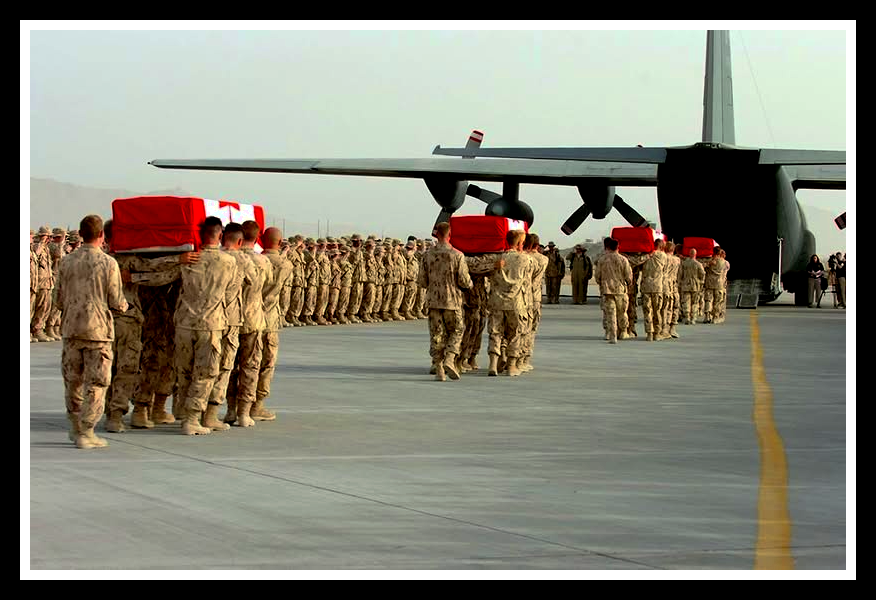
My nephew who served in Afghanistan once described the experience not in terms of politics or flags, but in terms of people. Of standing on parade and watching coffins draped in the stars and stripes being loaded onto aircraft. Of serving alongside Americans he lived with, laughed with, and trusted with his life. Of a brotherhood that did not care about the patch on your shoulder, only whether the person beside you would do their job when everything went wrong. That is the reality Trump’s words deny.

So let me end this where it belongs. Canada, we need to remember who we are. We are not a country that hides behind others or waits to be asked when history demands action. Again and again, we have shown up because it was the right thing to do. That history belongs to us, and no one gets to rewrite it.

To those who serve now, to those who have served before, and to the families who carried the weight alongside you, this country owes you truth, respect, and the refusal to let your sacrifice be diminished.

And let’s be clear. This was not just an insult to Canada. When Donald Trump said this, he dismissed all allied forces who answered the call after September 11. Every nation. Every soldier. Every family. That level of contempt does not stop at a border.

And we will not be told now, not by someone who doesn’t understand war, and not by someone whose record shows repeated contempt for service, sacrifice, and basic human decency, that we “stayed back.” We will not accept lectures from a man who has mocked prisoners of war, demeaned the wounded, and treated allied sacrifice as disposable.

Canada knows who it is. We have buried our dead. We have carried our wounded. We have stood forward when history demanded it. We didn’t stay back. We never have. And myself and my fellow Canadians are damn proud of that.

What The Hell Just Happened?

Posted: January 21, 2026 in Uncategorized

What the hell just happened? Because in the space of a single afternoon, we went from another Trump speech to a NATO meeting and a flurry of claims that something meaningful had shifted around Greenland.

I keep Donald Trump permanently on mute. Not because I don’t care what he’s saying, but because I already know. It is always the same performance. The same grievances. The same declarations. The same certainty that he alone has fixed something no one else believes.

So when I saw the other interviews after his speech earlier today, I didn’t rush to turn the sound on. I made a ham and cheese sandwich. I poured a black coffee. And in the time it took to do that, we apparently moved from speech to meeting, and Donald Trump was suddenly sitting down with NATO’s Mark Rutte. And then an announcement on social media that a framework of a deal is in place. All of this within a couple of hours.

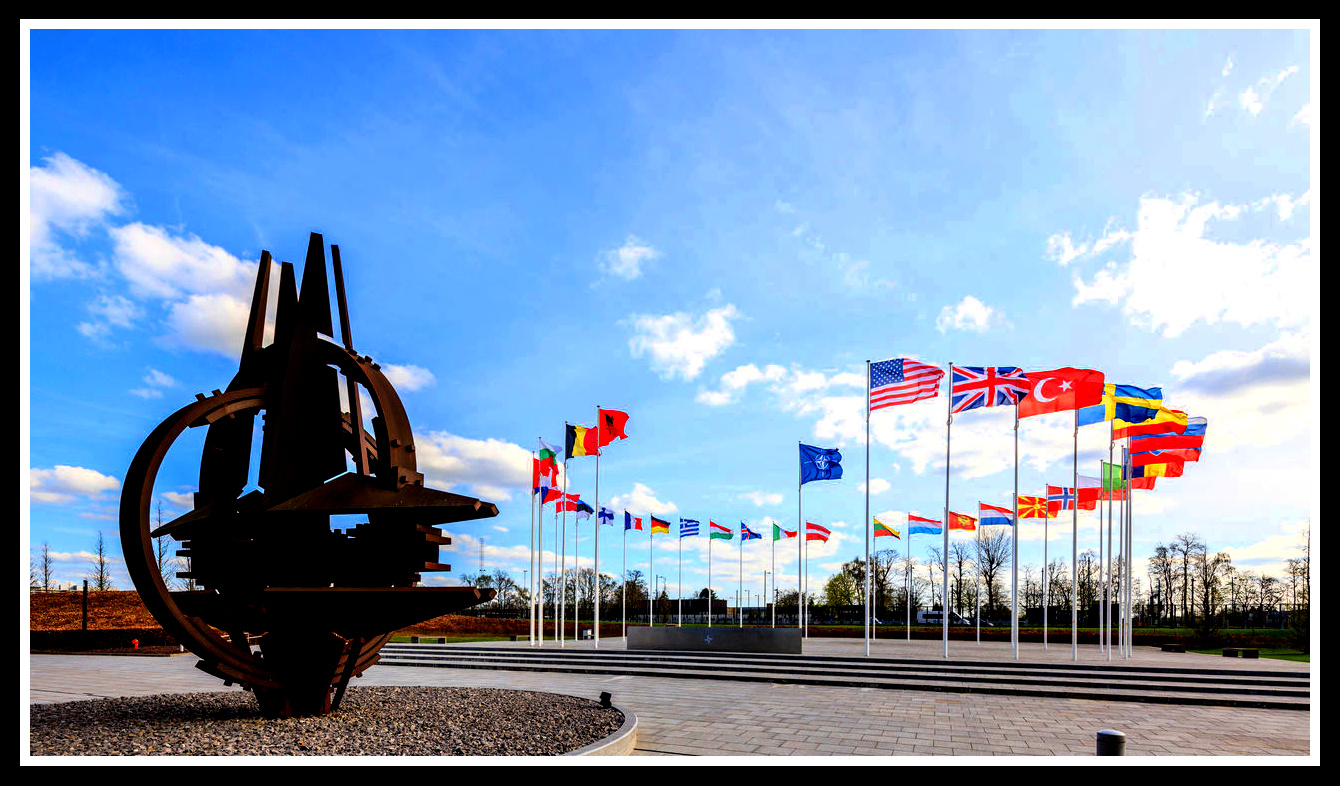
But that is where my brain pauses. Because NATO cannot negotiate land. That is not its role. NATO is a military alliance. It does not sell territory. It does not lease sovereignty. It does not speak for Denmark, Greenland, or the European Union on questions of ownership. So whatever Trump thinks he got, it cannot be that.

I am not going to let the glow of hearing our Prime Minister speak clearly and firmly fade just because Trump has started waving his arms again. That moment mattered. It still matters. And I refuse to pretend it didn’t just because the noise machine kicked back on.

But I am also trying to understand what this actually is. So I will use my crystal ball. And the only explanation that makes any sense is the familiar one. It’s just repackaging or regifting. Taking something that already existed, security cooperation, access, dialogue, and wrapping it up as if it were new. Handing it over so Trump can declare a win without anything materially changing. The diplomatic version of sneaking medicine into pudding. Everyone else knows it is the same gift. The recipient believes it is something different. And the adults in the room decide that letting him think he won is better than the alternative.

The speed alone tells you nothing real changed. Sovereignty does not move this fast. Land does not change hands in the space of a single afternoon. If something substantive had happened, we would already be hearing from Denmark, from Greenland or from the European Union. I would expect it to be loud but instead, there is silence.

NATO can speak for NATO. It cannot negotiate Greenland.

Any actual agreement involving land would require ratification, governance, and public process. None of that happens in the time between a speech and a photo op.

So yes, I think this is exactly what it looks like. A familiar pattern. A loud demand followed by a carefully wrapped non concession. Something that already existed, re presented, and declared a triumph.

I hope hoping I’m right, because the alternatives are worse. But I am also watching very closely. And until someone other than Donald Trump explains what just happened, this is not a deal. It is not a breakthrough. NATO, Denmark, Greenland. If there is something here, we need to hear it from you. Clearly and directly. In your own words.

Until then, I will assume exactly what this looks like. Something old, re wrapped, handed back as if it were new. Declared historic by the only person claiming it is.

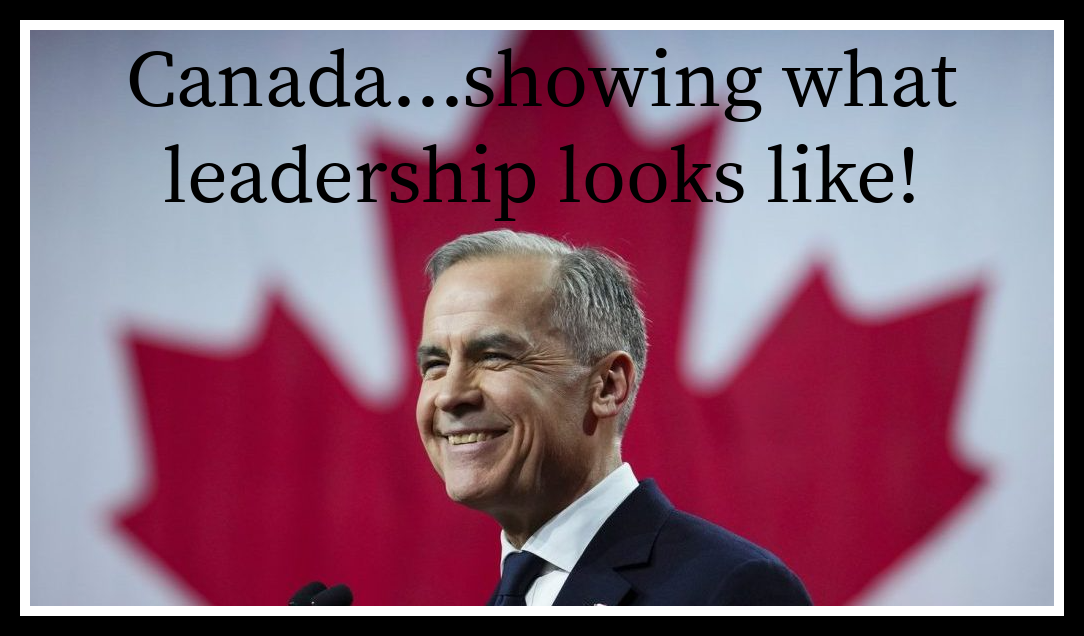
I was in my home today listening to Prime Minister Mark Carney speak at the World Economic Forum in Davos. I didn’t expect to be moved by it in the way I was. From his first sentence, I knew I needed to stop and just listen. It was clear, serious, and grounded in the world as it is. By the time he finished, I was standing. And when it ended, I realized I had given a standing ovation to my Prime Minister, alone in my house.

Today, Mark Carney received a standing ovation at Davos. That matters. It matters because it does not happen often, and it does not happen unless something real lands. He spoke for a world weary of threats, coercion, and endless noise masquerading as strength. He spoke calmly, deliberately, and with purpose, and that steadiness carried far beyond the room.

His speech was just under seventeen minutes long. In that time, he laid out a clear-eyed assessment of the world as it is, the risks we face, and the choices in front of us. He spoke about middle powers, about cooperation, about building strength at home and working honestly with others. He spoke about economics, security, sovereignty, and values, not as abstractions, but as responsibilities. He named reality without despair, and without pretending that leadership comes from volume.

I hesitated before writing this. Many of my fellow writers and content creators are already talking about this speech. It is being shared and discussed around the world, and part of me wondered if there was anything left to add. Anyone can find it, watch it, or read it. But then I looked at what else filled the day.

Donald Trump spoke for two hours. Nearly every word was about himself and the United States, framed through grievance, power, and performance. There was no sense of a shared world. No recognition of interdependence. No concern for what comes next beyond his own interests. And that tells you everything.

What struck me so deeply about Mark Carney’s speech was not just its clarity or its brevity, though accomplishing that much in under seventeen minutes matters. It was the way it reflected something Canadians understand instinctively. We see ourselves as part of something bigger. We understand that our prosperity and security are tied to others. We know that leadership means caring about what happens beyond our borders, because the world does not stop at them.

The leader of our country spoke about cooperation, responsibility, and the future we share. That contrast could not be clearer.

That is why I decided to add my voice anyway. Not because this speech needs amplification, but because it deserves it. Let’s share it. Let’s push it. Let’s make this what rises to the top instead of a two-hour diatribe that offers nothing to a better world. Let’s show what Canada sounds like when it leads.

Here in Alberta today, under blue skies and barely any wind, something shifted for me. I went from that heavy feeling so many of us are carrying right now to something else. Even if only temporarily, I felt inspired. Encouraged. Revitalized.

This is one of the most important speeches made by a Canadian leader in recent memory. No, it’s more than that. This is one of the most important speeches made by any leader in recent memory.
And damn it, I am really proud.

This Is The Linchpin

Posted: January 18, 2026 in Uncategorized

There are moments in time when you know something has shifted. Not because someone announces it, but because you can feel it. You recognize it the way people always have, with disbelief first and then a kind of quiet dread, because you also know that once it passes, there is no going back to the way things were. This feels like one of those moments.

And yes, I know this is yet another conversation about Greenland. I am not dismissing Israel, Gaza, Ukraine, Venezuela, or Minneapolis. All of those matter deeply, and all of them exist inside a world already under strain. But this is the linchpin. This is the point on which everything else quietly turns, because if the rules give way here, they do not hold anywhere else.

Donald Trump doesn’t just want access to or to cooperate with Greenland. No, he wants ownership and control. He talks as if this is nothing more than a real estate transaction, and international law is nothing more than a minor inconvenience. We can talk about his narcissism, decline, or cruelty as unique, but history has seen men like this before. And history has repeatedly shown that political systems may recognize what is happening but only act when the cost becomes unavoidable.

We tend to remember the Second World War as if it began suddenly with the September 1, 1939, invasion of Poland. The remilitarization of the Rhineland, the annexation of Austria, the seizure of the Sudetenland, or the occupation of the rest of Czechoslovakia was not enough. Each step was met with caution, rationalization, and delay, not because leaders didn’t understand what was happening, but because they convinced themselves that each new violation could still be managed. The problem was that everyone had already taught Hitler that escalation worked. Poland was not unique just because it was bigger, more strategic, or more morally shocking than what came before. It was unique because it was the point at which Britain and France finally said that if this, too, was allowed, there would be no stopping it.

That is the lens through which I am watching what is happening in Greenland.

The justification keeps changing, which should tell everyone something. First, it was security, then it was economics. Now it is tariffs, pressure, and the misuse of the International Emergency Economic Powers Act of 1977. This law was never intended to give one person the ability to coerce allies and destabilize the global order on a whim.

If this were truly about defence, ownership of Greenland would not be necessary. The United States already has access, as it has for decades. At its height during the Cold War, the U.S. presence on Greenland included thousands of personnel across multiple installations. Over time, under both Republican and Democratic administrations, that presence was deliberately reduced. Not because Greenland became less important, but because ownership was never required to meet security objectives and they U.S. always knew they could increase presence on the island when needed.

Trump has been explicit about how he sees the world. He talks about the Western Hemisphere as a spear, about dominance, about who sits at the tip. His is not a National Security Strategy rooted in necessity. It is a worldview rooted in power and control. Minerals, rare earths and leverage. That is what this is about.

What is hardest to comprehend is not Trump himself, but the response around him. The Supreme Court of the United States needs to bring down their tariff decision. Congress and the Senate need to act. Please don’t let this be another moment in history where institutions hesitated, calculated, or stayed silent, and then spent decades explaining why they did not move when they still could.

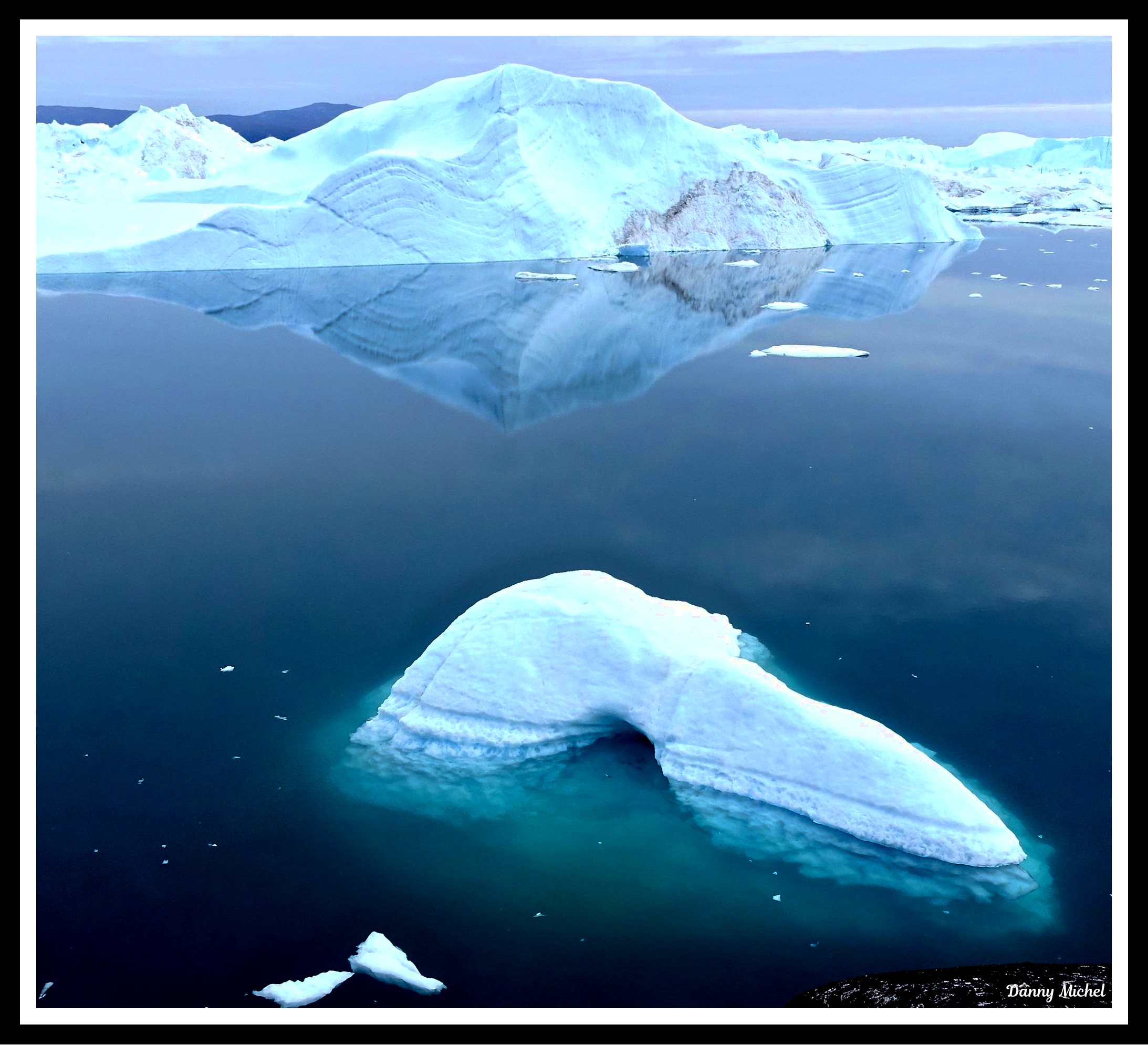
Canadians need to understand how close to home this is. Our proximity to Greenland is geographic, strategic, and directly tied to our own Arctic sovereignty. If coercion against allied territory becomes acceptable, Canada does not sit safely outside that logic. If you think this stops at Greenland, you are a fool.

I do not envy the position Mark Carney is in. There is a narrow line to walk when dealing with someone who thrives on instability and spectacle. A balance between diplomacy, restraint and action must be maintained.

But this is also not a moment for partisan comfort. Just as the United States needs bipartisan action, Canada does too. Our livelihoods are at risk. Our economy is at risk. Our military, and the people we love who serve in it, are not abstractions. They are real, and they will be affected by what happens next.

And to Canadians who cheer this on, minimize it, or frame it as clever politics, including those encouraging this thinking from within Canada and particularly in Alberta, stop and think about what you are endorsing. This is not about oil or slogans or sticking it to the other side. This is about whether the rules that keep smaller countries from being swallowed still matter.

Remember. the allies did not enter the Second World War because of Poland alone. But Poland was the moment when the world finally admitted that the pattern could no longer be managed. What followed was catastrophe, sacrifice, and eventually a new order built on the idea that borders, alliances, and rules mattered. That order was imperfect, but it held because enough people understood what was at stake. That order is now in jeopardy.

And the danger, as history keeps reminding us, is not always where people are looking. Most of what determines whether something holds or fails is not visible on the surface. What appears solid can already be thinning underneath, and collapse does not begin when it finally gives way, but when everyone convinces themselves that what they cannot see does not matter.