Archive for the ‘Uncategorized’ Category

Have you ever felt like the world was slipping sideways beneath your feet, like we’re right at the edge of the Earth, and the ground we assumed was solid suddenly isn’t? Of course you have as that is now our status quo.

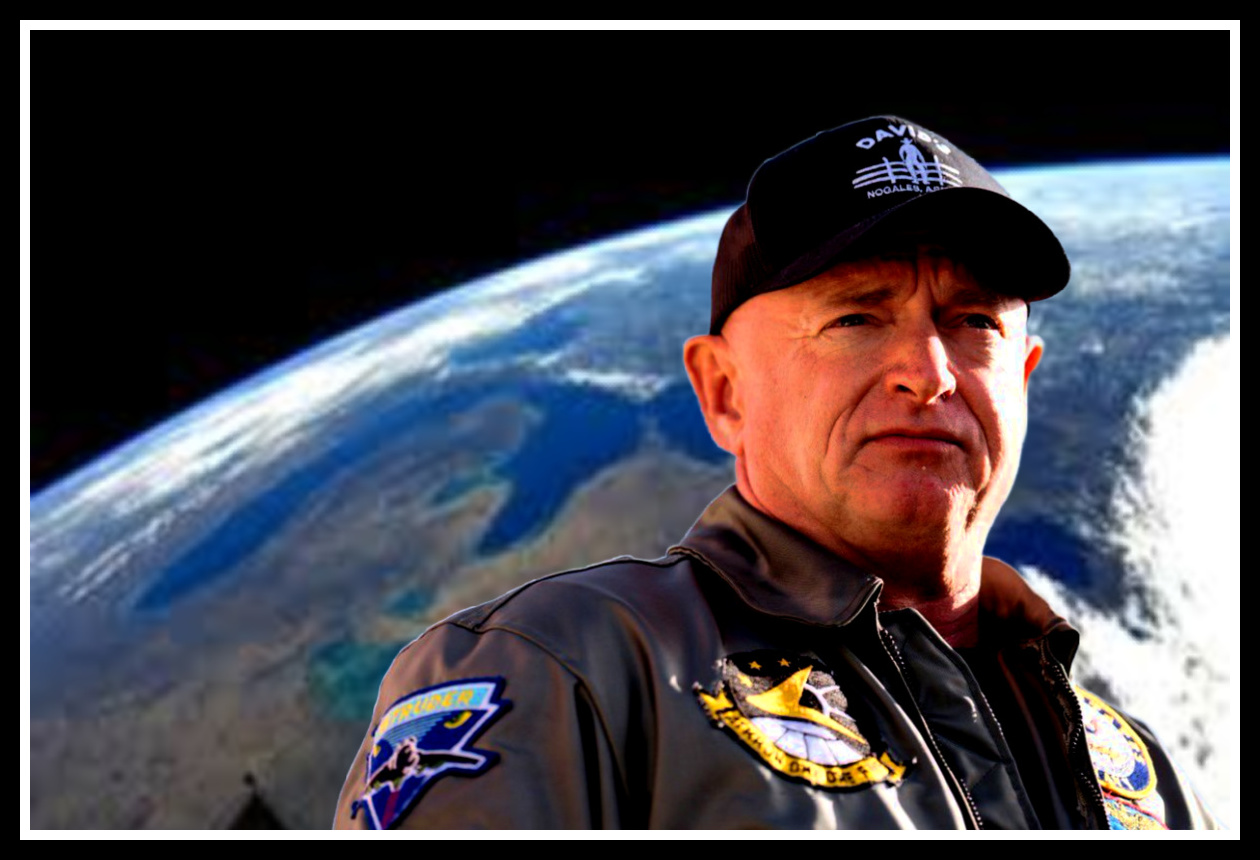
I feel disoriented. I feel the chaos and fear to my core. The rules we thought held us in place are being quietly unbolted. And in the middle of that, I keep coming back to this person. This is Senator Mark Kelly. Naval officer, combat fighter pilot, aeronautical engineer, astronaut and U.S. Senator. Four space shuttle missions. Nearly five million miles traveled in space. One hundred and eighty-six orbits of the Earth. More than 5,000 flight hours in over 50 aircraft. Almost 400 aircraft carrier landings. Married to Gabby Giffords, who survived an assassination attempt and lives every day with its consequences.

And now, he is being called a traitor and that he is seditious. Someone whose rank, pension, and standing are being actively targeted. How American is that?

I didn’t expect that, in the span of a year, we would be talking this seriously about war again, or about the military being dragged into political loyalty tests. I certainly didn’t expect to hear that sanctioning Mark Kelly is no longer just being floated, but is proceeding. When I heard that, I could barely breathe. What makes this even more grotesque is that it was Pete Hegseth himself who once argued that service members have a duty to refuse unlawful orders, because their oath is to the Constitution, not to a person. Let’s just park that hypocrisy for a moment.

Last night, I listened to Congressman Jason Crow (D) speak about the video he recorded with Mark Kelly, reminding service members that they are obligated to follow lawful orders and refuse unlawful ones. Crow told a story that matters deeply right now.

Before deploying to Iraq, he gathered his platoon of paratroopers, young men barely out of high school and showed them the film Platoon. That film includes a recreation of the My Lai massacre, which happened in real life. Crow used it to ask a hard question: how do people lose sight of their humanity under fear, chaos, and pressure? He had that conversation before combat, so that when they were in the fog of war, making split-second life-and-death decisions, they already understood their moral, ethical, and legal obligations.

That is not undermining the chain of command. That is reinforcing it. It also matters to be honest about how military training actually works. Officers who come through military colleges or advanced programs may receive extensive education in the law of armed conflict and military ethics. That is not the reality for most enlisted soldiers. Many are very young. Many are new. Many are asked to make decisions under extraordinary pressure with limited time and incomplete information.

Expecting perfect legal judgment in five seconds, without prior discussion, is not strength. It is abdication of responsibility.

I want to pause here, because many people who follow me have served, are serving, or come from military families. Some of you may disagree with me. This is not a conversation I’ve had broadly across my larger military circle, outside my very small inner one. And that’s okay. You don’t have to agree with me on this. But I stand firm in where I land.

I do not believe Mark Kelly should be treated this way. I do not believe reminding service members of their constitutional obligations is disloyal. And I do not believe we should be punishing people whose entire lives have been defined by service under pressure, simply because they refuse to collapse the Constitution into blind obedience.

We talk endlessly about sedition. We talk endlessly about patriotism. And yet here we are, on January 6, unable even to agree on a plaque honoring the police officers who defended the Capitol while a man like Mark Kelly is penalized for a lifetime of service.

If anyone believes this is about legality, constitutionality, or morality, we should be honest with ourselves. This is being done ‘to’ Mark Kelly. And the real question is whether that distinction matters at all to Donald Trump or to those who serve his cause.

Donald Trump talks endlessly about patriots. You would be hard pressed to find someone who has done more for his country than Mark Kelly. Naval service, combat aviation, space exploration and public service. That doesn’t mean there aren’t others. It means this man is the very definition of patriotism.

Just not patriotic to Trumps cause. And maybe that’s the point.

When the world feels like it’s tilting toward the edge, the people who still believe in rules, restraint, and responsibility are the ones treated as expendable. They are proceeding. And that should alarm all of us. And we’ve seen this before.

Senator John McCain (R) was a prisoner of war. He endured years of torture. He refused early release so others could go home first. He lived a lifetime defined by service and sacrifice. And Donald Trump mocked him. Dismissed him. Reduced his service to a punchline, all from a man who has no lifetime of service of his own, military or otherwise, and no visible legacy of service in his extended ancestry either.

I know what the word seditious means and the people I see fitting the description are running the White House.

Timing And The Cost Of Waiting

Posted: January 5, 2026 in Uncategorized

January is a difficult month for me. Today would be my father’s 103rd birthday. It is also four years since my brother passed away. Over time, January has become a convergence point of personal loss and memory. Dates that carry weight whether we want them to or not. I have never taken my Christmas tree down before January 6th. Not out of doctrine, but out of respect for carrying light to its proper end. Ritual matters when the world feels unsteady. Turning the lights off too early has always felt like conceding something unnecessary.

Like many people, today marks a return to regular work, routines. and responsibility. The holiday pause ends, and whatever unfolded while much of the world was distracted now has to be faced in real time.

I have never been someone who sees the world through rosecoloured glasses. But I have also never believed that the worst outcome is inevitable. Lately, that balance feels harder to hold, not because I have changed, but because the world has. We no longer move from crisis to recovery. We move from crisis to crisis. And much of that instability now radiates outward from the United States.

That sense of unease is sharpened by the calendar itself. Tomorrow, January 6th, marks five years since the attack on the U.S. Capitol. An insurrection I will continue to call exactly that. It is no longer just a historical marker. It is a reminder of how quickly norms can fracture, and how much damage can be done when power is pursued without restraint.

Congress sits today which means briefings, internal positioning, and the gradual emergence of information that does not always align with the first wave of public messaging following the recess. The important conversations around the economy, health care and Epstein are being sidelined.

In 2012, Donald Trump suggested that Barack Obama might use military action to boost approval ratings if his poll numbers slipped. No such action occurred. But the comment revealed something important about how Trump understands power. He sees public attention, timing, and polling as levers. Pressure in one area can be relieved by escalating activity in another.

Which makes the timing of this moment worth paying attention to. We are just exiting the holiday period, when credible polling simply is not conducted. Neither quantitative nor qualitative data reflecting public reaction to the events of the past several weeks will be available for days, possibly longer. That creates a familiar window. Without data, narrative moves first. Public attention shifts and other controversies cool. By the time polling resumes, people are no longer reacting to events themselves but to the stories that have already formed around them.

I am not claiming certainty about motive. But it is reasonable to note that this window exists, and that Donald Trump has long demonstrated an instinct for using timing to his advantage. When polling does resume, it will not capture raw reaction. It will measure sentiment after attention has already been redirected.

David Frum recently argued that this imbalance consistently advantages Trump. His supporters act immediately, facts optional. His opponents, who tend to care deeply about facts, institutions, and fairness, hesitate. They wait for confirmation, for perfect evidence, for the right words. Frum’s warning is that this hesitation becomes paralysis. Trump thrives in that space.

Many people assume Members of Congress, particularly Republicans, will not act. Fear of Donald Trump has proven powerful. But fear is not static. There may come a point where fear of constituents outweighs fear of one man. At some point, serving the country has to matter more than serving a single political figure.

I have been grounding myself in voices that understand oil economics rather than political theatre. Analysis from oil and gas experts like Matt Randolph writing in Forbes makes one point clear. Venezuelan oil is heavy oil. The closest real comparator is Canada. Canada’s oil sands did not become viable quickly or cheaply. They required decades of political stability and enormous capital investment. That raises a basic question about whether oil companies have made commitments to this investment and are being discussed seriously or rhetorically.

People with direct responsibility for war and peace are speaking plainly. Former NATO Supreme Allied Commander Admiral James Stavridis warned this week that language about running Venezuela should alarm anyone who has lived through the forever wars. Military power is zero sum.

To Americans reading this, this is your moment. Please do not assume someone else is calling your congressperson. Democracies do not self correct on autopilot.

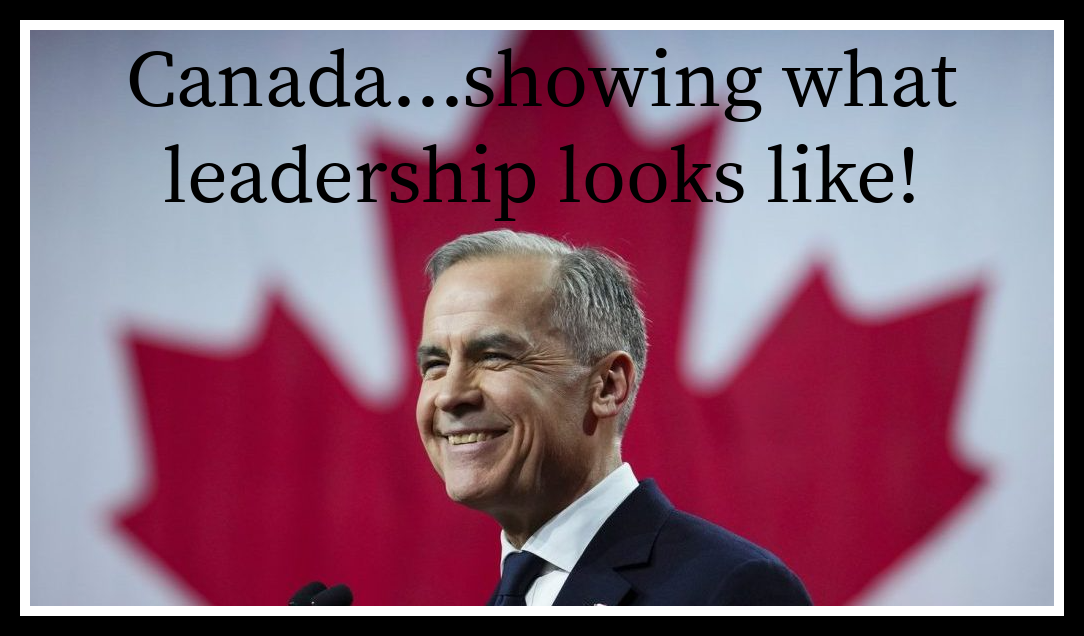
To my fellow Canadians, I am watching Prime Minister Mark Carney. I understand the frustration of those who feel he has not said enough yet. That concern is fair. But diplomacy is not endorsement. It is risk management. Unity matters right now.

Canada is a vast country, but our greatest vulnerability is geographic. Nearly ninety percent of our population lives within one hundred and sixty kilometres of the U.S. border. That’s not a long way to travel for American troops. This is not fearmongering. It is a map that you can clearly see.

I do not have conclusions. What I have is a clear sense that timing, geography, history, and civic responsibility all matter. This is one of those moments we cannot afford to simply mark and move past.

I gave myself twenty-four hours. Twenty-four hours to sit with this. To calm myself. To see whether time would bring perspective or reassurance. I wanted to believe that stepping back would help me feel less unsettled. It did not!

If anything, I feel more uneasy today than I did yesterday. Not because new information has emerged, but because the ease with which military force is now discussed feels profoundly reckless. As though risk has been abstracted away. As though putting people in harm’s way is no longer treated as the extraordinary act it is.

Clearly this was a successful military operation. The United States military planned it well and it was implemented with precision. That has been true in many operations over the decades, and it is true here. The military did exactly what they were asked to do, professionally and effectively. That is not in question.

What is in question is everything around it. A successful operation is not the same thing as a coherent strategy. Military execution cannot substitute for political planning. The strategic thinking in this entire chain of events cannot fall entirely on the role played by the military and we should be deeply concerned about where this ends.

Based on the president’s own remarks during the press conference, I see a complete absence of a political strategy beyond the initial act. Donald Trump does not operate with policy coherence. He reacts. He lurches from one crisis to the next as he chases attention rather than outcomes.

We know his is not about drugs nor is it about democracy. Donald Trump himself has made that clear. This is about oil, leverage and power. It is about Trump’s view that treats the Western Hemisphere as something to be managed and controlled rather than a collection of sovereign nations.

As a Canadian watching this unfold, I cannot let that framing pass without comment. I will not normalize it and I will not pretend it does not matter. Canada needs to be ‘on guard’ which obviously sounds frightening but behaving otherwise would be very naive.

History matters here. Vietnam became a defining failure. It reshaped not only Southeast Asia, but the United States itself. Iraq saw a regime dismantled swiftly, followed by years of instability and sectarian violence. Afghanistan absorbed twenty years of military presence, only to see the institutions meant to hold the country together collapse almost overnight once that presence ended. In none of these cases did military excellence translate into durable democratic stability. That is a matter of historic record.

Regime change is not a technical exercise. You cannot precision strike legitimacy into existence. You cannot remove a leader and assume a society will reorganize itself neatly around values imposed from the outside. Nation building has repeatedly proven to be something the United States military is not designed to do. And yet that expectation persists. The message now being delivered is that the United States will run the show as they now believe Venezuela cannot run their own country. That power will be centralized, managed, and imposed by the U.S. government. In my opinion, that is exactly how you ensure that whatever follows will not be stable, legitimate, or lasting.

What continues to unsettle me is how casually military force and military cost are discussed. Not just the financial cost but the human cost. The number of troops required in a large jungle country would be extensive should the president follow through on his remarks about boots on the ground.

And then there is the word liberation. It is one of Donald Trump’s favourite words. Liberation through tariffs. Liberation through intervention. Liberation through coercion. Liberation defined by the most powerful actor in the room is not liberation at all. It is control. Something done to people, not with them. Something imposed, not chosen.

I do not waver in my assessment of Nicolás Maduro. He is a dictator presiding over a brutally oppressive and criminal regime. Canada’s position on that is clear. Prime Minister Mark Carney reiterated that one of the first actions taken by Canada’s new government was to impose additional sanctions on Nicolás Maduro’s brutally oppressive and criminal regime. At the same time, he reaffirmed that the Venezuelan people have the sovereign right to decide and build their own future in a peaceful and democratic society, and that international law must be respected. Some have criticized that statement for lacking force. I do not agree. In moments like this, restraint is responsibility.

I am asking something of the citizens of the United States, regardless of political stripe. This is the moment when Congress matters. Because if this continues without restraint, without strategy, and without accountability, then you have lost control of the process entirely. And history tells us what comes after that.

What I hope people will see is what is wrong here. Not the removal of Maduro, but the process. Marco Rubio explicitly told the House Armed Services Committee nothing would happen without their approval. It was not true. The explanation now being offered is fear of leaks. That is a curious justification, given the public leaks in this term have come from the Secretary of Defense himself, not from Congress. Democratic oversight is not a nuisance, it is the check and balance needed in a democracy.

In Donald Trump’s worldview, the Americas are all part of the United States of “America.” He sees oil is prosperity and force as peace. And if he says it loudly enough, he seems to believe it becomes true. But dominance is not strategy. And improvisation is not leadership.

And to my readers in the U.S., if cheaper gas is all it takes to sell you his story, that bargain will feel meaningless when you cannot feed your family or pay for medical care. I remain genuinely gobsmacked that this is being offered as a trade worth making.

There is going to be a lot of mud to wade through.

10,000 Feet And Wide Awake

Posted: January 3, 2026 in Uncategorized

I was woken in the middle of the night by a notification that the United States had taken military action in Caracas and removed President Maduro and his wife. I followed developments as they unfolded. What remains unclear are the details, and those details will be filtered through the mouth of a serial liar, so I am not anchoring this post on whatever version is being sold today. Except the important piece that the U.S. would be leading Venezuela. What the hell does that mean?

This is a 10,000 foot view. Not a tactical analysis. Not a defence of Maduro, who has been under indictment in the U.S. since 2020, as he is no democratic hero. This is about power, precedent, and what this moment represents. Because it is almost never just about the man being removed.

In any other version of the United States we once recognized, something like this would unfold in the Situation Room. Structured. Constrained. Informed by institutions that understood the weight of military force. Instead, this president is watching events unfold from Mar-a-Lago, like a television show (his words). Standing around him are people like Pete Hegseth, Marco Rubio and Stephen Miller. Not as restraints, not as dissenting voices but as loyal enablers.

There are boots on the ground, and that phrase matters deeply to me. Not just posturing or using sanctions. This is a deliberately planned military operation in the Western Hemisphere. That is not how power has traditionally been exercised in this hemisphere, and we should not pretend otherwise.

When it comes to oil, this is not speculation. Trump himself has said this is not just about regime change. Those are his words. So when we hear, again and again, that U.S. Gulf Coast refineries are retrofitted for heavy crude and therefore the United States must rely on Canada, that argument weakens considerably when another source of heavy crude is suddenly back in play.

There are other realities we cannot ignore. China and Russia are deeply invested in Venezuela. That may not concern Donald Trump but it concerns me. There is an elected opposition figure waiting in the wings. Whether that person can realistically assume power, under what conditions, and whether democracy can actually be restored through military force are all open questions. These are early hours. Nothing about this is settled.

Which raises the harder question that cannot be avoided. Even if democracy is the stated goal, is it the role of the United States to enter another sovereign country and decide the outcome by force. The international reaction so far has been mixed. That matters. There will be time to unpack that. This is not that post.

To Alberta separatists who believe their future aligns more naturally with the United States than with Canada, if that is still your position this morning, then we have nothing in common in our worldview. Disagreement is one thing. Willful alignment with an increasingly unrestrained power is another.

For Canada, this is not academic. I have a son serving in the Canadian Armed Forces. I come from a military family. When I talk about sovereignty, preparedness, and the need to take defence seriously, even when it costs money and makes people uncomfortable, I am not speaking hypothetically. Military actions like this do not remain contained. They ripple outward. They always do.

Which brings me back, once again, to Congress. This is where restraint, accountability, and legitimacy are supposed to live, or not live at all. No matter how this moment is ultimately defined, the response of the United States Congress may be one of the most consequential factors for the entire world. Speaker Mike Johnson and others like him, men who loudly claim Christian values, appear to serve only one master and that master was sitting at Mar-a-Lago, likely rewatching the same spectacle he watched last night.

Congress either asserts authority now, over all decisions, including military ones, or it confirms that it has surrendered that authority entirely. There is no meaningful middle ground left. Congress returns Monday, January 5. To the people of the United States this part is on you. Make your representatives accountable. Demand oversight, restraint, and that institutions function before they are hollowed out beyond repair. The consequences of failure will not stop at your borders.

I said I was not going to watch the press conference, and for the most part I haven’t. I have it on mute. I turned the volume up briefly, and what struck me immediately was not substance, but fatigue. A tired, familiar voice delivering the same well worn lines. I am not going to listen further before posting this, because there is nothing coming that will meaningfully change what matters here. The danger is not in what is said. It is in what is being done, and where accountability is failing.

And one more thing. Do not let this distract you from Epstein. Do not let it disappear from public view. Ask yourself whether creating a global spectacle might serve another purpose entirely. At this point, it would be naïve to assume distraction is not part of the strategy.

One final clarification. Going forward, I am going to stop using the word American to describe the citizens of the United States. Donald Trump treats “American” as if it belongs to him and extends over everything in the Americas, and I am not granting him that authority. We are all Americans in this hemisphere. They are citizens of the United States.

This morning, I looked out at a calm, frosty Alberta landscape. Everything looked unchanged, quiet and familiar. History has taught us that calm is not the same thing as security. Sometimes the world shifts while everything still looks exactly the same. And sometimes, that is when we should be paying the closest attention.

I have been sitting with this for a few days because I caught myself almost slipping. I saw a video that was polished, emotionally satisfying, and perfectly aligned with what I already believe. And for a moment longer than I am comfortable admitting, I did not rush to check it, not because it felt wrong, but because it felt right. When I did stop and look more closely, it unraveled quickly. It was not factual nor real. It was AI-generated. What stayed with me was not that I was fooled, that happens to many, but that I almost did not want to check.

Around the same time, I was looking at a political meme. It did not scream fake and that was the problem. It was not exaggerated or over the top. It looked reasonable, measured and plausible. And when I slowed down and actually examined it, the pattern was familiar. Some parts were true, some were half true, some were misleading, and one piece was simply false. The conclusion itself was opinion, presented as fact. It was easy to believe precisely because it was not extreme.

I have been aware of this for a long time. Nearly fifty years ago, I read Subliminal Seduction, a book about advertising and influence, and it made clear how easily we can be guided without realizing it. What has changed since then is scale, speed, and reach. Modern misinformation works if it does not shout. It quietly borrows credibility from partial truths and waits for us to fill in the rest.

It also helps to name something that often gets blurred together. Misinformation is false or misleading information shared without intent to deceive. Someone passes it along because they believe it is true. Disinformation is different. It is false or manipulated information shared deliberately, to influence, provoke, or polarize. Most people are not acting in bad faith. But some systems and campaigns absolutely are. And social media does not care which is which. It rewards reach, speed, and reaction.

This matters even more right now because I know what is coming. Over the next few weeks, you are going to see me focus three ways. The Alberta Prosperity Party’s separatist petition launches on January 2. You will also see me to continue to focus on American politics, because what happens there does not stay there. Congress and the U.S. Senate return on January 5. Our House of Commons does not return until January 26 and I will be watching closely.

Just last night, I watched a conversation unfold about the Alberta referendum where people were confidently claiming that only those born in Alberta should be allowed to vote, often citing Quebec as precedent. That simply is not true. In Canada, provincial and federal voting eligibility is governed by election law. You must be a Canadian citizen, be 18 years of age or older, and be a resident of the jurisdiction where you are voting. Being born in a province has never been a requirement. Yet the claim spread easily because it sounded plausible and fit a narrative some people wanted to believe.

As I look toward 2026, one of the greatest challenges outside of the extremist people leading these dynamics is how social media will be the primary battleground. Not long policy documents or traditional advertising, but short, repeatable, emotionally charged content designed to move faster than facts can keep up. I know this has already happened. I know it is happening now. And I know it will accelerate.

This is part of why I am paying such close attention. There is documented American money and influence behind the Alberta Prosperity Party. And if you are somewhere else in Canada know that this is just the beginning. This is not just organic disagreement or neighbour to neighbour debate. It means tactics refined elsewhere are being imported here. These include emotional framing, repetition, aggressive meme culture and coordinated amplification, often referred to as bot farms. These are networks of automated or semi automated accounts designed to flood feeds until messages feel familiar, urgent, and inevitable.

Add to that the rapid improvement in AI generated images and video, which has accelerated noticeably even in the past year, and it becomes genuinely difficult to tell what is real unless you slow down and look closely. None of this means everything you will see is fake. But much of it will be designed to bypass critical thinking rather than engage it. One clarification matters here. Not everything misleading is AI generated, and not everything that involves AI is misleading. AI is now an integral part of legitimate, authentic businesses and daily work. What deserves scrutiny is how content is manipulated, amplified, and pushed at scale.

I write opinion pieces. But I try very hard to ground my opinions in verifiable facts. Not everyone does. Some people are careless, some are chasing attention and some are actively trying to provoke and polarize. But even the best content creators can be fooled.

The uncomfortable truth is that if something confirms what we already believe, we are less likely to question it, less likely to check the source, and far more likely to share it quickly. That is not a left problem or a right problem. It is a human one. I include myself in that deliberately, because credibility is not about never being wrong. It is about being willing to pause, check, and correct.

So here is the lens I want you to use, the same one I am forcing myself to use. If something feels too perfect, pause. If it aligns flawlessly with your worldview without friction, pause. If it is just a meme with no sourcing, pause. Ask who is saying it, what is missing, and whether you believe it because it is true or because it agrees with you.

This may not be the most emotional post I write, but it may be one of the most important. Democracy does not erode only when people lie. It erodes when truth becomes optional and close enough starts to feel good enough. The most effective misinformation does not ask you to believe something false. It asks you to stop asking questions.

The holidays are over. The volume is about to go up. I am not willing to outsource my thinking, not to algorithms, not to memes, and not to my own desire to be right.

Better Together

Posted: January 1, 2026 in Uncategorized
Tags: , , , ,

Last night the phrase ‘better together’ kept circling in my head.  It isn’t a direct quote, but I think it’s the shorthand my mind keeps returning to after listening to Prime Minister Mark Carney’s New Year’s message; words that were simple, but anything but superficial. “We are strongest when we are united, when we look out for each other, and when we take care of each other. That is what makes Canada strong.”

He was speaking about our country. And he’s right. But better together, as I hear it, stretches beyond politics, and even beyond Canada itself. It speaks to something more fundamental. On how societies function when difference is not treated as a threat, and when disagreement does not automatically turn into hostility. Too often, better together gets misunderstood as better when we all think the same way, have the same politics, the same worldview and the same approved opinions. And that insulation has never helped a country navigate real strain.

If better together means anything at all, it means we do better when difference is allowed to exist without being weaponized. When debate doesn’t collapse into contempt. When conversation isn’t replaced by slogans, and disagreement is not mistaken for disloyalty.

That tension is everywhere right now, in Canada, in the United States, and very clearly in Alberta where polarization is no longer abstract but lived. Lines are drawn faster than questions are asked. Motives are assigned before words are heard.

We need to be honest. The divide we are struggling with did not simply appear on its own. It was widened, deliberately, by leaderships operating on the ideological fringes, particularly on the far right. Not by everyone who holds conservative values, because conservatism itself is not extremism, but by those who discovered that grievance, fear, and identity politics are powerful tools for mobilization. When a cut is shallow, it can heal on its own. When it is deep and wide, it requires careful stitching, and that work becomes harder when the blade is still in motion.

We see this in Alberta. We see it nationally. And we see it most starkly in the United States, where loyalty to personalities has replaced accountability to institutions. For many people caught in that orbit, walking away doesn’t feel like changing a political position, it feels like losing a community, a purpose, even an identity. Acknowledging this isn’t partisan. It’s honest. And honesty is the only place real unity can begin.

I’ve always tried to look at this country from a national perspective. That doesn’t mean ignoring regional realities; it means recognizing that Canada only works because it is built from differences. Geographic, cultural, economic, and political. Unity here has never meant sameness. It has meant commitment.

Something interesting many Canadians may not know is that the Northwest Territories and Nunavut operate under consensus government. There are no political parties in the legislature. Every decision requires discussion, compromise, and ultimately, consensus. That isn’t always easy.  Years ago, when speaking with an MLA from the Northwest Territories we discussed the bad and the good of that system. It can be slow and requires patience. It demands listening, especially when agreement isn’t immediate. But it also forces something we’ve quietly lost elsewhere; the understanding that governing is shared work, and that no one gets everything they want.

Historically, Canada understood this. We’ve long occupied a more centrist political space, not because we lacked conviction, but because we valued stability and cohesion. The same was once true in the United States, where major policies were passed through cooperation rather than total ideological victory. That muscle has badly atrophied.

What’s striking is that Canadians still know how to do this. In 2025, when economic pressure mounted and cross border tensions sharpened, Canadians responded instinctively. We supported Canadian businesses. We bought local. We chose domestic alternatives when we could. Not because one political party told us to, but because we understood something basic: we look after each other when it matters. It was collective. Canadians who support all political parties have stepped up because we know we are better together.

So why does that instinct disappear the moment politics enters the room? Why have we convinced ourselves that cooperation is weakness, that listening is surrender, that acknowledging complexity somehow erases principle? The truth, uncomfortable as it may be, is that we accomplish great things together, and we unravel when division becomes our default setting.

As we step into a new year, I don’t expect sudden harmony. Democracy requires disagreement. But it also requires restraint, curiosity, and a shared commitment to something larger than winning the argument of the day. Better together doesn’t mean agreeing. It means staying at the table when it would be easier to walk away. It means arguing without dehumanizing. It means refusing to pretend that damage hasn’t been done and while still believing repair is possible.

If 2025 reminded us of anything, it’s that Canada’s strength has never come from uniformity. It has come from our imperfect, ongoing willingness to keep choosing one another anyway. Repair takes time. Unity takes effort. And neither happens by accident. Better together isn’t about agreement, it’s about choosing to keep showing up, even when it’s hard. That is truly nation building.

And as a new year begins, it’s work worth carrying forward even if the bridge doesn’t inspire immediate confidence, the other side isn’t fully visible, and standing still clearly isn’t doing us any favours. For my part, I’ll walk down the centre of the bridge, as I always have, not because the edges don’t exist, but because there I have always found my best footing.

The end of a year always invites reflection, but this one feels different. Many of us are closing the chapter on a year we did not expect to be closing this way.

One year ago when when I thought forward to 2025 I anticipated a year of changes but not to the degree that we are seeing. Some days I feel the Handmaids Tale was a mandatory read for the supporters of Project 2025. Of course there were personal joys this year. Moments of connection, love, laughter, pride. They do not disappear just because the world feels unsteady. But it can be hard to savour them fully when what is happening globally weighs so heavily. Holding onto joy right now can feel like work. Looking toward to the year ahead with uncomplicated anticipation is hard.

So instead of pretending otherwise, I want to be measured. To pause. To take stock of where we are, and what we can actually do from here.

Twelve years ago, as one year turned into the next, I wrote on my blog something that has stayed with me. “Life is short. The risk to remain perched in my nest is far more detrimental than the risk it takes to fly.”

At the time, that was personal. It was about growth, intuition, and the danger of hiding in places that feel safe but quietly diminish us. It was about learning to act with intention and trusting that forward motion mattered. What has changed is not the truth of that insight. What has changed is the moment we are in. Today, remaining perched is no longer just a personal choice. It is a civic one.

As we move into January, the stakes become clearer. In Alberta, a separatist signature campaign begins on January 2nd, and the familiar machinery of online amplification and disinformation surfaces. Much of that content and money is originating from outside Canada. At the same time, the United States Congress and Senate return on January 5th (I’m still hoping some spines grew over the break), while our own Members of Parliament do return on January 26th. These early weeks matter. They will shape the tone, the tactics, and the pressure points of what comes next, at a moment when Canada’s sovereignty is no longer theoretical, but actively being tested.

We need to be cautious with the information we will be inundated with. Not everything loud is true, and not everything repeated is real. Discernment is no longer optional. It is a responsibility.

I have learned over time that perspective matters, and it will matter even more in 2026. Sometimes we will be looking at events from far above, trying to understand patterns, systems, and history. Other times we will be standing right on the ground, dealing with the real consequences of decisions made far away. We need both views. Clarity comes from knowing when to zoom out, and when to pay close attention to what is happening right in front of us.

Last night, someone I respect deeply said something to me, quietly and without drama, about what they would be willing to do if things truly came to a point where Canada’s sovereignty was compromised. It surprised me, not because it was extreme, but because it was measured and thoughtful, rooted in a lifetime of understanding what responsibility actually means. That will stay with me as I enter the new year. It reminded me that seriousness and commitment still exist and so does the willingness to stand up when it matters.

I do not know how much time I have on this earth. None of us does. But I know this. I am not leaving it without knowing I did every damn thing I could to make a difference. In 2026, that means being a little bolder and a little more connected to my civic duty. I hope those who can will do the same. I am not asking anyone to abandon their life. I want you to care for your family. I want you to protect your livelihood. I want you to hold onto the personal joys that no amount of political chaos can take from you. I will not confuse gratitude with complacency. Individual effort only matters if it contributes to something larger.

So if you have never written a letter to an elected representative before, write one now. If you have never questioned a headline, start. If you have stayed silent because you thought your voice did not matter, let this be the year you test that belief.

Standing on the final day of the year, this feels less like an ending and more like a pause. The kind that comes just before something begins. It feels as though the entire orchestra is taking its seat. Some of the music may sound like joyful. Familiar and uplifting. Other moments may feel far heavier, closer to music played in times of mourning or reckoning. Most likely, it will be a mix of both. What is clear is that the music is building and the crescendo is growing. It will not simply fade out on its own.

I appeal to my readers. Please do not stay perched!

As the clock moves toward midnight and this year gives way to the next, time does not pause with us. Whatever comes will arrive whether we are ready or not. The year ahead will test us, not just individually but collectively. How we respond, how quickly we pay attention, and who chooses to step forward when it matters will shape what follows.

This is not a moment for spectatorship. Time is already moving. What we choose to notice and respond to still matters.

My writing almost always starts with something personal. It is how I make sense of history when it starts pressing in close. And I try to keep my ‘Canadian Lens’ front and centre.

In the span of forty-eight hours, President Volodymyr Zelenskyy’s aircraft touched down twice in Canada. On the way to Mar-A-Lago, he met with Prime Minister Carney in Halifax. On the way back his plane stopped in Gander, Newfoundland for refueling.

Gander has my heart. My sister and her family have been their for over half a decade. Aviation runs deep in that place, in the people, in the airport, in the history. For decades, before long-haul aircraft made nonstop crossings routine, Gander was known as the crossroads of the world. It serves as a Canadian Armed Forces base and for many decades as an American Forces base. Planes from everywhere landed there. The world passed through. And then, on September 11, 2001, when the world broke open, Gander did what Canada did best. It welcomed strangers. Thousands of Americans who were scared, stranded, and exhausted. No politics and no ideology. Just people helping people because it was the right thing to do. This latest stop is not symbolic by design. It is a natural refuelling point. Aviation logistics are practical and structural. But it is also another reminder of Canada’s unique place in the world, shaped by geography, movement, and memory.

That matters now. Because once again, the world is at a crossroads. And this time the danger is not confusion or chaos. It is moral collapse at the very top.

Yesterday, Vladimir Putin claimed that Ukraine had launched drones at his summer residence. No evidence was provided. Absolutely none! Immediately, the President of the United States accepted the claim as fact and chastised Ukraine for “not negotiating properly.” And on the timing? While those words were being spoken, Russian missiles and drones were striking Ukrainian cities. People were being killed and homes were being destroyed. This is not a frozen conflict. This is an active war of aggression.President Zelenskyy responded plainly. He said he does not trust Putin. He said Putin does not want a successful Ukraine. He was calm, direct, and anchored in reality.

What should concern everyone, regardless of political stripe, is not simply that Donald Trump repeated a Kremlin accusation without proof. It is what that act represents. The moment a president accepts an unverified claim from an aggressor, he forfeits the authority to mediate peace. This is not about being philosophically liberal or philosophically conservative. That framing is irrelevant. This is about standards. About evidence. About whether truth still matters when the stakes are global.

Successful American foreign policy has always rested on bipartisan consensus. Northern Ireland. Taiwan. NATO. Ukraine. Congress is not decorative. It is a co-equal branch of government charged with oversight. There is bipartisan support in Congress for Ukraine on the fundamental truth that Ukraine is defending its sovereignty and Russia is the aggressor.

What we are watching instead is something far more dangerous. Hope being mistaken for strategy. Hope that Trump does not pull the plug entirely. Hope that it does not get worse. Hope that appeasement somehow produces peace. BUT hope is not policy. Ukraine can win this war. Victory is definable. A secure eastern border. Freedom of navigation in the Black Sea. Integration with Europe. What is missing is not capacity. It is will.

I do not want to be distracted by the wrong question. I do not need to know why Putin has leverage over Trump (well maybe I do) however it clearly exists. What matters is behavior, visible and consistent.

What stays with me is the image of a lone aircraft sitting on the tarmac late at night in the quiet and in the dark in a place that has seen history pass through before, often when things were breaking elsewhere. Gander remembers what solidarity looks like. Canada remembers what showing up means. That is my lens, and it is why this moment feels worth paying attention to.

Canadians should remember something else too. We are not observers. We sit between Europe and the United States and Russia. Geography alone makes this our problem. Those who grew up during the Cold War learned that early. Drills in schools. Maps on classroom walls. The understanding that authoritarian expansion was real, and it was close. If you cannot see this through anything sharper than ideology, then geography alone should wake you up.

Because if there was ever any doubt about the hold Vladimir Putin has over Donald Trump, yesterday should have eliminated it. When a president repeats an unproven claim from an aggressor while bombs are falling, that is definitively submission.And at this point, we should be honest with ourselves. Do we truly believe Donald Trump is going to do anything that saves anyone except himself.

Democracies do not collapse all at once. They erode when lies are treated as opinions and power is indulged instead of challenged. Peace cannot be negotiated by someone who no longer recognizes truth. History will NOT be confused about what this was. Or who chose to look away.

The Apple Of His Eye

Posted: December 28, 2025 in Uncategorized
Tags: , , , ,

I spent most of today doing what many of you did. Watching, listening, reading, waiting. Hours of coverage. A long meeting between Donald Trump and Volodymyr Zelensky. Calls with European leaders. Percentages tossed around like breadcrumbs. 80 percent, 90 percent, 95 percent. And at the end of it all, I am left with the same question I started with. What actually changed? The short answer is not much.

Yes, the tone between the United States and Ukraine was better. That’s important. Yes, the conversations sounded serious and professional. That’s important too. And yes, Europe appears more firmly in the room than it has been before. All of that is positive.

But tone is not leverage and conversation is not consequence.
All the optimism in the world does not end wars. What stood out for me today is likely not what stood out for others. It was when Donald Trump drifted into reminiscing about how he once had been, in his own words, the apple of Vladimir Putin’s eye.

I actually laughed, and then immediately stopped. Because that phrase is not about diplomacy. It was rather about him being cherished, favoured and special. And in geopolitics, wanting to be someone’s prized apple can be dangerous, especially when the orchard is poisoned.

While Trump spoke nostalgically about lost status, Russia provided messaging that hasn’t changed throughout this war. Rejecting a ceasefire, rejecting meaningful security guarantees and continuing to bomb civilian and energy infrastructure. Kyiv left without heat in winter. That is not a negotiating partner signalling compromise. That is a regime signalling confidence.

Throughout the press conference, we heard a great deal about “progress,” but very little about pressure. Trump ultimately acknowledged that Vladimir Putin will not agree to a ceasefire, and then effectively accepted that reality. When asked what happens if talks fail, the answer was blunt. The fighting continues. People keep dying. What was missing was any indication that new consequences would follow. And that is the crux of the problem. Diplomacy without leverage is not diplomacy. It is just another working lunch followed by a press conference.

Ukraine has shown flexibility. President Zelensky has been clear and careful about what is possible and what is not. Land concessions cannot be made casually or unilaterally. Millions of Ukrainians are displaced across Europe. Any referendum requires time, infrastructure, and safety. That is not obstinacy. That is constitutional reality. Russia, meanwhile, has not moved. Not on Donbas, not on NATO, not on security guarantees and not on a ceasefire.

So when we hear “95 percent done,” we have to ask. Done with what, exactly? The hardest issues, the ones that actually determine whether peace holds, remain unresolved. And without consequences for continued aggression, there is no reason for Vladimir Putin to resolve them.

Donald Trump said something today that deserves more attention than it received. He said the war will either end soon, or it will last a long time. That was not a prediction. It was a warning. And it was also an admission that without pressure on Putin, the burden of “ending it” will inevitably be shifted onto Ukraine.

Putin rules an autocracy. Zelensky leads a democracy at war. One man can decide alone. The other cannot. That asymmetry explains exactly where blame will land if this stalls.

Canada is not the centre of this war, but Canada’s role alongside European allies does matter. Canada is a trusted partner within the broader coalition supporting Ukraine, aligned with European governments that understand deterrence, enforcement, and long-term security. That credibility counts, even if it is not always loudly acknowledged from Florida.

And for those already gearing up to rage about Canada’s latest support announcement, a reminder. A loan guarantee is not cash pulled from your pocket. It is a financial backstop, not a handout. If you are going to object, at least object to what is actually happening.

The image that stays with me from today is not the handshakes or the percentages. It is the rotten apple. Glossy on one side. Decaying on the other and sitting squarely atop Russia.

Pretty words on the surface and rot underneath. And no amount of nostalgia about being the apple of Putin’s eye is going to change that.

Calm Is Not Inaction

Posted: December 26, 2025 in Uncategorized
Tags: , , , ,

For some people, it’s about shopping and deals and doing Christmas all over again at full speed. When I was growing up, it meant visiting people. We would see what gifts they’d received, sit on unfamiliar couches, and eat again. Today, in our house, it’s much simpler. Hot turkey sandwiches, as many desserts as you want because there are always more than we’ll ever finish, and absolutely no pressure to do anything at all.

And before anything else, I want to say this. Yesterday was a good day. In fact a really good day. Time with my core family. Laughter. Familiar rhythms. I felt gratitude in my whole being as much as in my head. I don’t take that for granted.

It’s from that quieter place that I finally listened to Prime Minister Mark Carney’s Christmas messages this morning. Both of them. One to Canadians and one to the women and men of the Canadian Armed Forces. What struck me wasn’t a soaring line or a sentimental turn of phrase. It was the tone. These were serious messages. Intentionally so. Not bleak nor alarmist. But grounded in the reality that we are living in a moment that does not reward denial or fluff. Historically, Christmas addresses tend to soften the edges, to reassure, to smooth, to wrap things gently. This one didn’t do that. There was a deep vein running through both messages, and it felt deliberate.

Carney spoke about hope and light, absolutely, but always in the context of darkness already acknowledged. He spoke of unity not as a slogan, but as a necessity. And when he addressed the Armed Forces, there was no romanticizing and no abstraction. He spoke about sovereignty and security as things that are not guaranteed but rather defended daily, by people spending this holiday far from home.

What’s been interesting to watch since is how some of the commentary has reacted to that seriousness. There’s been a lot of talk about tone, about how measured it was, how sober, how unadorned. Some have praised it and some seem unsettled by it. And that, too, tells us something.

We’ve become accustomed to leadership that either performs reassurance or manufactures outrage. Loudness is often mistaken for action. Constant visibility is confused with effectiveness. In that environment, calm can look like absence, and restraint can be misread as inertia.

I don’t think that could be further from the truth here. It’s not just that Mark Carney doesn’t suffer fools though I think that phrase fits more than people are comfortable admitting. It’s that he operates in a way many of us have forgotten how to read. We see composure and assume things must be calm. We see deliberation and assume nothing urgent is happening. We hear careful language and decide that nothing meaningful is underway.

None of that is true.

Quiet leadership is not passive leadership. Calm does not mean complacent. And seriousness delivered without theatrics does not mean inaction. In fact, it often signals the opposite. That work is being done methodically, deliberately, and without the need to narrate every step for public consumption.

Carney understands the seriousness of the global moment we’re in. He doesn’t need to name every actor or spell out every threat for that to be clear. Donald Trump’s shadow looms whether spoken or not. Vladimir Putin doesn’t require explanation. Alliances are shifting. Europe is repositioning. Power is being tested. History tells us that when predators circle one another, one eventually consumes the other.

But what I keep coming back to, especially on a day like today is that right now, I care most about us.

Canada has never been strongest when we’re loudest. We’ve been strongest when we’re steady. When we resist the urge to turn inward on one another. When we recognize that domestic turmoil is not a sign of independence or strength, but a vulnerability that others are always willing to exploit.

I staged the image I’m sharing here. My son’s very used military boots, an old Canadian flag, the Christmas tree above. What I didn’t notice until after I uploaded it was the flag outside, still flying on the pole in our front yard, visible through the window. The flag wasn’t staged and that part wasn’t a planned statement. There’s a light snow falling this morning, the kind that softens everything without erasing it. Standing there, looking out, it felt deeply emotional in a way that’s hard to explain, quiet, steady, unmistakably Canadian.

That’s why the tone of Prime Minister Carney’s messages matters so much. They weren’t designed to soothe us into complacency or to whip us into fear. They were designed to orient us, to remind us that seriousness is not something to be afraid of, but something to rise to.

And yes, Alberta more than anyone needs to hear this. Not as a rebuke, and not as a lecture, but as a reminder born of lived experience. We do not get through what lies ahead by fracturing. We get through it by recognizing seriousness when it’s offered honestly, even when it isn’t wrapped in comfort or spectacle.

This Christmas, the Prime Minister spoke to Canadians like adults. He didn’t promise ease. He didn’t perform reassurance. He acknowledged reality, and trusted us to sit with it.

On a Boxing Day that’s quiet, full of leftovers, and heavy with reflection, that feels exactly right.