April 21, 2025

Posted: July 4, 2025 in Uncategorized

The platform! Before you compare, remember this: Carney’s is the only fully costed platform on the table. The Conservatives haven’t released one, so stop grading him against a ghost. AND let’s get one other thing straight: this IS a big platform with a big price tag. And thank God for that. Because you can’t fix a broken housing market, rebuild a hollowed-out military, or defend against Trump’s tariffs with budget line edits and a toonie’s worth of duct tape. You have to invest. That’s not reckless, that’s reality.

Every serious businessperson knows you spend to grow. And every serious voter should be asking: Who actually has a plan to grow anything? Only one party has released a full, costed platform. Just one. The rest? They’re waiting in the weeds, ready to take potshots at the numbers — but not bold enough to put out numbers of their own.

So here we are. If you’re going to judge, judge the only plan on the table. The only one that tells you not just what gets built, but what it costs to build it.

Let’s talk military. Mark Carney is putting $31 billion on the table over four years to rebuild, rearm, and actually equip the people we ask to put their lives on the line. New submarines, Arctic patrols, aerial drones, radar systems, and yes, new boots. If you know, you know. (And if you don’t — ask someone who’s served what their toes look like after a winter ruck march.) This isn’t abstract for me. My son is wearing that uniform. And it shouldn’t take a war or a scandal for us to realize he and his peers deserve better than broken barracks and bureaucracy.

Next housing. This plan revives the federal government’s role in construction, with Build Canada Homes leading the charge. It’s the most ambitious housing strategy since the Second World War: 500,000 homes per year, cuts to development fees, revived rental incentives, and bulk pre-fab builds to bring costs down. For those chirping that it’s government overreach… we’re in a market that’s pricing people out of their own cities. Yoga-stretching around the issue won’t build a single roofline. And if you’re wondering why I care? I live in Alberta. I’ve watched a generation of skilled trades get squeezed between rising materials and vanishing margins. My youngest is finishing university and asking the same question so many are: How am I supposed to start my life if I can’t afford to live in it?

And then there is oil and gas. The attacks I get on this one are laughable. Apparently, I hate the industry, despite the fact that my husband has been an O&G consultant for decades. This platform includes infrastructure to bring oil and gas to tidewater, full stop. So let’s stop treating Mark Carney like he’s the Grim Reaper of pipelines. He’s proposing energy corridors that include oil, natural gas, renewables, transmission lines, and yes, critical minerals. It’s a pragmatic, 21st-century approach — not a fantasyland of slogans and rage memes.

Now, the fiscal plan. Here’s what matters: Capital investment is prioritized. Homes, roads, ports, factories, military equipment, all in. Public service is capped, not gutted. EI payments come faster, digital services improve, and you stop getting bounced between five departments like it’s a bureaucratic game of pinball. Debt-to-GDP goes down. Operating balance by 2028. Child care, pharmacare, and dental care stay. The math is there, and so is the discipline. This is not reckless. This is nation-building. This is the kind of spending you do when you want your country to survive a hostile global economy (oh should I mention Trump here) with a bit more than a smile and a spreadsheet.

And yet, this week, you’ll hear the opposite. You’ll see ads calling this plan “dangerous.” You’ll see bots shrieking “tax hike!” without a calculator in sight. You’ll see TikToks from the same folks who haven’t released a single costed proposal and whose entire pitch so far could be summed up as “shut it all down.”

So here’s my final word: I don’t post because I’m trying to win arguments. I post because I believe people deserve real information. I’ve been attacked for allegedly not caring about the next generation of homebuyers, meanwhile I’m watching my son try to rent a closet for the price of a mortgage. I’ve been attacked for not caring about oil and gas while living with a man who’s consulted in that field longer than most of these critics have had a driver’s license. If you care about this country, you pay attention. If you care about the people in it, you ask questions. And if you care about your future, you demand answers that come with a cost estimate, not just a catchphrase.

Because in politics, like in finance, anyone promising you everything for nothing isn’t making a budget. They’re making a scam look patriotic.

April 20, 2025

Posted: July 4, 2025 in Uncategorized

ALBERTA: THE SWING IS REAL. THE CLOCK IS TICKING. This isn’t my usual kind of post. No jokes. No fire and brimstone. Just straight-up voter intel from deep inside the numbers -because the narrative is shifting, fast. You know those pretty colours on 338Canada? They’re not just polling numbers. They’re built from a stew of public polls, regional trends, past elections, and a dash of modelling from founder Philippe J. Fournier. They assign confidence like this: Safe = 99.9%+, Likely = 90–99%, Leaning = 70–90% Toss-Up = anything under that. Last week? Alberta had eight Liberal-favouring ridings. Today? Four of those are sliding. Hard. Here are the ‘odds of winning stats’ Edmonton West dropped from 63% to 28%, Calgary McKnight? Down. Edmonton Centre? Down. Calgary Centre and Confederation? Now tilting, Conservative. And no, Easter weekend polling gaps don’t explain this away. This is a warning. Not because the game is lost, but because this is the moment it starts slipping if we don’t act. If you’re in Alberta, this is the time to stop assuming, start talking, and get every single progressive voter you know ready. Make sure they understand that the path to holding back the blue wave doesn’t just run through Ontario and BC, it runs through us. Right now. If you’re in another province? Pay attention. What’s happening here could hit you next. Polls don’t vote. People do. But if we sit this one out? We’re going to wake up in a Canada we don’t recognize — and it won’t be a polling model’s fault. It’ll be ours.

April 19, 2025

Posted: July 4, 2025 in Uncategorized

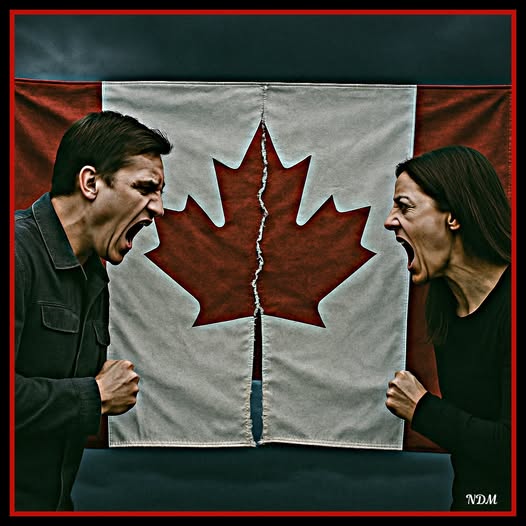
This morning I saw the lines—real, long, determined lines of people voting. And I felt something I hadn’t felt in a while: hope, heartbreak, and a gut-punch reminder that democracy still means something. Even here. Even now. This weekend, like many others across Canada, my family will come together. There will be laughter, probably too much food, and at least one heated discussion where someone storms out to walk off a mood. And underneath it all—this steady awareness that we are still lucky. Not in the smug, patriotic bumper-sticker way. But in the way that says: we still live in a country where we get to choose. Where we get to vote. I know that sounds cheesy. Cliché. Maybe even a bit hokey. But it’s true. This morning, I saw the photos on social media and experienced lines out the door when the polls opened. People showed up early to cast a ballot in this election, some of them for the first time. It stopped me cold. Because for all the cynicism, the noise, and the manipulation, there’s something about people choosing to vote that still feels deeply human. I live in rural Alberta. I know most people in the line I was in would not be voting the way I did. But I still felt this strange mix of hope and heartbreak seeing them there. Because at least they were voting. At least they were showing up. And I think-especially right now-that still means something. We are at a crossroads in this country. And that isn’t dramatic. That’s just where we are. And the divide isn’t just about left versus right, or who cuts what taxes. It’s deeper than that. It’s about whether we still believe in Canada. It’s messy, imperfect, pluralistic-or whether we retreat into something smaller. Something meaner. Something more American. I haven’t talked much lately about the 51st state rhetoric, or Alberta sovereignty, or any of the independence fantasies that keep bubbling up in this province. Not because it’s gone away. It’s just been drowned out by other noise—housing, inflation, disinformation, culture wars. But it’s still there, under the surface. And honestly? I’m feeling it again. Stronger than I have in weeks. I feel it when I hear people talk like Canada is the problem. When they fantasize about breaking it up instead of fixing what’s broken. I feel it when I see politicians weaponize anger instead of offering vision. And I especially feel it when I think about the people in my life—family, friends, strangers online—who seem convinced that freedom means getting your way and nothing else. And I come from a background shaped by both world wars and ongoing military service today. I was raised to believe in responsibility. In showing up. In defending not just borders, but principles. That doesn’t mean I think Canada is flawless. It means I believe it’s worth fighting for. I also think about new Canadians-the way they talk about voting here for the first time. The way they dress up to go to the polls. The way they describe it as a privilege, a joy, a moment they never thought they’d get. And I wonder when we stopped feeling that way. When did we trade that pride in for indifference-or worse, for resentment? We’ve been handed something precious. Post Second World War, Canada was left with an incredible gift: peace, resources, stability, and room to grow. And sure, we’ve made mistakes. We’ve forgotten who we are sometimes. But that doesn’t mean we burn it all down and start over in someone else’s image. It means we remember what’s worth saving. And I’ll say this too—because it’s part of the story. We talk a lot about housing and affordability, and I get it. I really do. But I also think we’ve warped what “success” looks like. I grew up in a solid middle class family. Three-bedroom house. One bathroom for five people. And we were proud. It wasn’t 6,000 square feet and a granite kitchen. It was a home. A life. A shared space with expectations grounded in community-not entitlement. I’m not saying young people shouldn’t want to own a home. I’m saying the system has broken down not because we’ve lost our values, but because we’ve forgotten how to value the things that matter. Like voting. Like compassion. So maybe this is all a little ranty. A little too long. But I needed to get it down. Because this long weekend, when you’re sitting around the table, smiling at your kids/grandkids or in my case, my very first grandchild—maybe take a second and remember that none of this is guaranteed. None of it is permanent. Democracy isn’t some background noise. It’s a decision. One we make every time we show up. And yeah, maybe it’s a little sad that it takes a crisis for people to remember that. But here we are—lined up outside polling stations, still trying. Still choosing. Still stubborn enough to believe we can do better. That’s Canada, isn’t it? Not perfect. Not always polite. But still showing up-even when the weather sucks, even when the system feels rigged, even when your neighbour’s voting the opposite of you and you still nod hello. So let’s vote. Let’s fight. Let’s hold the line. Let’s not let apathy do what no foreign enemy ever could. We’ve been handed something rare. Let’s not give it back. I always have that memory of the many times I heard my father say “When you’re born in Canada you’ve already won the lottery.” 

April 18, 2025

Posted: July 4, 2025 in Uncategorized

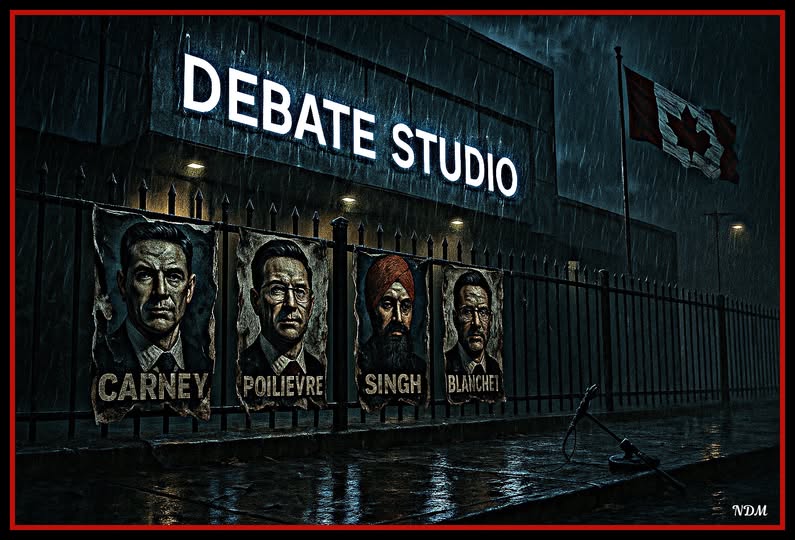
Debate Night Debrief: Rage, Restraint, and Red Flags, and let’s be honest: nobody changed their mind tonight. But a lot got revealed. Pierre Poilievre didn’t answer a single question without boomeranging it back at Mark Carney — even if the question came from the moderator, Blanchet, or a stray fruit fly in the studio. His fixation was surgical. Like a chatbot programmed to say “the last 10 years” on repeat, and I counted that at least 20 times. He said “Trudeau” less than usual (someone clearly told him to tone it down), but the strategy was the same: blame, deflect, repeat. He’s not here to lead. He’s here to litigate a decade he wasn’t trusted to shape. Meanwhile, Mark Carney stayed calm, clear, and policy-focused. His answers weren’t rhetorical fluff – they had content. Even when pressed on the Brookfield issue, he stuck to the line that it was pre-politics, private-sector, and fully disclosed. Did he hit every note? No. But he didn’t lose anyone, and he made his point stick: when Trump comes knocking, you want someone at the table who’s already been there. He didn’t dominate the room — he dignified it. And in this climate, that’s rare. Plus he dropped the night’s cleanest cut: “I know it may be hard, Mr. Poilievre. You spent years arguing against Justin Trudeau and the carbon tax — and they’re both gone.” Jagmeet Singh showed up swinging. Figuratively. Dressed for political war. And he held his ground. The problem? He might have shown up too late. People who’ve moved to strategic voting may not come back. But this was one of his strongest performances. He fought like a leader. The problem is, his voters are playing golf. And then there was Yves-François Blanchet, who spent so much time reminding us he’s a Quebecer that he forgot he’s also supposed to be in a federal debate. His separatist edge wasn’t just grating — it was borderline nihilistic. Even hardline Quebecers know now isn’t the time to burn bridges while the global house is on fire. Blanchet still hasn’t read the room. Or the century. This wasn’t a debate: it was a slow-motion collision between ego, evasion, and existential dread, and let’s be blunt: the moderators lost control. Questions got bulldozed, time limits ignored, and follow-ups were rarer than facts in a Rebel News comment section. When you’re refereeing four egos and an election, you have to own the room. This felt more like they borrowed it for the evening. When the moderators whisper, the spin machine roars.

Now let’s talk about what should chill every Canadian to the bone: Pierre Poilievre’s casual willingness to abuse the Notwithstanding Clause. He floated using it to override sentencing laws — not for an emergency, not during a war, but to overrule court decisions he doesn’t like. That’s not criminal justice reform-that’s constitutional vandalism. The Charter isn’t a suggestion box. Once you normalize the Notwithstanding Clause for political convenience, you open the floodgates. One clause away from any right being up for grabs — from union protections to reproductive freedoms. We don’t need a prime minister who governs like he’s on a Reddit forum called ‘Abolish Rights for Fun.’ And then there is the Trump factor which frankly is the factor that needs to be of the biggest concern to all Canadians. Carney didn’t let it slide. He hammered the stakes: Trump’s return, tariffs on Canadian steel and aluminum, NATO at risk, and an American president who thinks Canada is a discount warehouse for his imperial whims. Poilievre has no plan. He talks tough but lacks a diplomatic record or global respect. Canadians need to ask: if Trump pulls the pin, do we want someone who knows the wiring -or someone holding a match? This isn’t about liking Carney. It’s about surviving Trump.

And then there was the chaos after the cameras. The debate ended, but the circus continued. A media scrum devolved into farce after Rebel News and True North threw a tantrum about their place in line. The debate commission backed down and cancelled the scrum. That’s a problem. These aren’t real news organizations – they’re outrage factories. And when you let propagandists bully their way into legitimacy, you’re playing straight from the Trump 2016–2024 handbook. This wasn’t just bad optics. It was a canary in the democratic coal mine. When you start letting fringe outlets dictate the rules, the fringe becomes the fabric.

So the final score? No knockout punches. Just confirmations. Poilievre played to his base with rage, repetition, and wrecking-ball rhetoric. Carney stayed statesmanlike and reminded voters that policy still matters. Singh had fight, but maybe not enough runway. Blanchet looked like he was in the wrong election.

In the end, this debate won’t decide the race — but it underlined what’s at stake: the cost of every promise, the risk of every shortcut, and the question of whether we still value the institutions that hold this country together. Because if we don’t — someone like Trump doesn’t need to tear us down. We’ll do it ourselves, one sound bite, one scapegoat, one constitutional override at a time — until democracy becomes just another thing we say we used to have.

April 17, 2025

Posted: July 4, 2025 in Uncategorized

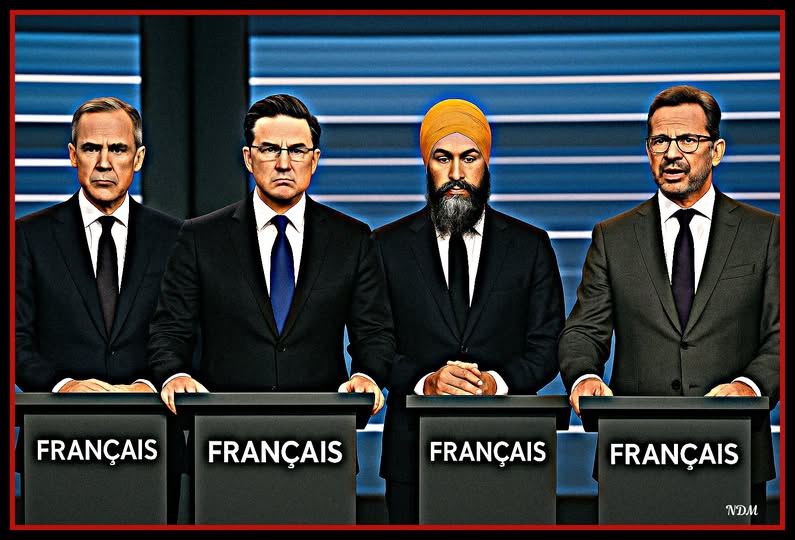
Canada is shifting — and last night, we watched the fault lines widen in French. The French-language debate wasn’t about applause lines or slick rehearsals. It was a political MRI — and the scans were revealing. Pierre Poilievre walked in like a man told to behave — and it showed. Gone were the shouty soundbites, the rage-tinted slogans, the performative anger. What we got instead was the quiet version of Poilievre… and honestly? There was nothing there! No TikTok cadence. No faux-fury. Just awkward pauses and the unsettling realization that without the noise, he doesn’t actually have much to say. Jagmeet Singh looked good. Sounded good. But left almost no mark. Yves Francois Blanchet was bold, biting, and very Quebec — he played to his base, but his base isn’t what it used to be. Mark Carney, the guy they all came for, stood there calmly -answering, clarifying, sometimes stumbling, but never flinching. His French wasn’t perfect, but it was enough. He didn’t perform. He persevered. There’s a difference. And it matters.

Now, with the French debate in the rearview, we shift to the final stage: Thursday, April 17-the English-language leaders’ debate. This is it. The last chance to see all the leaders side by side, speaking in a language they all understand, on a stage where no one gets to hide behind subtitles or hometown crowd advantages. So what should we expect? Poilievre will try to recalibrate. Expect him to swing between slogans and smirks. But now that we’ve seen what happens when the volume drops, don’t expect much substance. Singh will bring the heart. But it may land like déjà vu unless he can carve out something new. Blanchet will toss cultural grenades from the sidelines. Because even in English, he knows how to make Quebec heard. Carney will be the wildcard again. Still not polished. Still not a seasoned politician. But maybe that’s the point. No stunts. No script. Just well-informed responses and calm.

So, indulge me for a moment as I have my own debate question… I am just curious Mr. Poilievre, if you want to lead Canada, could you pretend you don’t want to burn half of it down to win? Let’s start with what we’re all pretending not to see. The Freedom Convoy crowd didn’t disappear — they just traded their rigs for lawn chairs at your rallies. And from the looks of it, they’re not just supporting you… they might be writing the damn agenda. And where are you, Pierre? Right there. Not just watching it happen — encouraging it. You’ve got convoy cosplay at every rally, flag-bearers with a vocabulary that begins and ends with “F***” and you haven’t said a word. Not one. First it was F** Trudeau*. Now it’s F** Carney*. Tomorrow? Probably F** Literacy* -as long as it fits on a flag and keeps the rage machine running. So here’s the real question, Mr. Poilievre: Will you ever look your base in the eye and say, “This is not the Canada I want”? Because until you do, you’re not just tolerating it. You’re endorsing it — with silence, winks, and staged rallies so sanitized, even Fox News might call it propaganda-lite. But of course you won’t say that. Because to denounce them is to lose them. And without them, your campaign isn’t a movement — it’s just a merch stand with a podcast. Do you lead these people? Or just read their comments section and call it policy? Because if you can’t, or won’t say that the flag-waving hate mob doesn’t represent your vision for Canada, then we’ll have to assume that it does. And at that point, let’s be honest: You’re not running to be Prime Minister of Canada, you’re auditioning to be manager of the Maple MAGA outlet. Same rage. Different flag. Because this one isn’t about politics anymore. It’s about whether you actually give a damn about this country or do you just want to watch it burn from the top floor of 24 Sussex with a smirk and a slogan.

And now that I’ve emptied that political junk drawer here we are. The French debate peeled back the polish. The English debate may expose some gaps. And the question Poilievre will never answer is still hanging in the air like smoke from a fire he helped start. And now? Now we vote. Not to relive history — but to stop it from repeating what’s happening next door. Because this isn’t about slogans or seats anymore. It’s about sovereignty – ours. And whether Canada steps forward with spine… or follows the convoy into a country it won’t recognize by Christmas. So vote like the border just caught fire. Because actually it kind of already did. 

April 16, 2025

Posted: July 4, 2025 in Uncategorized

Don’t scroll past this. Seriously! Even if you think French-language politics isn’t your thing — read on. On Sunday night the leaders of the Liberal Party and the Conservative Party set down (individually) on Tout le Monde en Parle. What is that you ask? If 60 Minutes, The Daily Show, and your smartest cousin’s dinner party had a baby — and that baby grew up snacking on sarcasm, politics, and deep cultural takes — you’d have Tout le Monde en Parle. It’s the Sunday night ritual in Quebec. It draws over a million viewers weekly — not just for celebrity fluff, but for real talk. Politicians, artists, thinkers, scandal-ridden CEOs — if you’ve got something to prove (or confess), this is where you go. It’s not a puff-piece show. It’s not a debate stage. It’s more like stepping into the collective living room of Quebec — where everyone’s got a glass of wine, a sharp opinion, and no time for BS. If you do well there, Quebec notices. If you bomb? Quebec really notices. Put simply: It’s where reputations are built… or politely shredded in real time. So when the two men most likely to run the country sit down for solo interviews, you better believe it’s not “just a Quebec thing.” It’s a national preview with cultural teeth. So how did they do?

Mark Carney — measured, humble, a little too professional, and fully aware of his weaknesses. He apologized for long answers (in French!) and still made that sound like leadership.

Pierre Poilievre — calm on the surface, barbed underneath. Less attack dog, more cobra in a suit. Still managed to make the word “Bonjour” feel like a threat.

Even the National Post and Edelman Communications called it straight: Carney was sincere. Poilievre was sharp-edged. And Quebec was watching closely. And here’s the moment that matters, and let’s hope it holds true. Quebecers said: “Let’s stop talking about Mark Carney’s French. It’s good enough!!” Because honestly? He said more with a slight accent than most say fluently.

Now, the math: In 2021 in Quebec there were 33 Liberal seats, 34 Bloc seats, 10 Conservative seats and 1 NDP seat. This week? The Bloc’s grip is slipping. Liberals are now in contention for up to 46 seats. Conservatives are circling 12. The bloc? Hanging onto 18.

So what happens if those Bloc seats fall? They don’t disappear. They swing. And that swing could tip the country. This is not the time to be anti-Quebec or dismissive of “French politics.” Quebec is part of the equation, and they may solve it before the rest of us finish the question. So remember Wednesday, April 16: French-language leaders’ debate. Be sure to check the time in your time zone. Only in Canada do we move a national debate because the Habs might, maybe, kind of, make the playoffs. Because when culture and politics collide here, hockey wins — and no one even argues about it. And here’s something the rest of Canada needs to clock: Quebec isn’t just talking about ‘its’ sovereignty anymore. Quebecers are asking real questions about Canada’s sovereignty — economic, cultural, democratic. It’s a level of political engagement that deserves national attention, not dismissal. So the tone and tenure for tonight? Poilievre comes in angry and rehearsed, locked and loaded with rage-fuelled zingers, Singh sounds smooth in French but knows he’s one bad night from political oblivion and Blanchet is the hometown sniper — charming, cutting, and ready to play goalie for Quebec nationalism. Carney? He’s the target. Because when you’re in first, everyone else is just fighting to become your headline.This week isn’t just about a pair of debates. It’s about who gets to narrate the next four years — and if you’re not paying attention, don’t be shocked when the plot makes zero sense, the villain gets top billing, and there’s no option to skip the ads… or the consequences. 

April 15, 2025

Posted: July 4, 2025 in Uncategorized

What Happened to the Vote? (aka: The Funeral for Civil Discourse — now with extra pitchforks) Once upon a time, your vote was between you and a stubby pencil behind a cardboard screen.

Now? It’s between you, 600 conspiracy threads, your aunt’s Facebook posts written entirely in CAPS LOCK, and a guy livestreaming from his truck saying Canada “isn’t even a country anymore.” How did we get here? Maybe it’s because we used to treat voting like a civic duty. Now it’s a personality trait. A team jersey. A litmus test for who gets blocked, unfriended, or uninvited to Easter dinner. And here’s the thing: It’s totally fine to land at different places on the political spectrum. That’s democracy. That’s freedom. That’s literally the point. But radicalization? That’s not a belief. That’s a breakdown. It’s when your opinion builds a bunker. It’s when you stop voting for something and start raging against anyone who thinks differently. It’s not “I disagree with you.” It’s “you’re the reason Canada is dying.” And at that point, you’re not debating—you’re detonating. This didn’t happen by accident. Our politicians figured out that anger sells better than policy. Fear gets more likes than facts. And they handed us torches instead of ballots.

Now, here’s the truth I’ve been sitting with: At my core, this fight—for me—is about battling anger politics. Maybe Pierre Poilievre is just the messenger, but what he’s tapping into… it’s not just frustration. It’s something deeper. Louder. Meaner. It’s fear.
It’s resentment. It’s disenfranchised voices turned into digital mobs. Sometimes it feels like radical religion, other times like economic despair. But it’s never just policy—it’s personal. And poisonous. And somewhere in the background, like a bloated orange spectre, floats Donald Trump—still holding rallies like it’s 2016, still confusing cruelty with charisma, still inspiring wannabe strongmen across borders like he’s the Colonel Sanders of authoritarianism. His greatest export wasn’t policy. It was permission. Permission to say the quiet part loud. To replace facts with feelings. To swap debate for derangement. And now we’ve got Canadian knock-offs trying to rebrand rage as leadership.

So yes—vote. Be passionate. Be proud. But if your vote needs a helmet and body armour just to show up in public… maybe it’s not democracy we’re defending. Maybe it’s just our pride wrapped in barbed wire. And since we’re a full day away from the French debate and an extra one from the English, maybe—just maybe—we can try something wild: Tolerance Tuesday. Bite your tongue. Sit on your hands. Resist the urge to call your cousin a fascist because of a lawn sign. Let’s see what happens when we log off the rage machine and tune into the actual debates. Worst case? You survive 24 hours without melting down in the comments. Best case? Maybe we learn we’re still capable of choosing reason over rage. Even if we have to do it with clenched teeth and one eye twitching.You remember we’re still a country worth fighting for—not just fighting about. 

April 14, 2025

Posted: July 4, 2025 in Uncategorized

Canada’s Military Crisis is real and personal to many of us. You Can’t Build Bases Without Boots!! Let’s be blunt. Our enemies are evolving. Our allies can’t always be counted on. And Canada’s Department of National Defence is currently held together with polite intentions, rusting gear, and recruitment posters that look like they were designed in 1998. But this one hits close to home. My grandfather fought in the trenches at Ypres and was gassed. It eventually killed him. My father flew in the Second World War. My nephew just retired from active service and served in Afghanistan. My son is currently a pilot in uniform. So don’t tell me defence is just another policy file. For some of us, it’s bloodline-deep. Now, with the world tipping into a new kind of chaos — cyber warfare, Arctic tension, shifting alliances, and the looming shadow of Trump 2.0 — both Pierre Poilievre and Mark Carney are talking about rebuilding Canada’s military. That should be good news. Except…Poilievre says he’ll build bases in the North and buy more equipment — like it’s an episode of “Property Brothers: Arctic Edition.” He’s promised to hit NATO’s 2% target, but offers little about how we fix recruitment, housing, mental health supports, or the fact that we have aircraft without enough pilots. Carney, on the other hand, gets that conflict doesn’t just erupt out of ideology — it follows the money. Tariffs. Resource control. Cyber-espionage. Power vacuums. Carney understands the global financial undercurrents that lead to war — because he’s managed them. He’s the only candidate who’s sat at the G7 table, worked through global financial crises, and advised NATO allies on economic security. And when he talks about defence, it’s not just “buy planes” — it’s “fix the foundation.” Retention. Career paths. Culture change. Real investment in our people before bricks and mortar. Not shiny distractions — structural reform. And yes Carney has also committed to meeting NATO obligations. Because here’s the truth no one wants to say out loud: You can’t defend a country if no one wants to stay in the military. It’s not about flag-waving photo ops or yelling about NATO. It’s about making sure our best and brightest don’t leave after five years because they can’t get decent housing, mental health care, or a career that respects their sacrifice. And let’s stop pretending this can be fixed overnight. You can’t rebuild a military in a single term. So when you hear promises, look deeper. Ask: who understands the economics of conflict? Who knows how to build trust across allies that no longer feel so allied? And who has a plan beyond Instagram clips?

Mark Carney brings more than military rhetoric. He brings context. Strategic insight. And the one thing you can’t Google: credibility on the world stage. If Poilievre’s defence plan is “buy jets, build bases, bash Liberals,” then we better hope our enemies are allergic to soundbites and cold weather-Because while he’s freezing in a tent waiting for a photo op, Mark Carney will already be in the war room… with the economists, the allies, and the exit strategy.

April 13, 2025

Posted: July 4, 2025 in Uncategorized

That is enough!!! This isn’t Facebook for the unhinged. This is a Canadian political content page. Full stop. Not a safe space for chaos agents, conspiracy tourists, or anyone who forgot Canada is, in fact, a sovereign country and not a subplot in some shaky TikTok exposé. I started this page to share quality, original, credited content — the kind that helps people think, not spiral. Lately, though? The floodgates have opened. What used to be a thoughtful place to learn and debate has turned into a submission pile that smells like Fox News and Facebook Marketplace had a baby. And I’m done pretending it’s fine. So here’s the new policy: If you want your post approved, message me directly. If I can’t verify you’re a real person with real intentions, it’s not going up. Period. If your post includes rage memes, shadowy “sources,” or references to lizard people, secret global plots, or how 5G is mind-controlling moose — delete your own account on the way out. Differing views? Great. Manufactured outrage and digital cult recruitment? Not today. And let me be crystal clear: Some of the behaviour I’ve seen over the last 48 hours hasn’t just been inappropriate — it’s been threatening. I’m not here to be intimidated. Not by strangers with sock-puppet accounts. Not by trolls who can’t spell “sovereignty.” I am in an internal debate as to how to continue to message and protect my mental health. If engaging in democracy makes you feel violent, you’re the problem. I will protect myself. I will protect this space. And I will not let fear dictate the conversation. Yes, I post satire. Yes, I use humour — sometimes dark enough that it needs a flashlight. But make no mistake: I take this election seriously. I take Canada seriously. Because this is about my kids, my grandkids, my neighbours, and the country we’re trying to hold together while the algorithms are actively trying to shred it. So if you’re here for good info, sharp commentary, and the occasional political roast — welcome. If you’re here to derail, destabilize, or demoralize — I’m not your admin, and this is not your group. Now, carry on. Just… smartly.

April13, 2025

Posted: July 4, 2025 in Uncategorized

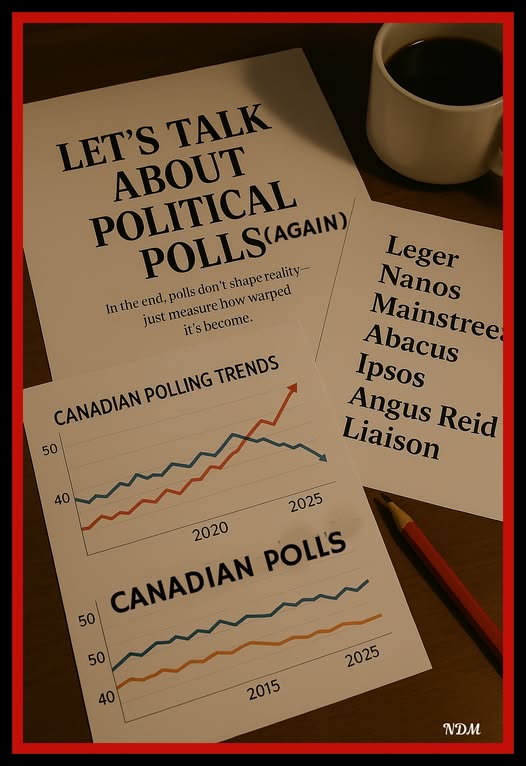
Let’s Talk About Political Polls (Yes, Those Polls). So it’s happening again so I have to update this info. Your cousin just shared a meme claiming the Liberals own the polls. Some bot account says Leger is run out of Mark Carney’s basement. And someone with a flag in their username is yelling that 338Canada is part of a globalist psy-op. Let’s breathe. Then let’s torch the nonsense. Because while actual pollsters are busy doing weighted samples and posting methodologies, some dude in his garage just invented a bar graph in Canva and called it “the real numbers.” And for the record: when you see a poll that puts Pierre Poilievre at 98% in downtown Montreal, maybe don’t forward it to your entire contacts list.

Okay, okay—nobody wakes up excited to read about polling methodology unless you’re the kind of person who finds joy in spreadsheets and C-SPAN reruns. But bear with me, because in the absolute fever dream that is the 2025 Canadian federal election, understanding political polls is like learning how to read the tea leaves in a haunted house—you might not like what you see, but at least you’ll know when the floor’s about to collapse. Now, first things first: the heavy hitters in Canadian political polling. In rough order of reputation and reliability, we’ve got:

Leger, Nanos, Mainstreet, Abacus, Ipsos, Angus Reid, and Liaison.

These firms are all members of the Canadian Research Insights Council (CRIC), meaning they’re bound by strict ethics, privacy guidelines, and the eternal curse of being corrected on Twitter by armchair psephologists. Let’s get one thing straight: polls can be biased. But responsible pollsters account for that by including margins of error. That’s the ±3% you see in the fine print, usually ignored by people who post “OMG LIBS DOWN 2 POINTS” like they’ve just cracked the Enigma code.

Now, a lot of people love to scream: “The polls are bought!”

Well—yes. Obviously. Pollsters are companies. They’re not some monk-like order quietly collecting voter intention in the wilderness. They sell a product: data. Whether it’s Jean-Marc Léger or Nik Nanos, these people run services intended to turn a profit. And who buys that product? Political parties, governments, media outlets—all of whom need this information. Campaigns use it to decide where to send the leader and how to spin the next attack ad. Governments use it to test the public temperature before announcing things like tax credits or poorly branded climate plans. And media? They need it for clicks. The important thing is not who commissions the poll, but whether the methodology is sound, the data is public, and the transparency is there—which, in the case of CRIC-certified firms, it is. You’re allowed to be skeptical, but maybe aim that skepticism at how we interpret polls, not at the fact they exist. Now, to address the elephant in the war room: 338Canada. You’ve probably heard someone say, “Well, 338 says (insert party name) are going to lose…”

Cool. 338 is not a poll. It’s a poll aggregator. Think of it as a very sober oracle who takes all the polls, mixes in past election results, demographic trends, regional factors, and the whispers of the political wind, and then spits out seat projections. So no, 338 doesn’t have secret knowledge. It’s just very, very good at reading the collective mood swings of Canada’s pollsters. Why does all this matter? Because in a chaotic election year—where we’ve got a freshly-minted Mark Carney trying to reboot a shell-shocked Liberal brand, Pierre Poilievre auditioning for the role of Canadian Batman villain, and Jagmeet Singh looking increasingly like the best man at a wedding he wasn’t invited to—the numbers actually help cut through the noise. But here’s the thing: polls are not predictions. They are snapshots. Blurry, maybe a little drunk, and taken under questionable lighting—but snapshots nonetheless.

The map is not the territory. The poll is not the election. And the truth? Well, it’s somewhere between the margins of error and a Tim Hortons drive-thru in Moncton. So before you rage-share that pixelated “real poll” from @TrudeauIsLizardPeople47, ask yourself this: Are you reading data… or just joining a cult with better graphic design?