So this morning, we all woke up to a fresh helping of unsubstantiated tariffs—because apparently, chaotic international trade policy is back on the menu. Some countries got walloped like a piñata at a toddler’s birthday party. Canada? We caught a glancing blow. And Alberta? We walked away with a paper cut and a raised eyebrow.
Now, let’s not pretend this lucky break was thanks to Premier Danielle Smith cracking some international code. Alberta didn’t sidestep this because of some genius provincial plan. This wasn’t solved in Calgary with a press conference and a cowboy hat. Trump’s team knows that oil and gas tariffs would have met significant resistance from American consumers and businesses. This is federal-level heavy lifting—there’s a full team from Ottawa, actual trade professionals, in Washington right now advocating for Canadian interests. You know, the people who read briefing notes on purpose.
Because when Trump is involved, you need more than vibes and volume. This is a man who can flip from tariffs to tweets faster than you can say “TARIFF,” who?” It takes serious strategy, not solo stunts, to keep us out of the blast zone.
So if Alberta came out of this mostly unscathed, it’s not because someone in Edmonton solved international trade overnight. It’s because there’s a team in Ottawa that actually knows how to navigate a Trump storm, without needing a parade about it.
Yesterday was just the opening act. Trump’s trade chaos isn’t over, but fortunately, the federal team is already backstage, tuning the instruments.
As for Danielle Smith—someone might want to let her know it’s a symphony, not a solo.
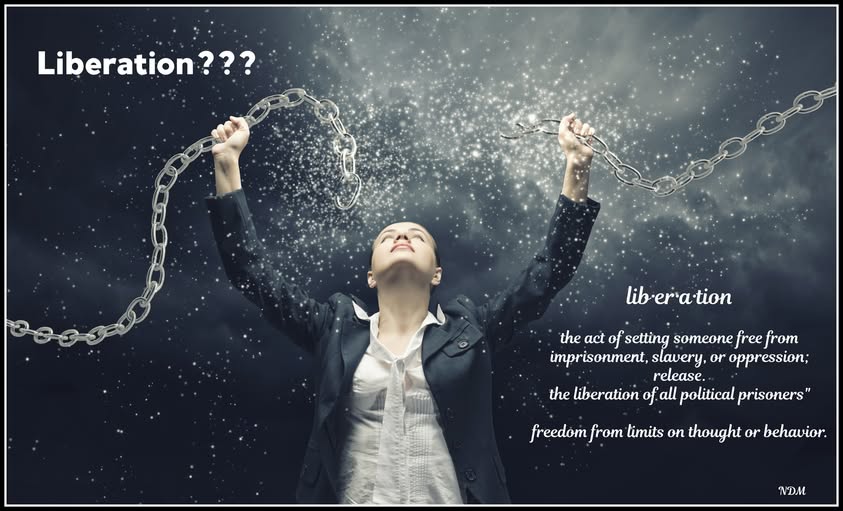
Donald Trump has recently claimed that he’s “liberating” the United States, specifically through tariffs, aimed at countries he believes have taken advantage of America.
Liberation? That word carries the weight of history. Real liberation is when the gates of Auschwitz were opened. It’s when Nelson Mandela walked out of prison after 27 years. It’s when nations clawed their way out from under the boot of dictatorship or colonial rule. Liberation is when someone is finally able to breathe freely after generations of systemic oppression.
Tariffs are not liberation. Trade negotiations are not liberation. Even the toughest economic policy isn’t liberation. It might be strategy, or even strong-arming—but let’s not pretend it’s on par with people being freed from death camps or political prisons.
Words matter. And when a president uses a term so sacred—so deeply tied to human survival and resilience—to describe his own economic choices, it doesn’t just feel wrong. It feels like an insult to every person who’s ever actually needed to be liberated.
If Trump thinks imposing tariffs is equivalent to freeing a nation from tyranny… well, maybe someone should hand him a history book instead of a microphone.
This is definitely my opinion, and note I do not name a party in this post, but it’s time to make this political relationship social media official and explain why I’m supporting Mark Carney, and I thought you might want to, too. I never thought I’d fall for a former central banker, but here we are. In the vast and wild world of politics, where charisma often trumps competence and shouting gets more airtime than substance, Mark Carney feels like a unicorn: calm, credible, and—dare I say—actually kind of cool?
Okay, maybe “cool” is a stretch. He’s no TikTok star. But if solving complex economic problems, navigating global financial crises, and leading with actual integrity gets you going, then welcome to the fan club. Politics had become something to be checked in on every four years, kind of like going to the dentist. Uncomfortable, a bit painful, but necessary. Then the world got weirder, the stakes got higher, and suddenly, who leads our country felt like the most personal question of all.
I care about economic stability. I care about climate change. I care about housing, about young people being able to build a life here, about truth-telling and steady leadership. And the more I looked around, the more I kept coming back to Mark Carney. So why? Let’s start with the resumé: former Governor of the Bank of Canada and the Bank of England. The guy practically wrote the manual on crisis management—and didn’t lose his moral compass while doing it. He’s been a vocal advocate for sustainable finance, helped launch the Task Force on Climate-related Financial Disclosures (TCFD), and has made it clear that a functioning economy and a livable planet are not mutually exclusive goals. In other words: he gets that capitalism needs a conscience. And while other leaders are busy rehearsing soundbites, Carney brings something refreshingly rare—substance over spectacle. What I like most isn’t just his brain (though, let’s be honest, the man is frighteningly smart). It’s that he listens. He doesn’t talk down to people. He doesn’t treat politics like a sport. He treats it like a responsibility.
In a time when political discourse often feels like a bar fight—loud, messy, and completely detached from reality—Carney is the guy calmly explaining how the fire started, how to put it out, and how to fireproof the place next time. All without breaking a sweat. For clarity this isn’t just about being a “fan” of a politician. This is about wanting a better Canada. One that supports working people without leaving the next generation drowning in debt. One that can tackle climate change with urgency and clarity. One that can lead on the world stage without losing its soul. One that supports working people without leaving the next generation drowning in debt. Supporting Mark Carney isn’t about being starstruck—it’s about being serious. About choosing a leader who doesn’t just have the credentials, but the character to lead us through turbulent times. So…We’ve tried politics as performance. We’ve tried outrage. Maybe it’s time we tried competence, clarity, and a bit of calm. That’s why I’m supporting Mark Carney.
No drama. No gimmicks. Just leadership that looks like it actually belongs in 2025.
And hey—if we end up with a Prime Minister who can explain inflation without making your eyes glaze over and doesn’t look like he’s about to start a podcast called “Alpha Leadership Unleashed”? That’s just a bonus
***As yesterday proved to be an exceptional day in the world of misinformation and bots, messaging to my inbox that outnumbered the people in this group, I felt it was time to put some energy into researching accurate, cited, and legitimate information on the bot world as it relates to our Canadian Federal Election. Regardless of your political philosophy or partisanship, please scrutinize everything that comes into your social media, email, or inbox with a critical eye. I know some of these posts are long, but I encourage people to educate themselves and research what they read. Please don’t attach yourself to a meme or image that supports your own beliefs without questioning its legitimacy. NM ***
Are Bots More Involved for the Conservatives or the Liberals in Canada’s Current Election?
The role of bots and other automated accounts in shaping political discourse has been a growing concern in recent Canadian elections. As of the most recent federal election in Canada, evidence suggests that while both the Conservative Party of Canada (CPC) and the Liberal Party of Canada (LPC) have seen bot activity in their favor, the impact and prevalence of bot networks seem to be more significantly aligned with the Conservatives.
Evidence and Analysis
Studies on Bot Activity in Canadian Elections A study conducted by the University of Toronto’s Citizen Lab and the Canadian Communications Security Establishment (CSE) reported that misinformation and bot-driven amplification have targeted Canadian elections, although on a smaller scale than seen in the United States. Their findings suggested that during the 2019 and 2021 federal elections, the Conservative Party benefited from a higher volume of automated engagement, often amplifying criticism of Prime Minister Justin Trudeau and the Liberal government.
According to a 2021 study by The Conversation, nearly 25% of Twitter activity during the election campaign was generated by accounts that exhibited bot-like behavior, and a disproportionate amount of this activity aligned with pro-Conservative or anti-Liberal narratives.
The study also noted that Conservative-leaning hashtags, such as #TrudeauMustGo, were frequently boosted by bot networks to amplify opposition to Trudeau’s policies.
Misinformation and Targeted Narratives Bots involved in Canadian elections have been known to push misinformation and polarizing content. A report by The Digital Democracy Project found that misinformation targeted at Trudeau and the Liberals, particularly on issues like climate change, immigration, and the COVID-19 pandemic, was amplified by automated accounts.
The narrative often painted Trudeau’s government as weak on national security or overly progressive, which resonated with conservative-leaning audiences.
Pro-Conservative accounts, many exhibiting bot-like behavior, pushed narratives that aligned with the CPC’s platform, criticizing carbon pricing, immigration policies, and vaccine mandates.
Conservative Social Media Strategy The Conservative Party has historically been more aggressive in its social media strategy compared to the Liberals. A report from McGill University analyzed social media activity in the 2021 election and found that Conservative messaging was more widely amplified through automated or coordinated accounts. Conservative-aligned content, particularly related to anti-Trudeau sentiments, was widely spread on platforms like Facebook, Twitter, and Reddit.
Pierre Poilievre, the current Conservative leader, has also embraced a strong online presence and mobilized support through platforms like YouTube and Twitter, where bot engagement tends to amplify his message.
Liberal Bot Activity and Counterpoints While the evidence points to more bot activity favoring Conservatives, it is important to note that the Liberal Party is not immune to bot involvement. Some reports have identified bot networks promoting pro-Liberal or anti-Conservative narratives, although the scale appears smaller in comparison.
In the 2021 election, some automated accounts pushed messages that supported Liberal policies on climate change and pandemic response, though the volume of bot activity in favor of the Liberals was considerably lower than that of the Conservatives.
Conclusion
While bot activity has been observed in support of both the Conservative and Liberal parties during Canadian elections, research and analysis suggest that bot networks have been more actively aligned with the Conservative Party’s narratives and messaging. The amplification of anti-Trudeau and pro-Conservative content through bots has had a notable influence on shaping online discourse and public perception. However, as technology continues to evolve and influence democratic processes, it remains essential to scrutinize and mitigate the impact of automated accounts on Canada’s political landscape. NDM
Sources:
University of Toronto’s Citizen Lab: Report on misinformation and election interference (2021).
The Conversation: Analysis of bot activity in Canadian elections (2021).
McGill University Digital Democracy Project: Social media influence during the 2021 election.
Canadian Communications Security Establishment (CSE): Reports on cyber threats to Canadian democracy.
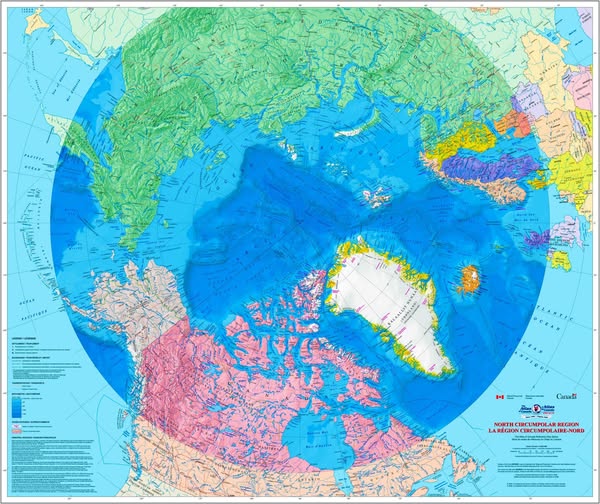
Tonight, I would take a different approach in my post. With all the talk about Greenland I want to tell a different story. Only 2% of Canadians have ever been north of the 60th parallel, which encompasses 48% of our land mass. If you left Toronto and travelled north to Alert it would be the same travel distance as if you left Toronto and went south to Bogata, Colombia. If you look at the map, you will see the part of Canada that almost touches the top of Greenland. That is our air force base CFS Alert. I have been fortunate to have not only been north of 60 but to have spent quite a bit of time in Canada’s North. I believe that maybe some would consider Canada as a better partner for Greenland than the United States. Greenland is primarily Inuit and these people will never be interested in further colonization. That is why they have an an issue with Denmark. Note I said ‘partner’ because to the best of my knowledge Greenland is also ‘not for sale’. Here are my thoughts…NM
When considering potential international partners, Greenland would likely find that Canada offers a more natural, beneficial, and culturally aligned relationship compared to the United States. While the United States may bring economic power and geopolitical influence to the table, Canada’s geographic proximity, environmental priorities, and respect for indigenous cultures make it a more suitable and sustainable partner for Greenland’s long-term growth and development.
1. Geographic Proximity and Shared Arctic Interests
Canada and Greenland are immediate neighbors, sharing the Arctic region and its unique environmental challenges. Both nations have vested interests in preserving the fragile Arctic ecosystem and managing the effects of climate change, such as melting ice caps and rising sea levels. As the Arctic opens up to increased shipping and resource exploration, Canada and Greenland have a common interest in ensuring sustainable development while protecting indigenous communities and the environment. This mutual understanding gives Canada a more aligned approach to Greenland’s goals and concerns.
2. Commitment to Indigenous Rights and Cultures
Canada has a strong record of promoting indigenous rights and recognizing the importance of indigenous knowledge in governance and environmental stewardship. With a large Inuit population in Canada’s northern regions, Canada understands the cultural and political dynamics that Greenland faces as a predominantly Inuit nation. In contrast, the United States has historically had a more complex and often strained relationship with its indigenous populations. Partnering with Canada would allow Greenland to work with a nation that values and respects indigenous governance models, creating a partnership built on mutual understanding and cultural appreciation.
3. Environmental Leadership and Sustainable Development
Canada’s environmental policies, though not without flaws, demonstrate a greater commitment to sustainability and combating climate change compared to the United States. Canada is an active participant in international climate agreements and promotes environmental stewardship, particularly in the Arctic. Greenland’s environment is vulnerable to the consequences of climate change, and a partnership with Canada would ensure that development in the region prioritizes sustainability over exploitation.
4. Similar Governance Structures and Political Values
Canada and Greenland share a tradition of democratic governance, respect for human rights, and emphasis on cooperative decision-making. Canada’s political system, which includes decentralized authority to its provinces and territories, resonates with Greenland’s desire for increased autonomy and self-governance. This alignment in governance models makes Canada a more natural fit for collaboration, where Greenland’s aspirations for independence and sustainable development would be respected.
5. Economic and Research Collaboration in the Arctic
Canada’s Arctic research programs and investments in sustainable development align with Greenland’s interests in leveraging its natural resources responsibly. By working with Canada, Greenland could benefit from joint research initiatives, knowledge sharing, and technological innovations that promote sustainable practices in industries like fishing, mining, and tourism. While the United States tends to prioritize economic gain over environmental sustainability, Canada’s approach would better balance economic development with ecological preservation.
Conclusion
While the United States may offer greater economic resources, Canada presents a more balanced, culturally respectful, and environmentally conscious partnership for Greenland. Canada’s proximity, shared Arctic interests, commitment to indigenous rights, and dedication to sustainable development make it a more natural and beneficial ally for Greenland’s future. By choosing Canada as a primary partner, Greenland would secure a relationship that not only advances its economic interests but also safeguards its culture, environment, and autonomy.
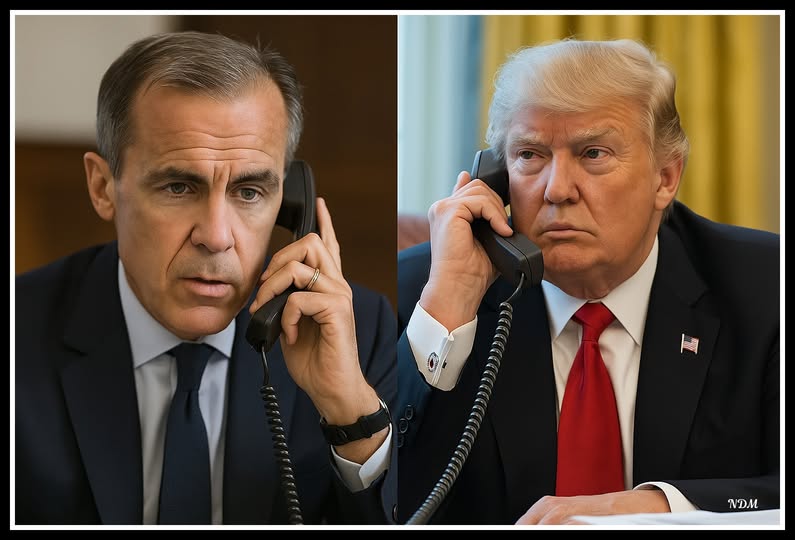
UPDATE: The call is happening this morning, March 28. Note that, as of the time of posting, the call has not yet occurred. From Mark Carney…“Last night, the president of the United States reached out to schedule a call. I appreciate this opportunity to discuss how we can protect our workers and build our economies. I will make clear to the president that those interests are best served by cooperation and mutual respect, including our sovereignty. We won’t back down; we will respond forcefully. Nothing is off the table to defend our workers and our country. It is clear that the United States is no longer a reliable partner. It is possible that with comprehensive negotiations, we will be able to restore some trust, but there will be no turning back. It’s the sobering reality.” NDM
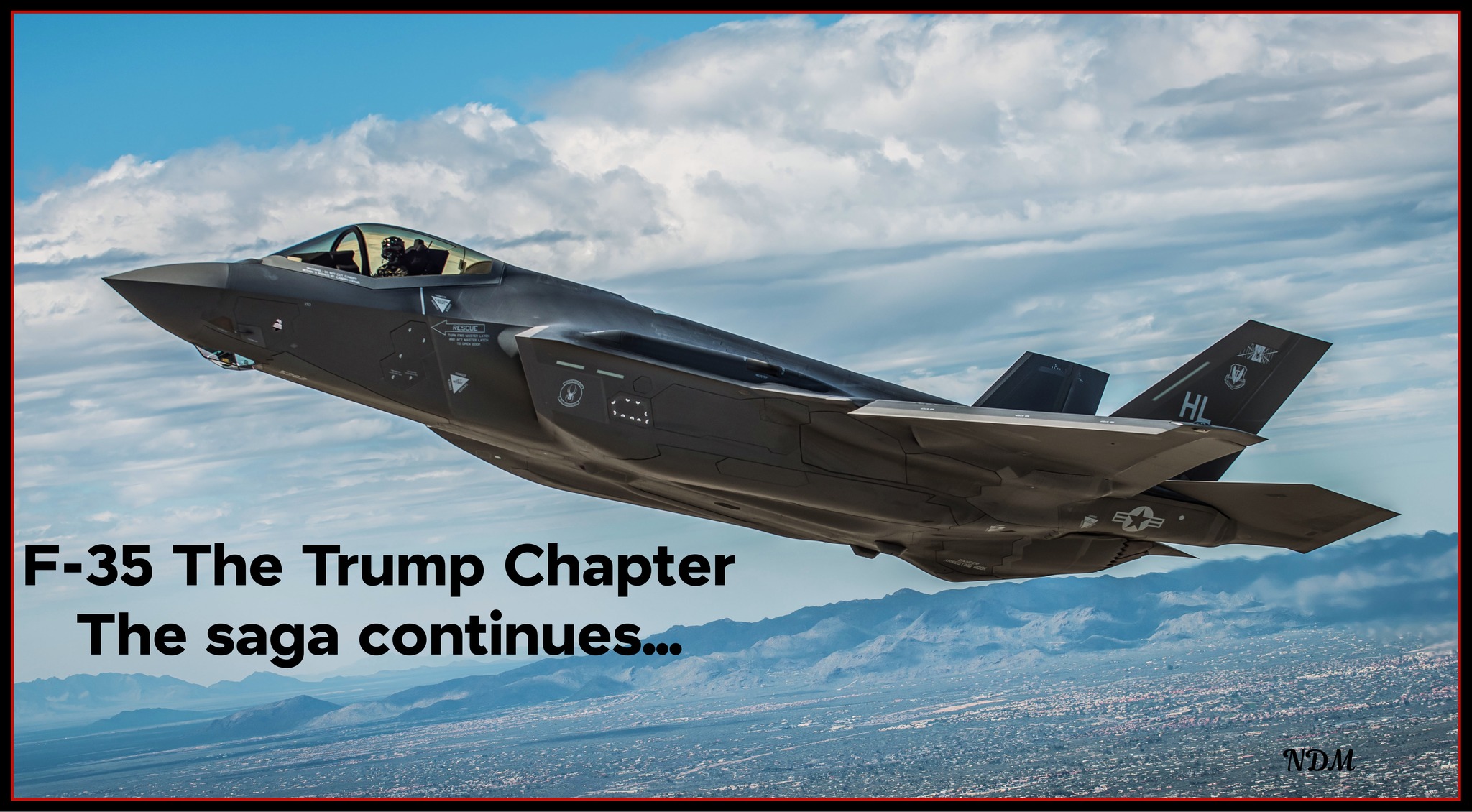
The Saga continues and now we enter the Trump chapter. Once aain a conversation is happening around the purchase of the F-35 as Canada’s replacement for our aging F-18 fleet. A few years ago this ‘final’ decision was exciting and now we are faced with the Trump World and what it means. Lochheed Martin are scrambling with the potential loss of this contract from Canada as well as other allied countries. They are planning to do more of the manufacturing in Canada which is likely not enough to protect the interity of the F-35 program. When will the Replublicans start taking Trump to task on the damage he is doing to their country? NM
Yvan Blondin Canadian general F-35Retired Lt.-Gen. Yvan Blondin headed the Royal Canadian Air Force from 2012 to 2015. Photo by Photo by Cpl Levarre McDonald/8 /PostmediaCanadian general who recommended F-35 deal now calls for purchase of other jets Retired Lt.-Gen. Yvan Blondin says building Canada’s future fighter force solely on the American-made F-35 would be “irresponsible” given the hostility of the U.S. government. The air force general who recommended Canada buy the F-35 fighter jet now says the purchase should no longer go forward as planned because the U.S. has become so untrustworthy.
Retired Lt.-Gen. Yvan Blondin, who headed the Royal Canadian Air Force from 2012 to 2015, argues that the American-built F-35 was the best fighter jet for Canada to operate in a world where alliances were anchored by the United States.
But all that has changed with the election of U.S. President Donald Trump. “Reliance on a US defence umbrella, a critical factor since the end of WW2 for so many countries, is no longer guaranteed,” Blondin wrote in a March 25 post on LinkedIn. “No affected country can afford to close its eyes and hope that 2026 or 2028 elections in the US will bring everything back to ‘normal’… and not happen again. The toothpaste cannot go back in the tube.”
Trump has threatened to harm Canada’s economy and has talked about annexing this country. He has mulled about seizing Greenland and the Panama Canal and under his administration the U.S. has cozied up to Russia.
Blondin wrote that because of the U.S., Canada is now fighting for its very existence.
The retired general, a former fighter pilot, recommended to Conservative prime minister Stephen Harper that Canada purchase the F-35 from Lockheed Martin. Harper’s government announced the acquisition but eventually that was put on hold because of the increasing cost and technical problems associated with the F-35.
The Liberal government announced in 2023 it was spending $19 billion to buy 88 F-35s. But Canada has only financially committed to purchasing the first 16 jets.
Blondin said the problem with the F-35 is not the aircraft itself; it is the complete control the Americans have over all aspects of the plane.
“The reality is that, without US consent, no country can hope to operate the F-35 for long,” Blondin said.
He said building Canada’s future fighter force solely on the F-35 would be “irresponsible.”
F-35 United States Canada Ottawa CitizenYvan Blondin said building Canada’s future fighter force solely on the F-35 would be “irresponsible.” Photo by Jack Boland /Jack Boland/Toronto Sun
Liberal Leader Mark Carney ordered a review of the F-35 purchase in the wake of an increasingly hostile United States and Trump’s threats towards Canada.
Blondin said there is still time before a decision has to be made to purchase the remaining 72 F-35s. The solution, he added, may be a mix of some F-35s and other aircraft from European nations, while at the same time spending money for future aircraft being developed by Europe.
“We may find for example that 36 F-35 and 150 other fighter aircraft such as Rafale or Gripen could be a better strategic, economic, and military posture while investing heavily in 6th gen developments,” he explained.
Blondin dismissed claims that Canada could not support two different types of fighter jets and argued that the country could quickly purchase a new aircraft.
Carney confirmed March 17 that he had discussions with French and British government officials about whether those countries could build a fighter jet in Canada.
In addition, there have been suggestions that the Swedish-built Gripen, which came second in the Canadian fighter jet competition, could provide a solution for Canada. The Swedes had promised to build the Gripens in Canada.
Blondin said Canada now needs to develop a defence strategy based on the new realities of changes in the U.S.
Former defence procurement chief Alan Williams and various defence analysts have warned that the F-35 represented a strategic vulnerability for Canada since the U.S. has total over software upgrades and spare parts on the aircraft.
Supporters of Canada’s F-35 purchase point to the hundreds of millions of dollars worth of contracts that Canadian companies have earned by supplying parts for the U.S. aircraft. That, in turn, has sustained or created Canadian aerospace jobs.
But on Feb. 28, the National Post reported that Trump had told Lockheed Martin he wanted those jobs back in the U.S. when the Canadian contracts came up for renewal. NDM
When I heard about this today I initially just chalked it up to another gaff in the maga mistake world of the Trump Administration and then I was sitting working and it hit me how seriously frightening this is. And not just one person making an error. No, multiple people were involved and although the Secretary of Defense Pete Hegseth said the journalist was lieing it is very clear he was not. To anyone anywhere hearing this remember that these same players are not just leads in national security for the US but are leads in international security. Can the gong show stop now? NM
And now to the story details.
The Trump Administration Accidentally Texted Me Its War Plans
U.S. national-security leaders included me in a group chat about upcoming military strikes in Yemen. I didn’t think it could be real. Then the bombs started falling.
The world found out shortly before 2 p.m. eastern time on March 15 that the United States was bombing Houthi targets across Yemen.
I, however, knew two hours before the first bombs exploded that the attack might be coming. The reason I knew this is that Pete Hegseth, the secretary of defense, had texted me the war plan at 11:44 a.m. The plan included precise information about weapons packages, targets, and timing.
This is going to require some explaining.
The story technically begins shortly after the Hamas invasion of southern Israel, in October 2023. The Houthis—an Iran-backed terrorist organization whose motto is “God is great, death to America, death to Israel, curse on the Jews, victory to Islam”—soon launched attacks on Israel and on international shipping, creating havoc for global trade. Throughout 2024, the Biden administration was ineffective in countering these Houthi attacks; the incoming Trump administration promised a tougher response.
This is where Pete Hegseth and I come in.
On Tuesday, March 11, I received a connection request on Signal from a user identified as Michael Waltz. Signal is an open-source encrypted messaging service popular with journalists and others who seek more privacy than other text-messaging services are capable of delivering. I assumed that the Michael Waltz in question was President Donald Trump’s national security adviser. I did not assume, however, that the request was from the actual Michael Waltz. I have met him in the past, and though I didn’t find it particularly strange that he might be reaching out to me, I did think it somewhat unusual, given the Trump administration’s contentious relationship with journalists—and Trump’s periodic fixation on me specifically. It immediately crossed my mind that someone could be masquerading as Waltz in order to somehow entrap me. It is not at all uncommon these days for nefarious actors to try to induce journalists to share information that could be used against them.
I accepted the connection request, hoping that this was the actual national security adviser, and that he wanted to chat about Ukraine, or Iran, or some other important matter.
Two days later—Thursday—at 4:28 p.m., I received a notice that I was to be included in a Signal chat group. It was called the “Houthi PC small group.”
A message to the group, from “Michael Waltz,” read as follows: “Team – establishing a principles [sic] group for coordination on Houthis, particularly for over the next 72 hours. My deputy Alex Wong is pulling together a tiger team at deputies/agency Chief of Staff level following up from the meeting in the Sit Room this morning for action items and will be sending that out later this evening.”
The message continued, “Pls provide the best staff POC from your team for us to coordinate with over the next couple days and over the weekend. Thx.”
The term principals committee generally refers to a group of the senior-most national-security officials, including the secretaries of defense, state, and the treasury, as well as the director of the CIA. It should go without saying—but I’ll say it anyway—that I have never been invited to a White House principals-committee meeting, and that, in my many years of reporting on national-security matters, I had never heard of one being convened over a commercial messaging app.
One minute later, a person identified only as “MAR”—the secretary of state is Marco Antonio Rubio—wrote, “Mike Needham for State,” apparently designating the current counselor of the State Department as his representative. At that same moment, a Signal user identified as “JD Vance” wrote, “Andy baker for VP.” One minute after that, “TG” (presumably Tulsi Gabbard, the director of national intelligence, or someone masquerading as her) wrote, “Joe Kent for DNI.” Nine minutes later, “Scott B”—apparently Treasury Secretary Scott Bessent, or someone spoofing his identity, wrote, “Dan Katz for Treasury.” At 4:53 p.m., a user called “Pete Hegseth” wrote, “Dan Caldwell for DoD.” And at 6:34 p.m., “Brian” wrote “Brian McCormack for NSC.” One more person responded: “John Ratcliffe” wrote at 5:24 p.m. with the name of a CIA official to be included in the group. I am not publishing that name, because that person is an active intelligence officer.
The principals had apparently assembled. In all, 18 individuals were listed as members of this group, including various National Security Council officials; Steve Witkoff, President Trump’s Middle East and Ukraine negotiator; Susie Wiles, the White House chief of staff; and someone identified only as “S M,” which I took to stand for Stephen Miller. I appeared on my own screen only as “JG.”
That was the end of the Thursday text chain.
After receiving the Waltz text related to the “Houthi PC small group,” I consulted a number of colleagues. We discussed the possibility that these texts were part of a disinformation campaign, initiated by either a foreign intelligence service or, more likely, a media-gadfly organization, the sort of group that attempts to place journalists in embarrassing positions, and sometimes succeeds. I had very strong doubts that this text group was real, because I could not believe that the national-security leadership of the United States would communicate on Signal about imminent war plans. I also could not believe that the national security adviser to the president would be so reckless as to include the editor in chief of The Atlantic in such discussions with senior U.S. officials, up to and including the vice president.
The next day, things got even stranger.
At 8:05 a.m. on Friday, March 14, “Michael Waltz” texted the group: “Team, you should have a statement of conclusions with taskings per the Presidents guidance this morning in your high side inboxes.” (High side, in government parlance, refers to classified computer and communications systems.) “State and DOD, we developed suggested notification lists for regional Allies and partners. Joint Staff is sending this am a more specific sequence of events in the coming days and we will work w DOD to ensure COS, OVP and POTUS are briefed.”
At this point, a fascinating policy discussion commenced. The account labeled “JD Vance” responded at 8:16: “Team, I am out for the day doing an economic event in Michigan. But I think we are making a mistake.” (Vance was indeed in Michigan that day.) The Vance account goes on to state, “3 percent of US trade runs through the suez. 40 percent of European trade does. There is a real risk that the public doesn’t understand this or why it’s necessary. The strongest reason to do this is, as POTUS said, to send a message.”
The Vance account then goes on to make a noteworthy statement, considering that the vice president has not deviated publicly from Trump’s position on virtually any issue. “I am not sure the president is aware how inconsistent this is with his message on Europe right now. There’s a further risk that we see a moderate to severe spike in oil prices. I am willing to support the consensus of the team and keep these concerns to myself. But there is a strong argument for delaying this a month, doing the messaging work on why this matters, seeing where the economy is, etc.”
A person identified in Signal as “Joe Kent” (Trump’s nominee to run the National Counterterrorism Center is named Joe Kent) wrote at 8:22, “There is nothing time sensitive driving the time line. We’ll have the exact same options in a month.”
Then, at 8:26 a.m., a message landed in my Signal app from the user “John Ratcliffe.” The message contained information that might be interpreted as related to actual and current intelligence operations.
At 8:27, a message arrived from the “Pete Hegseth” account. “VP: I understand your concerns – and fully support you raising w/ POTUS. Important considerations, most of which are tough to know how they play out (economy, Ukraine peace, Gaza, etc). I think messaging is going to be tough no matter what – nobody knows who the Houthis are – which is why we would need to stay focused on: 1) Biden failed & 2) Iran funded.”
The Hegseth message goes on to state, “Waiting a few weeks or a month does not fundamentally change the calculus. 2 immediate risks on waiting: 1) this leaks, and we look indecisive; 2) Israel takes an action first – or Gaza cease fire falls apart – and we don’t get to start this on our own terms. We can manage both. We are prepared to execute, and if I had final go or no go vote, I believe we should. This [is] not about the Houthis. I see it as two things: 1) Restoring Freedom of Navigation, a core national interest; and 2) Reestablish deterrence, which Biden cratered. But, we can easily pause. And if we do, I will do all we can to enforce 100% OPSEC”—operations security. “I welcome other thoughts.”
A few minutes later, the “Michael Waltz” account posted a lengthy note about trade figures, and the limited capabilities of European navies. “Whether it’s now or several weeks from now, it will have to be the United States that reopens these shipping lanes. Per the president’s request we are working with DOD and State to determine how to compile the cost associated and levy them on the Europeans.”
The account identified as “JD Vance” addressed a message at 8:45 to @Pete Hegseth: “if you think we should do it let’s go. I just hate bailing Europe out again.” (The administration has argued that America’s European allies benefit economically from the U.S. Navy’s protection of international shipping lanes.)
The user identified as Hegseth responded three minutes later: “VP: I fully share your loathing of European free-loading. It’s PATHETIC. But Mike is correct, we are the only ones on the planet (on our side of the ledger) who can do this. Nobody else even close. Question is timing. I feel like now is as good a time as any, given POTUS directive to reopen shipping lanes. I think we should go; but POTUS still retains 24 hours of decision space.”
At this point, the previously silent “S M” joined the conversation. “As I heard it, the president was clear: green light, but we soon make clear to Egypt and Europe what we expect in return. We also need to figure out how to enforce such a requirement. EG, if Europe doesn’t remunerate, then what? If the US successfully restores freedom of navigation at great cost there needs to be some further economic gain extracted in return.”
That message from “S M”—presumably President Trump’s confidant Stephen Miller, the deputy White House chief of staff, or someone playing Stephen Miller—effectively shut down the conversation. The last text of the day came from “Pete Hegseth,” who wrote at 9:46 a.m., “Agree.”
After reading this chain, I recognized that this conversation possessed a high degree of verisimilitude. The texts, in their word choice and arguments, sounded as if they were written by the people who purportedly sent them, or by a particularly adept AI text generator. I was still concerned that this could be a disinformation operation, or a simulation of some sort. And I remained mystified that no one in the group seemed to have noticed my presence. But if it was a hoax, the quality of mimicry and the level of foreign-policy insight were impressive.
It was the next morning, Saturday, March 15, when this story became truly bizarre.
At 11:44 a.m., the account labeled “Pete Hegseth” posted in Signal a “TEAM UPDATE.” I will not quote from this update, or from certain other subsequent texts. The information contained in them, if they had been read by an adversary of the United States, could conceivably have been used to harm American military and intelligence personnel, particularly in the broader Middle East, Central Command’s area of responsibility. What I will say, in order to illustrate the shocking recklessness of this Signal conversation, is that the Hegseth post contained operational details of forthcoming strikes on Yemen, including information about targets, weapons the U.S. would be deploying, and attack sequencing.
The only person to reply to the update from Hegseth was the person identified as the vice president. “I will say a prayer for victory,” Vance wrote. (Two other users subsequently added prayer emoji.)
According to the lengthy Hegseth text, the first detonations in Yemen would be felt two hours hence, at 1:45 p.m. eastern time. So I waited in my car in a supermarket parking lot. If this Signal chat was real, I reasoned, Houthi targets would soon be bombed. At about 1:55, I checked X and searched Yemen. Explosions were then being heard across Sanaa, the capital city.
I went back to the Signal channel. At 1:48, “Michael Waltz” had provided the group an update. Again, I won’t quote from this text, except to note that he described the operation as an “amazing job.” A few minutes later, “John Ratcliffe” wrote, “A good start.” Not long after, Waltz responded with three emoji: a fist, an American flag, and fire. Others soon joined in, including “MAR,” who wrote, “Good Job Pete and your team!!,” and “Susie Wiles,” who texted, “Kudos to all – most particularly those in theater and CENTCOM! Really great. God bless.” “Steve Witkoff” responded with five emoji: two hands-praying, a flexed bicep, and two American flags. “TG” responded, “Great work and effects!” The after-action discussion included assessments of damage done, including the likely death of a specific individual. The Houthi-run Yemeni health ministry reported that at least 53 people were killed in the strikes, a number that has not been independently verified.
On Sunday, Waltz appeared on ABC’s This Week and contrasted the strikes with the Biden administration’s more hesitant approach. “These were not kind of pinprick, back-and-forth—what ultimately proved to be feckless attacks,” he said. “This was an overwhelming response that actually targeted multiple Houthi leaders and took them out.”
The Signal chat group, I concluded, was almost certainly real. Having come to this realization, one that seemed nearly impossible only hours before, I removed myself from the Signal group, understanding that this would trigger an automatic notification to the group’s creator, “Michael Waltz,” that I had left. No one in the chat had seemed to notice that I was there. And I received no subsequent questions about why I left—or, more to the point, who I was.
Earlier today, I emailed Waltz and sent him a message on his Signal account. I also wrote to Pete Hegseth, John Ratcliffe, Tulsi Gabbard, and other officials. In an email, I outlined some of my questions: Is the “Houthi PC small group” a genuine Signal thread? Did they know that I was included in this group? Was I (on the off chance) included on purpose? If not, who did they think I was? Did anyone realize who I was when I was added, or when I removed myself from the group? Do senior Trump-administration officials use Signal regularly for sensitive discussions? Do the officials believe that the use of such a channel could endanger American personnel?
Brian Hughes, the spokesman for the National Security Council, responded two hours later, confirming the veracity of the Signal group. “This appears to be an authentic message chain, and we are reviewing how an inadvertent number was added to the chain,” Hughes wrote. “The thread is a demonstration of the deep and thoughtful policy coordination between senior officials. The ongoing success of the Houthi operation demonstrates that there were no threats to troops or national security.”
William Martin, a spokesperson for Vance, said that despite the impression created by the texts, the vice president is fully aligned with the president. “The Vice President’s first priority is always making sure that the President’s advisers are adequately briefing him on the substance of their internal deliberations,” he said. “Vice President Vance unequivocally supports this administration’s foreign policy. The President and the Vice President have had subsequent conversations about this matter and are in complete agreement.”
I have never seen a breach quite like this. It is not uncommon for national-security officials to communicate on Signal. But the app is used primarily for meeting planning and other logistical matters—not for detailed and highly confidential discussions of a pending military action. And, of course, I’ve never heard of an instance in which a journalist has been invited to such a discussion.
Conceivably, Waltz, by coordinating a national-security-related action over Signal, may have violated several provisions of the Espionage Act, which governs the handling of “national defense” information, according to several national-security lawyers interviewed by my colleague Shane Harris for this story. Harris asked them to consider a hypothetical scenario in which a senior U.S. official creates a Signal thread for the express purpose of sharing information with Cabinet officials about an active military operation. He did not show them the actual Signal messages or tell them specifically what had occurred.
All of these lawyers said that a U.S. official should not establish a Signal thread in the first place. Information about an active operation would presumably fit the law’s definition of “national defense” information. The Signal app is not approved by the government for sharing classified information. The government has its own systems for that purpose. If officials want to discuss military activity, they should go into a specially designed space known as a sensitive compartmented information facility, or SCIF—most Cabinet-level national-security officials have one installed in their home—or communicate only on approved government equipment, the lawyers said. Normally, cellphones are not permitted inside a SCIF, which suggests that as these officials were sharing information about an active military operation, they could have been moving around in public. Had they lost their phones, or had they been stolen, the potential risk to national security would have been severe.
Hegseth, Ratcliffe, and other Cabinet-level officials presumably would have the authority to declassify information, and several of the national-security lawyers noted that the hypothetical officials on the Signal chain might claim that they had declassified the information they shared. But this argument rings hollow, they cautioned, because Signal is not an authorized venue for sharing information of such a sensitive nature, regardless of whether it has been stamped “top secret” or not.
There was another potential problem: Waltz set some of the messages in the Signal group to disappear after one week, and some after four. That raises questions about whether the officials may have violated federal records law: Text messages about official acts are considered records that should be preserved.
“Under the records laws applicable to the White House and federal agencies, all government employees are prohibited from using electronic-messaging applications such as Signal for official business, unless those messages are promptly forwarded or copied to an official government account,” Jason R. Baron, a professor at the University of Maryland and the former director of litigation at the National Archives and Records Administration, told Harris.
“Intentional violations of these requirements are a basis for disciplinary action. Additionally, agencies such as the Department of Defense restrict electronic messaging containing classified information to classified government networks and/or networks with government-approved encrypted features,” Baron said.
Several former U.S. officials told Harris and me that they had used Signal to share unclassified information and to discuss routine matters, particularly when traveling overseas without access to U.S. government systems. But they knew never to share classified or sensitive information on the app, because their phones could have been hacked by a foreign intelligence service, which would have been able to read the messages on the devices. It is worth noting that Donald Trump, as a candidate for president (and as president), repeatedly and vociferously demanded that Hillary Clinton be imprisoned for using a private email server for official business when she was secretary of state. (It is also worth noting that Trump was indicted in 2023 for mishandling classified documents, but the charges were dropped after his election.)
Waltz and the other Cabinet-level officials were already potentially violating government policy and the law simply by texting one another about the operation. But when Waltz added a journalist—presumably by mistake—to his principals committee, he created new security and legal issues. Now the group was transmitting information to someone not authorized to receive it. That is the classic definition of a leak, even if it was unintentional, and even if the recipient of the leak did not actually believe it was a leak until Yemen came under American attack.
All along, members of the Signal group were aware of the need for secrecy and operations security. In his text detailing aspects of the forthcoming attack on Houthi targets, Hegseth wrote to the group—which, at the time, included me—“We are currently clean on OPSEC.”
As a mother I am very proud of my two sons and want to feel encouraged about the future in front of them. My older son is married to a great gal and they now have a beautiful baby girl. My younger son is in his final year at military college. I’ve always been excited for my youngest on his journey in the military and it is me that has fear now. For my lifetime I was aware who we thought our enemies were and who our friends were in the global picture and now that is unknown and at best unreliable. So right now indeed my fear is a reaction but my courage has to come as a conviction to continue to spread information that I have reliably sourced so that people can make good decisions when they vote. When I hear conversations around carbon tax it is just noise to me now because it is not what is crucially important in this upcoming election. There are many important things such as housing, the economy, child care, Healthcare and so much more. But what does it all matter if we cannot deal with our situation with the United States. Please feel free to share your thoughts on how you see each of the leaders in their relationship with Donald Trump and how that will best serve our future. It is that we need to pay attention to. The leader that will better deal with Trump is the leader that can virtually save our country. Don’t just tell me who . Please tell me why they are the better choice. Please think about that and not just about your party right now. This is not an election about parties- it is an election about leadership and our future. NDM
GRADE 6 politics. If there are any questions, reach back to a grade 6 teacher in your area or grab a copy of the Scholastic book designed for grade 6 students called. “Who Runs This Country, Anyway?” Basic Questions and Answers:
Did we wake up in a dictatorship in Canada tomorrow? The short and long answer to that question is NO. In Canada, we elect a Prime Minister by each of us voting for a local representative. We do not vote for the man/woman, we vote for their party. The only people who actually saw Justin Trudeau on their ballot, were people in his local riding. The rest of us, saw our local Liberals, NDP and PC’s on our ballots.
“Mr Carney won the Liberal Leadership without having a seat in the House of Commons meaning he did not run in an election and win a riding (electoral districts) or Canada’s Federal electoral map. Is Mr Carney the first Prime Minister who came into the position this way? No, he is not. The following former PMs were in this same position:
Charles Tupper
John Sparrow
David Thompson
Louis St. Laurent
Pierrre Trudeau
Kim Campbell
Paul Martin
Mackenzie Bowell
Sir John Abbott (death of Macdonald) and
John Turner
It can also happen, that an election is held, and the leader of the party doesn’t win their riding. If that happens, they can take the seat of a party member who did win, and then hold a by-election. It can also happen that a Prime Minister steps down, like JT just did, and they can replace their leader. Kim Campbell is an example from our lifetime (1993, Conservative who became Prime Minister when Mulroney stepped down), also John Turner in our lifetime. Normally when this happens, an election is called very soon after.
Well then when will an election be called? Carney is expected to announce an election by the end of next week. It’s in their best interest to announce an election too. There are rumours that Carney will hold off an election until next year. The Liberals don’t want to hold off on this, as much as people seem to think that’s what they want. The earliest I personally see the election is Monday April 28th but more likely Monday, May 5. In my opinion. It is law that the election period be a minimum of 37 and 51 days and must fall on a Monday.
Why are they trying to manipulate our vote? What? People are upset that JT did what he did when he was about to have a vote of non-confidence raised against him, and then he shut down parliament. Do you know who’s play book he got that out of? Stephen Harper, Conservative who did the exact same thing in 2009 when he was about to have a vote of non-confidence raised against him. It’s amusing when your preferred party does it, it’s treasonous when the party you don’t like does it. That’s Canadian politics for you. Absolutely nothing about the handing over of power from Trudeau to Carney is illegal, or unusual, or against our electoral process or laws. It’s literally exactly how it is supposed to happen when a Prime Minister steps down. People screamed for him to step down. He stepped down. Now, take a deep breath, and vote in the upcoming election Canada. It’s how democracy works. NDM







 Nancy's Notes