I should say up front that I do know how to skate. Figure skating, however, would be a stretch. When I was young, I wanted to be a figure skater. I could skate well enough to stay upright, but not well enough to win anything. Athletics was never my strength. I was usually picked last in gym class, or second last if someone was feeling charitable. None of that harmed me. It taught me something essential. Wanting something does not make it yours.

That said, if there happens to be a Canadian female Olympic gold medalist out there who feels a little bored with her award and would like to share it, I am apparently living in an era where that sort of thing is now conceivable.

And maybe there’s another option. Since sports were clearly not my thing, perhaps the performing arts were. In my 50s, in fact, I had the opportunity to play Mrs. Boyle in a local production of Agatha Christie’s The Mousetrap. I died in the second act. Consistency matters. If anyone out there with a Tony Award feels that performance warrants recognition, I am open to that conversation. Apparently, earning it is no longer a requirement.

Awards are not aspirations. They are acknowledgements of something done.

Which brings me to today. Donald Trump has apparently been given the 2025 Nobel Peace Prize medal from María Machado, a Venezuelan opposition leader. He did, in fact, receive the physical medal. What he did not receive was a Nobel Peace Prize in any legitimate sense of the word. That one truth remains.

As the Norwegian Nobel Committee states, “once a Nobel Prize is announced, it cannot be revoked, shared, or transferred to others. The decision is final and stands for all time.” A medal can change owners, but the title of a Nobel Peace Prize laureate cannot.

That distinction is not technical. It is fundamental. Without it, we are asked to pretend that possession equals meaning. It does not.

And yes, I’m choosing humour as it is the only thing that makes the embarrassment bearable.

We have all heard stories of Super Bowl rings ending up in pawn shops. Someone sold them. Someone else bought them. But the buyer did not become a Super Bowl champion. The ring did not transfer achievement. It did not rewrite history. Without context, it was simply an object. This is no different.

He can put the medal in a drawer in the Oval Office. He can frame it on a wall. He can show it to visitors. But it does not make Trump a Nobel laureate any more than my second act death makes me an award-winning actor.

As for María Machado, some argue she has a plan. That this was leverage. That this was the currency she believes she has to use on behalf of the Venezuelan people. Perhaps. That remains to be seen. So, although the episode has not yet revealed her motive, it definitely revealed Trump’s lack of character.

And this is where the hypocrisy becomes impossible to ignore.

For years, we have been lectured by the right about merit. About how the “woke left” hands out participation trophies. About how people receive recognition they did not earn. About how DEI hires are presumed undeserving simply because they exist. Skill matters, we are told. Standards matter. Rules matter. Until, apparently, they do not.

Because nothing could be more divorced from merit than accepting an honour you did not earn. Nothing could look more like a participation trophy than a Nobel Peace Prize stripped of legitimacy and held up as proof of greatness.

If this were happening on the left, it would be mocked relentlessly. It would be called unserious and corrupt. But because it is happening here, we are told to nod along. To pretend this is normal. To confuse entitlement with achievement.

This is about a man who believes he deserves everything he wants simply because he wants it. And a movement willing to abandon every principle it claims to defend in order to protect that belief.

History will not be confused by this. But it also will not linger on it. This will not stand as a turning point or a great moment of consequence. It will be remembered, if at all, as another small, revealing episode. One more instance of a man in the Oval Office reaching for a shiny object simply because someone else once had one. No ambition or leadership. Just entitlement, briefly on display.

I have been quieter for a few days, not because I had nothing to say, but because everything I wrote started to feel like a variation on the same theme. Different headlines, same mechanics. At some point, you stop reacting to each new development and start paying attention to the pattern underneath it.

Every day, a new place name is thrown into the churn. Greenland, Venezuela, China, immigration raids and trade threats. It all sounds disconnected until you stop treating it that way. The justification changes constantly, but the logic remains the same.

Earlier today, I listened to an interview with Carla Sands, a former U.S. ambassador to Denmark during Trump’s first term. I did not know much about her, so I looked her up. During the first Trump administration, she served as the U.S. ambassador to Denmark. A former chiropractor, socialite, and actress who married into wealth. No geopolitical background but all the skills of a Trump sycophant.

According to her, Greenland wants U.S investment. If it does not come from the United States, she said, it will come from China. As though those are the only two options available. As though the people who actually live there are incapable of choosing their own partners or charting their own futures.

When challenged about Greenlanders and Danes repeatedly saying they do not want U.S. control, the language shifted to protection and security, which can only be provided by the United States. Protection language shows up reliably when money and resources are involved.

Greenland is strategically important, yes. But it is also resource-rich, and much of what is there is currently inconveniently locked under ice. Ice that some people seem perfectly comfortable treating as a temporary obstacle. When venture capital voices talk about what people want, it is worth remembering that investment is rarely neutral.

None of this is new. Venezuela was never really about drugs. It was always about oil. The drug narrative simply faded when it stopped being useful. The same cycle repeats. The reason changes. The country changes. The prize stays the same.

What has changed is the extent to which these ambitions are openly disconnected from public support. Roughly 75% of U.S. citizens oppose any attempt to take or involve Greenland. That is not a close call. That is a broad rejection. At the same time, Donald Trump’s approval ratings are weak on the very issues he ran on. Immigration, cost of living, and international relations. When leaders lose public confidence, they rarely respond with restraint. They will escalate, increase distraction and look outward.

This is where Canada comes back into the picture. Another notable read today was an article by journalist Terry Moran titled The World Is Learning How to Live Without America. Moran spent years at ABC News before leaving. I might note that the departure was part of the new government-controlled media, but that’s another story for another day. The question he posed is the one that matters.

“If you were running a country or a global corporation, would you bet the future of your people or your firm on the stability, reliability, and sanity of the United States of America in the coming years?”

That question explains a great deal of what we are seeing.

Countries are not being dramatic. They are managing risk. European nations are reassessing supply chains. Germany is looking inward on defense manufacturing. Asian economies are hedging. Mexico is recalibrating. There is a quiet, methodical process underway that has nothing to do with ideology and everything to do with reliability.

And the example he used was Canada and the work of our Prime Minister. Our PM has been clear about this, even if the significance of it has not fully landed yet. We can no longer think only north south. We have to think east west. Europe, Asia, diversification and stability. This is risk management in a world where unpredictability has become a feature, not a bug.

This is not anti U.S. sentiment. It is simply being realistic.

The post World War II order worked because the United States was powerful and cooperative. It underwrote institutions and valued alliances. It was predictable enough that others could plan around it. That era is ending, and not because the world suddenly changed its values, but because the risk profile changed.

When even the people of the U.S. themselves are rejecting expansionist ideas like Greenland, when independents are walking away, when allies are quietly recalculating, the signal is clear. This is not about one headline or one country. It is about trust. And for many people the United States has lost their trust. Consider me one of those people.

Canada is not stepping away from the world. We are paying attention to it. And that is something worth noticing.

And so we don’t forget…

WHERE ARE HELL ARE THE EPSTEIN FILES??

I don’t often post on Sundays. But as we head into another unpredictable week, I wanted to set a tone. A fairer one, I hope.

There is a rhythm to politics that most of us don’t consciously track, but we feel it anyway. Generally, the second Monday after the Christmas break is when things actually begin to move. New polls appear, conversations restart and overall the volume rises.

The strange thing is, it doesn’t feel like we ever got a break this year. The world didn’t pause. The headlines didn’t soften. The stakes didn’t reset. It has felt relentless, and that may be part of why everything feels so charged right now.

Over the past week, especially since the incident in Minnesota, there has been a lot of discussion about how people can look at the same images and come away with completely different interpretations. Some say that divide falls neatly along party lines. I’m not convinced it’s that simple.

It reminded me of that moment years ago when the internet argued endlessly about the color of a dress. Some people were certain it was one thing. Others were just as certain it was another. Scientists explained perception. Psychologists talked about context. What stayed with me wasn’t the answer, but the reminder that none of us sees the world objectively.

We all look through a lens. This is how I write. This is my lens. You have yours.

And I want to be fair about something. I cannot expect everyone to be as impassioned about geopolitics, history, or international power dynamics as I am. If your priority is paying rent, affording groceries, or figuring out whether you will ever be able to buy a home, then places like Greenland or Yemen feel distant and abstract. They do not feel urgent. I understand that but I also struggle with it.

Because distance is often an illusion. What feels far away geographically or politically has a way of arriving at our doorstep faster than we expect. Take Greenland. Most people in North America have never spent much time thinking about it. Americans have not. Canadians have not either. It is a place on a map, vaguely northern, rarely discussed. So when serious conversations arise about control, security, or influence there, many people shrug. If something happens, it happens. It does not feel connected to their lives.

If you are sitting in a small town like Monroeville, Alabama, or in Bieseker, Alberta, Greenland does not feel relevant. You are focused on your own survival. That makes sense.

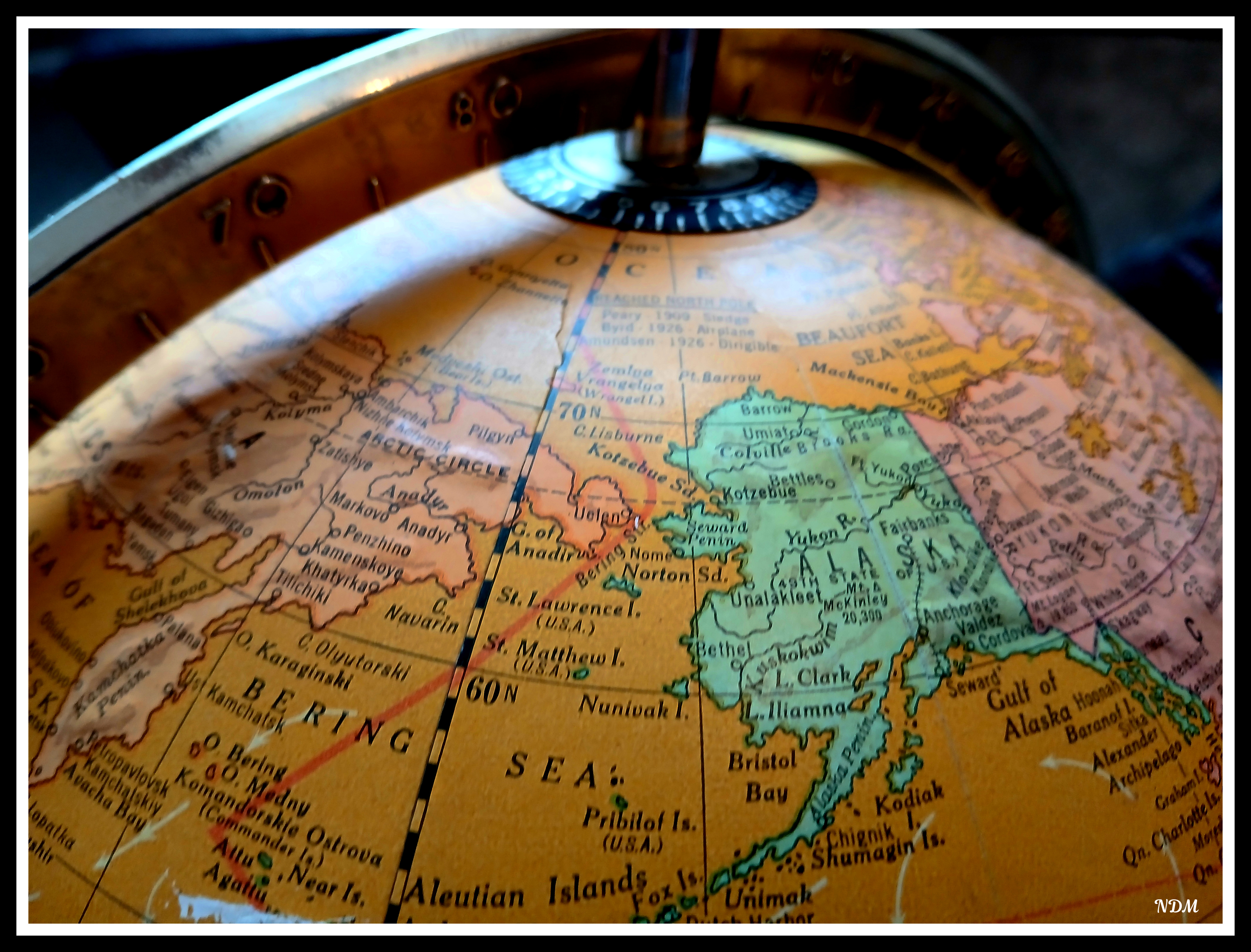
I see it differently because I think in maps and globes. Because I have knowledge of the North. Because I try to hold a broader picture in my head, even when it is uncomfortable. That does not make me smarter or more informed. It simply means my lens is different.

So I am not angry at people who do not share my sense of urgency. I am not dismissive of people whose lives do not allow the time or energy to follow deep investigative journalism or long historical threads. But I am asking something of you.

I am asking people to consider that the bigger picture matters even when it feels disconnected from daily life. That global events do not happen in isolation. That every decision, every conflict, every power shift affects the next thing.

Sometimes that requires something as simple as pulling out a map. Look at where places actually are. Look at who borders whom. Look at alliances and proximity. Look at trade routes and security corridors.

For example, when Donald Trump says he does not want Russia as a neighbor, take ten seconds to look at a map. Look at Alaska, then look at Russia and the Bering Strait. Look at how close the two countries already are. Facts like that matter, because they reveal how careless some statements really are.

We are living in a moment where major issues stack on top of one another. Iran, Greenland, Venezuela, energy policies, trade and domestic unrest. And underneath all of it are unresolved truths that struggle to surface because distraction is constant and convenient.

When transparency is delayed, when accountability is buried under noise, when facts are drowned out, it does not just damage trust in institutions. It damages trust in reality itself.

As we head into this week, I do not pretend to have answers. I am processing in real time, just like everyone else. But I will say this may be my last gentle post for a while. My only real goal here is simple. If one person who normally scrolls past deeper material decides to read a piece of history, or learn something about NATO, or understand a little more about the Cold War, or simply take a moment to look at a map and see the world differently, then this was worth writing.

I do not need everyone to be as impassioned as I am. But I do hope more people will look. Because understanding the world we live in is no longer optional. And if a simple glance at a globe can expose the nonsense, then maybe the real danger isn’t ignorance, but how comfortable we’ve become with it.

Turning Up The Voltage

Posted: January 9, 2026 in Uncategorized

Today I finally tried to turn my attention back to some practical things that needed doing, the kind of everyday details that make life feel normal again. While searching through old emails, I stumbled across a video of my son giving a presentation for an undergraduate psychology course.

I remembered the class. I remembered the assignment. He had forwarded it to me for feedback. He was talking about Stanley Milgram’s obedience experiment. What I hadn’t remembered was how deeply unsettling the subject is when you hear it laid out plainly. Sitting there listening to him explain it again, not just as a parent, but as someone watching the world right now, something clicked into place for me.

After the Second World War, and following the Nuremberg trials, the world struggled with how ordinary people could participate in extraordinary harm. Over and over, those on trial offered the same justification. They were following orders. They were subordinate. They believed responsibility rested elsewhere. That explanation disturbed many people at the time, including Milgram, who wanted to understand how obedience actually operates in everyday people.

In the early 1960s, Milgram conducted a series of experiments in a controlled university setting. Participants were recruited from the general public and told they were taking part in a study on learning and memory. They were assigned the role of “teacher.” On the other side of a barrier was a “learner,” who was actually an actor participating in the study.

The teachers were instructed to ask questions. When the learner answered incorrectly, the teacher was told to administer an electric shock. The shocks were not real, and the researchers knew this. The teachers did not. They believed the person on the other side was actually being harmed.

Each wrong answer required a stronger shock than the last. As the voltage increased, the learner cried out, begged to stop, and eventually went silent. When teachers hesitated, an authority figure in a lab coat calmly instructed them to continue.

These teachers were not cruel people. They did not want to hurt anyone. But most of them complied. All of them reached levels of shock they believed could cause serious harm, and the majority went all the way to what they believed was a lethal level. Not because they were evil, but because they were being told to proceed by someone they perceived as legitimate authority.

Relistening to my son explain this again in the video I understood why this has been sitting at the edge of my thinking for months.

I have spent a long time writing about obedience. About military service members facing questions around legal and illegal orders. About institutions filled with good people trying to reconcile their conscience with their role. About watching behaviors escalate while being framed as lawful, necessary, or unavoidable.

I am speaking directly to citizens of the United States, to those in positions of power around the President, and to those who support or excuse what is unfolding. And I am also speaking to Canadians who align themselves with the same ideology, who cheer it on, excuse it, or believe it could never happen here simply because a different flag is flying.

In just the last 48 hours, there have been shootings in two cities involving I.C.E. and a person is dead. All in the name of immigration enforcement. Now comes the what as become familiar, leaders speaking in lock step. They sure didn’t lower the temperature. They turned it up full blast.

This is where Milgram stops being a classroom lesson.

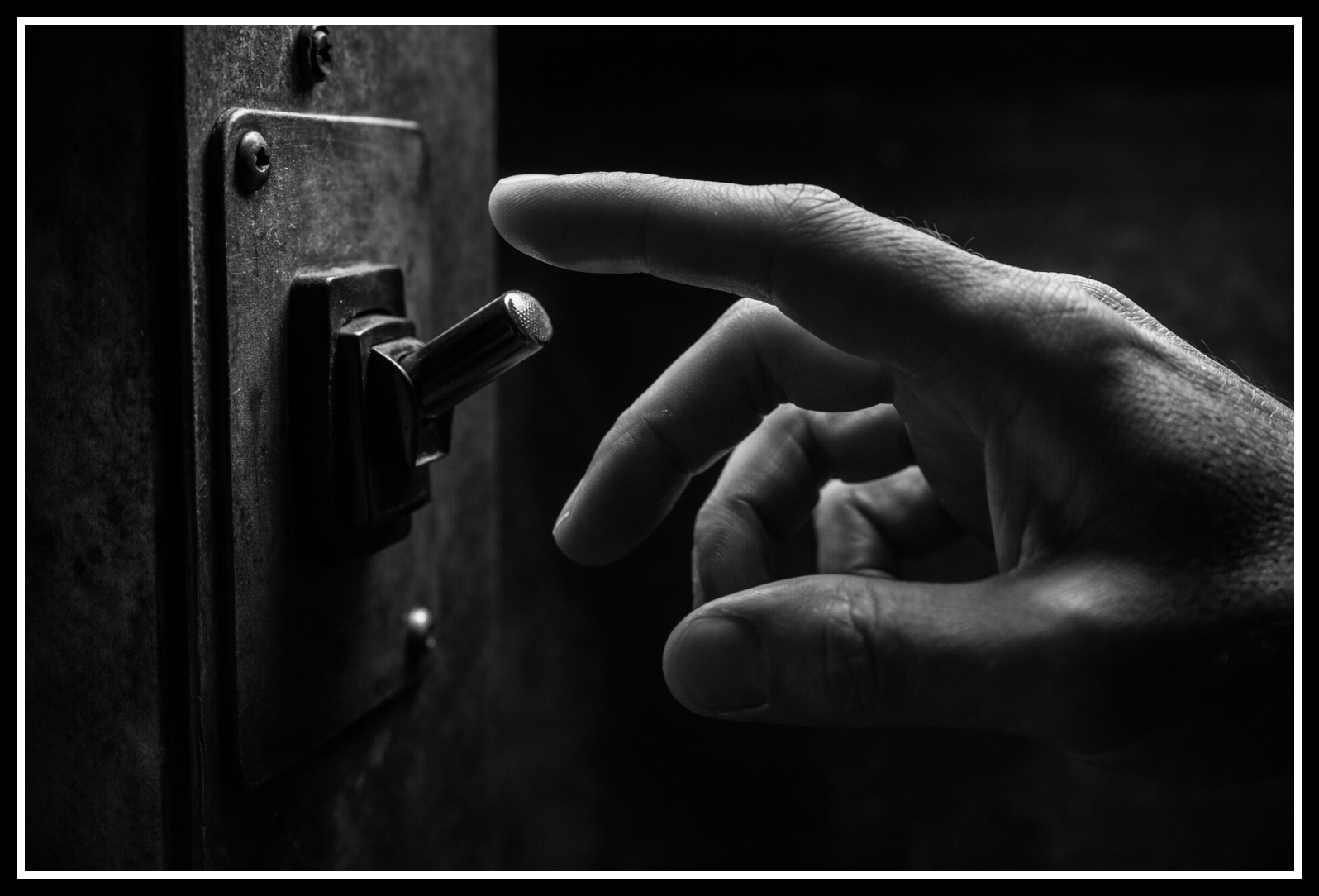
This is the voltage increasing. Not all at once, but increment by increment. Through rhetoric. Through policy. Through the suggestion that something bad will happen if people do not comply. Through reassurance that responsibility belongs somewhere else.

Milgram described what he called an “agentic state,” where people stop seeing themselves as moral decision makers and begin to see themselves as instruments carrying out someone else’s will. That shift does not require hatred. It does not require belief. It only requires authority and pressure.

That is what makes this moment so dangerous. Soldiers are being moved into more places. I.C.E. agents are being deployed into communities. Enforcement actions are intensifying. And too many people in power are either encouraging this escalation or refusing to stop it.

Congress and the Senate may not be holding the switch, but they are not stepping away from the experiment either. And the people carrying out these actions are increasingly being placed in the exact psychological position Milgram warned about. Obey now. Question later. Responsibility is not yours.

Someone I follow once said that history does not repeat itself exactly, but it echoes. That feels painfully true right now. This is not the past replaying itself, but it is the same pattern resurfacing under new conditions.

Milgram’s experiment is not obscure. It is taught in basic psychology classes. But it is easy to forget what it actually tells us. Democracies do not unravel only through loud extremism. They unravel through compliance. Through good people doing what they are told because they believe they have no other choice.

That is why I am writing this today. Not to accuse, and not to sensationalize, but to remind. If this moment feels unsettling, that is because it should.

Obedience is not inherently wrong. But obedience without moral accountability is how ordinary people become participants in extraordinary harm. And once we understand that, we lose the excuse of ignorance.

Yesterday, Donald Trump was asked by the New York Times whether there are any limits to his global power. His answer was simple. “My own morality, my own mind, is the only thing that can stop me.” And what exactly does that mean?

If we do not think everything I have just written matters, there is your reminder. Milgram did not study monsters. He studied people. And he showed us what happens when authority is unchecked, responsibility is displaced, and obedience becomes the point.

Lately, in my political writing, I’ve received more than a few messages from people in my age bracket telling me that if someone came near our country, they would bear arms and defend it. Boomers and older than Boomers. I respect the sentiment. I really do and I even thought “maybe I could do that.” But today it reminded me I may be ill equipped for that type of scenario. Heck I’m too uncoordinated to manage a trip to my back yard. I went outside to untangle my dog. She’s a 110 pound 13 year old husky/lab cross who still believes she is a spry two year old wolf. Even though we live on 17 acres, she has to be tied because the husky brain says run forever and the senior body says absolutely not.

So out I go. I’ve got my boots on and have the leash in hand. Reminder here that this is rural Alberta and neighbours are not nearby. There’s a creek on one side, railway tracks on the other. Just me and the prairie.

What I forgot, entirely, is that recently there was some digging done near the septic system. A vent thing that left a message hole. But it’s now covered by snow. Deceptively innocent snow I might add.

Important visual detail: I work from home, which means most days I change from nighttime pajamas into daytime pajamas. Today’s daytime pajamas were a satiny, Chinese-style kimono situation with matching pants. This was not tactical clothing.

I step forward. The ground disappears. I don’t fall into the hole. I fall ALL the way into the hole. Full body, gone like a character from a 60’s Wile E. Coyote cartoon.

I’m wedged. My ankle hurts. My wrist hurts. I start calling for help. And I realize two things at once. No one can hear me and satin is not a traction fabric.

I try to climb out. I slide back in. I try again. Slide again. I attempt what can only be described as a shimmy.

At this point the wrap around kimono has opinions of its own and is opting out of the situation entirely. So there I am, clothing compromised, fully stuck, echoing into the vast Alberta nothingness and thinking, well, this is how people disappear.

Eventually, through a combination of stubbornness, one cooperative wrist, and pure spite, I manage to extract myself. The dog watches calmly. She does not help. She does, however, get to pee.

Now I’m inside. Warm and changed and mostly uninjured. Pride severely bruised. And this is where I circle back to the gun thing.

If the fate of the nation depended on me navigating snowy ground in satin pajamas, holding a rifle we’re doomed.

So no this post is not my normal political post. This is Nancy Unfiltered, and today Nancy Unfiltered needed a break. Today is about knowing your limits. About winter, about aging dogs and their people, hidden septic vents, and the important distinction between bravery and balance.

The upside? It is a stunning Alberta winter day. Blue sky. Sunlight. Barely a cloud. Not even that cold. And so far, despite the heaviness of the world there are still spaces I can find joy and humour.

For those who know me, you’ll say: That is so Nancy. For those who don’t, you’ll say: This woman does not have her poop together.

Both are correct.

This Land Is My Land

Posted: January 7, 2026 in Uncategorized

I’ve been trying to wrap my head around this growing insistence that the world should be divided into “natural” spheres of influence, that geography somehow grants permission for domination. America here. Russia there. China over there. As if power follows longitude lines. As if maps, rather than people, decide who belongs to whom.

Part of the problem, I think, is how we look at the world. A lot of people see it flattened, rectangles on screens, Mercator projections that distort size, distance, and relationship. I’m a globe person. The room I’m sitting in right now has four globes in it. I like maps too, but globes tell the truth in a way flat maps don’t. They force you to see proximity, curvature, connection.

So when people start talking about “natural” spheres of influence, I want to say grab an actual globe.

Because once you do, the story takes on a different view. If Europe is part of the Russia sphere then why not Greenland? If Asia is supposedly one sphere, what does that make Australia? New Zealand? Are they suddenly “Asian” because a strongman says so? Or are they only included when it’s convenient to someone else’s power narrative? Or are these just places waiting to be assigned.

The Americas, after all, are only called the Americas because someone named them that. Geography didn’t vote.

I heard a comment last night, in reference to Venezuela, framed in a tone that immediately rang a bell “that the U.S. were there in Venezuela and they were going in to help the repressed people.” And suddenly, all of it lined up.

As many of you know, I’ve spent a lot of time in Canada’s North, much of it alongside Indigenous peoples, through education, research, and volunteer work and of course aviation. I’ve listened to residential school survivors. I’ve worked in spaces shaped by the Truth and Reconciliation Calls to Action, always asking the same question: what can I do that actually makes a difference?

And one thing has always been unmistakable. The moment someone says, “we’re here to help,” the dynamic changes.

Indigenous peoples in Canada know exactly what that phrase has meant historically. It was spoken by churches, governments, and corporations. By people who arrived convinced they were superior, convinced they knew better, and uninterested in the cultures, governance systems, and sovereignty already in place.

“We’re here to help” has never meant help. It has meant assimilation, extraction and control.

We soften that history now. When we hear Hudson Bay Company we think of striped blankets and heritage branding. We rarely talk about the Hudson’s Bay Company as a corporate force that exploited Indigenous labour, disrupted economies, and entrenched colonial power structures. That part of the story is uncomfortable and essential.

Because it’s the same logic we’re seeing again. Venezuela, Latin America, The Middle East, and Greenland. Different places. Same posture. The help is always conditional. You can have it as long as you accept our economic priorities, our political systems and our cultural expectations. As long as your land serves our needs. As long as resistance can be reframed as instability or ignorance.

Greenland is potentially a more modern example. A small Indigenous population on a vast landmass rich in strategic value. We’re told the United States needs it for “security,” despite already operating a military base there and having full access through allied cooperation. The people of Greenland never asked for this. Historically, they never have to.

And now that logic is edging closer to home. They haven’t yet said “we’re here to help” about Canada. Instead, they’ve said something just as revealing. That we can’t survive without them.

That our economy depends on them. That our future depends on them. That our sovereignty is negotiable because of proximity, resources, or reliance. The ‘we’re here to help’ comes next. And that’s the danger.

Because once you accept the premise that you cannot stand on your own, you’ve already surrendered something essential. Canada does not need saving.

I am deeply proud of this country, imperfect, unfinished, and still learning. Proud of our commitment, however incomplete and flawed, to reconciliation. Proud that “Canadian” is not defined by race or religion. Proud that our identity is not built on supremacy.

So no, you don’t get to redraw this tapestry. You don’t get to tell us who we are, what we need, or who benefits from our land.

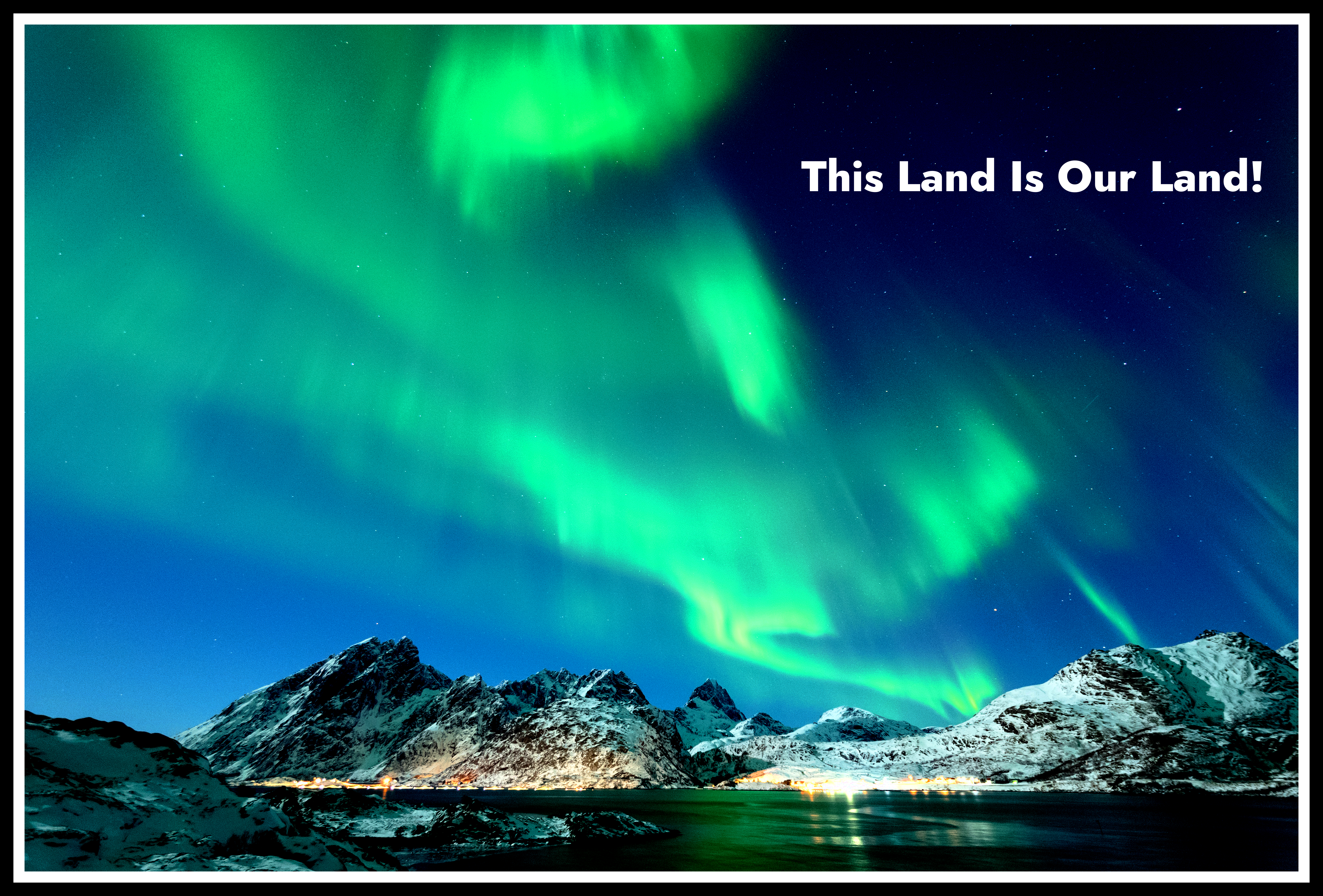
This land is my land. Not your land!

And to our Prime Minister, keep getting on the plane. Keep building alliances. Keep doing the unglamorous work of protecting sovereignty in a world that seems increasingly eager to repeat its worst instincts. Because we’ve seen this pattern before. And to Donald Trump and those who think like him: don’t tell us you’re coming to help or that we need you. We know exactly how that story ends.

Have you ever felt like the world was slipping sideways beneath your feet, like we’re right at the edge of the Earth, and the ground we assumed was solid suddenly isn’t? Of course you have as that is now our status quo.

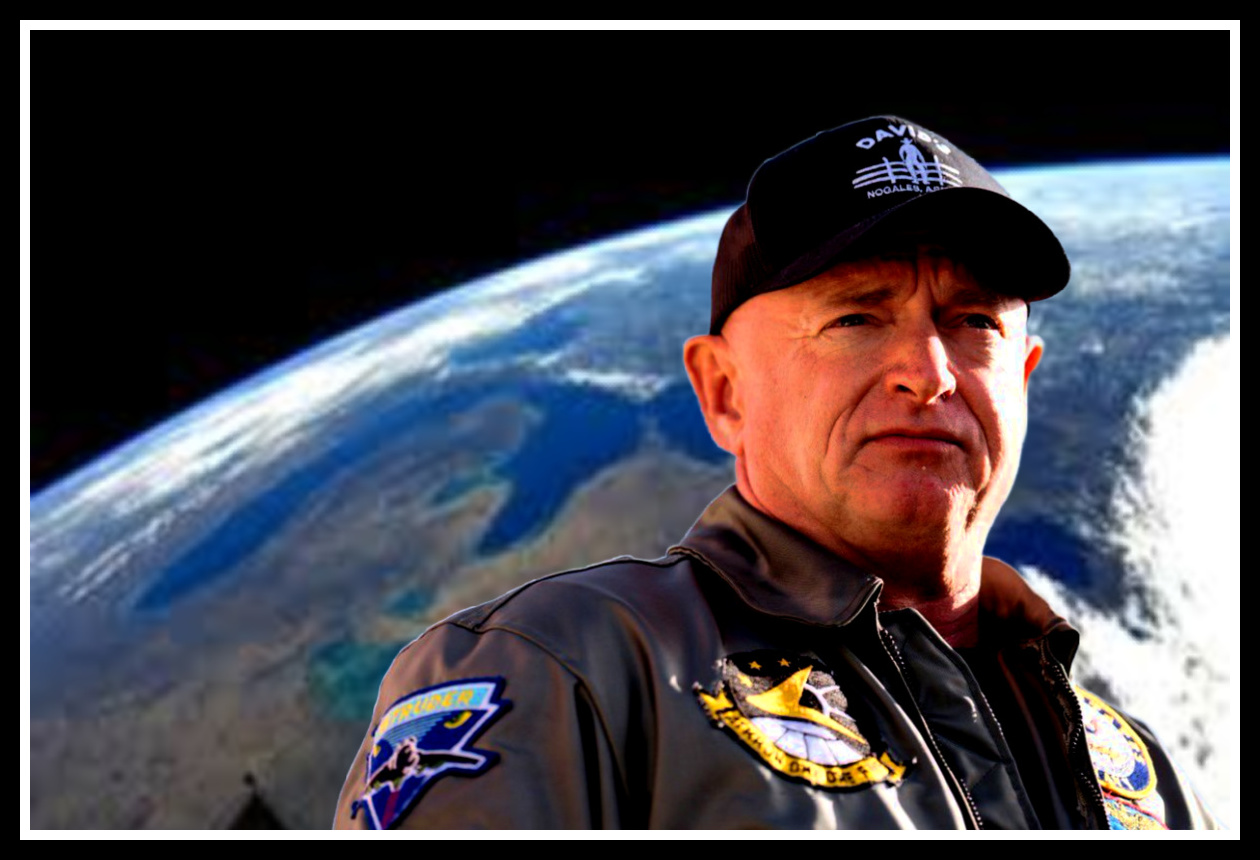
I feel disoriented. I feel the chaos and fear to my core. The rules we thought held us in place are being quietly unbolted. And in the middle of that, I keep coming back to this person. This is Senator Mark Kelly. Naval officer, combat fighter pilot, aeronautical engineer, astronaut and U.S. Senator. Four space shuttle missions. Nearly five million miles traveled in space. One hundred and eighty-six orbits of the Earth. More than 5,000 flight hours in over 50 aircraft. Almost 400 aircraft carrier landings. Married to Gabby Giffords, who survived an assassination attempt and lives every day with its consequences.

And now, he is being called a traitor and that he is seditious. Someone whose rank, pension, and standing are being actively targeted. How American is that?

I didn’t expect that, in the span of a year, we would be talking this seriously about war again, or about the military being dragged into political loyalty tests. I certainly didn’t expect to hear that sanctioning Mark Kelly is no longer just being floated, but is proceeding. When I heard that, I could barely breathe. What makes this even more grotesque is that it was Pete Hegseth himself who once argued that service members have a duty to refuse unlawful orders, because their oath is to the Constitution, not to a person. Let’s just park that hypocrisy for a moment.

Last night, I listened to Congressman Jason Crow (D) speak about the video he recorded with Mark Kelly, reminding service members that they are obligated to follow lawful orders and refuse unlawful ones. Crow told a story that matters deeply right now.

Before deploying to Iraq, he gathered his platoon of paratroopers, young men barely out of high school and showed them the film Platoon. That film includes a recreation of the My Lai massacre, which happened in real life. Crow used it to ask a hard question: how do people lose sight of their humanity under fear, chaos, and pressure? He had that conversation before combat, so that when they were in the fog of war, making split-second life-and-death decisions, they already understood their moral, ethical, and legal obligations.

That is not undermining the chain of command. That is reinforcing it. It also matters to be honest about how military training actually works. Officers who come through military colleges or advanced programs may receive extensive education in the law of armed conflict and military ethics. That is not the reality for most enlisted soldiers. Many are very young. Many are new. Many are asked to make decisions under extraordinary pressure with limited time and incomplete information.

Expecting perfect legal judgment in five seconds, without prior discussion, is not strength. It is abdication of responsibility.

I want to pause here, because many people who follow me have served, are serving, or come from military families. Some of you may disagree with me. This is not a conversation I’ve had broadly across my larger military circle, outside my very small inner one. And that’s okay. You don’t have to agree with me on this. But I stand firm in where I land.

I do not believe Mark Kelly should be treated this way. I do not believe reminding service members of their constitutional obligations is disloyal. And I do not believe we should be punishing people whose entire lives have been defined by service under pressure, simply because they refuse to collapse the Constitution into blind obedience.

We talk endlessly about sedition. We talk endlessly about patriotism. And yet here we are, on January 6, unable even to agree on a plaque honoring the police officers who defended the Capitol while a man like Mark Kelly is penalized for a lifetime of service.

If anyone believes this is about legality, constitutionality, or morality, we should be honest with ourselves. This is being done ‘to’ Mark Kelly. And the real question is whether that distinction matters at all to Donald Trump or to those who serve his cause.

Donald Trump talks endlessly about patriots. You would be hard pressed to find someone who has done more for his country than Mark Kelly. Naval service, combat aviation, space exploration and public service. That doesn’t mean there aren’t others. It means this man is the very definition of patriotism.

Just not patriotic to Trumps cause. And maybe that’s the point.

When the world feels like it’s tilting toward the edge, the people who still believe in rules, restraint, and responsibility are the ones treated as expendable. They are proceeding. And that should alarm all of us. And we’ve seen this before.

Senator John McCain (R) was a prisoner of war. He endured years of torture. He refused early release so others could go home first. He lived a lifetime defined by service and sacrifice. And Donald Trump mocked him. Dismissed him. Reduced his service to a punchline, all from a man who has no lifetime of service of his own, military or otherwise, and no visible legacy of service in his extended ancestry either.

I know what the word seditious means and the people I see fitting the description are running the White House.

Timing And The Cost Of Waiting

Posted: January 5, 2026 in Uncategorized

January is a difficult month for me. Today would be my father’s 103rd birthday. It is also four years since my brother passed away. Over time, January has become a convergence point of personal loss and memory. Dates that carry weight whether we want them to or not. I have never taken my Christmas tree down before January 6th. Not out of doctrine, but out of respect for carrying light to its proper end. Ritual matters when the world feels unsteady. Turning the lights off too early has always felt like conceding something unnecessary.

Like many people, today marks a return to regular work, routines. and responsibility. The holiday pause ends, and whatever unfolded while much of the world was distracted now has to be faced in real time.

I have never been someone who sees the world through rosecoloured glasses. But I have also never believed that the worst outcome is inevitable. Lately, that balance feels harder to hold, not because I have changed, but because the world has. We no longer move from crisis to recovery. We move from crisis to crisis. And much of that instability now radiates outward from the United States.

That sense of unease is sharpened by the calendar itself. Tomorrow, January 6th, marks five years since the attack on the U.S. Capitol. An insurrection I will continue to call exactly that. It is no longer just a historical marker. It is a reminder of how quickly norms can fracture, and how much damage can be done when power is pursued without restraint.

Congress sits today which means briefings, internal positioning, and the gradual emergence of information that does not always align with the first wave of public messaging following the recess. The important conversations around the economy, health care and Epstein are being sidelined.

In 2012, Donald Trump suggested that Barack Obama might use military action to boost approval ratings if his poll numbers slipped. No such action occurred. But the comment revealed something important about how Trump understands power. He sees public attention, timing, and polling as levers. Pressure in one area can be relieved by escalating activity in another.

Which makes the timing of this moment worth paying attention to. We are just exiting the holiday period, when credible polling simply is not conducted. Neither quantitative nor qualitative data reflecting public reaction to the events of the past several weeks will be available for days, possibly longer. That creates a familiar window. Without data, narrative moves first. Public attention shifts and other controversies cool. By the time polling resumes, people are no longer reacting to events themselves but to the stories that have already formed around them.

I am not claiming certainty about motive. But it is reasonable to note that this window exists, and that Donald Trump has long demonstrated an instinct for using timing to his advantage. When polling does resume, it will not capture raw reaction. It will measure sentiment after attention has already been redirected.

David Frum recently argued that this imbalance consistently advantages Trump. His supporters act immediately, facts optional. His opponents, who tend to care deeply about facts, institutions, and fairness, hesitate. They wait for confirmation, for perfect evidence, for the right words. Frum’s warning is that this hesitation becomes paralysis. Trump thrives in that space.

Many people assume Members of Congress, particularly Republicans, will not act. Fear of Donald Trump has proven powerful. But fear is not static. There may come a point where fear of constituents outweighs fear of one man. At some point, serving the country has to matter more than serving a single political figure.

I have been grounding myself in voices that understand oil economics rather than political theatre. Analysis from oil and gas experts like Matt Randolph writing in Forbes makes one point clear. Venezuelan oil is heavy oil. The closest real comparator is Canada. Canada’s oil sands did not become viable quickly or cheaply. They required decades of political stability and enormous capital investment. That raises a basic question about whether oil companies have made commitments to this investment and are being discussed seriously or rhetorically.

People with direct responsibility for war and peace are speaking plainly. Former NATO Supreme Allied Commander Admiral James Stavridis warned this week that language about running Venezuela should alarm anyone who has lived through the forever wars. Military power is zero sum.

To Americans reading this, this is your moment. Please do not assume someone else is calling your congressperson. Democracies do not self correct on autopilot.

To my fellow Canadians, I am watching Prime Minister Mark Carney. I understand the frustration of those who feel he has not said enough yet. That concern is fair. But diplomacy is not endorsement. It is risk management. Unity matters right now.

Canada is a vast country, but our greatest vulnerability is geographic. Nearly ninety percent of our population lives within one hundred and sixty kilometres of the U.S. border. That’s not a long way to travel for American troops. This is not fearmongering. It is a map that you can clearly see.

I do not have conclusions. What I have is a clear sense that timing, geography, history, and civic responsibility all matter. This is one of those moments we cannot afford to simply mark and move past.

I gave myself twenty-four hours. Twenty-four hours to sit with this. To calm myself. To see whether time would bring perspective or reassurance. I wanted to believe that stepping back would help me feel less unsettled. It did not!

If anything, I feel more uneasy today than I did yesterday. Not because new information has emerged, but because the ease with which military force is now discussed feels profoundly reckless. As though risk has been abstracted away. As though putting people in harm’s way is no longer treated as the extraordinary act it is.

Clearly this was a successful military operation. The United States military planned it well and it was implemented with precision. That has been true in many operations over the decades, and it is true here. The military did exactly what they were asked to do, professionally and effectively. That is not in question.

What is in question is everything around it. A successful operation is not the same thing as a coherent strategy. Military execution cannot substitute for political planning. The strategic thinking in this entire chain of events cannot fall entirely on the role played by the military and we should be deeply concerned about where this ends.

Based on the president’s own remarks during the press conference, I see a complete absence of a political strategy beyond the initial act. Donald Trump does not operate with policy coherence. He reacts. He lurches from one crisis to the next as he chases attention rather than outcomes.

We know his is not about drugs nor is it about democracy. Donald Trump himself has made that clear. This is about oil, leverage and power. It is about Trump’s view that treats the Western Hemisphere as something to be managed and controlled rather than a collection of sovereign nations.

As a Canadian watching this unfold, I cannot let that framing pass without comment. I will not normalize it and I will not pretend it does not matter. Canada needs to be ‘on guard’ which obviously sounds frightening but behaving otherwise would be very naive.

History matters here. Vietnam became a defining failure. It reshaped not only Southeast Asia, but the United States itself. Iraq saw a regime dismantled swiftly, followed by years of instability and sectarian violence. Afghanistan absorbed twenty years of military presence, only to see the institutions meant to hold the country together collapse almost overnight once that presence ended. In none of these cases did military excellence translate into durable democratic stability. That is a matter of historic record.

Regime change is not a technical exercise. You cannot precision strike legitimacy into existence. You cannot remove a leader and assume a society will reorganize itself neatly around values imposed from the outside. Nation building has repeatedly proven to be something the United States military is not designed to do. And yet that expectation persists. The message now being delivered is that the United States will run the show as they now believe Venezuela cannot run their own country. That power will be centralized, managed, and imposed by the U.S. government. In my opinion, that is exactly how you ensure that whatever follows will not be stable, legitimate, or lasting.

What continues to unsettle me is how casually military force and military cost are discussed. Not just the financial cost but the human cost. The number of troops required in a large jungle country would be extensive should the president follow through on his remarks about boots on the ground.

And then there is the word liberation. It is one of Donald Trump’s favourite words. Liberation through tariffs. Liberation through intervention. Liberation through coercion. Liberation defined by the most powerful actor in the room is not liberation at all. It is control. Something done to people, not with them. Something imposed, not chosen.

I do not waver in my assessment of Nicolás Maduro. He is a dictator presiding over a brutally oppressive and criminal regime. Canada’s position on that is clear. Prime Minister Mark Carney reiterated that one of the first actions taken by Canada’s new government was to impose additional sanctions on Nicolás Maduro’s brutally oppressive and criminal regime. At the same time, he reaffirmed that the Venezuelan people have the sovereign right to decide and build their own future in a peaceful and democratic society, and that international law must be respected. Some have criticized that statement for lacking force. I do not agree. In moments like this, restraint is responsibility.

I am asking something of the citizens of the United States, regardless of political stripe. This is the moment when Congress matters. Because if this continues without restraint, without strategy, and without accountability, then you have lost control of the process entirely. And history tells us what comes after that.

What I hope people will see is what is wrong here. Not the removal of Maduro, but the process. Marco Rubio explicitly told the House Armed Services Committee nothing would happen without their approval. It was not true. The explanation now being offered is fear of leaks. That is a curious justification, given the public leaks in this term have come from the Secretary of Defense himself, not from Congress. Democratic oversight is not a nuisance, it is the check and balance needed in a democracy.

In Donald Trump’s worldview, the Americas are all part of the United States of “America.” He sees oil is prosperity and force as peace. And if he says it loudly enough, he seems to believe it becomes true. But dominance is not strategy. And improvisation is not leadership.

And to my readers in the U.S., if cheaper gas is all it takes to sell you his story, that bargain will feel meaningless when you cannot feed your family or pay for medical care. I remain genuinely gobsmacked that this is being offered as a trade worth making.

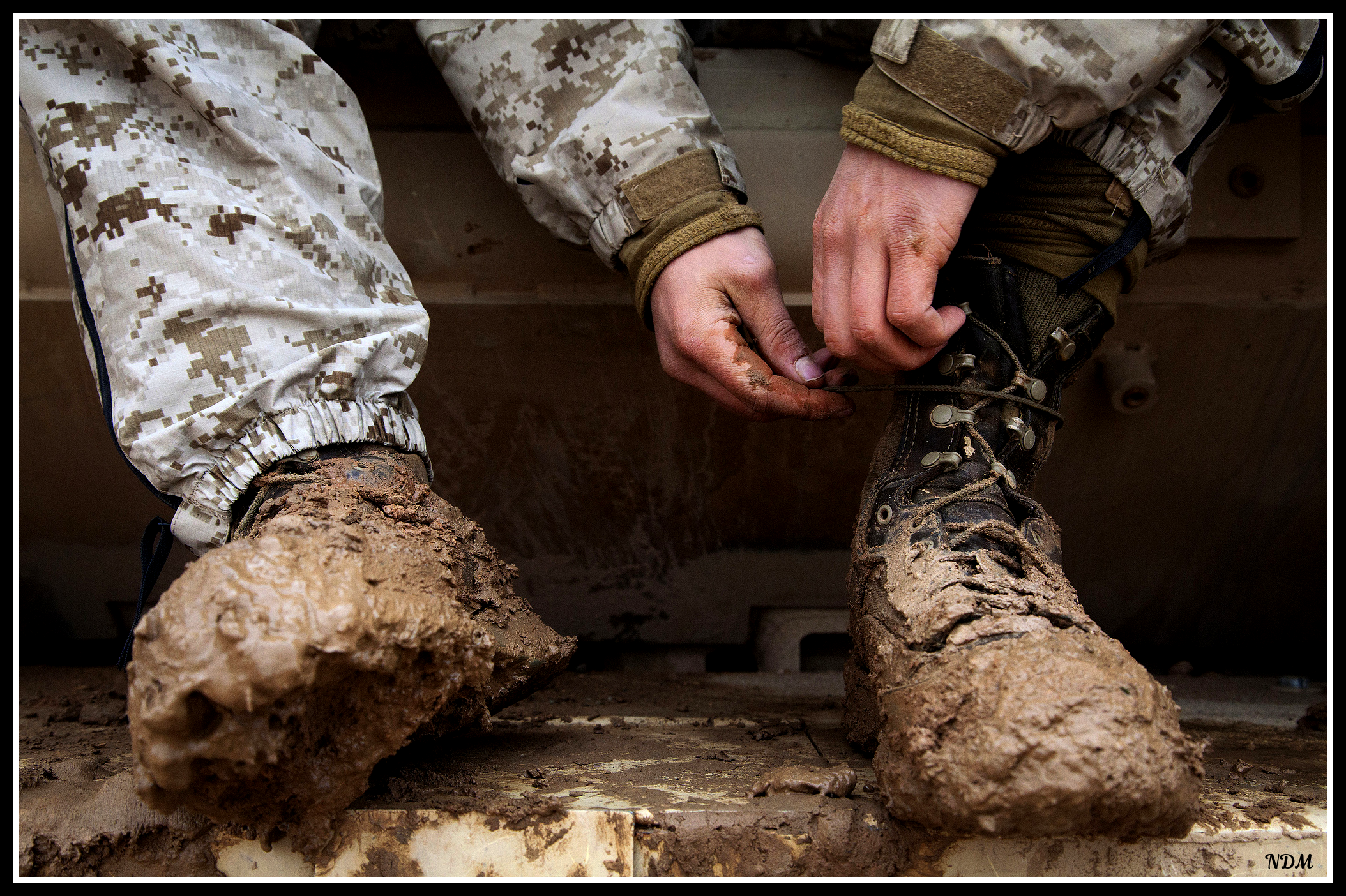
There is going to be a lot of mud to wade through.

10,000 Feet And Wide Awake

Posted: January 3, 2026 in Uncategorized

I was woken in the middle of the night by a notification that the United States had taken military action in Caracas and removed President Maduro and his wife. I followed developments as they unfolded. What remains unclear are the details, and those details will be filtered through the mouth of a serial liar, so I am not anchoring this post on whatever version is being sold today. Except the important piece that the U.S. would be leading Venezuela. What the hell does that mean?

This is a 10,000 foot view. Not a tactical analysis. Not a defence of Maduro, who has been under indictment in the U.S. since 2020, as he is no democratic hero. This is about power, precedent, and what this moment represents. Because it is almost never just about the man being removed.

In any other version of the United States we once recognized, something like this would unfold in the Situation Room. Structured. Constrained. Informed by institutions that understood the weight of military force. Instead, this president is watching events unfold from Mar-a-Lago, like a television show (his words). Standing around him are people like Pete Hegseth, Marco Rubio and Stephen Miller. Not as restraints, not as dissenting voices but as loyal enablers.

There are boots on the ground, and that phrase matters deeply to me. Not just posturing or using sanctions. This is a deliberately planned military operation in the Western Hemisphere. That is not how power has traditionally been exercised in this hemisphere, and we should not pretend otherwise.

When it comes to oil, this is not speculation. Trump himself has said this is not just about regime change. Those are his words. So when we hear, again and again, that U.S. Gulf Coast refineries are retrofitted for heavy crude and therefore the United States must rely on Canada, that argument weakens considerably when another source of heavy crude is suddenly back in play.

There are other realities we cannot ignore. China and Russia are deeply invested in Venezuela. That may not concern Donald Trump but it concerns me. There is an elected opposition figure waiting in the wings. Whether that person can realistically assume power, under what conditions, and whether democracy can actually be restored through military force are all open questions. These are early hours. Nothing about this is settled.

Which raises the harder question that cannot be avoided. Even if democracy is the stated goal, is it the role of the United States to enter another sovereign country and decide the outcome by force. The international reaction so far has been mixed. That matters. There will be time to unpack that. This is not that post.

To Alberta separatists who believe their future aligns more naturally with the United States than with Canada, if that is still your position this morning, then we have nothing in common in our worldview. Disagreement is one thing. Willful alignment with an increasingly unrestrained power is another.

For Canada, this is not academic. I have a son serving in the Canadian Armed Forces. I come from a military family. When I talk about sovereignty, preparedness, and the need to take defence seriously, even when it costs money and makes people uncomfortable, I am not speaking hypothetically. Military actions like this do not remain contained. They ripple outward. They always do.

Which brings me back, once again, to Congress. This is where restraint, accountability, and legitimacy are supposed to live, or not live at all. No matter how this moment is ultimately defined, the response of the United States Congress may be one of the most consequential factors for the entire world. Speaker Mike Johnson and others like him, men who loudly claim Christian values, appear to serve only one master and that master was sitting at Mar-a-Lago, likely rewatching the same spectacle he watched last night.

Congress either asserts authority now, over all decisions, including military ones, or it confirms that it has surrendered that authority entirely. There is no meaningful middle ground left. Congress returns Monday, January 5. To the people of the United States this part is on you. Make your representatives accountable. Demand oversight, restraint, and that institutions function before they are hollowed out beyond repair. The consequences of failure will not stop at your borders.

I said I was not going to watch the press conference, and for the most part I haven’t. I have it on mute. I turned the volume up briefly, and what struck me immediately was not substance, but fatigue. A tired, familiar voice delivering the same well worn lines. I am not going to listen further before posting this, because there is nothing coming that will meaningfully change what matters here. The danger is not in what is said. It is in what is being done, and where accountability is failing.

And one more thing. Do not let this distract you from Epstein. Do not let it disappear from public view. Ask yourself whether creating a global spectacle might serve another purpose entirely. At this point, it would be naïve to assume distraction is not part of the strategy.

One final clarification. Going forward, I am going to stop using the word American to describe the citizens of the United States. Donald Trump treats “American” as if it belongs to him and extends over everything in the Americas, and I am not granting him that authority. We are all Americans in this hemisphere. They are citizens of the United States.

This morning, I looked out at a calm, frosty Alberta landscape. Everything looked unchanged, quiet and familiar. History has taught us that calm is not the same thing as security. Sometimes the world shifts while everything still looks exactly the same. And sometimes, that is when we should be paying the closest attention.