Posts Tagged ‘books’

I’ve spent a lot of time lately writing about things that are heavy, personal, and deeply consequential, and while that’s not going to change, every now and then I need a different kind of mental exercise. Something a little lighter and a little more entertaining. Something that reminds me why I enjoy paying attention in the first place. This Vanity Fair photo series does exactly that, because underneath the outrage and the hot takes, there’s something genuinely interesting going on here about strategy, image, and what happens when political presentation is stripped down to its bones.

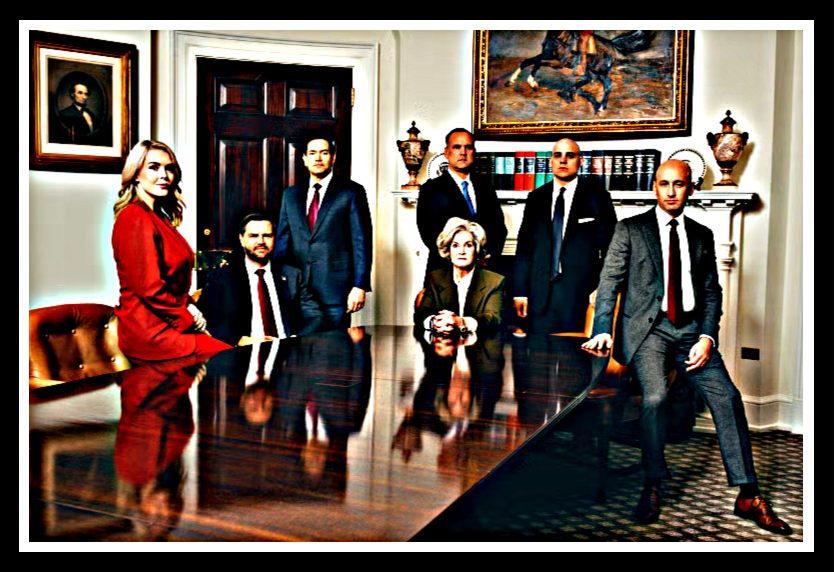
None of this was accidental. The photographer, Christopher Anderson, wasn’t sprung on the White House without warning. His work was pre-approved. His bio was known. His style was known. He has made a career out of shooting very close images. Close enough to remove the usual polish, and Vanity Fair’s editor described the work as an attempt to cut through what Anderson himself has called the “theater of politics.” So the shock some people are expressing now feels, at best, selective.

Listening to pundits dissect the images, what struck me wasn’t the outrage so much as the misreading. These weren’t meant to flatter, and they weren’t meant to humiliate either. They function more like scans. Almost like x-rays. Not images designed to reassure, but images designed to show what’s there once distance, lighting, and control are no longer doing the work for you.

I’ll admit something here. On a purely emotional level, this delights me. There’s something deeply satisfying about watching people who spend their lives managing image and narrative suddenly confronted with a lens that refuses to play along. Not cruelly nor theatrically but rather precisely. Anderson’s brilliance isn’t just technical; it’s strategic. He shows them not as caricatures, but as they are when the scaffolding is removed. And for someone who pays close attention to power, messaging, and performance, that kind of clarity is genuinely enjoyable to witness.

Take J.D. Vance, photographed against a wall that quietly provides visual reference points. It’s subtle, but it matters. A way of grounding scale and proportion for someone who has spent a great deal of time rhetorically inflating his own presence. The photograph doesn’t argue, doesn’t editorialize, and doesn’t correct him. It simply measures and lets the viewer connect the dots. With these references it is easy to measure his true height.

And then there’s Karoline Leavitt, which is where the conversation predictably veered off course. Yes, you can see evidence of cosmetic work. So what. That’s neither shocking nor particularly interesting. What is interesting is what Anderson didn’t do. He didn’t soften. He didn’t blur. He didn’t smooth away the human texture that appears on every face when a camera gets this close. Anyone who has ever been photographed at that distance knows that skin behaves like skin.

It’s worth noting here that the image you’re looking at has had an HDR filter applied, and you can feel the difference right away. That small change alone alters clarity and mood, which is worth keeping in mind when we talk about what a photograph is, and isn’t telling us. Even light intervention shifts how an image reads, which only underscores how deliberate Anderson’s original choices were.

The result, even so, is striking. She’s 28, but she reads older, not in years but in bearing. Almost matronly, in the sense of discipline rather than age. This isn’t a face inviting dialogue; it’s a face trained for delivery and repetition.

Which brings Donald Trump into the picture, even when he’s not in the frame. Because he has publicly praised Leavitt not just for her performance, but for her appearance, focusing obsessively on her lips and how they “move like a machine gun.” Placed next to this image, stripped of gloss and distance, that comment lands differently. Less like admiration and more like a functional assessment. Less about judgment or insight, more about output.

This isn’t a beauty image. It isn’t about youth or glamour. It’s about role. Should I bother to mention the slight orange tinge to her nose?

Politics usually depends on illusion. In photos using flattering angles, soft light and careful distance. These photographs decline to participate in that bargain. They don’t demean anyone, and they don’t exaggerate. They simply remove the padding and let the structure show. An x-ray doesn’t flatter you, and it doesn’t insult you either. It just tells you what’s going on under the surface.

And before anyone worries that I’ve gone soft or lost my edge, don’t. I’ll be back, as always, with plenty to say about politics provincially, nationally, and globally. This is simply a reminder that sometimes the most revealing political commentary doesn’t come from a speech or a press conference. Sometimes it comes from a camera, a small adjustment, and the uncomfortable realization that once you really look, you can’t unsee how the machine actually works.
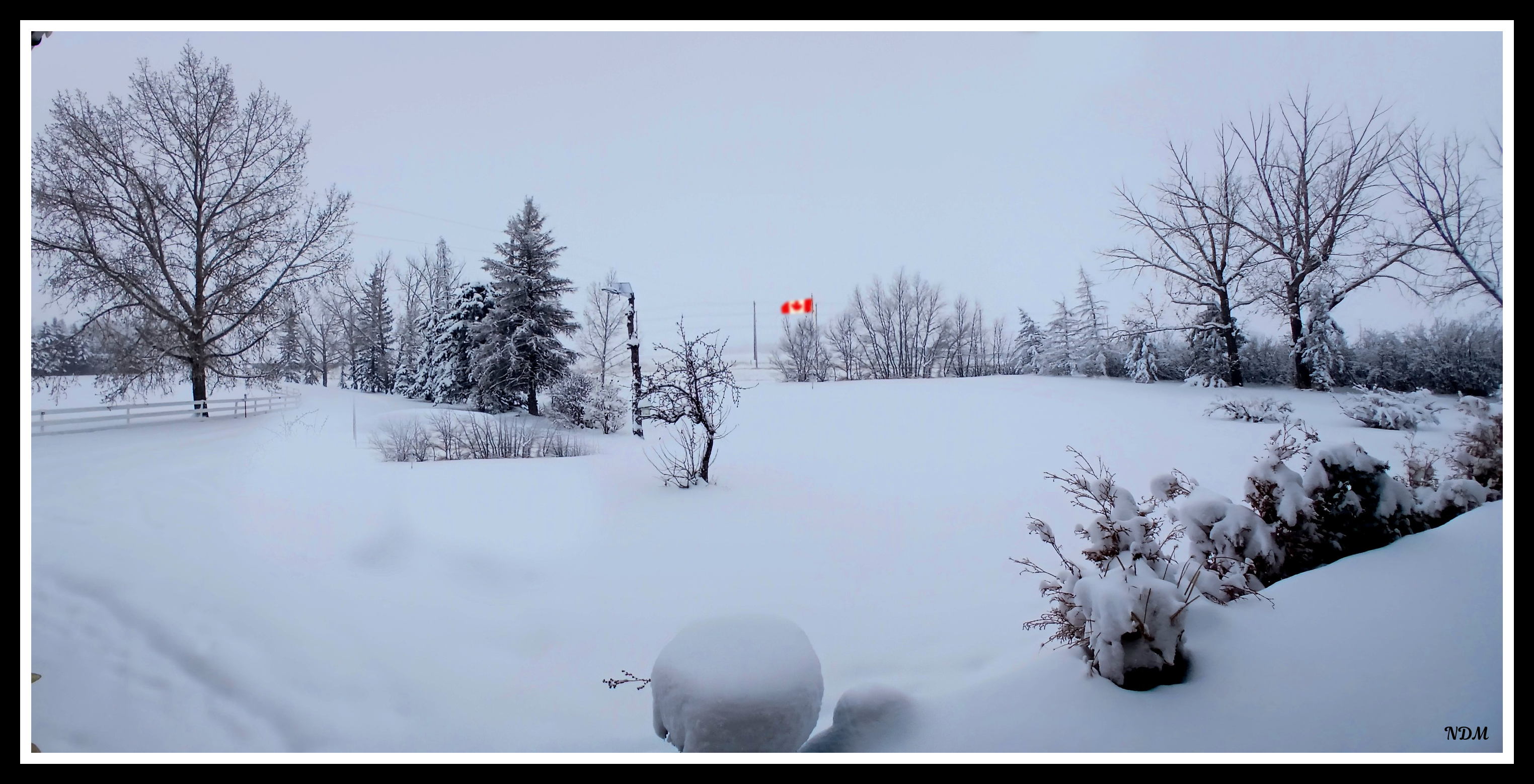
Last night I sat down with the intention of putting up my Christmas tree. But before I even touched the lights, I looked out my front window and saw what I always see this time of year: the quiet that villains underestimate, a winter prairie, a lone flag, and a province ready to string its own lights and write its own ending.

That was supposed to be my escape, a quiet moment to step away from politics, breathe, and let myself remember what this season means to me. But as I stood there untangling lights, my mind was racing in a dozen other directions: Putin announcing he will never give back the Ukrainian land he stole, the laws of armed conflict circling my thoughts, and now, because Alberta and specifically the UCP never miss an opportunity to raise the temperature… a new disaster is unveiled by our own government which a can only be described as a very dark fairy tale.

So let me tell it the way it came to me, standing in my living room with a half-lit Christmas tree and a full-body rant building.

Once upon a time, in a province known for grit and generosity, there lived a woman who fancied herself a queen.
I think her name was Queen Danielle. She wore a crown forged out of grievance and applause, and behind her stood several shadowy figures, not through the will of the people, but through decrees disguised as “choice” and “freedom.” And alas they unveiled their latest spell: Bill 14.

Every fairy tale has a moment when the villain finally stops pretending. This was that moment. Bill 14 removes oversight from Elections Alberta. It clears a path for a separatist referendum petition even if it is unconstitutional. Even if it violates treaties. Even if it fails every requirement of the Federal Clarity Act. In the old storybooks, this is where the queen waves her wand and announces, “The rules no longer apply to me.”

And as I stared at my tangled Christmas lights, I thought, Oh my God. We are living inside the chapter where the queen rewrites the kingdom.

And here is where the fairy tale becomes prophecy: This is exactly how it started south of the border. Not with a bang, but with “technical changes,” “procedural tweaks,” and “temporary exceptions” that slowly gutted democratic safeguards. A slippery slope never feels like a slide until you’re already halfway down. Albertans need to understand, clearly, that what we are watching here is the same playbook being run in slow motion.

I’ve perhaps tried to deny the “Trump-lite” comparisons, but today it was impossible not to see it. South of the border, people are begging for a Congress that will stand up to a would-be ruler. Here in Alberta? Not one MLA in the governing party seems willing to stand up to Queen Danielle or the shadows behind her. They just nod, bow, and pretend this is fine.

But let me break from fairy tale language for one crucial, real-world point: The government are saying the separatists need to do the same petition Forever Canadian did. Except they don’t.
Because they changed the rules. They only need half the signatures Forever Canadian gathered. And they get an extra month.

Forever Canadian began with a petition. As Thomas A. Lukaszuk has said many times: we have moved from petition into momentum. And now, we move from momentum into MOVEMENT because what is coming requires every single Albertan who cares about our future to show up. If you signed the Forever Canadian petition before or you volunteered or canvassed we still need you to sign into the system again. Not to re-sign the petition, but so we have accurate, up-to-date information for the work ahead. And if you’ve never heard of this until today please sign up now. forever-canadian.ca

But now this is the part of the fairy tale where the villagers decide whether they show up or surrender the ending to someone else.

And I’ll tell you exactly where I stand. If there are calls to be made, I’ll make them. If there are doors to knock, I’ll knock them.
If there is organizing to be done, I’ll do it. If we need to rally again, I’ll be there, boots on, voice ready.

Because Alberta already said, loudly, that we want to remain part of Canada. And I refuse to let an cabal of ideologues twist the story into something none of us asked for.

I wanted last night to be about Christmas lights. But villains don’t schedule their power grabs around my holiday decorating.
And this fairy tale can only end one of two ways; when the people give up or when the people rise I know exactly which ending I’m fighting for.

If you’re reading this from the United States, please know this: we see what’s happening to you, and we are determined to stop that slide from taking hold here. We’re fighting it now, while we still can.

If you’re reading this from elsewhere in Canada, understand how critical this moment is. Alberta is part of our country, and protecting that bond protects us all. And if you’re reading this here in Alberta… well, you already know what needs to be done. Our province is worth fighting for, and we’re not letting anyone rewrite its future.

The fairy tale isn’t over but I’ll be damned if we let the villains write the ending.

Before I even begin, I want to say this clearly: I would never change a Franklin book, its message, or its imagery to suit political commentary. These stories were foundational for my kids and for me and the lessons Paulette Bourgeois wrote and Brenda Clark illustrated deserve to be kept intact exactly as they are.

Which is why it feels so bizarre, and frankly insulting, to watch someone else drag Franklin into a political stunt while utterly disregarding the values these books were built on.

Because yes, the U.S. Secretary of Defense (who still calls himself the Secretary of War, as though renaming the job is part of the fantasy) posted an AI-generated picture of Franklin the Turtle hanging out of a helicopter holding a gun. And let me tell you, as someone who read Franklin books for decades and actually respects their moral compass: there is not a single Franklin story where he leans out of a helicopter with a weapon.

So while President Trump’s team continues rewriting norms, reality, and now children’s literature, I’d like to remind them what Franklin books actually taught. And if they’re going to keep dragging Franklin into this, the least we can do is put the real titles back on the table, the ones with actual lessons, not whatever that unhinged helicopter scene was supposed to convey.

Let’s look at some actual Franklin titles I read to my children as maybe they may be relevant in name only to those who frequent the oval office. And yes for the sake of this I will allow the titles to be related to the current US Administration. But just the titles and maybe the lessons that COULD be learned.

Franklin Is Bossy; inspirational reading for anyone who believes leadership involves yelling.

Franklin Plays the Game; although in Washington these days it’s mostly about changing the rules mid-game.

Franklin Is Messy; a political allegory if I’ve ever seen one.

Franklin’s Bad Day; every day ending in “y” when President Trump opens his mouth.

Franklin’s New Friend; once Putin, now the Saudi Prince… the club rotates.

Franklin Is Lost; spiritually, ethically, emotionally, geographically. Pick one.

Franklin Fibs; I don’t even have to explain this one.

Hurry Up, Franklin; or: Hurry up, Trump, could you please just step out of the building? Any building.

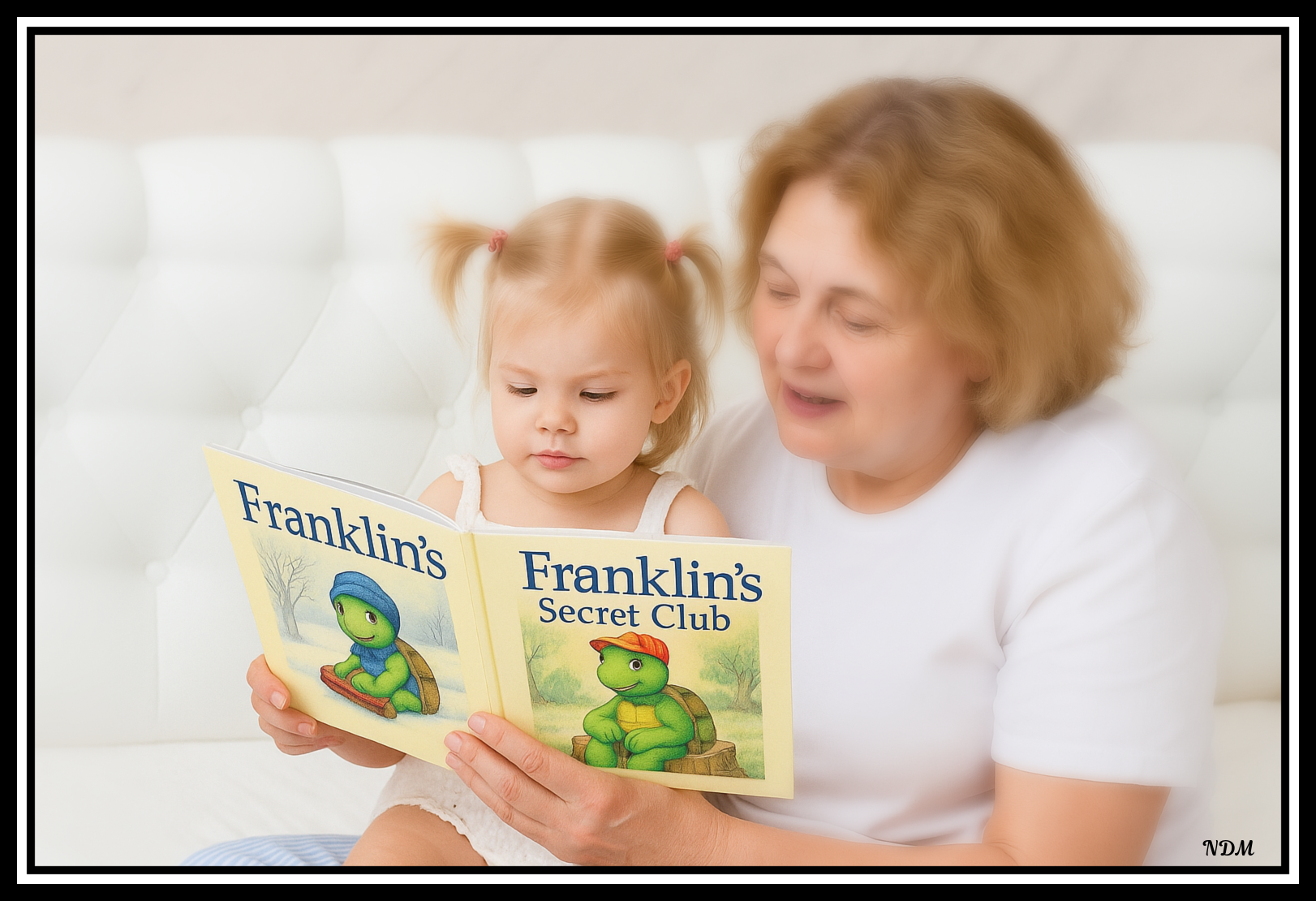
Franklin’s Secret Club; perfect for a president who loves a secretive inner circle, complete with loyalty oaths, whispered instructions, and a clubhouse password no one else is allowed to know. I’m guessing the entrance involves tapping three times on a gold-plated door and saying, “Do you love me? Tell me you love me.”

These books were designed to teach children kindness, honesty, problem-solving, and the value of friendship. It is… something else entirely to see those teachings twisted into a militarized meme featuring Franklin leaning out of a helicopter like he’s auditioning for a role in Rambo: The Turtle Years. My apologies for the sarcasm as I relate the titles to current American politics but would they understand the lessons if they moved past the titles

I don’t want to misuse Franklin here. I don’t want to transform a gentle Canadian icon into a prop. I don’t want to corrupt a childhood lesson into a political stunt. However I am using it to comment on the absurdity.

Because when we’re living in a moment where even after verifying screenshots, checking sources, and confirming clips, we still find ourselves asking, Is this parody then something has gone very wrong.

And CBC, if by chance you, Kids Can Press, or anyone who holds licensing rights to Franklin is listening, do you have any ability to tell the Secretary of Defense to stop? I know cease-and-desist letters can’t solve everything, but in this case, I would frame one on my wall out of sheer gratitude.

Franklin deserves better.

Are You There, God? It’s Me Nancy.

While Alberta is the current battleground, this isn’t just a provincial issue. What’s happening here is part of a much larger movement. A deliberate push to drag us back to some imagined “better time” the kind of sanitized, patriarchal past that Donald Trump has built his entire political brand around. And now that same “make it great again” mindset is leaking north, into our schools, our politics, and even our school libraries.

There are a number of books I grew up with, and still hold close, that are now somehow in question. And honestly? I find that profound. Disturbing. Even dystopian.

Harry Potter is under attack. A Wrinkle in Time is “controversial.” To Kill a Mockingbird and Of Mice and Men, classics that exposed racism, poverty, and injustice, have been yanked off shelves in libraries across North America. And The Handmaid’s Tale? Honestly, that probably belongs in Social 30 as mandatory reading. It’s hardly even fiction anymore.

But the one that hits me hardest? Are You There God? It’s Me, Margaret. by Judy Blume. That book was my coming-of-age manual. It talked about things like puberty, periods, insecurity, bras, boys, and yes, even questioning religion. It was honest and awkward and wonderful. And it made me feel seen. I can’t imagine my pre-teen years without it. I also can’t imagine that the millions of people who read it somehow turned into deviants just because it dared to mention menstruation.

And yet, here we are. A time when books that deal with real experiences, LGBTQ+ identity, racial injustice, gender roles, trauma, faith, are being framed as threats. Not discussed. Not debated. Just… banned. There are books being targeted simply because they reference homosexuality. For some, that’s apparently enough to warrant removal from a library shelf. So I guess we should also be pulling the Bible out of schools too? I mean, if we’re banning things with sex, violence, and controversial ideas, it fits the bill. No?

I used to think this kind of censorship only happened in movies. In places far away. In ultra-conservative, evangelical Southern U.S. towns where dancing wasn’t allowed. You know, Footloose territory. But I live in Canada, well specifically Alberta. And lately, it’s starting to feel like I’m living in that very script, only this time, it’s real. Policies are being drafted. School boards are being pressured. Ministers of Education are drawing lines. Librarians are afraid.

And students? They’re being told that their realities are “too political” or “too inappropriate” to exist in print. I’ve used the phrase “evangelical right” more than once. Maybe that needs some nuance. Maybe not. Because when you strip away the branding, the strategy is clear: control the narrative, limit access to ideas, and silence anything that doesn’t fit the worldview.

The quiet but powerful Christian nationalist network in the US has influence stretching from Washington to local school boards. Throw in a little Dominionism, sprinkle in some Take Back Alberta, and voilà, you’re not in Footloose anymore. You’re in something far more organized right here in Alberta.

Let me tell you a story. I remember being about 12 or 13, and my parents, clearly uncomfortable having “the talk” handed me and my sister this four-volume set called the Life Cycle Library. Picture it: early 1970s, plain soft covers, cartoon illustrations of intercourse (not live action, don’t panic), and honest, clinical information about bodies, puberty, and yes, sex. It even gently touched on homosexuality.

This was over 50 years ago. In a conservative (Red Tory) household. And it was fine. It wasn’t shameful. It wasn’t corrupting. It was information. And it was given with trust that we could read it, think about it, and maybe even ask questions. That’s what books do. They inform. They stretch your understanding. They make awkward things a little less scary. And sometimes, they make you feel like you’re not alone.

When I was a kid, I devoured books. Not just Judy Blume or L.M. Montgomery, I read Dale Carnegie at 9 and was knee-deep in a medical conspiracy book called World Without Cancer by 12. Maybe that wasn’t typical. But the point is: I wasn’t censored, and I turned out okay. Mostly.

This isn’t a fringe debate anymore, it’s at our school board meetings, our provincial legislature, and our kitchen tables. It’s here. Now we have education ministers making sweeping declarations about which books don’t belong in schools. No clarity. No context. Just vague threats and moral panic. I don’t even know which of these “offending” books are actually in the schools and libraries. Is this a real purge or just political performance art? Either way, it’s dangerous. And it’s happening here.

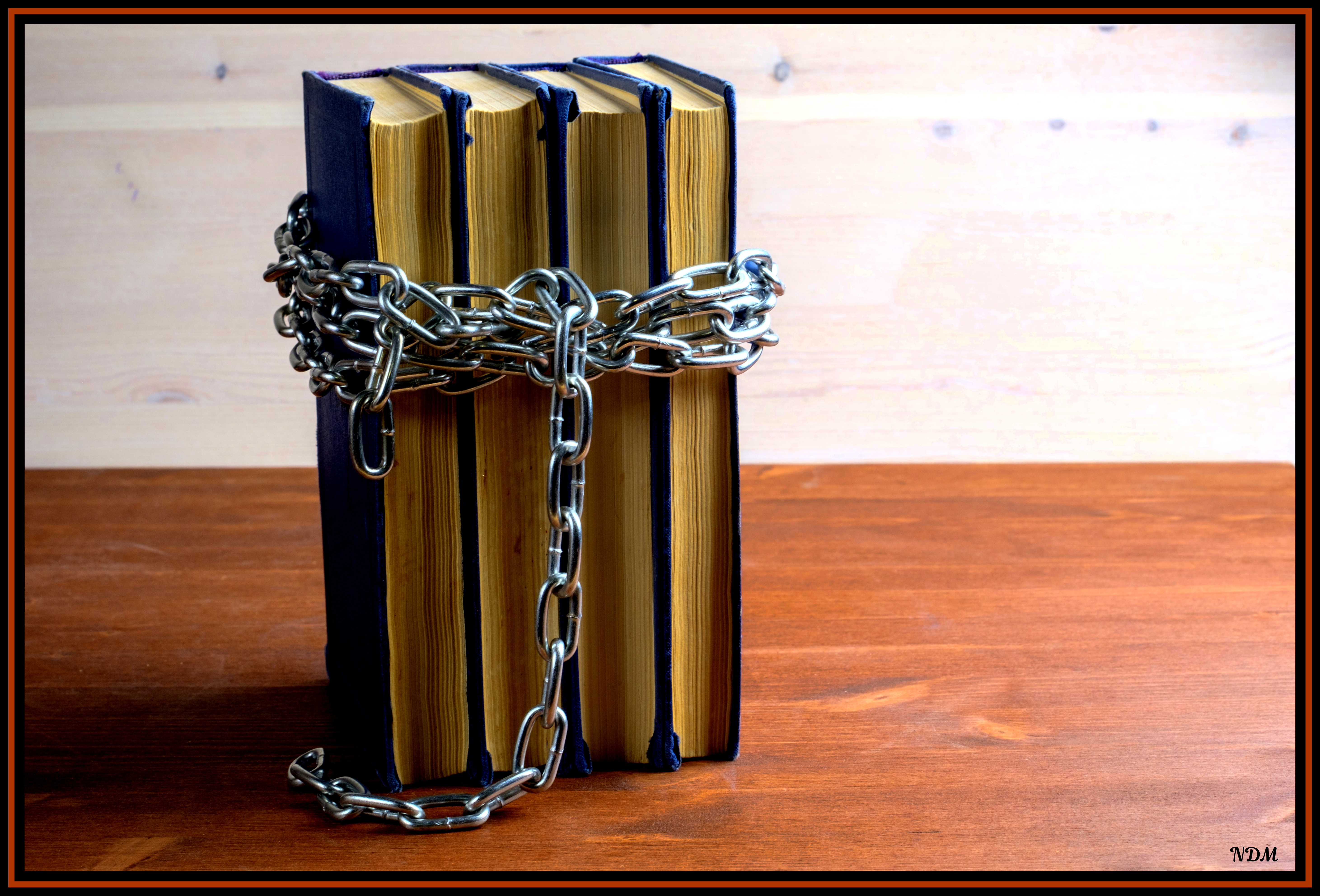
If we don’t stand up for the right to read, the right to think, someone else will decide for us what our children aren’t allowed to know. If you’re scared of kids reading about periods or pronouns, maybe the problem isn’t the books. Maybe it’s the people banning them. Because this was never about protecting kids. It’s about controlling them. And once you start banning books, what you’re really banning is empathy, perspective, and truth.

That’s not moral leadership. That’s authoritarianism.