Posts Tagged ‘donald-trump’

Calm Is Not Inaction

Posted: December 26, 2025 in Uncategorized
Tags: , , , ,

For some people, it’s about shopping and deals and doing Christmas all over again at full speed. When I was growing up, it meant visiting people. We would see what gifts they’d received, sit on unfamiliar couches, and eat again. Today, in our house, it’s much simpler. Hot turkey sandwiches, as many desserts as you want because there are always more than we’ll ever finish, and absolutely no pressure to do anything at all.

And before anything else, I want to say this. Yesterday was a good day. In fact a really good day. Time with my core family. Laughter. Familiar rhythms. I felt gratitude in my whole being as much as in my head. I don’t take that for granted.

It’s from that quieter place that I finally listened to Prime Minister Mark Carney’s Christmas messages this morning. Both of them. One to Canadians and one to the women and men of the Canadian Armed Forces. What struck me wasn’t a soaring line or a sentimental turn of phrase. It was the tone. These were serious messages. Intentionally so. Not bleak nor alarmist. But grounded in the reality that we are living in a moment that does not reward denial or fluff. Historically, Christmas addresses tend to soften the edges, to reassure, to smooth, to wrap things gently. This one didn’t do that. There was a deep vein running through both messages, and it felt deliberate.

Carney spoke about hope and light, absolutely, but always in the context of darkness already acknowledged. He spoke of unity not as a slogan, but as a necessity. And when he addressed the Armed Forces, there was no romanticizing and no abstraction. He spoke about sovereignty and security as things that are not guaranteed but rather defended daily, by people spending this holiday far from home.

What’s been interesting to watch since is how some of the commentary has reacted to that seriousness. There’s been a lot of talk about tone, about how measured it was, how sober, how unadorned. Some have praised it and some seem unsettled by it. And that, too, tells us something.

We’ve become accustomed to leadership that either performs reassurance or manufactures outrage. Loudness is often mistaken for action. Constant visibility is confused with effectiveness. In that environment, calm can look like absence, and restraint can be misread as inertia.

I don’t think that could be further from the truth here. It’s not just that Mark Carney doesn’t suffer fools though I think that phrase fits more than people are comfortable admitting. It’s that he operates in a way many of us have forgotten how to read. We see composure and assume things must be calm. We see deliberation and assume nothing urgent is happening. We hear careful language and decide that nothing meaningful is underway.

None of that is true.

Quiet leadership is not passive leadership. Calm does not mean complacent. And seriousness delivered without theatrics does not mean inaction. In fact, it often signals the opposite. That work is being done methodically, deliberately, and without the need to narrate every step for public consumption.

Carney understands the seriousness of the global moment we’re in. He doesn’t need to name every actor or spell out every threat for that to be clear. Donald Trump’s shadow looms whether spoken or not. Vladimir Putin doesn’t require explanation. Alliances are shifting. Europe is repositioning. Power is being tested. History tells us that when predators circle one another, one eventually consumes the other.

But what I keep coming back to, especially on a day like today is that right now, I care most about us.

Canada has never been strongest when we’re loudest. We’ve been strongest when we’re steady. When we resist the urge to turn inward on one another. When we recognize that domestic turmoil is not a sign of independence or strength, but a vulnerability that others are always willing to exploit.

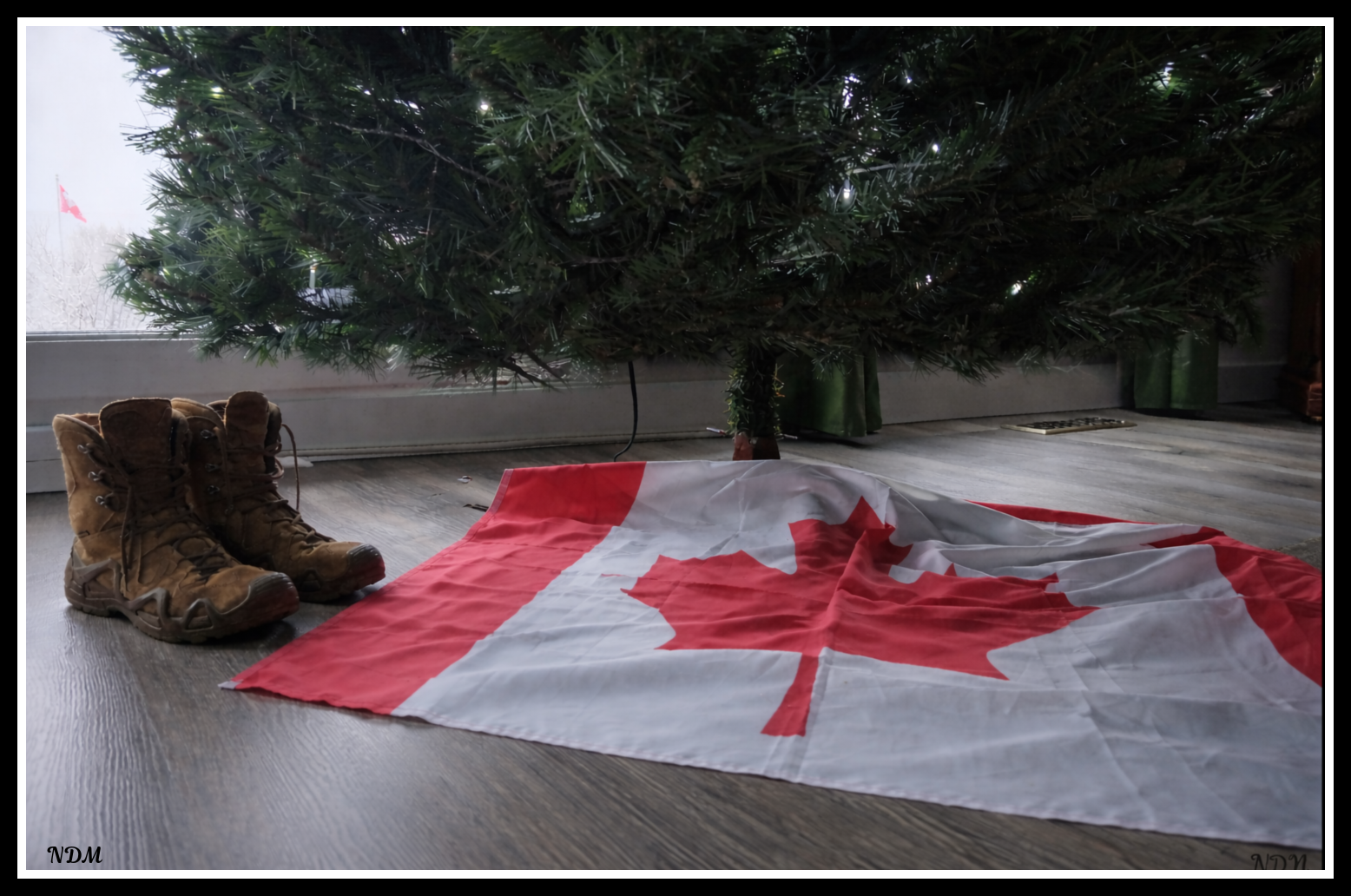
I staged the image I’m sharing here. My son’s very used military boots, an old Canadian flag, the Christmas tree above. What I didn’t notice until after I uploaded it was the flag outside, still flying on the pole in our front yard, visible through the window. The flag wasn’t staged and that part wasn’t a planned statement. There’s a light snow falling this morning, the kind that softens everything without erasing it. Standing there, looking out, it felt deeply emotional in a way that’s hard to explain, quiet, steady, unmistakably Canadian.

That’s why the tone of Prime Minister Carney’s messages matters so much. They weren’t designed to soothe us into complacency or to whip us into fear. They were designed to orient us, to remind us that seriousness is not something to be afraid of, but something to rise to.

And yes, Alberta more than anyone needs to hear this. Not as a rebuke, and not as a lecture, but as a reminder born of lived experience. We do not get through what lies ahead by fracturing. We get through it by recognizing seriousness when it’s offered honestly, even when it isn’t wrapped in comfort or spectacle.

This Christmas, the Prime Minister spoke to Canadians like adults. He didn’t promise ease. He didn’t perform reassurance. He acknowledged reality, and trusted us to sit with it.

On a Boxing Day that’s quiet, full of leftovers, and heavy with reflection, that feels exactly right.
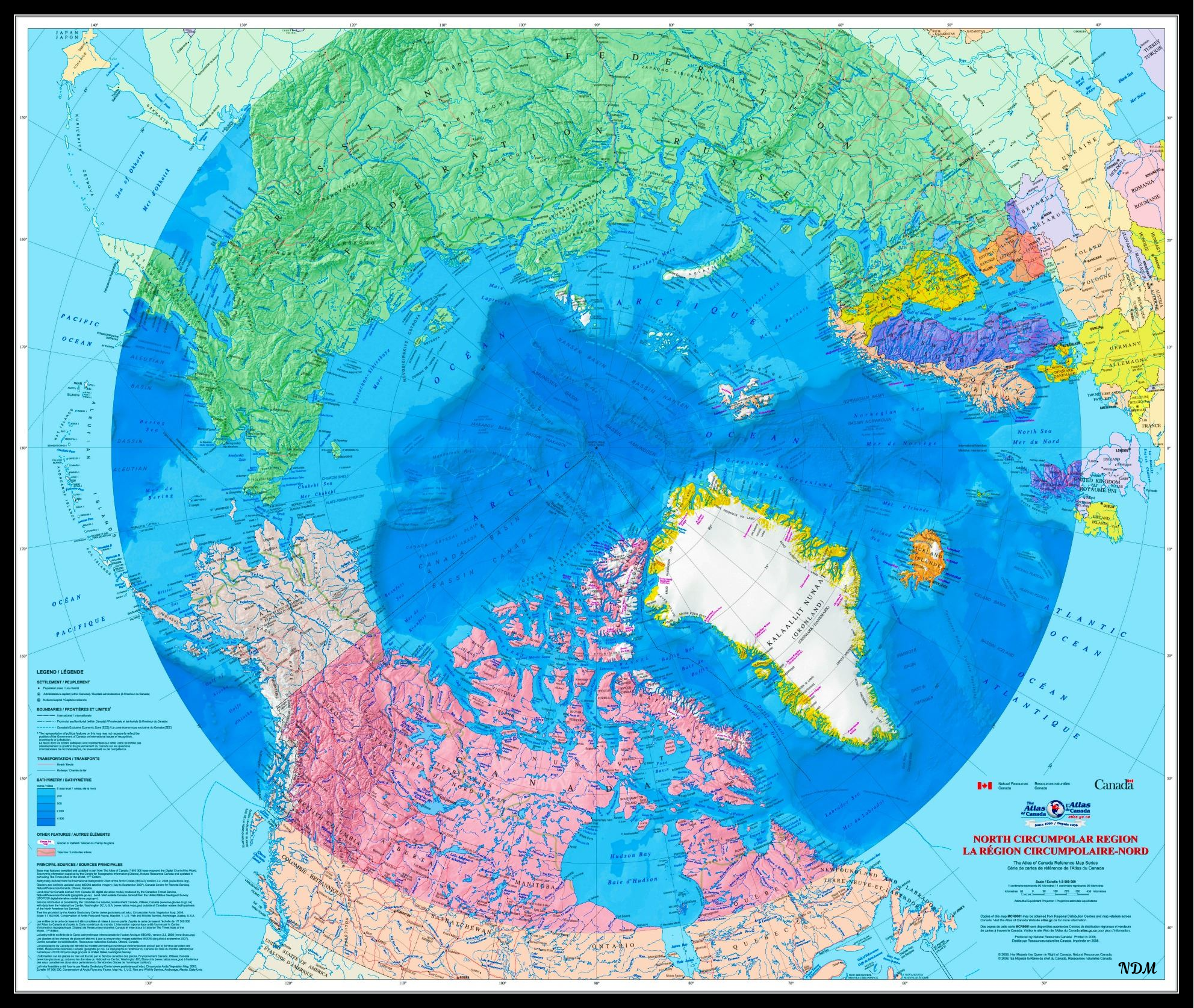
There’s something I say a lot when I’m trying to get people to understand the North and particularly how vast this country actually is. I usually turn it into a question. “If you were to leave Toronto and travel in a straight line north to Alert, Nunavut, how far do you think you’d be going?” People will throw out numbers. They’ll guess. And then I ask the second part. “If you went that exact same distance south, where do you think you’d end up?”

Almost no one ever gets this right. Most people say somewhere in the United States. Maybe the middle of it. Sometimes Mexico.

The actual answer is Bogotá, Colombia. In fact, just a few kilometres south of Bogotá. Every single time I say that, people stop.

Because once you hold that in your head, you can’t pretend the North is abstract anymore. It is a massive part of our country. That distance tells you something about scale, and scale tells you something about vulnerability.

That’s why, when I hear people talk casually about Greenland, I pay attention. With the renewed conversation this week about the United States assigning a new envoy to Greenland, I once again felt very concerned. This isn’t a response to an invitation. It isn’t a request for partnership. It’s the familiar posture of I’m doing this because I want to.

Greenland is not an idea. It is not a strategic blank space. And it is not a prize waiting for a powerful country to notice it. Greenland is primarily Indigenous, specifically Inuit. It is already someone’s home. And for my fellow Canadians it is not very far away. At Canada’s northernmost point, the distance from our coast to Greenland is 26 kilometres, (16 miles) miles. That’s not an ocean separating us. That’s proximity you can almost see across.

Only about 2% of Canadians have ever been north of the 60th parallel, even though nearly half of our landmass lies above it. And even then, most trips north are to places like Whitehorse or Yellowknife, northern cities, yes, but still sub Arctic, still below the tree line.

The Arctic is different. Being above Hudson Bay, above the ice, above the assumptions we carry from the south, that changes how you understand distance, exposure, and survival. It also changes how seriously you take casual talk about “acquiring” places that are already inhabited, already governed, already culturally whole. Those of us who have spent time in the North understand this instinctively.

Remote Indigenous communities are not empty space. They are resilient, deeply rooted, and far too often spoken about as if they exist only in relation to what outsiders want from them. Greenland is no different.

Which brings me to Denmark. I have always had a particular affinity for Denmark, my sister married into a Danish family, and growing up, Denmark was simply part of our world. My brother in laws mother was our Nana Cail. Familiar. Human. Not abstract. So when people talk about Greenland as if it is a loose possession, barely tethered to anything meaningful, it tells me they do not understand the depth of relationships or the weight of history that comes with it. Greenland’s relationship with Denmark is complicated. All colonial histories are. But complexity does not equal vacancy. And it certainly does not create an invitation for others to test boundaries simply because they can. Especially when Denmark is a NATO ally.

At some point, this conversation cannot just come from Denmark or Greenland. It has to come from NATO itself, reminding the United States that when it talks about Greenland, it is talking about a NATO-affiliated territory. This is not a sandbox. These alliances exist precisely to prevent powerful countries from testing limits simply because they feel entitled to do so.

Every time I name Donald Trump in my writings I want to be precise. I am not talking about one man acting alone. I am talking about an administration, a set of enablers, billionaires and a political culture that rewards impulse, spectacle, and domination especially when geography looks exploitable.

As the ice melts and Arctic routes become viable, conversations that once sounded absurd suddenly become operational. The Northwest Passage is no longer something unknown and vague. The United States has never fully accepted Canadian sovereignty over it.

So this is where people misunderstand the danger. Greenland is not asking for partners nor protection. And it is certainly not asking to be spoken about as if it is available.

And Indigenous homelands do not become negotiable because someone powerful has grown bored. If we keep treating places like Greenland as ideas instead of homes, as strategy instead of community, we shouldn’t be surprised when others decide consent is optional.

And history is very clear about what happens when powerful countries confuse proximity with entitlement. If Greenland can be spoken about as available, Canadians would be foolish to think we’re too far away to be next.

I’ve been wrestling for days with how to write about Venezuela.

I went down the research rabbit hole. Oil, sanctions, nationalization, corporations, authoritarianism, currency, and eventually hit an uncomfortable but honest wall: this is not a story that fits neatly into the 750–850 words I usually work within. This story can’t be flattened and things are escalating fast.

Then last night, I was given a gift. Another writer, Gordon F.D.Wilson, shared a piece that did what I was struggling to do. Through an aviation story (you know that got my attention), he captured the danger of what happens when the wrong people are in the cockpit and everyone else is strapped in as passengers. I’m not going to rewrite his work. I strongly encourage you to read it yourself. What is clear to me through my own research and his brilliant words, is that Venezuela matters far beyond Venezuela.

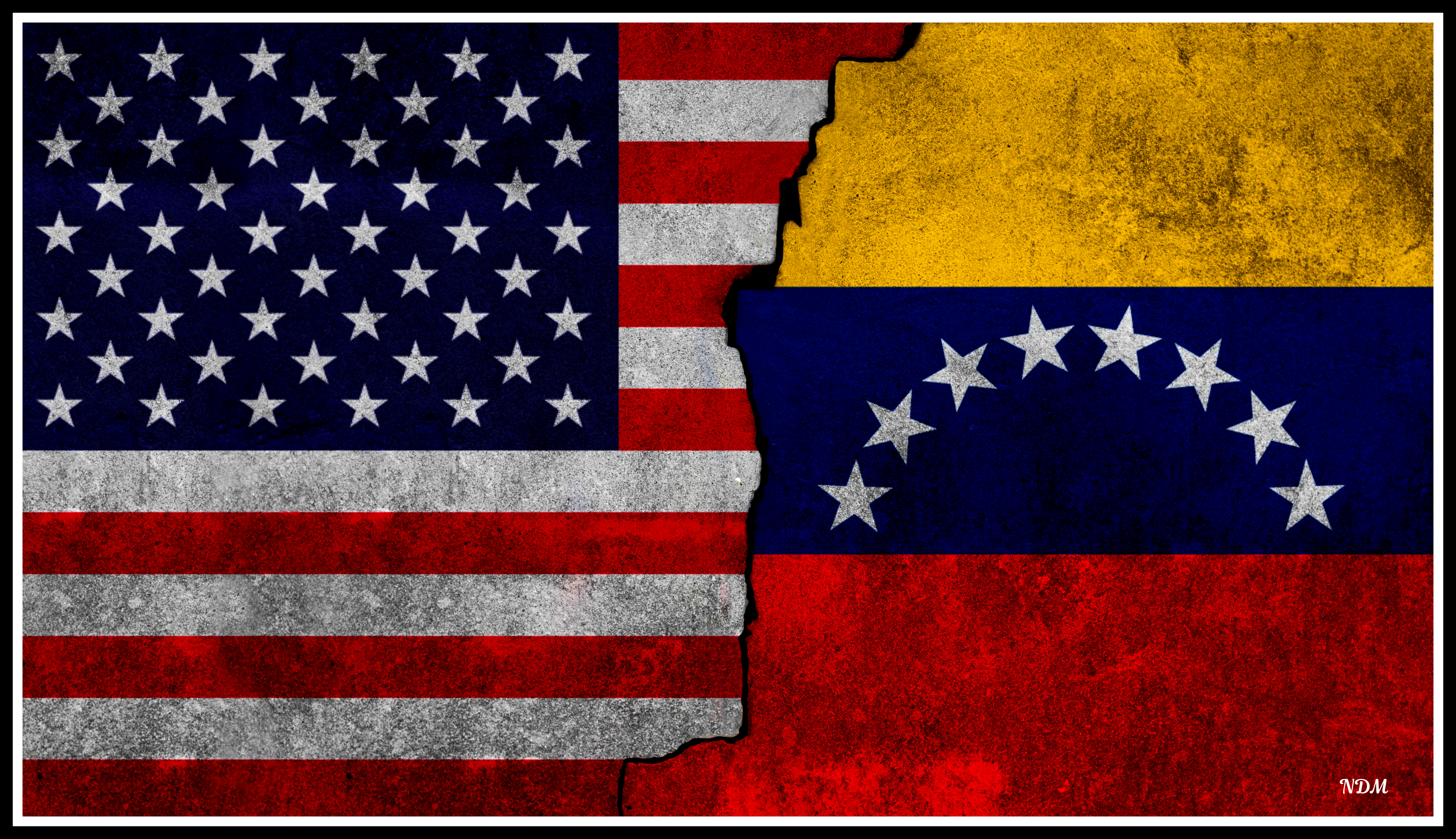
Let’s start with what is not up for debate. Venezuela is ruled by an autocrat. Nicolás Maduro is a corrupt, authoritarian leader who dismantled democratic institutions and presided over immense human suffering. But the story being told about Venezuela right now keeps shifting, and we need to pay attention. At first, we were told recent U.S. actions were about drugs. Fentanyl was even framed as a kind of weapon of mass destruction. Then the focus quietly moved from drug boats to oil tankers. By that point, fentanyl had vanished from the narrative altogether. We were no longer talking about drugs. We were talking about oil, shipping lanes, trade, currency, and power.

That’s the moment the explanation stopped making sense, and the behavior starts to matter more than the justification. The United States government did not lose Venezuelan oil. A U.S. corporation did. That is a distinct difference.

Venezuela’s oil sits on Venezuelan land. That doesn’t excuse corruption, mismanagement, or authoritarian rule, but it does implicate the claim that oil was “stolen” from the United States. Foreign investment does not equal permanent ownership of a country’s natural resources. If it did, sovereignty would be little more than a polite illusion.

This is where the history becomes too complex for slogans. Venezuela’s story involves decades of corporate dominance, oil nationalization, OPEC, sanctions, internal decay, and a slow, chilling slide from democracy into autocracy. If you want to see how an elected leader consolidates power over time, start with Hugo Chávez and work forward. But complexity is precisely what power prefers to erase.

Which brings us to the new U.S. National Security Strategy. This document quietly reframes America’s role in the world. Less global steward and more hemispheric enforcer. The Western Hemisphere is framed as America’s neighborhood its responsibility, its sphere.

That language should make every resource rich country in the Americas pause. The security doctrine shift, enforcement follows. And enforcement rarely arrives with clean explanations. One day it’s fentanyl. The next day it’s sanctions. Then it’s China. Then it’s oil. The story keeps changing. The actions do not.

And I can’t stop thinking about what this logic implies for Canada. I know what you’re saying “Canada is not Venezuela.” But Canada is resource rich. Our energy sector is deeply integrated with the United States. Our oil is traded in U.S. dollars. Our economy has been intertwined by design. If foreign investment quietly becomes conflated with ownership, if access starts to look like entitlement then sovereignty becomes thinner than we like to admit. The moment corporate loss is reframed as national injury, the line between partnership and pressure starts to blur. Let’s just say the phrase follow the money has never been more applicable. Your response President Trump?

This is where Wilson’s aviation metaphor lingers with me. We’re all passengers, distracted by turbulence in the cabin, while decisions are being made in the cockpit. The danger isn’t only the autocrat we can see. It’s the systems, incentives, and cronyism that decide who gets to fly the plane and whose laws apply when they become inconvenient.

I don’t have all the answers but I am seeking to understand. This situation is evolving, and the oil, currency, and enforcement implications are genuinely complex. But I do know this. Simple stories are being told about Venezuela right now, and simple stories are almost always dangerous. Especially as they relate to the United States right now. The Art of The Deal meets Follow The Money. So…if you want the deeper dive, the longer read that traces the full arc and asks the hardest questions, I strongly encourage you to read Gordon F.D. Wilson’s piece.

And this morning I need us to pay attention to what the U.S. leadership is counting on us not noticing, especially now, when people are tired, distracted, and trying to tune out the news over the holidays. But are we paying attention to who’s actually flying the plane, before the turbulence becomes something much worse.

There’s an expression I’ve used for decades. I don’t know who first said it, but it has stayed with me longer than most political slogans or news cycles ever will. ‘If you blame others, you give up the power to change.’

When I first started using it, it had nothing to do with politics. It was about people I knew, family, friends, community members, who faced difficult circumstances. We’ve all known those situations where two children grow up in the same home with the same opportunities and the same challenges, and one rises despite adversity while the other drowns despite prosperity. Circumstance isn’t destiny. Choice is always part of the picture, small, incremental choices about how we react, how we cope, and how we move forward.

But somewhere along the way, this human truth got swallowed by something much larger. Blame has stopped being an individual habit and has instead become a societal norm. It’s now a default setting, a reflex, a cultural posture. It doesn’t just show up in personal relationships or family dynamics. It shows up everywhere now. In politics, in public discourse, in online communities, in the way we talk to strangers and the way we talk to ourselves. It has become the new standard, and an unhealthy one.

And nowhere is that more obvious than in the way politics is now practiced. Over the past decade, politics has increasingly become a performance of victimhood. Not genuine suffering, but strategic grievance. In the United States, Donald Trump has practically built an empire out of it. You hear his refrain daily. Joe Biden this, Crooked Joe that, on and on and on. It’s a relentless drumbeat of pointing fingers outward to avoid ever turning the mirror inward.

And here in Canada? We’re not immune. Pierre Poilievre has turned Justin Trudeau into his entire personality. Ten plus years of the same line: Trudeau broke it, Trudeau ruined it, Trudeau is the cause of every pothole, every grocery bill, every global shockwave, every structural issue that existed long before he was even an MP. There is never a solution, only a scapegoat. And if he ever stopped blaming, he’d have to start explaining, which is far more difficult.

But this isn’t just about them. The real danger is what this style of politics does to us. When leaders model blame, they normalize it. They give society permission to adopt the same posture. And suddenly we are a nation, and a generation, encouraged to externalize everything. Everything becomes someone else’s fault. Someone else’s failure. Someone else’s responsibility to fix.

It creates a kind of moral paralysis.

If everything is always someone else’s doing, then nothing is ever within our power to change. The story becomes fixed. Our agency disappears. And once agency disappears, cynicism fills the space it leaves behind.

This is not the country I grew up in. It’s not the country many of us tried to build. And it’s certainly not a healthy model for young people, because when the only thing they hear from politicians is blame, how on earth are they supposed to learn accountability? How are they supposed to believe they have influence over their own lives, let alone their communities?

If society keeps modelling the opposite, if our political culture keeps rewarding the loudest finger pointer instead of the most honest problem-solver, then we shouldn’t be surprised when the entire public starts behaving the same way.

Leadership is not about who can yell “not my fault” the loudest or who can dig up the oldest grievance. Real leadership is quieter than that. It’s steadier than that. It’s the person who wakes up and without pageantry puts one foot in front of the other and deals with the issues actually in front of them. No excuses. No endless rehashing of who messed up what ten years ago. Just the work.

That’s the kind of leadership I prefer: the kind that solves instead of performs. The kind that owns responsibility instead of outsourcing it. The kind that doesn’t need an enemy to justify its existence.

Because the alternative is exactly what we’re living through, a political landscape where deflection has replaced direction, grievance has replaced governance, and blame has become the cheapest currency in public life.

And honestly who is driving that trend? Donald Trump has built an entire political identity around never taking responsibility for anything, ever, even when the consequences are catastrophic. Pierre Poilievre has spent more than a decade scripting every sentence around Justin Trudeau as if reciting a grievance is the same thing as offering a plan. And Danielle Smith has turned deflection into an art form, blaming everyone from judges to civil servants to the federal government rather than simply governing the province she was elected to lead.

This is not strength. This is not vision. This is not leadership.

We deserve leaders who face the hard truths, not run from them. Leaders who build instead of burn. Leaders who don’t need a scapegoat to feel powerful — and who understand that their job is not performance art but public service.

And we deserve leaders who model that for our children. Because whatever behaviour we normalize at the top quickly becomes the behaviour young people believe is acceptable. They watch how we speak, how we react, how we handle conflict, how we take, or avoid, responsibility. If all they ever hear is blame, then blame becomes the cultural default.

We deserve a society that refuses that path. A society that understands that blame might feel satisfying in the moment, but it is a dead end. It does not move us forward. It does not solve a single problem. It keeps us exactly where we are, frozen in place, circling the same resentments, repeating the same grievances.

And it brings us back to the line I’ve carried through decades of my life, a line more relevant now than ever. “When we blame others, we give up the power to change!”

People keep telling me I’m “not writing from a Canadian perspective”. So let me be uncomfortably blunt: everything I write, whether it’s about Washington, Moscow, Venezuela, or the moon, is through a Canadian lens. Because in 2025, there is no such thing as an American crisis that stays on the American side of the border. What happens there reaches us in real time. Economically, militarily, socially, digitally and emotionally.

Anything I write about the U.S. is about Canada. And this week, the danger became impossible to soften.

Two months ago, Pete Hegseth stood before senior U.S. military leaders and said the quiet part out loud, not hinted at, not theorized, not coded. No, he declared, “We don’t fight with stupid rules of engagement. We untie the hands of our war fighters to intimidate, demoralize, hunt, and kill… Just common sense, maximum lethality, and authority for war fighting.”

Maximum lethality. Untie the hands, intimidate, demoralize, hunt, andkill. That is not doctrine nor strategy. That is permission.

So when the world watched the evolving, contradictory explanations around the second strike on a drug boat, one that looks chillingly like a war crime, none of us should be surprised. The guardrails are gone. They told us they were removing them. They said it right into the cameras.

And as Canadians we’re supposed to shrug and say, “U.S. politics are weird right now”? This isn’t “weird.” This is destabilization and destabilization doesn’t need a passport to cross borders. My nephew, who served his entire career in the Royal Canadian Air Force and now continues with them in a civilian role wrote something earlier this year that I keep returning to. I’m paraphrasing, but he described standing on a tarmac in Afghanistan watching Star Spangled Banner draped coffins being loaded onto a plane. He talked about serving beside Americans who lived, laughed, fought, bled, and grieved as brothers, never caring what flag was on your shoulder as long as you showed up. He believed, deeply, that those same American generals would never obey an order to turn their military against Canada. He believed it was unthinkable. And in March, I believed that too. But this is not March. And the United States is not the same country it was even eight months ago.

Last night’s National Security Strategy should have stopped the world in its tracks. Instead, it barely caused a ripple because we’ve all become numb to shock. But we cannot afford numbness. Not here in Canada. Not when the document refers to Canada, explicitly, as a vassal state. If you look up that term, it means the following. ‘A state that has a mutual obligation to a superior state or empire, similar to a subordinate in a medieval feudal system.’

This is how Trump’s America now views Canada. Not as an ally. Not as a partner. Not as a neighbour with whom it shares the longest peaceful border in the world. But as a subordinate with obligations to an empire.

Read that again. And if you still think Trump is a “good guy,” and that the far-right radical politics sweeping across North America are some kind of righteous populist uprising, then you’re reading the wrong post and the wrong blogger or exactly the one you needed.

People often tell me that my writing calms them. But today, I don’t think I can do that. Today is not about calm. Today is about clarity. About looking at the shift happening south of us, militarily, politically, psychologically, and understanding that Canada is not insulated.

And yes, of course we need to pay attention to what’s happening right here at home, not to hide from the global picture, but because what’s unfolding in Alberta is part of that global picture. The erosion of institutional trust, the attacks on journalism, the flirtation with authoritarian rhetoric, the manufactured chaos, it all mirrors, almost perfectly, what we saw in the U.S. before their political centre collapsed. And the truth is, action always begins closest to home. We can’t fix the entire world, but we can damn well protect the ground we’re standing on. If we don’t get our house in order here, if we don’t recognize the direction these currents are pulling us, then political chaos becomes a gift to anyone who sees Canada not as a nation to respect, but as a chess piece to be moved.

And as much as this fear sits in my chest like a stone, I remain grateful, profoundly grateful, that Mark Carney is the one steering the ship in this moment. Steady when the world is lurching. Calm when our neighbour is convulsing. Focused when others are consumed by rage, impulse, and decline. But leadership can only work when a country understands the stakes.

I wish I could tell you everything will be fine. I wish I could offer comfort instead of warning. But the truth is that Canada is vulnerable. Not because we are weak, but because the reality around us has changed faster than we have been willing to admit.

And the most dangerous thing we can do right now,  as Canadians, as Albertans, as people who love this country, is pretend that the ground beneath us isn’t shaking. I am still optimistic. I wouldn’t write any of this if I weren’t. I believe in us. I believe in what we can be. I believe in our capacity to meet the moment. But optimism is not the same as denial. And today, the truth is simple and unavoidable: When an unstable superpower drops its guardrails, every nation in its shadow had better wake up. Because history does not wait for those who refuse to see it coming.

There are days when I worry we’re watching democracy get chipped away one unhinged Truth Social post at a time. Today was one of those days. Donald Trump, the man who dreams in capital letters and tantrums threatened Democratic lawmakers with arrest and execution because they did a video reminding military members to follow the law. That’s it. A group of veterans saying, “Your oath matters,” and Trump coming back with, “Hang them.” Not metaphorically. Literally.

And whenever something like this happens, the predictable chorus of extreme media voices kicks in. Left, right, and everything radicalized in between. People who treat politics like sport commentary, who defend the indefensible if it benefits their team and attack the reasonable if it threatens their scoreboard. I’m not talking about mainstream conservatives or progressives; I’m talking about the loudest, angriest, most hyperventilating commentators who seem to think democracy is a game show they’re trying to host. They spin and they excuse and they normalize. And they make it harder for ordinary people to see what’s right in front of them.

So let’s step out of the noise and into reality, Canadian reality.

Earlier this year, when Trump said he was going to “get Canada one way or another,” I spoke with people who’ve actually served. Friends, and people in my family. People who fought beside Americans in Afghanistan. And they all said the same thing at that time which was something I took some temporary comfort in: “The U.S. military leadership won’t follow an illegal order. Their oath is to the Constitution, not to the man. They wouldn’t invade Canada.

And I still want to believe that. But then came the Pentagon meeting a few months ago where Trump told senior commanders that if they didn’t fall in line, they could walk out the door. And if they did? They risked losing rank, pensions, and honours. Decades of service wiped away because they refused to bend to his personal will.

That’s not “leadership.” That’s coercion and the hallmark of someone who sees himself as a ruler rather than a president.

Today’s explosion over a simple reminder of legal duty only reinforces that. In my opinion nothing in that video was radical. Nothing was partisan. Nothing was even controversial. The message was something every soldier in North America learns on day one, your oath is to the Constitution, to lawful authority, not to the emotions of the person sitting in the big office.

This principle goes all the way back to the Nuremberg Principles, the foundation of post-WWII military law: “Just following orders” is not a defense for unlawful actions. Military personnel must follow lawful orders and challenge unlawful ones. And while yes, there are exact procedures depending on rank and context, the principle remains the same. It is the bedrock of a professional military.

Which is why there is absolutely nothing wrong with that video. It simply restates the oath Trump wants people to forget. And this is where my fear kicks in. Because not every enlisted person, especially the youngest ones has the background or confidence to distinguish between legality and politics. Many join because it’s their path to an education, a steady income, a future. That’s not a criticism, it’s the reality of recruitment demographics across the North America. Young people are trained to follow orders, not to decode the emotional storms of a man who treats the presidency like a spotlight he refuses to step out of.

Now imagine being a junior soldier hearing the Commander-in-Chief amplify posts calling lawmakers “traitors” and saying “hang them.” Imagine being a senior officer knowing your oath obligates you to refuse unlawful orders, while also knowing your entire career could be erased by the man issuing them. Imagine being a military family watching this unfold, knowing the oath your loved one swore is becoming a political drama. Imagine being an American soldier today.
It terrifies me. And here’s the Canadian part that should terrify you: Fifty percent of Canada’s Conservative base says they support Trump’s agenda and behaviour. Half. So if you’re in that 50%, I’m speaking directly to you: Is this what you endorse? A leader who demands personal loyalty from the armed forces?
A leader who suggests elected officials should die for reminding troops to follow the law? A leader whose outbursts require cleanup crews to appear on television insisting he “didn’t mean it”?

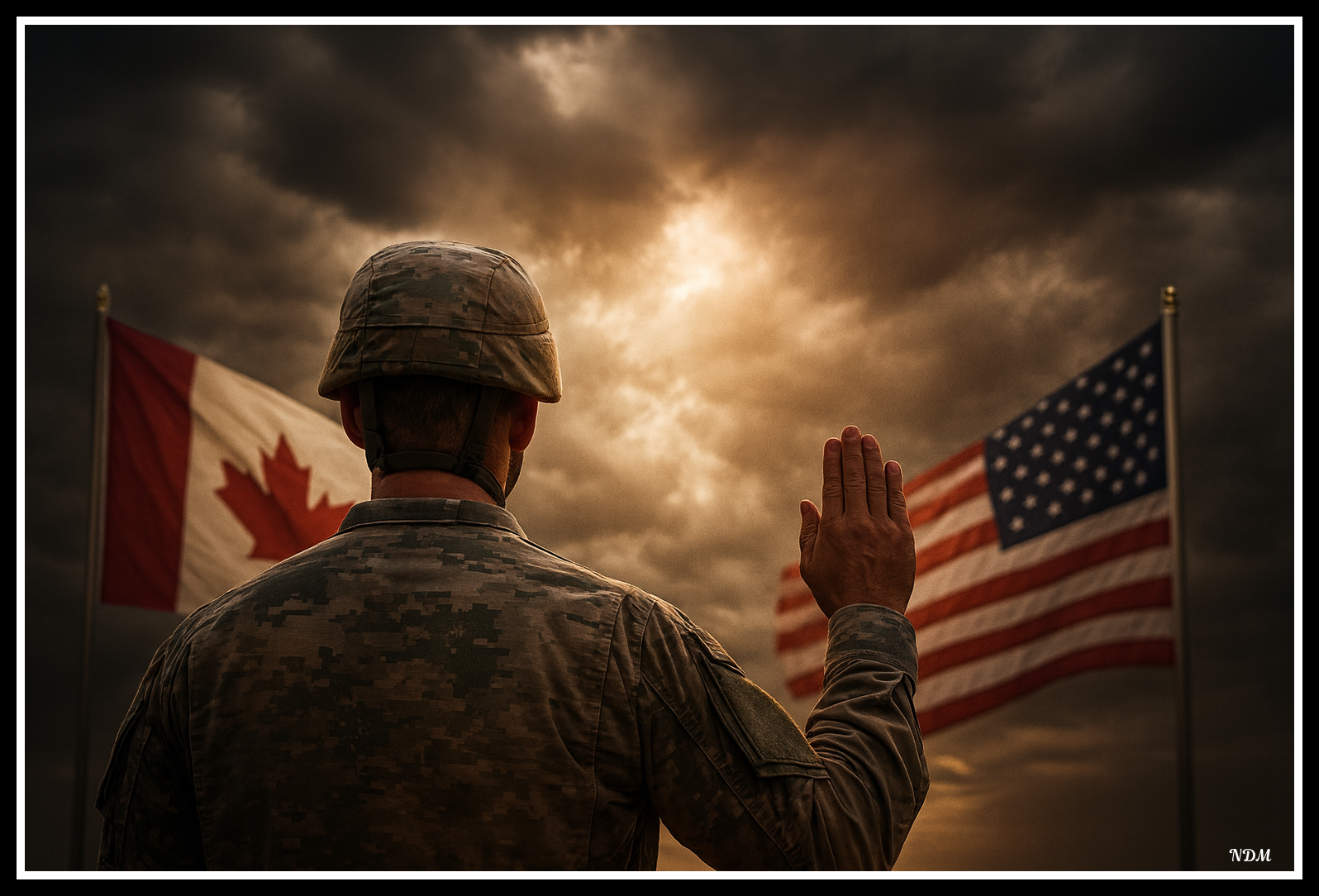
Because here’s the truth: It doesn’t matter if that soldier in the image below is Canadian or American, the oath is the same. In Canada and the United States, soldiers swear an oath to the law, not to the person who holds power.
The words differ slightly, but the meaning is identical: lawful authority first, democracy first, constitutional duty first. Not the ego of someone who thinks he’s above all three.

I’ve read pieces of my son’s papers from Royal Military College. Things like law of armed conflict, conflict theory, technology and warfare. And the lesson across all of it is simple and unwavering:

A professional military stands above political emotion. If Donald Trump, or anyone like him, expects soldiers to replace their oath with his ego, then democracy across this continent is in danger.

This isn’t about left vs. right. This isn’t about Democrats vs. Republicans. Liberals vs Conservatives. This is about the line between law and power, and who we expect our soldiers to follow. And that scares me. It scares me a lot.

UPDATE: I need to stand corrected. Rumour now has it that this will pass the Senate. And if that’s true, it doesn’t reassure me. It confirms every darker suspicion I had. Because for the Senate to suddenly fall in line, something behind the scenes has shifted, and not toward justice. If anything, it tells me the machinery working in the background is even more insidious, more self-protective, and more calculated than I thought. Whatever deal has been made, whatever pressure has been applied, whatever narrative Trump has pre-scripted it’s worse than the version I was bracing for.

There is nothing I can say today about the Epstein file that hasn’t already been chewed up and spit out by every podcaster, blogger, Substack warrior, news anchor, and the never ending parade of self appointed truth tellers on social media. This story has been dissected, divided, incinerated, resurrected, and re-packaged more times than any of us can count. And yet here we are again, walking right into another so called “moment of reckoning” as Congress gets ready to vote this afternoon. So yes, I’m putting my thoughts down before the two o’clock gong sounds, not because my voice will change anything, but because the hypocrisy rolling through Washington today deserves to be stamped, labeled, and called out with full accuracy.

Let’s begin with the most predictable part: Donald Trump did not suddenly wake up and decide that transparency is good for democracy. The man has never acted out of moral clarity in his life. If he’s supporting the release of anything related to Epstein, it’s because he already knows exactly what he can protect, what he can bury, and what he can spin. He doesn’t do anything unless he can tighten his grip in the process. So the idea that he is suddenly on the side of “letting the truth out” is laughable. If he is allowing this door to open even a crack, it’s because he has already controlled the narrative.

I am not accusing him of having sexual relations with underage girls. I have no proof of that, and I don’t pretend to. What I can say, because it’s indisputable, is that he was there. He knew who Epstein was. He knew what Epstein was widely rumored to be. Trump was not some naive bystander wandering into the wrong circles. At absolute best, he was passive. At worst, he was complicit through silence, proximity, and willful ignorance. And that alone is enough to demand scrutiny. But apparently demand and receive are very different things when you’re dealing with a man who has trained an entire political party to kneel before his whims.

Which brings us to today’s vote in the House. Suddenly, Republicans have permission to support releasing these documents. Not because they grew spines. Not because they found moral purpose. Not because the victims deserve justice. No. They are supporting this because Donald Trump has told them it is safe to do so. Their king, their god, their idol, their living embodiment of whatever twisted movement they’ve built; well he said yes. So they obey. And with his blessing, they can now pretend they’ve been warriors for truth all along.

But don’t be fooled. Because once this leaves the House, it enters the building where accountability goes to be stalled, smothered, and diluted beyond recognition: the United States Senate.
This is the chamber where Trump’s influence runs deepest. This is where loyalty to him isn’t just encouraged; it’s required. Many of these Senators owe their careers, their fundraising machine, and their political safety to him. And the minute anything threatens his interests, they lock step like soldiers guarding a fortress. There is no scenario where a full, unfiltered release of Epstein files passes through that chamber while Trump still commands the Republican Party. None. Please prove me wrong.

I already knew this would hit a wall, until I made the mistake of listening this morning to Mike Johnson, the Speaker of the House, a man who manages to combine sanctimony, dishonesty, and self-righteous slime in a single breath. According to him, he has been in “discussions” with his Senate counterpart, and the Senate has “concerns.” Let’s translate that into plain language: this is going nowhere. The Senate will delay it, stall it, bury it in committee, or strangle it with amendments. Whatever the method, the goal is the same: make it look like they tried, without ever allowing anything real to surface.

And in all of this political maneuvering and reputation saving, what gets lost, what always gets lost, is the truth that there were victims. Real people. Real children. Young lives that were manipulated, coerced, abused, and then ignored by the very systems supposedly built to protect them. They were failed by prosecutors, by police, by powerful men with more money than conscience, and by every person who looked the other way because confronting the truth would have cost them something. These young women have carried the weight of this for years. Some were silenced and some were pushed into the spotlight to relive nightmares the world dismissed as gossip or scandal. They deserve more than selective transparency. They deserve more than curated disclosures crafted to protect the rich and powerful. If there is going to be a reckoning, it should centre them, not the men scrambling to shield themselves from consequences.

And yes, I’m saying this from Canada. We may be north of the border, but we’re not blind to the fallout. For decades, America was the example, the country that claimed to stand for law, truth, fairness. But this? This contortion of justice and loyalty? This is not the America we once measured ourselves against. And if any echo of that ideal was still hanging on, this behaviour snaps the last piece off. We care because what happens there never stays there, and because victims, on any side of any border, deserve better.

So yes, the House vote will happen today, and yes, it will pass. But the pass itself is hollow if it’s designed to go no further. What matters is whether the truth escapes the Senate, where Trump’s grip is tightest and where the incentives to protect him are strongest. And let’s be honest: he would never green light anything he feared. He is not suddenly embracing openness. He is repositioning. He is gaming the system. He is controlling the floodgates, not opening them.

This is not justice nor courage nor accountability. This is control, strategic, deliberate, and calculated. If anyone wants to celebrate today as some watershed moment, ask yourself who benefits. Ask who is still in control. Ask who gains when the public believes something meaningful has happened even when nothing has. Because Donald Trump has never once allowed truth to obstruct his own survival. And he isn’t about to start now.

Canada Geese

Posted: November 15, 2025 in Uncategorized
Tags: , , , ,

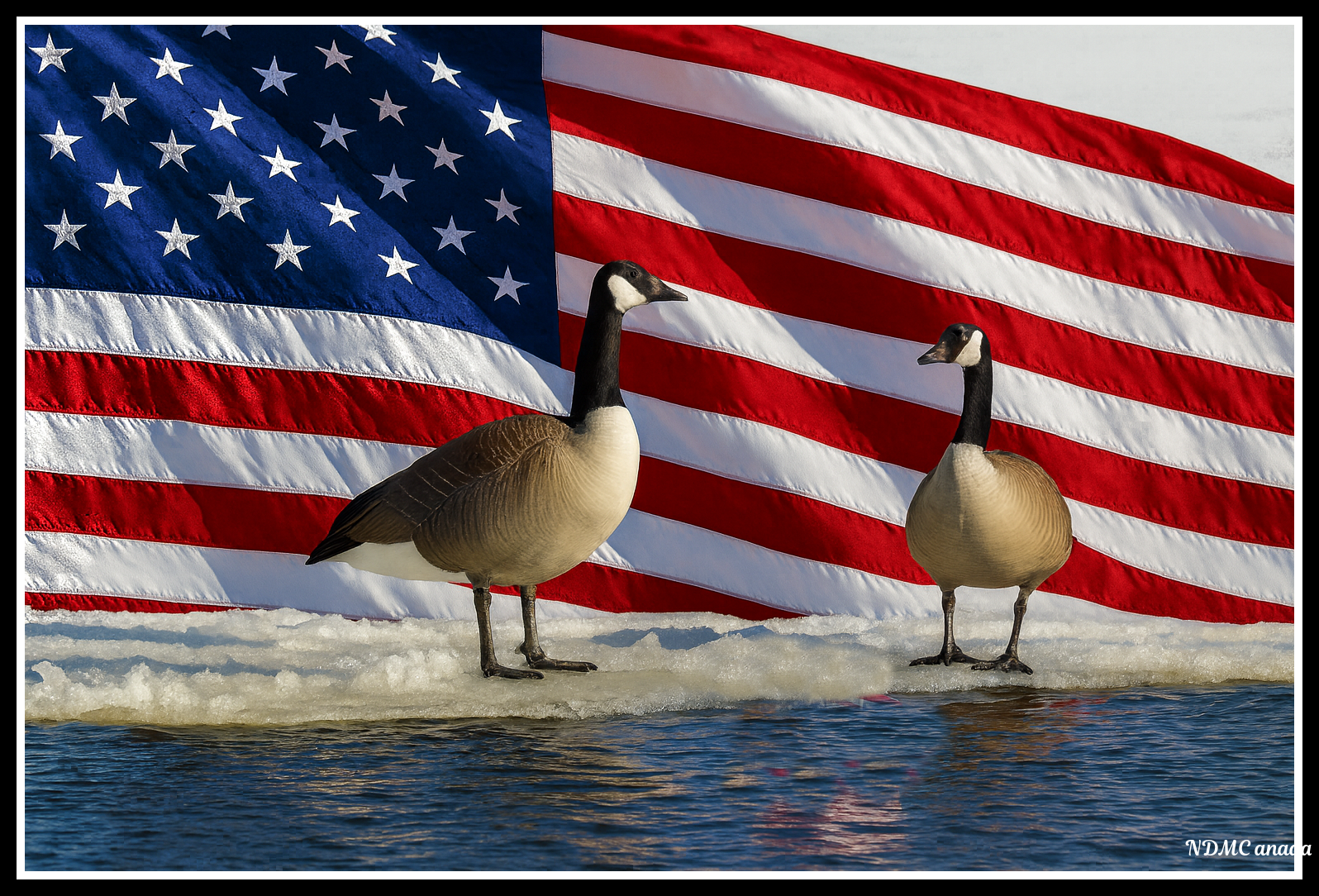
This crisp late-fall day has the last of the stubborn geese circling overhead, honking like they’re still debating whether they should go south this year. And honestly, given the state of things, who can blame them for hesitating? So many stayed last year. Maybe the ones still lingering on the canal took one look at the southern border and said, “No thanks, we’ll risk the frostbite.” They’re out there bobbing on the water, perfectly content, not looking the least bit anxious about moving on.

And yes, I hear you. “Nancy, what on earth does this have to do with anything?” Well, apparently more than I realized, because my brain seems to be looping back to the United States whether I mean to or not. And today, what I keep circling around is the moral cesspool that is the Epstein file situation.

Let me start with something I’ve said before and I will not soften here: I’m not sure there is a more repugnant human being walking this planet than Donald Trump. Inside politics, outside politics, take your pick. The man is rot.
But here’s where we weaken ourselves: when we focus solely on trying to label him a pedophile. I don’t know what he did or didn’t do sexually, and I don’t pretend to. What I do know, and what any thinking adult can see is that Donald Trump knew exactly who Jeffrey Epstein was, and exactly what he was doing.

You cannot orbit that world and be oblivious. You cannot spend years around the man and be unaware. Epstein did not become wealthy through brilliance or talent. He didn’t finish school. He was a mediocre Wall Street guy who somehow ascended into extreme wealth and extreme access.

And there is only one explanation that makes sense: his business model was procuring young girls for powerful men. That was his commodity, his leverage and his power. And that is why “follow the money” matters here in a way that truly exemplifies that phrase.

Because is not only about sex crimes, as monstrous as they are. This is about power, money, leverage, and protecting wealthy men whose reputations, careers, and political futures rest on keeping those files sealed. Some of those wealthy men are allies of Donald Trump. Some are donors. Some are defenders. Some are simply adjacent in ways that make everyone very, very nervous.

Now Trump has announced he wants an “investigation” but only into a small, cherry-picked group of Democrats he personally despises. He wants the process sliced to his convenience, weaponized for his grudges, and stripped of its full truth.

And how anyone sees that as fair, moral, or acceptable is beyond me.

If we are serious about justice, then every single person in those files must be investigated. Every billionaire, every celebrity, every politician and every hanger-on. I don’t care if they’re 97 years old and bedbound, if they hurt children, they answer for it.
And yes, Donald, that includes you. If you’re innocent, fling open the vault and prove it. People who are innocent don’t limit investigations. People who are innocent don’t curate lists. People who are innocent don’t fear daylight.

After the last U.S. election, the one that devastated me, I said something I’ll repeat again: Senators, congresspeople, look at your daughters and granddaughters when you vote. Because you have already failed them once. Do not fail them again. Two things matter now: Every Epstein file must be released. Every document, every ledger, every associate. Not some. Not the convenient ones.
All of them. AND Donald Trump must say he will NOT pardon Ghislaine Maxwell, a convicted sex trafficker. If he refuses to do that, then he is telling the world exactly what, and who, he is protecting.

And let me sharpen the line that needs no misinterpretation: This request to open the files will pass Congress, and will hopefully pass the senate. But if this reaches Trump’s desk and he blocks transparency, that is not confusion. That is not bureaucracy. That is not “procedure.” It is a choice, a deliberate act to protect himself, his allies, and any powerful man whose name appears where he doesn’t want it to.

He is not shielding America from scandal. He is shielding himself from accountability. There is no other story.

And that brings me back to the geese. They’re still out there on the canal, doing what geese do: watching the water, watching the temperature, responding to the world exactly as it is. They don’t only fly south out of tradition or habit. Actually they move when nature tells them it’s time, when the freeze takes hold, when the signals become impossible to ignore. They survive because they read the conditions honestly.

Americans are standing in that same moment. The water is cooling. The ice is forming. The warning signs are right in front of them. The geese will lift off when the freeze becomes undeniable.
The question is whether Americans will finally do the same, not by fleeing, but by refusing to let lies, secrecy, and power bury the truth any deeper.

July 9, 2025

Posted: August 3, 2025 in Uncategorized
Tags: , , , ,

So, Benjamin Netanyahu is reportedly nominating Donald J. Trump for the Nobel Peace Prize. Because of course he is. What better way for Bibi to flatter his own ego while distracting from his horrific international reputation.

The rationale? Supposedly because of the Abraham Accords, a set of diplomatic agreements signed in 2020 during Trump’s first presidency, normalizing relations between Israel and a few Arab nations: the UAE, Bahrain, Morocco, and Sudan. These were significant steps, no doubt. But let’s not kid ourselves, they came with arms deals, the complete sidelining of the Palestinian people, and the distinct whiff of transactional diplomacy. The ink wasn’t even dry before Trump turned the moment into a 2020 campaign asset and Netanyahu used it to flex before an audience of increasingly uneasy Israeli voters. Fast forward to 2025.

Now, before anyone panics: this nomination isn’t for this year’s Peace Prize, unless Netanyahu managed to quietly submit it before the January 31 deadline, which no one seems to believe he did. That means we’re likely talking October 2026. So, deep breath. You’ve got time to be disillusioned in stages.

Previously every time Trump’s name got mentioned in the same breath as the Peace Prize I’d feel my blood pressure spike. It offended me, not just politically, but morally. The very idea that a man who actively undermined alliances, courted despots, mocked the international order, and fanned the flames of domestic insurrection could receive that prize? It felt obscene.

But something has shifted. And it’s not because I’ve become indifferent to peace. Quite the opposite, it’s because I care so deeply about the concept of peace that I’ve decided not to look for its validation in the Nobel.

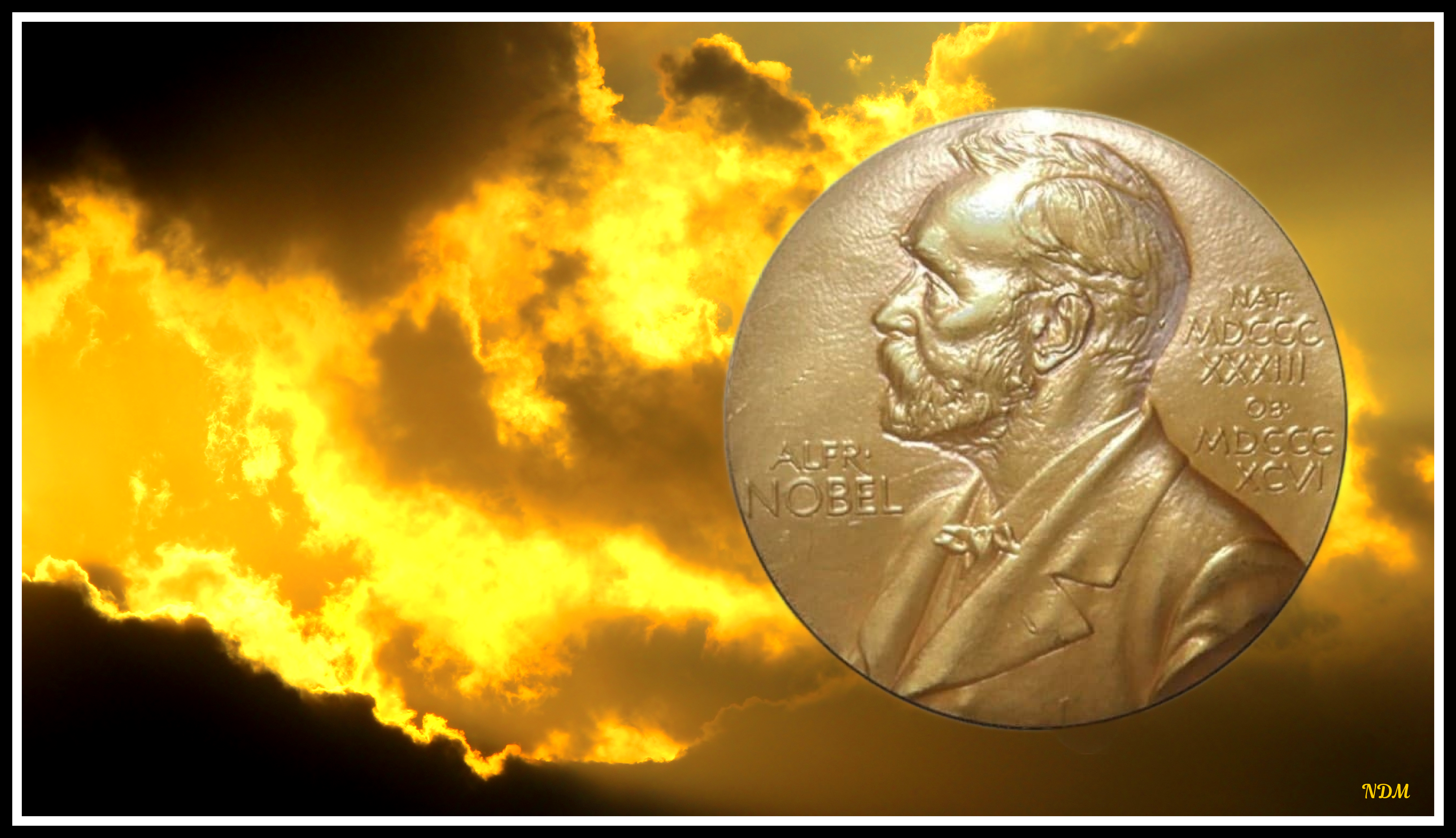
Let’s talk about the rules for a second. The Nobel Peace Prize, according to Alfred Nobel’s will, should go to the person or organization that has done “the most or the best work for fraternity between nations, the abolition or reduction of standing armies, and the holding and promotion of peace congresses.” That’s a noble goal. But in practice? The rules are discretionary. There’s no official short list, no vetting of criminal records, no requirement for lasting peace, just significant action that someone, somewhere, thinks nudged the world in the right direction.

Eligible nominators include members of national parliaments, heads of state, university professors, and past laureates. Netanyahu, as a sitting prime minister qualifies. And if the committee wants to take it seriously, they can. Or they can file it under “we’ll pretend to read this later” and move on.

But here’s where it shifts for me. Because if this nomination is what it takes to get Trump back onside with supporting Ukraine then I’m not sure I care about the price of that bribe. Because today Trump reversed course and endorsed continued U.S. weapons aid. If dangling a gold medallion in front of him helps even a little in resisting Putin’s bloodlust, fine. Let him have the shiny object.

Because the truth is, the Peace Prize has already been handed to people with long shadows. Henry Kissinger, and Yasser Arafat, and really even Barack Obama win was aspirational more than earned. The award has always been half idealism, half geopolitics. Sometimes it celebrates courageous changemakers. Other times it gets used to slap a sauve on a festering wound and call it healing. So if that’s the game, I’m not going to rage at the players anymore.

I used to think the prize itself stood for something unshakable. But peace is not a PR strategy, and we cheapen it when we hand out accolades like participation medals in a global ego contest. So if Trump wants a Nobel to cap his legacy, let him chase it. If it keeps him vaguely pointed in the direction of global cooperation, fine. Everyone’s got their own fight to fight. And I’m not going to fight over this one.

Because here’s where I’ve landed: I’m not shocked anymore. I’m not angry. I’m not even disappointed. I’m done caring. The Nobel Peace Prize? It just doesn’t mean anything. And whether Trump wins it or not? It has no bearing on the things I actually care about, like whether people are still dying in Gaza, or if Ukraine gets shelled into a crater, or if children anywhere have to grow up in rubble.

Give him the prize. Wrap it in velvet. Let him hang it in Mar-a-Lago next to a fake Time Magazine cover. If it shuts him up and slows the march to another war, I’m good with that. Because in the grand scheme, whether he wins it or not is just not the most important thing to me anymore. Peace is. Not props. Not pageantry. As for the signficance of this medal. Maybe it once stood for something but now I question that and I’m fine if they give it to whoever needs it to behave, like the promised treat if the tantrum stops. If it keeps the missiles grounded and the egos quiet, hand it over and move on. I just can’t waste my energy on this one. Not when there are actual lives at stake elsewhere. Not when the prize itself has already been gamified. Not when the possibility is that someone behaves better just because they want a sticker.