Posts Tagged ‘nato’

My writing almost always starts with something personal. It is how I make sense of history when it starts pressing in close. And I try to keep my ‘Canadian Lens’ front and centre.

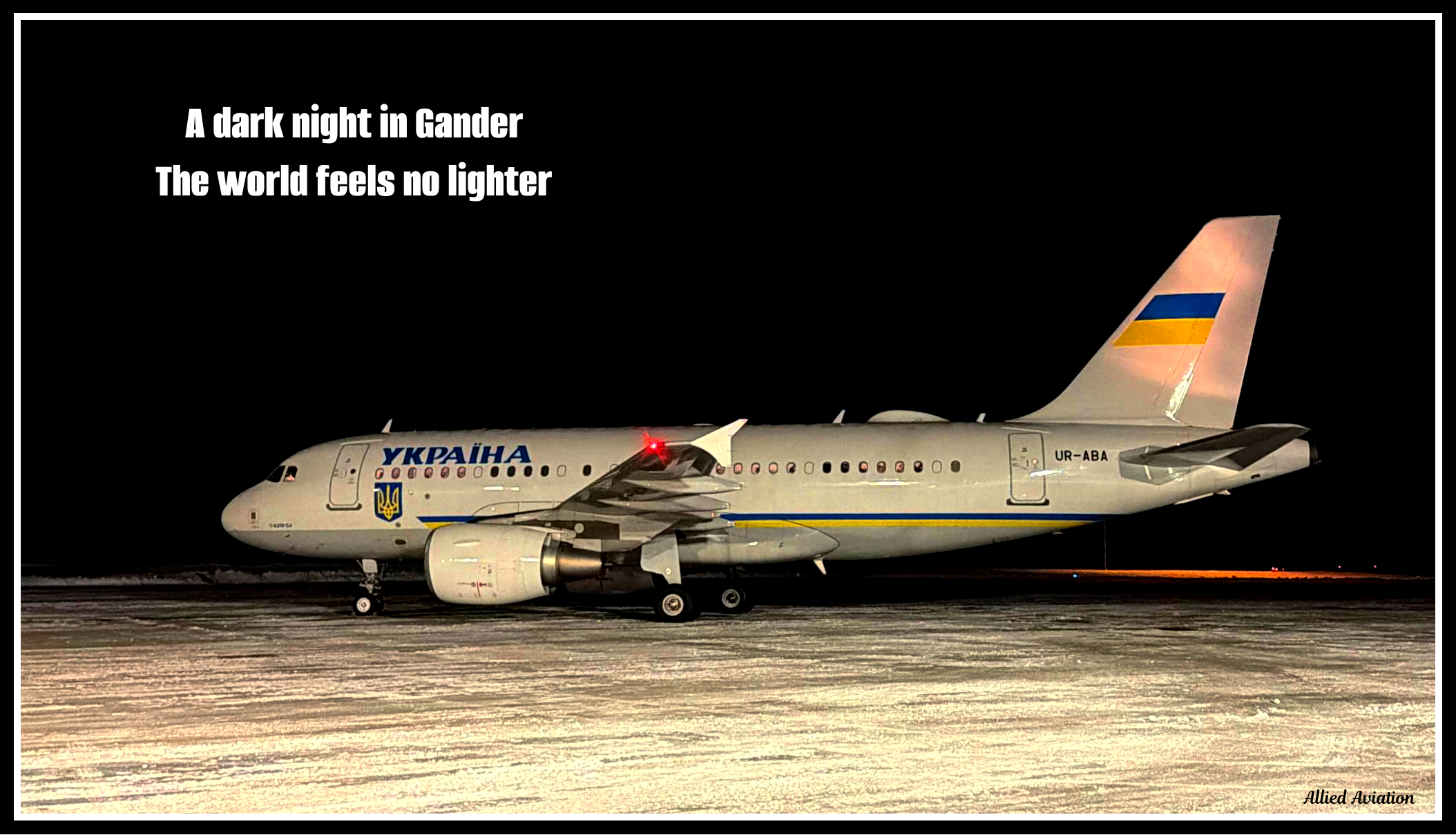
In the span of forty-eight hours, President Volodymyr Zelenskyy’s aircraft touched down twice in Canada. On the way to Mar-A-Lago, he met with Prime Minister Carney in Halifax. On the way back his plane stopped in Gander, Newfoundland for refueling.

Gander has my heart. My sister and her family have been their for over half a decade. Aviation runs deep in that place, in the people, in the airport, in the history. For decades, before long-haul aircraft made nonstop crossings routine, Gander was known as the crossroads of the world. It serves as a Canadian Armed Forces base and for many decades as an American Forces base. Planes from everywhere landed there. The world passed through. And then, on September 11, 2001, when the world broke open, Gander did what Canada did best. It welcomed strangers. Thousands of Americans who were scared, stranded, and exhausted. No politics and no ideology. Just people helping people because it was the right thing to do. This latest stop is not symbolic by design. It is a natural refuelling point. Aviation logistics are practical and structural. But it is also another reminder of Canada’s unique place in the world, shaped by geography, movement, and memory.

That matters now. Because once again, the world is at a crossroads. And this time the danger is not confusion or chaos. It is moral collapse at the very top.

Yesterday, Vladimir Putin claimed that Ukraine had launched drones at his summer residence. No evidence was provided. Absolutely none! Immediately, the President of the United States accepted the claim as fact and chastised Ukraine for “not negotiating properly.” And on the timing? While those words were being spoken, Russian missiles and drones were striking Ukrainian cities. People were being killed and homes were being destroyed. This is not a frozen conflict. This is an active war of aggression.President Zelenskyy responded plainly. He said he does not trust Putin. He said Putin does not want a successful Ukraine. He was calm, direct, and anchored in reality.

What should concern everyone, regardless of political stripe, is not simply that Donald Trump repeated a Kremlin accusation without proof. It is what that act represents. The moment a president accepts an unverified claim from an aggressor, he forfeits the authority to mediate peace. This is not about being philosophically liberal or philosophically conservative. That framing is irrelevant. This is about standards. About evidence. About whether truth still matters when the stakes are global.

Successful American foreign policy has always rested on bipartisan consensus. Northern Ireland. Taiwan. NATO. Ukraine. Congress is not decorative. It is a co-equal branch of government charged with oversight. There is bipartisan support in Congress for Ukraine on the fundamental truth that Ukraine is defending its sovereignty and Russia is the aggressor.

What we are watching instead is something far more dangerous. Hope being mistaken for strategy. Hope that Trump does not pull the plug entirely. Hope that it does not get worse. Hope that appeasement somehow produces peace. BUT hope is not policy. Ukraine can win this war. Victory is definable. A secure eastern border. Freedom of navigation in the Black Sea. Integration with Europe. What is missing is not capacity. It is will.

I do not want to be distracted by the wrong question. I do not need to know why Putin has leverage over Trump (well maybe I do) however it clearly exists. What matters is behavior, visible and consistent.

What stays with me is the image of a lone aircraft sitting on the tarmac late at night in the quiet and in the dark in a place that has seen history pass through before, often when things were breaking elsewhere. Gander remembers what solidarity looks like. Canada remembers what showing up means. That is my lens, and it is why this moment feels worth paying attention to.

Canadians should remember something else too. We are not observers. We sit between Europe and the United States and Russia. Geography alone makes this our problem. Those who grew up during the Cold War learned that early. Drills in schools. Maps on classroom walls. The understanding that authoritarian expansion was real, and it was close. If you cannot see this through anything sharper than ideology, then geography alone should wake you up.

Because if there was ever any doubt about the hold Vladimir Putin has over Donald Trump, yesterday should have eliminated it. When a president repeats an unproven claim from an aggressor while bombs are falling, that is definitively submission.And at this point, we should be honest with ourselves. Do we truly believe Donald Trump is going to do anything that saves anyone except himself.

Democracies do not collapse all at once. They erode when lies are treated as opinions and power is indulged instead of challenged. Peace cannot be negotiated by someone who no longer recognizes truth. History will NOT be confused about what this was. Or who chose to look away.
The Apple Of His Eye

Posted: December 28, 2025 in Uncategorized
Tags: , , , ,

I spent most of today doing what many of you did. Watching, listening, reading, waiting. Hours of coverage. A long meeting between Donald Trump and Volodymyr Zelensky. Calls with European leaders. Percentages tossed around like breadcrumbs. 80 percent, 90 percent, 95 percent. And at the end of it all, I am left with the same question I started with. What actually changed? The short answer is not much.

Yes, the tone between the United States and Ukraine was better. That’s important. Yes, the conversations sounded serious and professional. That’s important too. And yes, Europe appears more firmly in the room than it has been before. All of that is positive.

But tone is not leverage and conversation is not consequence.
All the optimism in the world does not end wars. What stood out for me today is likely not what stood out for others. It was when Donald Trump drifted into reminiscing about how he once had been, in his own words, the apple of Vladimir Putin’s eye.

I actually laughed, and then immediately stopped. Because that phrase is not about diplomacy. It was rather about him being cherished, favoured and special. And in geopolitics, wanting to be someone’s prized apple can be dangerous, especially when the orchard is poisoned.

While Trump spoke nostalgically about lost status, Russia provided messaging that hasn’t changed throughout this war. Rejecting a ceasefire, rejecting meaningful security guarantees and continuing to bomb civilian and energy infrastructure. Kyiv left without heat in winter. That is not a negotiating partner signalling compromise. That is a regime signalling confidence.

Throughout the press conference, we heard a great deal about “progress,” but very little about pressure. Trump ultimately acknowledged that Vladimir Putin will not agree to a ceasefire, and then effectively accepted that reality. When asked what happens if talks fail, the answer was blunt. The fighting continues. People keep dying. What was missing was any indication that new consequences would follow. And that is the crux of the problem. Diplomacy without leverage is not diplomacy. It is just another working lunch followed by a press conference.

Ukraine has shown flexibility. President Zelensky has been clear and careful about what is possible and what is not. Land concessions cannot be made casually or unilaterally. Millions of Ukrainians are displaced across Europe. Any referendum requires time, infrastructure, and safety. That is not obstinacy. That is constitutional reality. Russia, meanwhile, has not moved. Not on Donbas, not on NATO, not on security guarantees and not on a ceasefire.

So when we hear “95 percent done,” we have to ask. Done with what, exactly? The hardest issues, the ones that actually determine whether peace holds, remain unresolved. And without consequences for continued aggression, there is no reason for Vladimir Putin to resolve them.

Donald Trump said something today that deserves more attention than it received. He said the war will either end soon, or it will last a long time. That was not a prediction. It was a warning. And it was also an admission that without pressure on Putin, the burden of “ending it” will inevitably be shifted onto Ukraine.

Putin rules an autocracy. Zelensky leads a democracy at war. One man can decide alone. The other cannot. That asymmetry explains exactly where blame will land if this stalls.

Canada is not the centre of this war, but Canada’s role alongside European allies does matter. Canada is a trusted partner within the broader coalition supporting Ukraine, aligned with European governments that understand deterrence, enforcement, and long-term security. That credibility counts, even if it is not always loudly acknowledged from Florida.

And for those already gearing up to rage about Canada’s latest support announcement, a reminder. A loan guarantee is not cash pulled from your pocket. It is a financial backstop, not a handout. If you are going to object, at least object to what is actually happening.

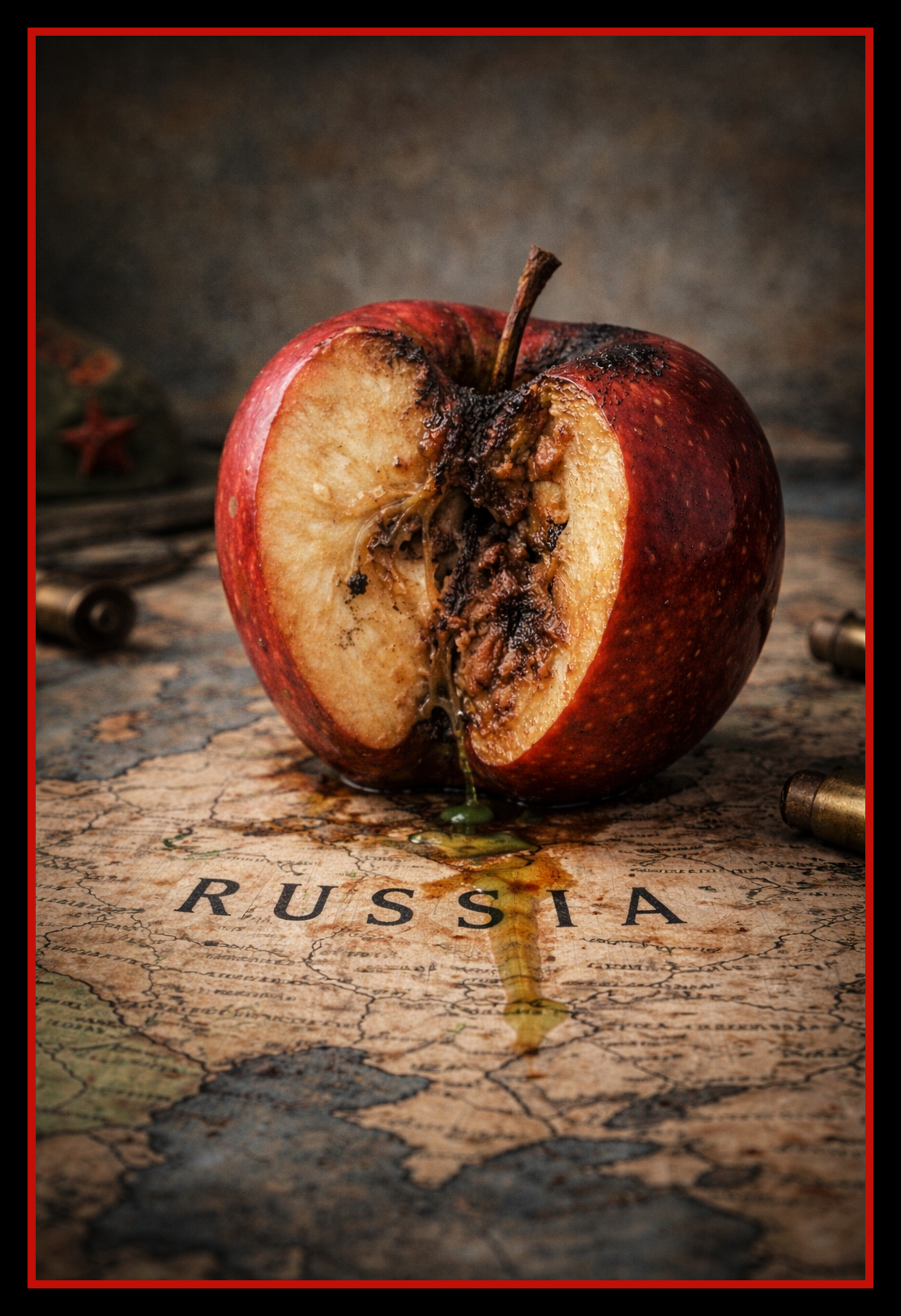
The image that stays with me from today is not the handshakes or the percentages. It is the rotten apple. Glossy on one side. Decaying on the other and sitting squarely atop Russia.

Pretty words on the surface and rot underneath. And no amount of nostalgia about being the apple of Putin’s eye is going to change that.

Ukaine and the 28 Point Plan

Posted: November 23, 2025 in Uncategorized
Tags: , , , ,

I’m sorry, but we have to go back to a dark conversation. It’s hard, from where we sit in our relatively safe corner of the world, to fully grasp the geopolitical weight of what is unfolding. Most of us have never lived under bombardment, never fled our homes with minutes to spare, never had to choose between surrendering dignity or surviving another winter under attack. But for those who still carry the memories of our last great global conflicts, for those whose families understand occupation, invasion, and loss, this moment is not theoretical. They know exactly what this means.

And we need to be honest with ourselves too. Canada is not insulated from this. We may feel far from Europe’s danger, but we share a border, not by fence line but by Arctic geography, with Russia. That reality doesn’t go away because we find it uncomfortable. It’s not fear-mongering to acknowledge it; it’s realism. Geography will not change. And when Russia pushes the boundaries of the international order, those ripples reach us whether we want them to or not.

And today, President Volodymyr Zelensky made it clear: Ukraine is standing at the edge of an impossible choice. He warned that the country may soon face “either the loss of dignity or the risk of losing a key partner.” Dignity is not a stray word. It’s a deliberate reference to Ukraine’s 2014 Revolution of Dignity, when Ukrainians overthrew a corrupt, Moscow-aligned president and claimed a democratic, European future. They fought for sovereignty once. Now they’re being cornered into signing it away.

Because the 28-point “peace plan” Donald Trump is pressuring Ukraine to sign before Thanksgiving is not a peace plan. It is a Russian-authored blueprint, awkwardly translated into English, and presented as diplomacy. Ukraine didn’t help write it. Europe wasn’t consulted. Congress was blindsided. But Putin’s allies were deeply involved.

The plan begins by restating Ukraine’s sovereignty, something Russia already promised in 1994 and promptly violated in 2014. From there, it accelerates: Crimea and vast sections of Ukraine’s eastern industrial heartland would be ceded to Russia. Ukraine would be forced to shrink its military. And Russia would face zero accountability, not for the torture chambers, not for the mass graves, not for the sexual violence, not for the deliberate targeting of civilians.

Instead, the plan offers full amnesty: no claims, no charges, no justice. Then comes the financial contortion. The world is being told Russia will “rebuild Ukraine,” except the reconstruction is mostly for the territories Russia would keep. Frozen Russian assets would be used to clean up Russia’s own destruction, and the improved regions would then belong to Russia. Europe, again not consulted, would unfreeze more Russian assets and contribute an additional $100 billion. And then the U.S. and Russia would split the profits.

Europe pays. Russia gains land. Trump gets to call it a deal.

Ukraine would also be required to amend its constitution to permanently reject NATO membership which has been Putin’s obsession for decades. And the plan attempts to reframe the United States not as a NATO ally but as some kind of “mediator” between NATO and Russia. It’s an unmistakable attempt to weaken the alliance system that has kept Europe stable since World War II.

NOTHING in this plan hides its purpose. It dismantles the post-war rules-based order and drags the world back to a time when powerful nations carved up smaller ones and called it “peace.”

This is the pressure Zelensky faces. This is the trap being set for a country already exhausted by loss, displacement, and years of Russian brutality. And somehow, through all of this, we’re meant to pretend Donald Trump has changed. That he’s independent. That Putin no longer has influence over him.

But this document reads like it was drafted in Moscow and couriered straight to Trump’s desk. It mirrors Putin’s priorities word for word. And it confirms something we already suspected: Trump is still firmly aligned, ideologically, politically, and predictably, with Vladimir Putin.

The geopolitical risk to Europe is enormous. A fractured Ukraine doesn’t bring peace; it creates a corridor of instability stretching from the Baltics to the Balkans. It emboldens Russia. It fractures NATO. And it signals to every authoritarian regime that borders can be erased if you find the right Western politician to help rebrand your land grab.

We may be far from Ukraine’s front lines, but Canada is not outside this story. Our security relies on an international system that punishes aggression, not one that rewards it. Our geography ties us directly to Russia in the Arctic. And our history, our real, lived history, reminds us why appeasement has always been the most dangerous path of all.

The world cannot afford to look away. And I know I’m not able to look away. And you shouldn’t look away.