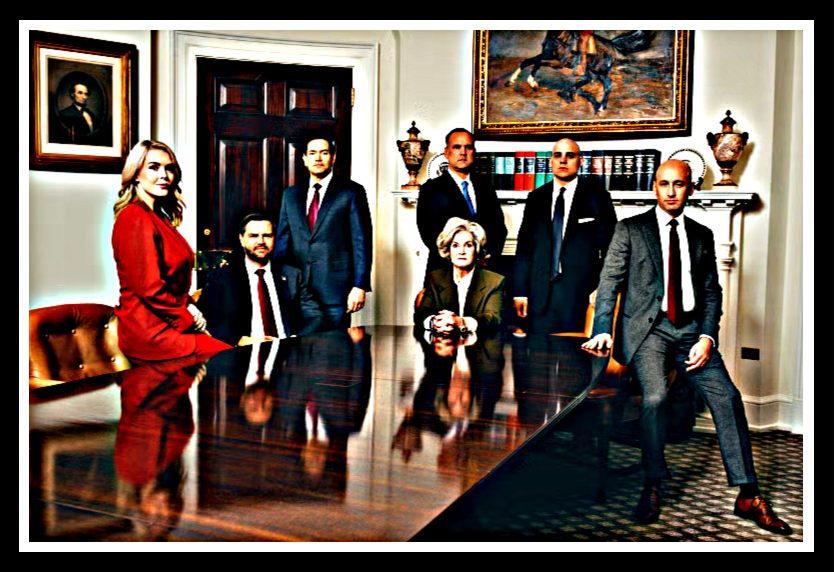
I’ve spent a lot of time lately writing about things that are heavy, personal, and deeply consequential, and while that’s not going to change, every now and then I need a different kind of mental exercise. Something a little lighter and a little more entertaining. Something that reminds me why I enjoy paying attention in the first place. This Vanity Fair photo series does exactly that, because underneath the outrage and the hot takes, there’s something genuinely interesting going on here about strategy, image, and what happens when political presentation is stripped down to its bones.

None of this was accidental. The photographer, Christopher Anderson, wasn’t sprung on the White House without warning. His work was pre-approved. His bio was known. His style was known. He has made a career out of shooting very close images. Close enough to remove the usual polish, and Vanity Fair’s editor described the work as an attempt to cut through what Anderson himself has called the “theater of politics.” So the shock some people are expressing now feels, at best, selective.

Listening to pundits dissect the images, what struck me wasn’t the outrage so much as the misreading. These weren’t meant to flatter, and they weren’t meant to humiliate either. They function more like scans. Almost like x-rays. Not images designed to reassure, but images designed to show what’s there once distance, lighting, and control are no longer doing the work for you.

I’ll admit something here. On a purely emotional level, this delights me. There’s something deeply satisfying about watching people who spend their lives managing image and narrative suddenly confronted with a lens that refuses to play along. Not cruelly nor theatrically but rather precisely. Anderson’s brilliance isn’t just technical; it’s strategic. He shows them not as caricatures, but as they are when the scaffolding is removed. And for someone who pays close attention to power, messaging, and performance, that kind of clarity is genuinely enjoyable to witness.

Take J.D. Vance, photographed against a wall that quietly provides visual reference points. It’s subtle, but it matters. A way of grounding scale and proportion for someone who has spent a great deal of time rhetorically inflating his own presence. The photograph doesn’t argue, doesn’t editorialize, and doesn’t correct him. It simply measures and lets the viewer connect the dots. With these references it is easy to measure his true height.

And then there’s Karoline Leavitt, which is where the conversation predictably veered off course. Yes, you can see evidence of cosmetic work. So what. That’s neither shocking nor particularly interesting. What is interesting is what Anderson didn’t do. He didn’t soften. He didn’t blur. He didn’t smooth away the human texture that appears on every face when a camera gets this close. Anyone who has ever been photographed at that distance knows that skin behaves like skin.

It’s worth noting here that the image you’re looking at has had an HDR filter applied, and you can feel the difference right away. That small change alone alters clarity and mood, which is worth keeping in mind when we talk about what a photograph is, and isn’t telling us. Even light intervention shifts how an image reads, which only underscores how deliberate Anderson’s original choices were.

The result, even so, is striking. She’s 28, but she reads older, not in years but in bearing. Almost matronly, in the sense of discipline rather than age. This isn’t a face inviting dialogue; it’s a face trained for delivery and repetition.

Which brings Donald Trump into the picture, even when he’s not in the frame. Because he has publicly praised Leavitt not just for her performance, but for her appearance, focusing obsessively on her lips and how they “move like a machine gun.” Placed next to this image, stripped of gloss and distance, that comment lands differently. Less like admiration and more like a functional assessment. Less about judgment or insight, more about output.

This isn’t a beauty image. It isn’t about youth or glamour. It’s about role. Should I bother to mention the slight orange tinge to her nose?

Politics usually depends on illusion. In photos using flattering angles, soft light and careful distance. These photographs decline to participate in that bargain. They don’t demean anyone, and they don’t exaggerate. They simply remove the padding and let the structure show. An x-ray doesn’t flatter you, and it doesn’t insult you either. It just tells you what’s going on under the surface.

And before anyone worries that I’ve gone soft or lost my edge, don’t. I’ll be back, as always, with plenty to say about politics provincially, nationally, and globally. This is simply a reminder that sometimes the most revealing political commentary doesn’t come from a speech or a press conference. Sometimes it comes from a camera, a small adjustment, and the uncomfortable realization that once you really look, you can’t unsee how the machine actually works.
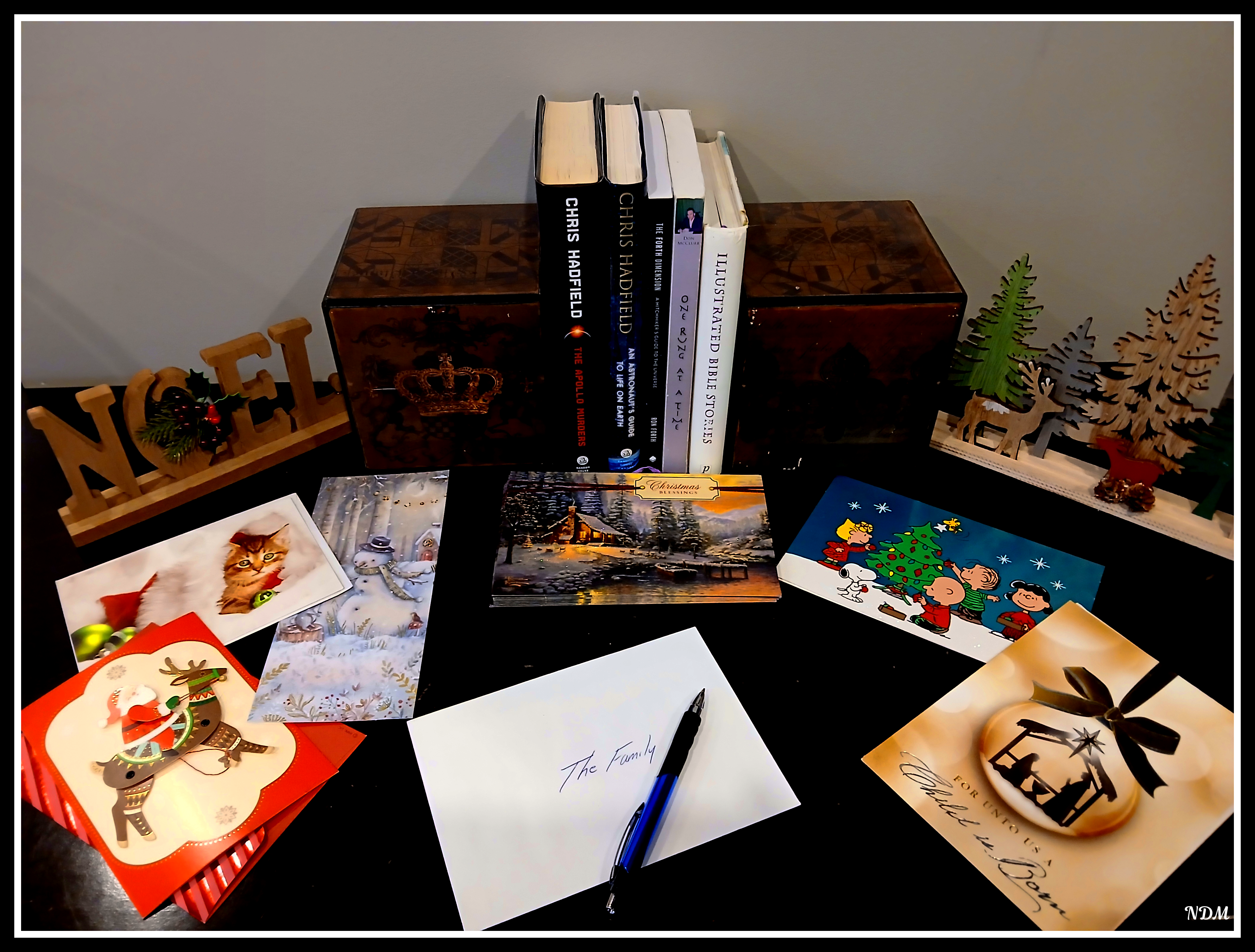
I started thinking about all of this while doing my Christmas cards. So I don’t send the same card to everyone. Some are funny and a little irreverent, because that’s who the recipient is. Some are quiet and beautiful, Thomas Kinkade like winter scenes, because they suit someone who loves stillness and tradition. And yes, some speak directly to faith, because the person I’m sending them to is deeply religious, and I want the message to meet them where they are. That’s never felt complicated to me. It’s felt respectful.

I say Merry Christmas. I always have. That’s the season I celebrate, and I mean it warmly. But I also know not everyone I’m speaking to celebrates Christmas at all. Some say Happy Hanukkah. Some prefer Season’s Greetings. Some don’t mark the season in any religious way. So I choose my words, and my cards, accordingly.

That has always felt very Canadian to me. It’s not about erasing faith. It’s about understanding that belief is personal, and that courtesy isn’t a threat.

Somewhere between addresses and stamps this year, that thought stuck with me. Because once belief starts shifting from something we honour in each other to something assumed, or enforced, by authority, the tone changes. That’s where this post began.

There’s a reason movements that want long-term power eventually turn their attention to young people. Adults are harder to move. They’ve lived a bit. They’ve made up their minds, or think they have. Young people are still figuring out who they are. They’re looking for belonging, certainty, direction. That’s not a criticism of youth, but rather the reality.

History shows this pattern again and again. Even before he fully consolidated power, Hitler understood that if you wanted to reshape a country, you didn’t start with adults. You reorganized youth life, school-adjacent clubs, uniforms, rituals, discipline, purpose. Not education but rather forced identity.

The following isn’t a one to one comparison. But patterns don’t have to repeat perfectly to be recognizable. And it would be irresponsible to pretend we don’t see familiar shapes forming today.

In the United States, Christian nationalism has moved out of the margins and into the mainstream. Not Christianity as faith, but Christianity as political structure, as a hierarchy, an identity, and ultimately as power. One of the clearest signs o f that shift in the US has been the focus on youth spaces including schools, universities, clubs, and mentorship networks and framed all framed as moral, values based, and patriotic. Organizations like Turning Point USA aren’t really about debate. They’re about direction. About telling young people who belongs, who leads, who should submit, and what a “real” citizen is supposed to look like. That should give anyone who cares about education pause.

Now bring this north. Canada isn’t immune to American political currents. We never have been. And if there’s a place where this kind of organizing has found fertile ground, it’s Alberta. I don’t say that casually. Alberta’s political ecosystem, particularly under the UCP, has become increasingly influenced by activist groups whose goals go well beyond taxes or pipelines. Groups like Take Back Alberta are open about what they want: reshape institutions, influence candidates, embed ideology, and redefine what it means to be Canadian and that’s often through a narrow religious lens.

This is not conspiratorial, it’s not abstract. It’s quite visible. When religious language starts showing up inside government messaging, not as personal belief but as shared moral authority, I pay attention. When education leaders speak as though faith is a given rather than a choice, I pay attention. When young people are talked about as something to be guided, corrected, or rescued, rather than taught how to think, I pay attention.

Because this is how movements grow, slowly and quietly with what looks like normalization.

Faith itself is not the issue. Some of the best people I know are deeply Christian. Their faith is generous, thoughtful, and lived, not imposed. That’s not what concerns me.

What concerns me is belief turned into obedience. Faith turned into hierarchy. Morality turned into political leverage. And when that mix starts organizing around young people, through schools, clubs, and identity-building, we are no longer talking about private religion. We’re talking about public power.

This is why it matters to me. I raised my kids here in Alberta and there were threads of this already growing 15 years ago. I’ve watched young people I love try to find their footing in a world that is louder, sharper, and far more manipulative than the one I grew up in. Because I know how comforting certainty can sound especially when it’s wrapped in the language of “values.”

I don’t come at this as an academic. I come at it as a parent, as a citizen, as someone who believes education should open doors, not close ranks. I say Merry Christmas. I always will. But I also want the kid who doesn’t celebrate Christmas to feel just as fully Canadian as my own children did. That matters to me. This isn’t fear mongering. It’s responsibility. Once you see how these things grow, it’s hard to unsee them.

So I’m paying attention. Not because I have special insight but because I care.

Beyond The Pale

Posted: December 16, 2025 in Uncategorized
Tags: , , , ,

There are so many things happening right now that make it hard to know what truly matters, or what deserves attention. I try to keep my writing rooted in Canadian context. In our values, our humanity, and our political reality, and yet we all know that so much of our public conversation gets tugged off course by the behaviour of the President of the United States. It creates this constant state of “pending,” waiting for the next outburst, the next shockwave, the next moment that should never be normal but somehow becomes part of the daily noise.

But this time, the noise has become something else entirely. Last weekend in Los Angeles, a man and his wife were killed by their adult son, who had long struggled with addiction and mental illness. Their celebrity is not the relevant point here. This is, at its core, a human tragedy before it is anything else and it is one that cuts deeply because it speaks to something I know too well.

Very few people know this about my family, but with my husband’s permission, I will share this. In June 2020, my husband’s only sister, in fact only sibling was murdered in her own home by her adult son, who had battled mental illness and addiction for years. Cold Lake, Alberta, where this happened, is an Air Force base community. Although retired at the time, both my sister in law and her ex-husband had served their country in the Canadian Armed Forces and had remained in Cold Lake because of their deep connection to that community.

Everything that followed, the hearings, the grief, the confusion, the guilt, the hollowed out days, was its own kind of hell. Unless you’ve lived inside that nightmare, you cannot understand the full weight that lands on a family’s shoulders, or how impossible it is to reconcile love with tragedy.

So when I look at the Reiner family, I don’t see celebrity. I don’t see politics. I see human beings, stunned, grieving, horrified, ashamed, questioning themselves, replaying every moment where they wonder if something, anything, could have gone differently. That is what this kind of tragedy feels like. It is not something any family imagines they will ever have to say aloud. We certainly didn’t.

Most people, even many who support Donald Trump, seem genuinely appalled by the comments he made about Rob Reiner in the immediate aftermath of this unimaginable loss. And for good reason. When Charlie Kirk was murdered, there was strong criticism directed at anyone who even hinted that such violence was justified. And rightly so. That is the morality line a healthy society should hold.

So how can a President of the United States justify criticizing Rob Reiner’s family in their darkest hour? If cruelty was wrong then, how is it suddenly acceptable now?

“Beyond the pale” is the phrase I’ve heard repeatedly these last few days, and for once it feels accurate. It was cruelty for sport. And then he doubled down on it. Clearly there is no political ideology that excuses mocking a grieving family. Not conservative, not liberal, not anything.

Rob Reiner was known to most of us as “Meathead” on All in the Family, or as the director of films like Stand By Me, A Few Good Men, The Princess Bride, When Harry Met Sally, and Spinal Tap. Yes, his political views were strong. Many people disagreed with them. None of that matters today. A man and his wife were murdered, and their surviving family is shattered.

And yet the loudest, most powerful political voice in the United States chose, at this moment, to dehumanize them.

When people ask, “Why didn’t the family fix it?” I can only say this: you have no idea how hard families try. For years. For decades. With professionals, without professionals, with hope, without hope. Addiction and severe mental illness are not solved by parental willpower. They are battles that break families long before the worst day arrives.

Rob Reiner’s family is no different than ours was in 2020. They lived in pain, trying everything they could. And now they face a grief that will never fully heal.

This goes beyond politics. It goes beyond partisanship. It goes beyond anything a reasonable society should tolerate. Donald Trump crossed a moral line, maybe worse than any he has crossed before . And I say that as someone who has lived the reality of this kind of tragedy, who knows the shame, the confusion, the judgment, and the quiet, desperate question: What more could we have done?

There is no forgiveness for attacking a family in that moment. And I believe, truly, that this will be a defining point for many people, even among his supporters. Some moments reveal a person’s character in ways that cannot be dismissed, spun, or excused. This is one of them.

So let me finish with this:
If anyone tries to tell me that this is still about “the good things Trump is doing,” or that there is some political justification for this behaviour, then you’ve just met your match. This is the moment where I’m done entertaining those arguments. There is a line between disagreement and cruelty, and he stepped so far past it that there’s no coming back.

And if this moment doesn’t make people rethink their loyalty, then nothing will, because if cruelty toward the grieving isn’t a deal-breaker, what on earth is?

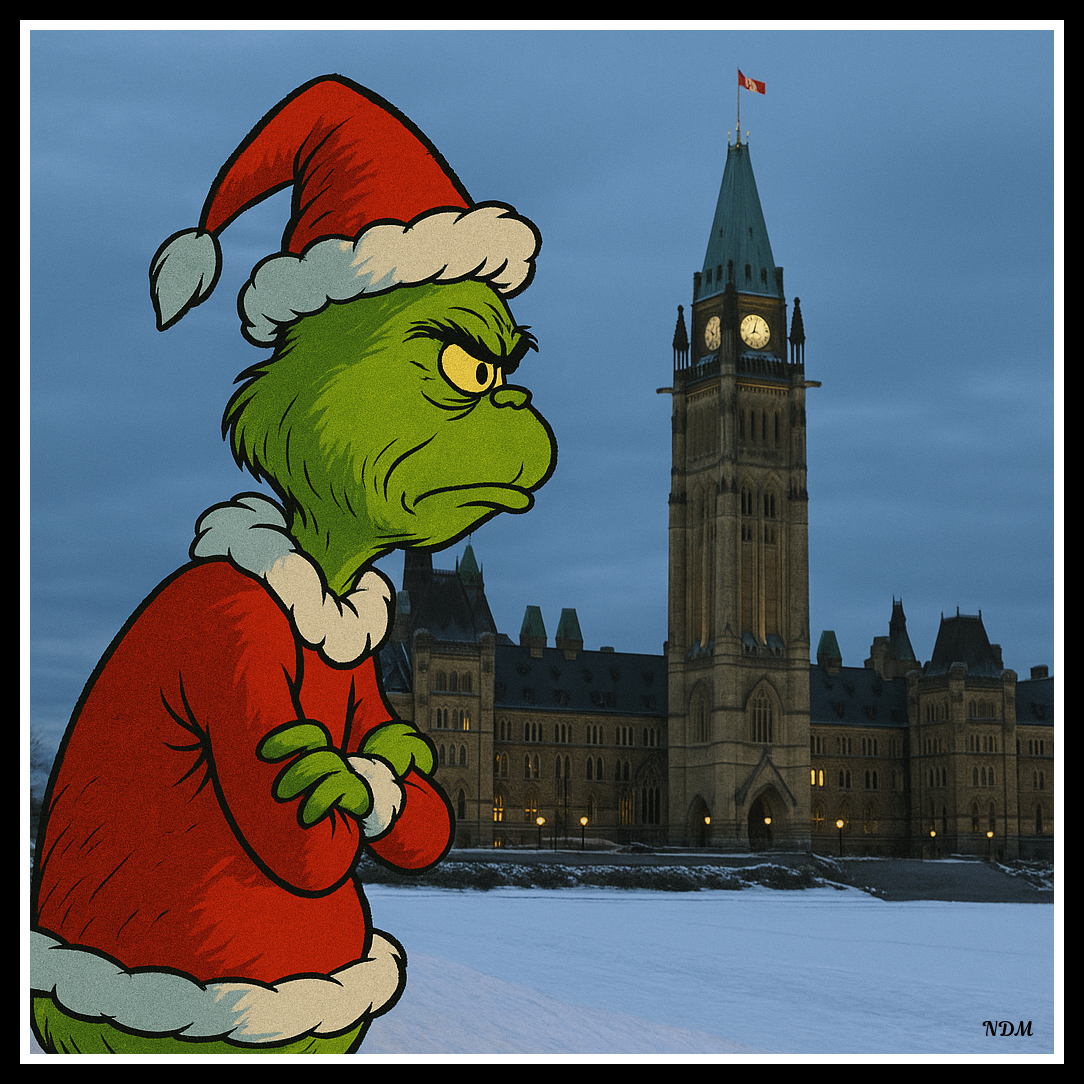
Last week in the House of Commons, Canada’s Secretary of State for Sport, Adam van Koeverden, delivered a speech that was sharp, funny, and painfully accurate. And for everyone still defending Pierre Poilievre and the style of politics he has perfected, it was a reminder of exactly what that legacy is in the words of MP van Koeverden.

“Mr. Speaker, remember when the Grinch tried to steal Christmas? He drove all the way up to the top of Mount Crumpit because he had everything that he needed, and he was going to throw the gifts that the Whos deserved because he thought they didn’t deserve to have nice things. It’s kind of like the leader of the Conservative Party, Mr. Speaker. For 25 years, he’s had dental care because he’s had a job here in the House of Commons, so he votes against dental care for 9 million Canadians. He’s got secure housing. He lives comfortably at Stornoway in government-owned housing, so he votes against affordable housing for millions and millions of Canadians. My Christmas wish is that the leader of the Conservative Party comes back in January with a heart that’s grown three sizes and tries to help a Canadian for once in his 21 years.”

That is Poilievre’s political biography in a paragraph. He is a man who has enjoyed every structure of public stability while dedicating his career to denying those same supports to everyone else. And rather than come back after he “won” or, let’s be honest, acquired his Alberta by-election in a riding that any Conservative could win in a coma, did he return with a better attitude? A vision? A grown heart? Anything?

No. He returned with the exact same tone, and the same fixation on Justin Trudeau that his followers can’t seem to let go of, despite the fact that Trudeau isn’t even in politics anymore. It has become some kind of reflexive obsession, a default setting they can’t reset, and it would almost be funny if it weren’t so detached from the reality the rest of us are living in.

For the continued supporters of Pierre Poilievre note that in 21 years he has not produced a single original idea. Nothing substantive, nor visionary. Nothing that withstands even casual inspection. Ask his supporters to name a policy, and they can’t. They can only tell you who they dislike. The only people insisting he’s “leadership material” are perched so far on the right flank of conservatism that competent global diplomacy looks like a threat to them.

Meanwhile, the same voices who accuse the Liberal government of being “socialist” conveniently forget that Canada’s core social programs that they likely embrace, such as unemployment insurance, public healthcare, old age security, and the Canada Pension Plan are exactly the kinds of systems they claim to oppose. And let’s not forget the single biggest fiscal challenge of the past five years, COVID. I would pay good money to see the statistic showing how many small government Conservatives cashed their CERB cheques without hesitation. Canadians across every political stripe were grateful for that “socialist” support when they needed it. Funny how ideology melts when the deposit hits the account.

Because here’s the uncomfortable global truth. There is no Conservative leader right now who would receive the level of international respect Mark Carney does. Could one emerge? Possibly. But the only route to international visibility available to the current Conservative movement is alignment with Donald Trump’s authoritarian worldview and Vladimir Putin’s destabilizing ambitions. That’s the company they’ve chosen.

And that should worry all of us. Leadership in 2025 is not just about the economy. It’s about safety. Economic strength collapses without geopolitical stability. Trade dies without trusted alliances. Investment evaporates when partners can’t count on you. Safety is the foundation of everything, and right now, Conservative politics offers no path to a safer Canada.

Meanwhile, we have a Prime Minister who is respected internationally, who is navigating one of the worst tariff crises in decades, and who does understand the complexity of global economics. Mark Carney is not perfect, no leader is, but he has the credibility Canada requires at a moment when credibility is currency.

And yet, the Conservative Party marches forward behind a man whose political compass points only toward resentment and reduction. A man who has had every benefit of public life yet opposes extending those same benefits to the people who fund them. A man who believes anger is a national strategy.

But unlike the Grinch, this story doesn’t end with a heart growing three sizes. In fact, if anything, every year he sounds more like the guy standing on the hill screaming about the downfall of Whoville while offering exactly zero ideas for how to fix it. A man who wants power with all the enthusiasm of someone who’s never bothered to figure out what he’d do with it once he had it.

Perhaps, perhaps, the spell is weakening. There is growing speculation that January could bring not just a new parliamentary session but a new Conservative leadership race. And if the Conservative leadership team has any instinct for political survival, they see the writing on the wall.

But then comes the real question. If not Poilievre… then who?

Andrew Scheer? You could replace him with a lump of coal and get more heat. A rising star? From where? This caucus has hollowed itself out. Jason Kenney? No love lost there, but compared to today’s far-right chaos, he now looks moderate, (don’t worry I’m not fooled). This says everything about the state of the party.

Adam van Koeverden’s Grinch analogy landed because Canadians recognize themselves as the Whos down in Whoville. Just trying to build something together while a man on the mountaintop insists we don’t deserve it. But unlike the Grinch, this story doesn’t end with a heart that grows.

And if that’s the best the Conservative Party can offer in a moment this dangerous, then it’s not a government in waiting. It’s a loud distraction for people who’ve stopped looking for real solutions.

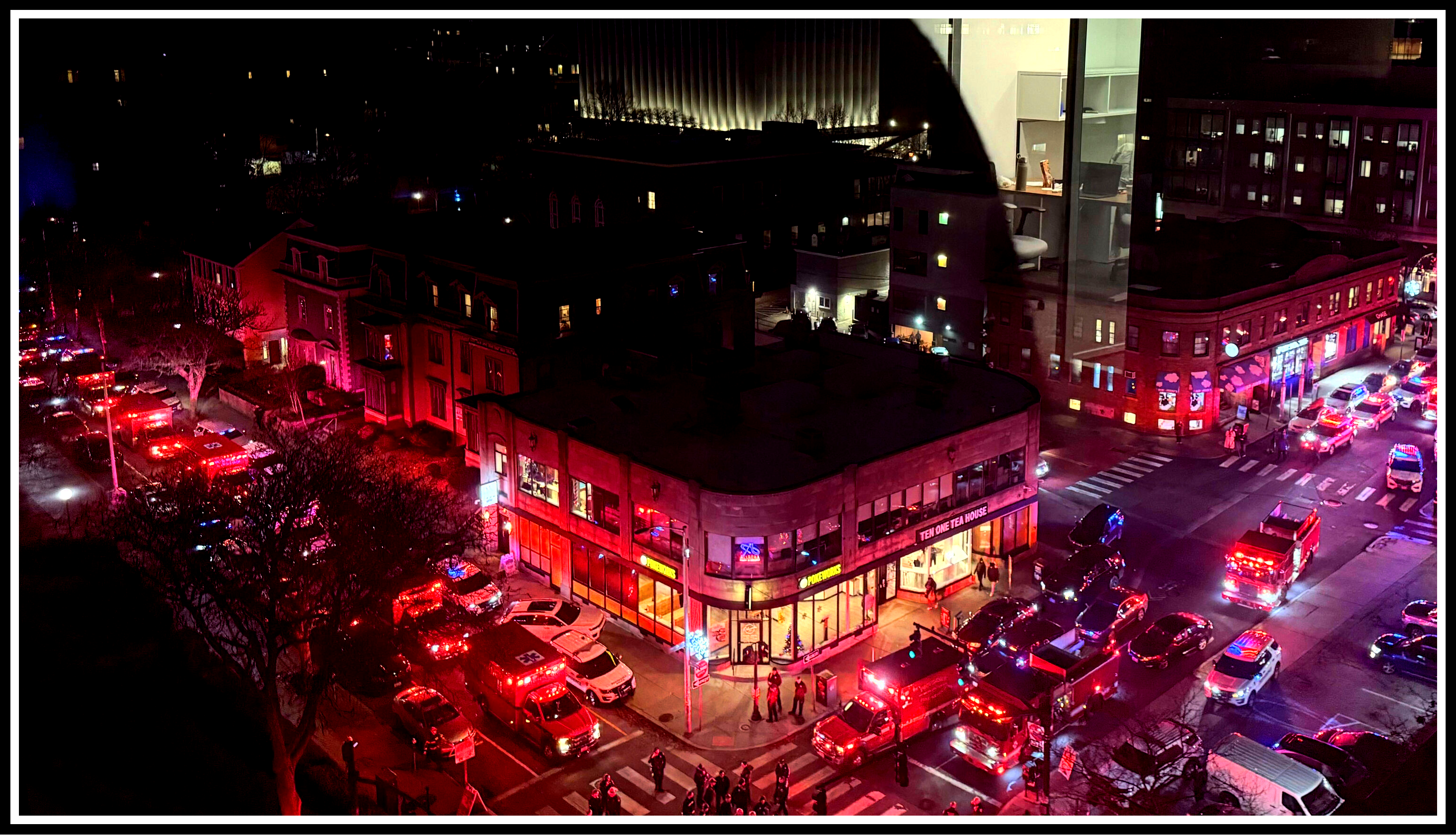
Late last night, I was watching news coverage of yet another horrific shooting in the United States. But what struck me wasn’t the familiar “BREAKING NEWS” banner. It wasn’t even the grim resignation that now accompanies every American mass shooting.

It was the face of a young woman speaking from her dorm room at Brown University, 19-year-old Zoe Wisemann, currently in lockdown. This is the second time she has lived through a school shooting. At twelve years old, she survived Parkland. And at nineteen, she is now surviving this.

As she spoke, I felt my own stomach twist, because what she said out loud is exactly what millions feel and what I have felt for years: she’s sad, yes, but right now, she’s angry. Furious that in the seven years since Parkland, nothing of meaning has changed. Furious that Congress has done nothing to reduce the violence or the risk. Furious that a generation of students is now collecting trauma the way they collect course credits.

And I echoed her, word for word. I’m angry too. Because here is the horrible, staggering truth. The statistical likelihood of anyone experiencing one school shooting should be zero. Zero. That should be the floor, the ceiling, and everything in between. Instead, we are now watching teenagers and young adults survive multiples, before they’re even old enough to legally order a drink in the United States.

Zoe is clearly bright and resilient, attending one of the most prestigious universities in the world. And none of that has protected her. No campus, no zip code, no GPA shields a student from a political system that has decided that guns matter more than human beings.

Before anyone trots out the tired talking points, mental health, pandemic isolation, social media, video games, cultural decay, let’s be realistic. Every single one of those conditions exists in Canada, in the UK, in Australia, in Germany, in Sweden, and across the entire Western world.

And of course, we all know what comes next, the ritual chorus of thoughts and prayers. Well, have at ’er with the thoughts and prayers. I will always assume those are a given. But thoughts and prayers are supposed to be the starting point, not the entire response. What matters is what comes after. And in the United States, “after” has become a blank space. A void and a shrug. A refusal to take even one step that would actually make a difference. That is what Zoe is angry about, and that is what I am angry about too.

The common denominator is guns. Are there mental health issues elsewhere? Of course. Do young people struggle everywhere? Yes. Does society feel strained everywhere? Absolutely. But only one country has decided that the “right” to a weapon outweighs the right of a child to survive a school day.

And here is the piece I hate to admit. In those first few seconds after the alert broke, I caught myself thinking, “Please don’t let this become fodder for the current government.” Because we all know how this works. Before anyone even absorbs the human cost, the political machine starts spinning. The question becomes not why is this happening but which side benefits from the narrative. And whether the extremism comes from the right or the left, the human tragedy gets buried under the political tug of war. The horror becomes background noise while everyone fights over who gets the last word. And that, too, is part of the sickness.

And yes, last night was supposed to be a night where I wasn’t writing about the United States at all. I already had a Canadian-focused political post ready but that can be for tomorrow morning. Some realities are too big, too raw, too completely unacceptable to pretend they didn’t happen.

Because the truth is this. No one is safe when the places that should be safe aren’t safe at all. Schools., universities, grocery stores, concerts, parades, malls nor places of worship.

And once again, like after every shooting, every mass event, every moment of national grief, the real question isn’t what happened. We know what happened.

The real question is where the hell is Congress? Where is the leadership? Where is the courage? Where is the willingness to do anything other than protect the gun lobby and their own titles?

Because whether the national conversation is about the Epstein files, or tariffs, or fentanyl, or Caribbean interdictions, or school shootings, or anything else that touches actual lives, the theme is always the same. Power first. Country second. People last. Every day, every hour and every crisis.

And last night, listening to a young woman who has now lived through two school shootings before the age of twenty, the weight of that reality hit me harder than usual. I’m sad. Yes. But like Zoe Wisemann, I’m mostly angry. And if America’s so called leaders refuse to take meaningful action, then maybe the young people who keep surviving these nightmares will be the ones who finally force the change the “adults in charge” never had the courage to make. Because nothing changes until someone decides enough is enough. And last night, a 19-year-old student reminded the world she reached that point a long, long time ago.

Politics across the globe feel dangerous in a way that is hard to articulate without sounding alarmist, but alarmed is exactly what we should be. The world is sitting on a fault line. Every major decision made by the global superpowers reverberates across continents, supply chains, borders, households, and families. No one is insulated. And while Canadians have a uniquely deep economic and geographical relationship with the United States, this moment isn’t just about us. It’s about the entire world and its future.

Today we learned that the head of NATO expects the alliance to be formally at war with Russia within the next five years. I’m not unpacking that intelligence or the what-ifs around it. But I am acknowledging the obvious: three of those years will unfold under Donald Trump’s second presidency. And that reality, paired with what we’re seeing in front of our eyes, has pushed me to talk about something I’ve deliberately avoided.

I have a close family member living with a memory-loss disease. I’ve never said that publicly because it hurts, because naming it out loud makes it real, and because I’ve never wanted to use their struggle as a metaphor. But over these past months, as politics have escalated into something darker, I’ve found myself unable to ignore parallels in patterns of behaviour I’ve personally witnessed and the behaviour we see, daily, globally, from the President of the United States.

To be clear, I am not making a diagnosis. I’m not a doctor. I’m not suggesting equivalency. One is a loved one who lived a good, quiet life and deserves compassion and safety and never acts from a place of cruelty or evil. The other is the most powerful person on Earth. But I am talking about recognizable human patterns, changes in speech, changes in focus, erratic storytelling, unshakeable belief in invented narratives, emotional volatility, unusual physical mannerisms, and moments that simply do not match past behaviour.

Back in Trump 1.0, we all witnessed the erratic late night tweets, the mood swings, the wild pivots, the sudden tangents, behaviour that became part of the spectacle, part of the chaos-for-show that defined his first term. It was volatile and unnerving, but it was still framed as “Trump being Trump,” an exaggerated performance wrapped in grievance and bravado.

But it wasn’t until recent months that people began using the word “sundowning” in a more serious way, pointing to his increasingly disorganized late-night Truth Social posts, sharper emotional swings, moments of confusion that couldn’t be brushed off as theatrics, and most of all, the growing certainty with which he clings to things that simply aren’t real. For those of us who have lived with someone who truly does experience certain changes in behaviour and ‘imaginings’ the parallels are impossible to ignore. The volatility, the slipping coherence, the absolute conviction in invented narratives, once you’ve seen these patterns up close, it is deeply unsettling to watch echoes of them play out on a global stage.

In my family’s case we made the heartbreaking decision to place our loved one somewhere safe, supported, respected, and protected. They hold no power, no weapons, no military chain of command and yet we knew we had to make that decision. They require care, patience, and stability. And they deserve that.

Now imagine a similar pattern of behaviour, but the individual holds the largest nuclear arsenal on the planet, commands 1.3 million active-duty service members, and is treated by his closest advisors as flawless and unquestionable. Imagine that person at the centre of a geopolitical world already teetering, and imagine that no one around them is willing, or able, to intervene.

That terrifies me. And it should terrify every Canadian, every ally, every democracy. Not because we dislike his politics. Not because we preferred Biden. But because unchecked power combined with unchecked behaviour is historically catastrophic.

And yes, there were legitimate questions about Biden’s age and capacity. Some of that should have been more transparent. But Biden, for all his flaws, did not glory in cruelty. He did not fantasize about retribution. He did not weaponize the military against political enemies. The comparison is not equivalent.

As Canadians, including those of us in Alberta, we must choose leaders who will not normalize this, who will not run to Mar-a-Lago for approval, who will not bend the knee for trade favours or photo-ops. Mark Carney was never going to “manage” Donald Trump, because Trump is unmanageable. Only those closest to him can intervene. That is the point and the danger. No one is doing that.

I also know I’m not alone in this world. We are living in a time where more and more families are navigating memory-loss diseases. Millions of people understand these behavioural patterns because they live with them every single day. And yes, I know many people are waiting for the full release of the Epstein files and the Caribbean boat incident, and those disclosures absolutely matter. But just as urgent is something far closer to the present: there needs to be a full, unambiguous disclosure of this man’s cognitive and neurological assessment, not another distraction about how “perfect” his heart supposedly looked or another deflection about cankles. Transparency about his actual capacity is not a luxury; it is a global safety issue.

Something is happening, and the people around Donald Trump are doing nothing. That is what keeps me up at night. That is why I am breaking my silence about my family’s situation. Because I know what these patterns look like up close. And when I see echoes of those patterns in the Oval Office, backed by absolute power, global instability, and a circle of enablers?

Yes, it terrifies the hell out of me.

Where Humanity Takes Flight

Posted: December 11, 2025 in Uncategorized
Tags: , , , ,

So my conversation today isn’t supposed to be about politics. Well, yes it is, and no it isn’t. What it’s really about is humanity, compassion, decency, and the expectations we set for the people who lead us and for the people we choose to be.

Some of you know me through the stories I tell. I’m not a historian or a journalist, I speak from lived experience, from the people and places that shaped me. And today, even though I said I wasn’t going to talk about politics, how can I talk about how we treat other human beings without landing there?

With yesterday’s talk of requiring five years of social media history just to enter the United States, it became clear that many of us, myself included, won’t be visiting anytime soon. Honestly, I’m not sure I’ll miss it. I’ve been to Disney more times than I can count; I’ve walked New York; I can survive without Vegas.

What I can’t survive without is my sense of humanity, and today I was reminded of where it comes from.

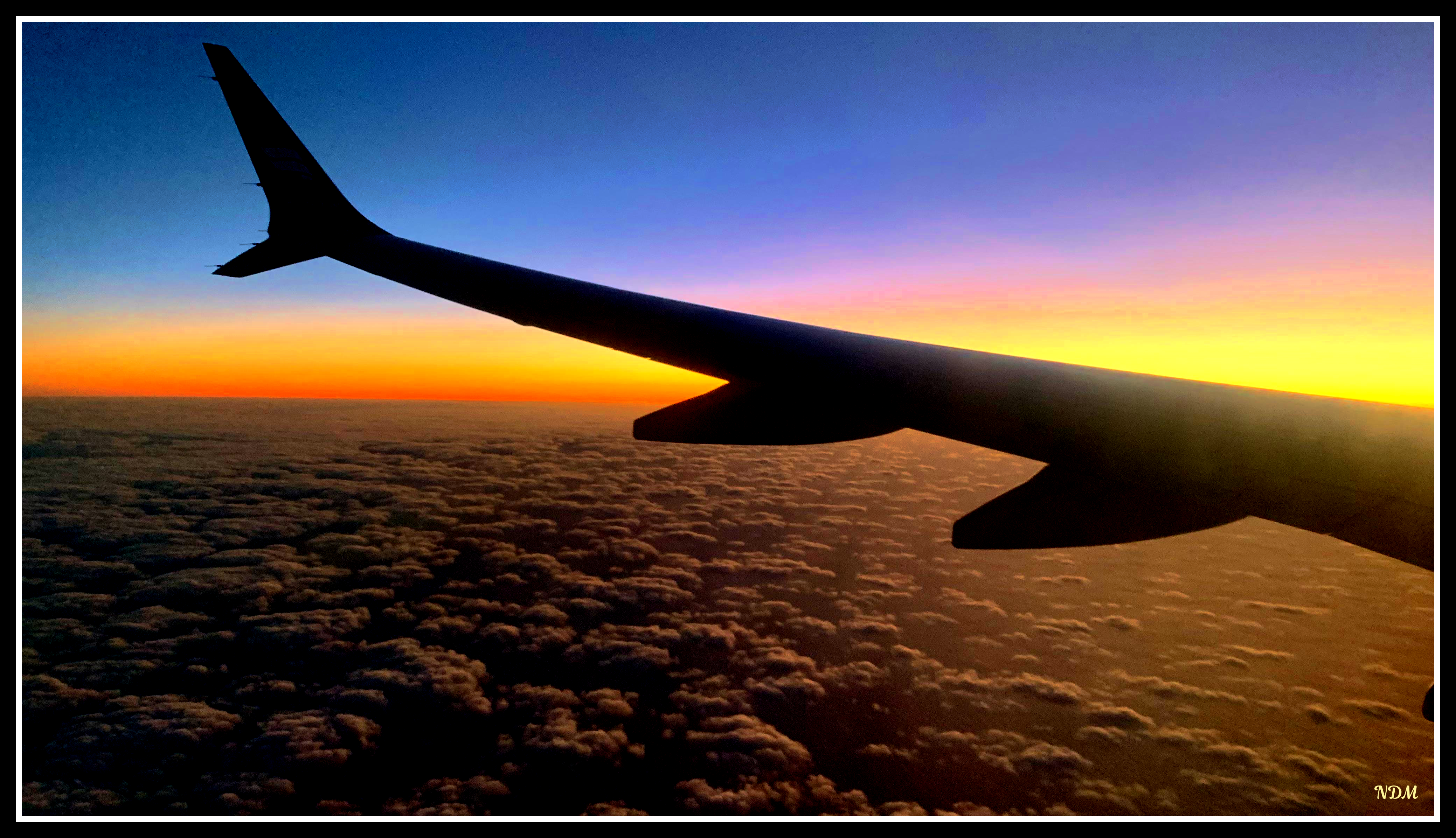
I grew up in Moncton, a small city in New Brunswick. In the 60s and early 70s it looked overwealmingly white, like so many communities across Canada. The exception was the steady stream of students from around the world who came to learn to fly at my father’s flight school. That was my normal. As a teenager I was pumping avgas, dispatching flights, and working around those students. I grew up in a hangar full of languages, accents, hopes, and dreams. I didn’t understand then what a gift that was.

A few months after my father passed away in 2008, a letter arrived from one of those former students, Israel Ameh of Nigeria. I hadn’t known him at the time he trained in Moncton, I had already left Moncton, but his words captured exactly who my father was and what humanity can look like when lived fully and without prejudice.

Here is his letter, unchanged: “I came to Canada from Nigeria in 1982 to learn how to fly. Even before I got here I felt like I knew Mr. McClure as he tried to make my voyage to Canada as trouble-free as possible. When I arrived at the Moncton Train Station on August 2nd 1982, Don sent his Cool Station Wagon to pick me up. He made the MFC become like… a revolving family setting and as I needed to take different courses, I did not think twice about where to return for those courses. When I returned in 1988/89 and got my Flight Instructor rating, Don helped me get my First and second jobs. His recommendation also made securing a Work Visa easy. I ended up marrying from Buctouche making the Moncton area part home. In 2008, I found Don’s email address on the Internet and sent him a thank you letter which was unfortunately returned due to a bad email address. When I learnt of his passing, it was a sense of tremendous loss that I did not get to thank him for all he did in my life. Mr. McClure, I know you can still read this and I want to say THANK YOU for being such a wonderful person. You practised equality and globalisation with sterling vision before it became fashionable. To many of us, you were like a father. I still remember a talk you gave to me in 1985 about AIDS and why us young men had to be aware and cautious. Other students laughed at the time but it made me into a better man. From the provinces of Canada, Libya, Nigeria, UK, the Carribeans, Nepal, India, Pakistan and all other places that sent men and women to you to turn into Pilots, I think I speak for all of them when I say the world lost a Great Man. Rest in Peace Don, but I know that if they have airplanes in Heaven, you will be helping run an efficient operation and checking up on the airplanes and asking why they are not up flying just as you did to keep us on our toes; but most of all, thank you for changing the life of an 18 year old from an African village.”

That letter, especially that last line, tells you everything about my core. And it’s why, when I hear Donald Trump speak of Haiti or Africa or Afghanistan as though the people from those places are somehow lesser, it hits like a gut punch. It dishonours the young men and women I grew up around. It dishonours my father. And it dishonours that young man whose life changed because someone treated him with dignity.

Trump, born with every advantage, has no understanding of what it means to build your life by strength, opportunity, and gratitude. No understanding of being a guest in another country. No understanding of leadership grounded in humanity. This isn’t left or right. It’s about whether we widen the circle or shrink it until only people who look like us get to belong.

Most of you reading this already get that. But maybe someone, somewhere, will feel something crack open. Because there are cracks everywhere right now, cracks in the asphalt, cracks in the façade of cruelty-as-strength. But dear God, don’t let this be the world our children and grandchildren inherit. Not a world sliding backward into suspicion and hate toward anyone who doesn’t look like us.

If an 18-year-old from an African village could take flight because someone believed in him, then surely we can choose humanity.

Surely we can chart a better course, one where compassion, not fear, keeps us airborne.

There’s an expression I’ve used for decades. I don’t know who first said it, but it has stayed with me longer than most political slogans or news cycles ever will. ‘If you blame others, you give up the power to change.’

When I first started using it, it had nothing to do with politics. It was about people I knew, family, friends, community members, who faced difficult circumstances. We’ve all known those situations where two children grow up in the same home with the same opportunities and the same challenges, and one rises despite adversity while the other drowns despite prosperity. Circumstance isn’t destiny. Choice is always part of the picture, small, incremental choices about how we react, how we cope, and how we move forward.

But somewhere along the way, this human truth got swallowed by something much larger. Blame has stopped being an individual habit and has instead become a societal norm. It’s now a default setting, a reflex, a cultural posture. It doesn’t just show up in personal relationships or family dynamics. It shows up everywhere now. In politics, in public discourse, in online communities, in the way we talk to strangers and the way we talk to ourselves. It has become the new standard, and an unhealthy one.

And nowhere is that more obvious than in the way politics is now practiced. Over the past decade, politics has increasingly become a performance of victimhood. Not genuine suffering, but strategic grievance. In the United States, Donald Trump has practically built an empire out of it. You hear his refrain daily. Joe Biden this, Crooked Joe that, on and on and on. It’s a relentless drumbeat of pointing fingers outward to avoid ever turning the mirror inward.

And here in Canada? We’re not immune. Pierre Poilievre has turned Justin Trudeau into his entire personality. Ten plus years of the same line: Trudeau broke it, Trudeau ruined it, Trudeau is the cause of every pothole, every grocery bill, every global shockwave, every structural issue that existed long before he was even an MP. There is never a solution, only a scapegoat. And if he ever stopped blaming, he’d have to start explaining, which is far more difficult.

But this isn’t just about them. The real danger is what this style of politics does to us. When leaders model blame, they normalize it. They give society permission to adopt the same posture. And suddenly we are a nation, and a generation, encouraged to externalize everything. Everything becomes someone else’s fault. Someone else’s failure. Someone else’s responsibility to fix.

It creates a kind of moral paralysis.

If everything is always someone else’s doing, then nothing is ever within our power to change. The story becomes fixed. Our agency disappears. And once agency disappears, cynicism fills the space it leaves behind.

This is not the country I grew up in. It’s not the country many of us tried to build. And it’s certainly not a healthy model for young people, because when the only thing they hear from politicians is blame, how on earth are they supposed to learn accountability? How are they supposed to believe they have influence over their own lives, let alone their communities?

If society keeps modelling the opposite, if our political culture keeps rewarding the loudest finger pointer instead of the most honest problem-solver, then we shouldn’t be surprised when the entire public starts behaving the same way.

Leadership is not about who can yell “not my fault” the loudest or who can dig up the oldest grievance. Real leadership is quieter than that. It’s steadier than that. It’s the person who wakes up and without pageantry puts one foot in front of the other and deals with the issues actually in front of them. No excuses. No endless rehashing of who messed up what ten years ago. Just the work.

That’s the kind of leadership I prefer: the kind that solves instead of performs. The kind that owns responsibility instead of outsourcing it. The kind that doesn’t need an enemy to justify its existence.

Because the alternative is exactly what we’re living through, a political landscape where deflection has replaced direction, grievance has replaced governance, and blame has become the cheapest currency in public life.

And honestly who is driving that trend? Donald Trump has built an entire political identity around never taking responsibility for anything, ever, even when the consequences are catastrophic. Pierre Poilievre has spent more than a decade scripting every sentence around Justin Trudeau as if reciting a grievance is the same thing as offering a plan. And Danielle Smith has turned deflection into an art form, blaming everyone from judges to civil servants to the federal government rather than simply governing the province she was elected to lead.

This is not strength. This is not vision. This is not leadership.

We deserve leaders who face the hard truths, not run from them. Leaders who build instead of burn. Leaders who don’t need a scapegoat to feel powerful — and who understand that their job is not performance art but public service.

And we deserve leaders who model that for our children. Because whatever behaviour we normalize at the top quickly becomes the behaviour young people believe is acceptable. They watch how we speak, how we react, how we handle conflict, how we take, or avoid, responsibility. If all they ever hear is blame, then blame becomes the cultural default.

We deserve a society that refuses that path. A society that understands that blame might feel satisfying in the moment, but it is a dead end. It does not move us forward. It does not solve a single problem. It keeps us exactly where we are, frozen in place, circling the same resentments, repeating the same grievances.

And it brings us back to the line I’ve carried through decades of my life, a line more relevant now than ever. “When we blame others, we give up the power to change!”

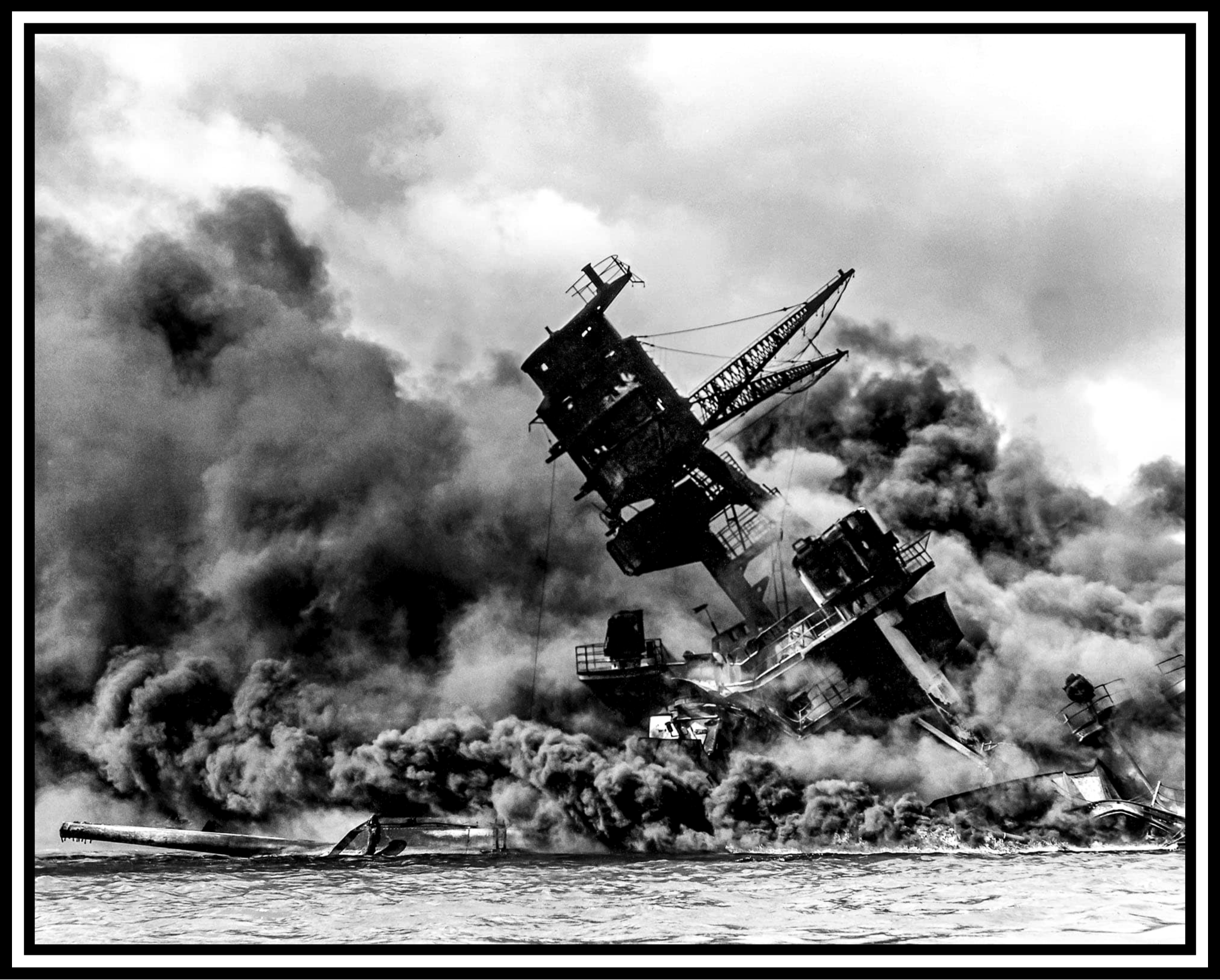
Other than being a beautiful, almost-winter day here in my corner of rural Alberta, December 7th carries a weight that never leaves me. For Canadians, Americans and the rest of the world this date is part of our shared history, a reminder that the world doesn’t fracture in isolation and that we have always stood shoulder to shoulder with our allies when democracy is threatened. Today is the anniversary of the bombing of Pearl Harbour, December 7th, 1941, the moment the United States was pulled into the Second World War, and the moment the trajectory of the 20th century changed. I debated writing about it at all because I try, so often, to anchor things “at home.” But everything I write comes from my own lived place, memory, emotion, experience, and this date sits at the centre of all of that.

My father, as many who read me now know, shaped so much of how I see the world. Back in 1981, during the 40th anniversary of the bombing of Pearl Harbour, my parents wanted one final trip to Hawaii, my mother already many years into the paralysis of her stroke. I met them there because my father couldn’t manage the physical care on his own, and because time with them mattered. Two things were important to him on that trip: travelling to the remote resting place of Charles Lindbergh, and standing where the Second World War began for America.

Standing above the sunken USS Arizona with them is something I will never forget. Tourists moved around us, reading plaques or pointing at the quiet water. But for my father, it was not a tourist stop. It was a place of reverence. A place of loss. A place that demanded silence. He stood there as a Canadian who had done his part in those dark years, because it was right to stand with an ally, with democracy, with the world. And I felt that through him. I wasn’t alive in 1941, but I knew the significance of that place because he carried it in his bones.

That’s why it sits so heavily with me that, according to reporting years later, when Donald Trump toured the USS Arizona Memorial in 2020, he asked what it was and why it mattered. The president of the United States standing on the graves of 1,177 Americans and not understanding the meaning of where he was. People say, “Well, that’s just Trump.” But that is the point. When you cannot feel history, when you do not carry its weight, you cannot grasp consequences. You cannot lead through the echoes of the past when you don’t even hear the original sound.

And today, after the United States released its new National Security Strategy, framed against a backdrop of global instability, authoritarian drift, and democratic stress this anniversary lands with a different heaviness. Because Pearl Harbour wasn’t only an American call to arms. It was a turning point for Canada too. My father, like so many Canadians of his generation, believed that when democracy was threatened, you didn’t shrug and say, “That’s someone else’s problem.” You showed up. You stood with your allies. You defended something bigger than borders.

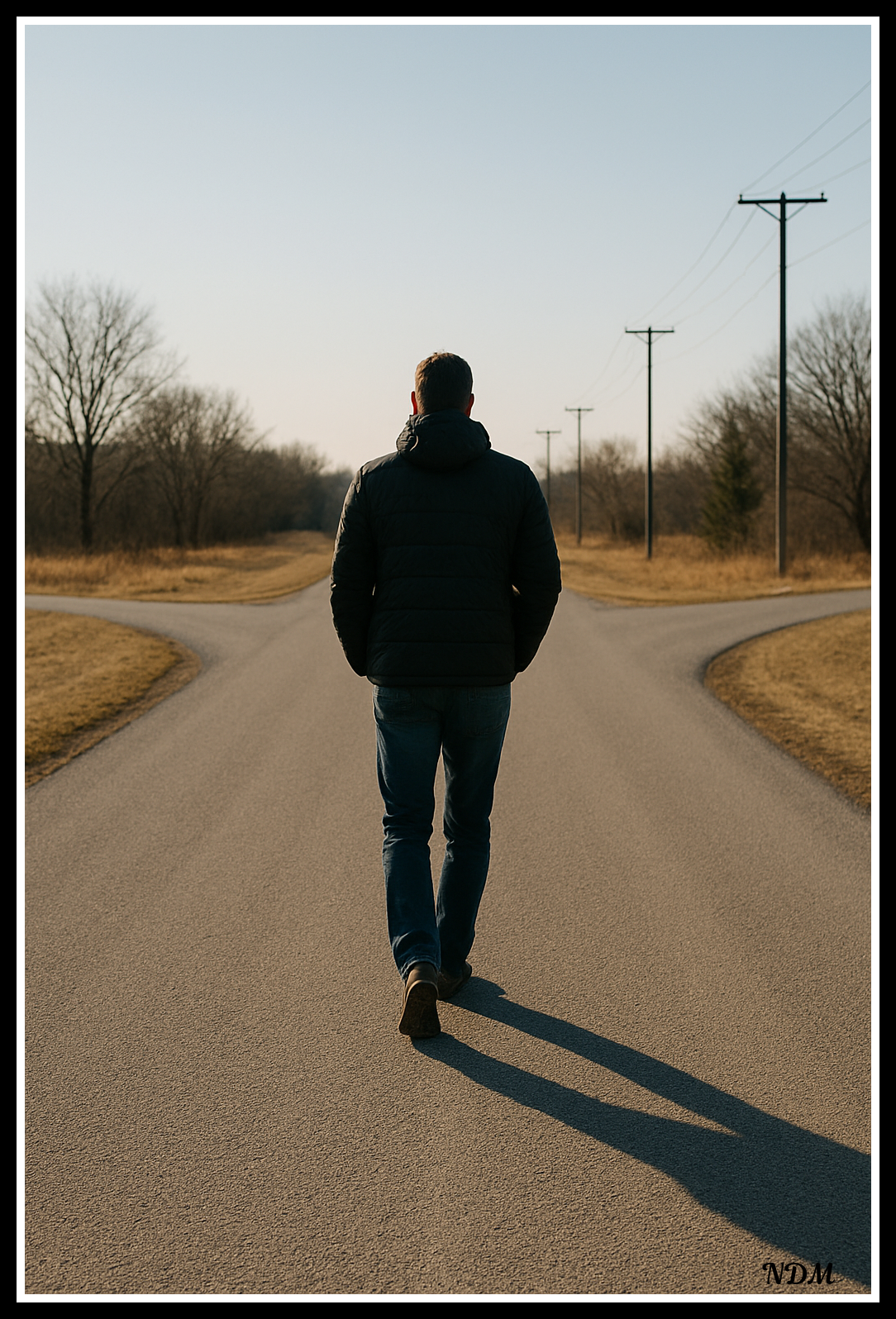
And now, as Americans face a crossroads inside their own country, the echoes of 1941 feel unbearably loud. Not because history is repeating itself, but because, as a historian recently said, it is not repeating. It is echoing, resonating and warning.

I think about my father’s reverence on that platform above the Arizona. The way he held the past with both gratitude and responsibility. And I contrast that with a man who once stood in the same place and asked, essentially, “What is this?”

So maybe it’s an emotional weekend. Maybe it’s Christmas coming. Maybe it’s age. Maybe it’s the weight of watching the world tilt again in ways too familiar for comfort. But as a Canadian who once stood above the USS Arizona carrying the reverence my father carried, I will say this plainly:
We understand, perhaps more than we say aloud, that America’s turning points have always shaped our own, economically, politically, militarily, and morally. Canada has never been a bystander in the currents of history.

The anniversary of Pearl Harbour matters, not just to Americans, but to all of us. Especially now, as we watch a man who has never understood the weight of history wield presidential power without any sense of consequence. The echoes are loud. Please hear them.

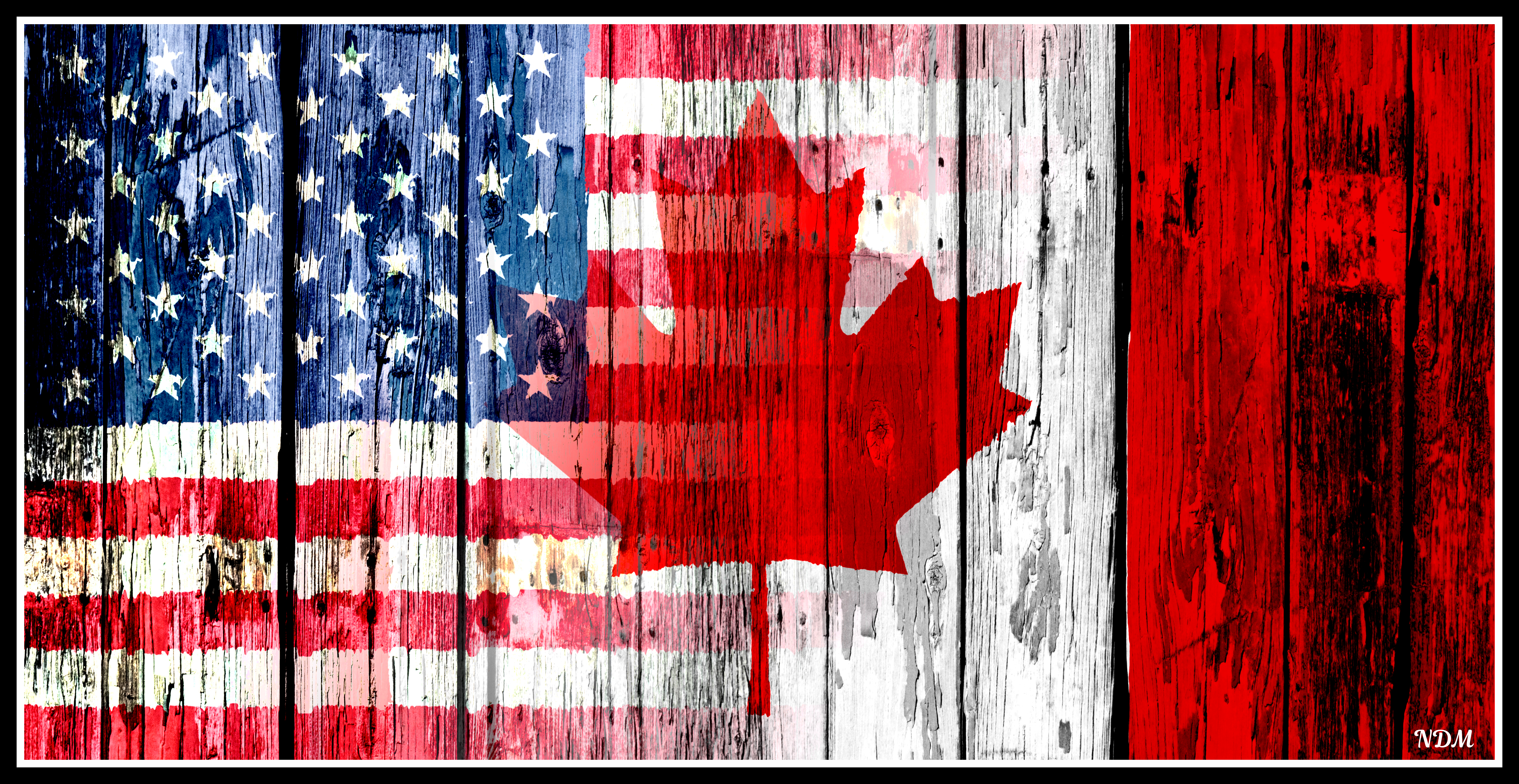
People keep telling me I’m “not writing from a Canadian perspective”. So let me be uncomfortably blunt: everything I write, whether it’s about Washington, Moscow, Venezuela, or the moon, is through a Canadian lens. Because in 2025, there is no such thing as an American crisis that stays on the American side of the border. What happens there reaches us in real time. Economically, militarily, socially, digitally and emotionally.

Anything I write about the U.S. is about Canada. And this week, the danger became impossible to soften.

Two months ago, Pete Hegseth stood before senior U.S. military leaders and said the quiet part out loud, not hinted at, not theorized, not coded. No, he declared, “We don’t fight with stupid rules of engagement. We untie the hands of our war fighters to intimidate, demoralize, hunt, and kill… Just common sense, maximum lethality, and authority for war fighting.”

Maximum lethality. Untie the hands, intimidate, demoralize, hunt, andkill. That is not doctrine nor strategy. That is permission.

So when the world watched the evolving, contradictory explanations around the second strike on a drug boat, one that looks chillingly like a war crime, none of us should be surprised. The guardrails are gone. They told us they were removing them. They said it right into the cameras.

And as Canadians we’re supposed to shrug and say, “U.S. politics are weird right now”? This isn’t “weird.” This is destabilization and destabilization doesn’t need a passport to cross borders. My nephew, who served his entire career in the Royal Canadian Air Force and now continues with them in a civilian role wrote something earlier this year that I keep returning to. I’m paraphrasing, but he described standing on a tarmac in Afghanistan watching Star Spangled Banner draped coffins being loaded onto a plane. He talked about serving beside Americans who lived, laughed, fought, bled, and grieved as brothers, never caring what flag was on your shoulder as long as you showed up. He believed, deeply, that those same American generals would never obey an order to turn their military against Canada. He believed it was unthinkable. And in March, I believed that too. But this is not March. And the United States is not the same country it was even eight months ago.

Last night’s National Security Strategy should have stopped the world in its tracks. Instead, it barely caused a ripple because we’ve all become numb to shock. But we cannot afford numbness. Not here in Canada. Not when the document refers to Canada, explicitly, as a vassal state. If you look up that term, it means the following. ‘A state that has a mutual obligation to a superior state or empire, similar to a subordinate in a medieval feudal system.’

This is how Trump’s America now views Canada. Not as an ally. Not as a partner. Not as a neighbour with whom it shares the longest peaceful border in the world. But as a subordinate with obligations to an empire.

Read that again. And if you still think Trump is a “good guy,” and that the far-right radical politics sweeping across North America are some kind of righteous populist uprising, then you’re reading the wrong post and the wrong blogger or exactly the one you needed.

People often tell me that my writing calms them. But today, I don’t think I can do that. Today is not about calm. Today is about clarity. About looking at the shift happening south of us, militarily, politically, psychologically, and understanding that Canada is not insulated.

And yes, of course we need to pay attention to what’s happening right here at home, not to hide from the global picture, but because what’s unfolding in Alberta is part of that global picture. The erosion of institutional trust, the attacks on journalism, the flirtation with authoritarian rhetoric, the manufactured chaos, it all mirrors, almost perfectly, what we saw in the U.S. before their political centre collapsed. And the truth is, action always begins closest to home. We can’t fix the entire world, but we can damn well protect the ground we’re standing on. If we don’t get our house in order here, if we don’t recognize the direction these currents are pulling us, then political chaos becomes a gift to anyone who sees Canada not as a nation to respect, but as a chess piece to be moved.

And as much as this fear sits in my chest like a stone, I remain grateful, profoundly grateful, that Mark Carney is the one steering the ship in this moment. Steady when the world is lurching. Calm when our neighbour is convulsing. Focused when others are consumed by rage, impulse, and decline. But leadership can only work when a country understands the stakes.

I wish I could tell you everything will be fine. I wish I could offer comfort instead of warning. But the truth is that Canada is vulnerable. Not because we are weak, but because the reality around us has changed faster than we have been willing to admit.

And the most dangerous thing we can do right now,  as Canadians, as Albertans, as people who love this country, is pretend that the ground beneath us isn’t shaking. I am still optimistic. I wouldn’t write any of this if I weren’t. I believe in us. I believe in what we can be. I believe in our capacity to meet the moment. But optimism is not the same as denial. And today, the truth is simple and unavoidable: When an unstable superpower drops its guardrails, every nation in its shadow had better wake up. Because history does not wait for those who refuse to see it coming.